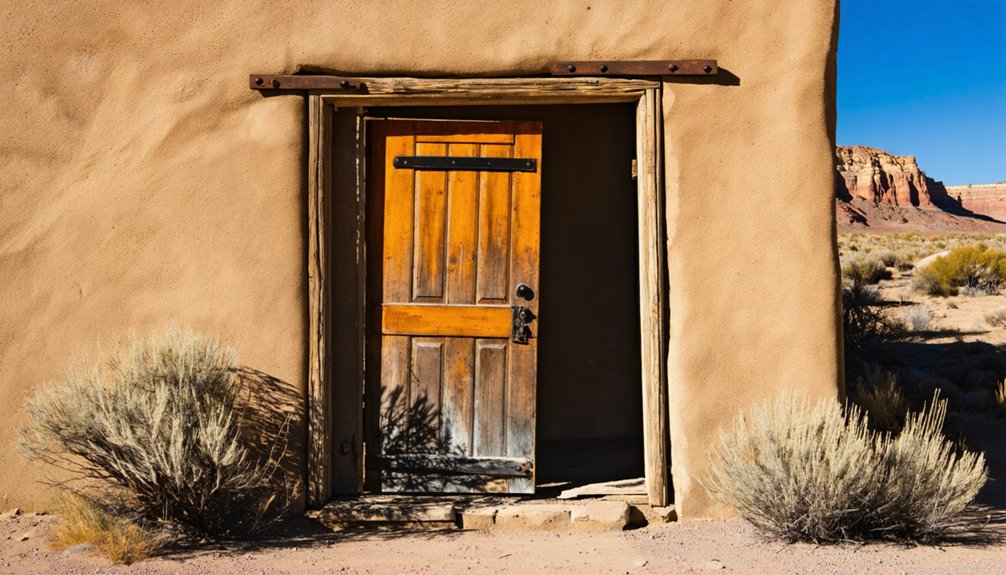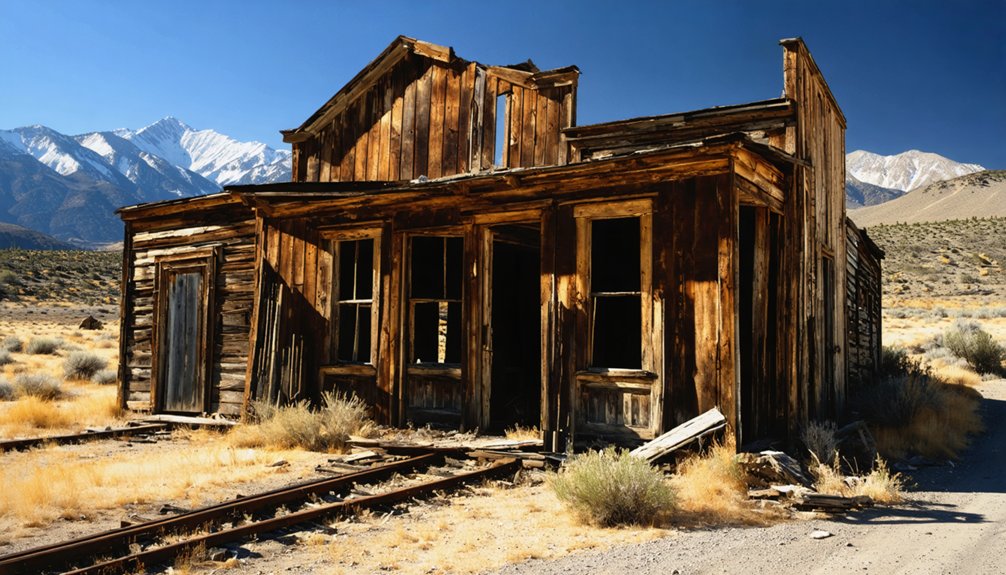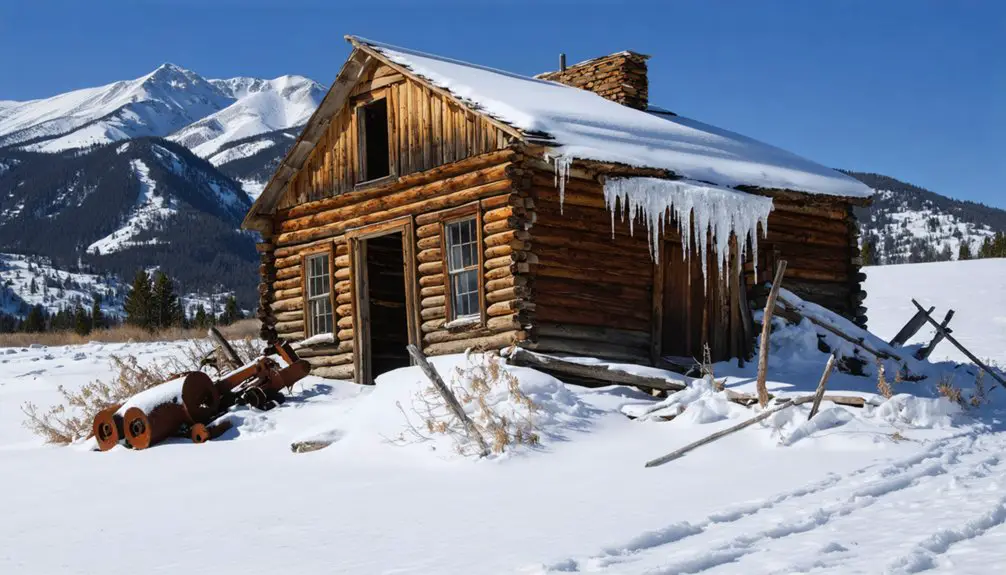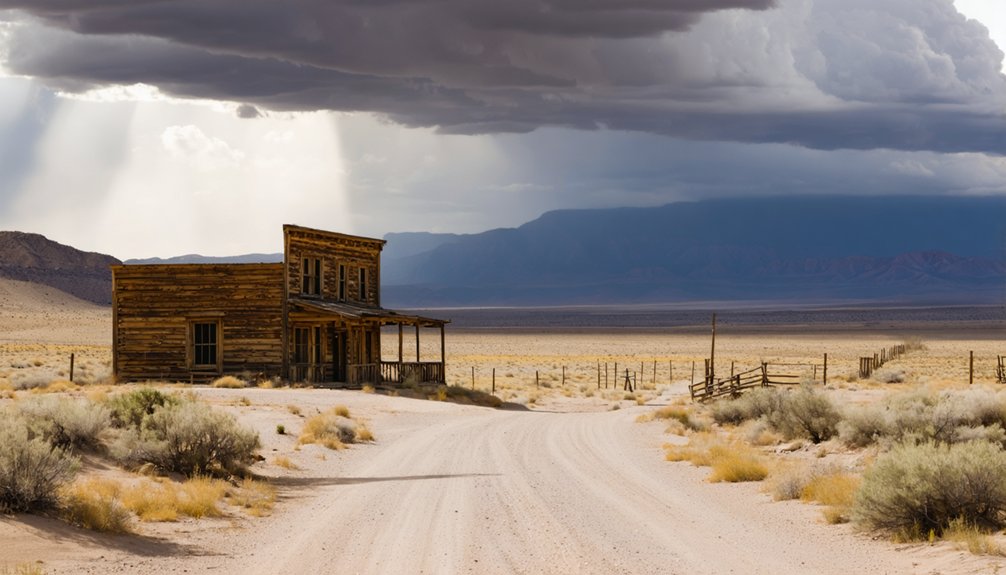
You’ll find Blacks Fork’s ghostly log cabins at 9,000 feet in Utah’s Uinta Mountains, accessible via 2WD-friendly roads from summer through early fall. Plan to explore over a dozen collapsed structures, including duplex boarding houses and the old commissary that once served hundreds of Swedish and Finnish loggers cutting railroad ties in the 1920s. Look for six-foot stumps, hand-hewn timbers, and century-old inscriptions left by tie cutters. The ruins below hold stories of sawmill innovations and timber transport systems that shaped this remote mountain outpost.
Key Takeaways
- The 2WD-accessible road makes summer through early fall the best time to visit Blacks Fork ghost town.
- Explore over a dozen log cabins in varying states of collapse from the 1916 timber company operations.
- Look for six-foot-high stumps, hand-hewn timbers, and original 1916 clay chinking among the historic ruins.
- The site features duplex boarding houses, mess hall remains, and tie cutters’ inscriptions on cabin interiors.
- Blacks Fork was a Standard Timber Company town that operated from 1913 until accessible timber vanished in the 1930s.
The Rise and Fall of a Timber Company Town
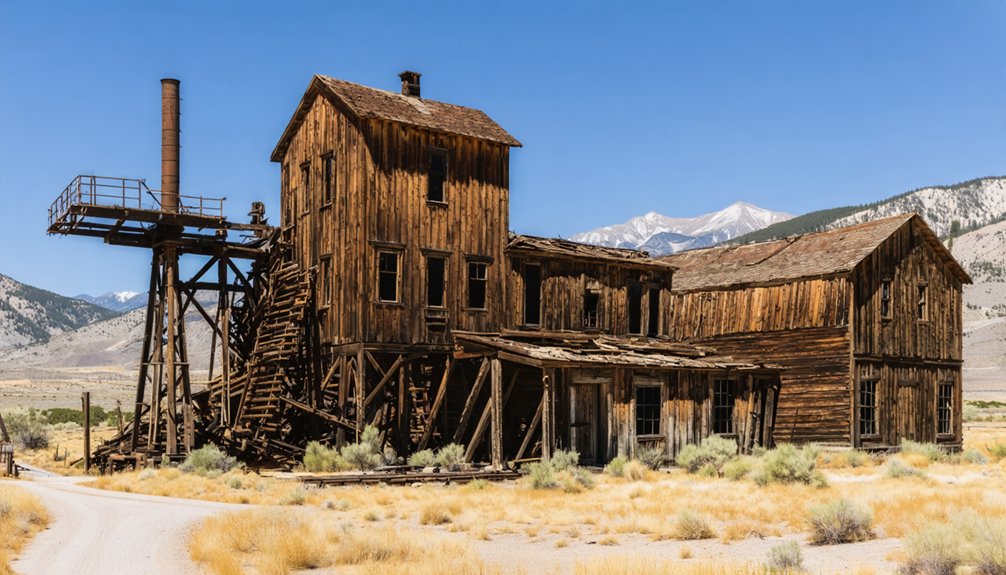
When timber companies first eyed the northern slopes of the Uinta Mountains in the 1870s, they didn’t build Blacks Fork for community—they built it for profit. This supply outpost housed 50-100 men who cut trees for railroads and mines, their axes echoing through virgin timber stands.
Everything changed in 1913 when Standard Timber Company secured a contract for over 9 million railroad ties. They constructed the Blacks Fork commissary by 1916, transforming the rough camp into a proper hub. You’ll notice the emerging social dynamics in how operations evolved—local farmers initially filled ranks, but workforce composition shifts brought hundreds of Swedish and Finnish professionals by the 1920s.
The party ended when accessible timber vanished. By the 1930s, portable sawmills made remote commissaries obsolete, leaving Blacks Fork to the elements.
Life at Peak Operations: Housing and Daily Routines
Standing among the duplex cabin ruins on Blacks Fork’s western edge, you can picture rows of bunks where single loggers collapsed after dawn-to-dusk shifts cutting timber on Uinta’s slopes.
The large single-room structure near town center likely served as the mess hall—imagine fifty men scraping chairs across plank floors three times daily, wolfing down meals between coordinating wagon runs to Fort Bridger.
These weren’t homes but functional barracks, designed to house a rotating workforce that lived, ate, and worked on the timber company’s schedule.
Boarding House Living Quarters
Stand among these rotting logs today, and you’re witnessing one unique cabin style among hundreds documented across the Uintas. Despite forest fires and vandalism, some walls still stand—testament to builders who understood that survival here demanded solid construction, not elaborate design.
Central Mess Hall Operations
At peak capacity, the central mess hall buzzed with the clatter of hundreds of tin plates and the sharp scent of wood smoke mixed with frying bacon. You’ll find massive stone foundations marking where catering staff responsibilities included feeding entire shift rotations—breakfast before dawn, dinner after dark.
The general store supplied bulk provisions hauled by stagecoach, while iron stoves lined the cooking area where food preparation techniques relied on wood-fired heat and cast-iron skillets.
Adjacent shower houses let miners scrub off soot before communal dining, and you can still trace the layout between eating quarters and the recreational swimming pool.
Charred foundation poles tell the story’s end—fire consumed these timber structures, leaving only ruins that whisper of organized chaos and frontier efficiency.
Single Men’s Work Schedules
Underground shifts ran twelve brutal hours, with single miners descending into the coal seams before first light and emerging well after sunset. You’d have worked those relentless cycles six days weekly, your body adjusting to darkness as your primary companion.
Single men’s health considerations were practically nonexistent—black lung, injuries, and exhaustion defined daily existence. The camp offered no alternative single men’s employment options beyond the mines themselves. You either dug coal or moved on.
Brief respites came during shift changes, when you’d grab meals at the mess hall before collapsing in cramped bunkhouses. Today’s ruins whisper these grueling rhythms—timbers marking where men once gathered before dawn, their silhouettes disappearing into mountainside tunnels that demanded everything.
Logging Methods and Timber Transport Systems
The sharp bite of a single-man saw cutting through eight-inch lodgepole pine echoed through the Uinta Mountains for over sixty years, from 1868 until the 1930s when mechanization finally arrived. You’ll notice six-foot-high stumps still dotting the forests—evidence of lumberjacks wielding axes from springboards to reach above the thick base. These tree cutting techniques produced over ten million railroad ties between 1867 and 1938.
Log transport methods evolved from brutal necessity. Workers built splash dams on creeks, releasing millions of gallons to float timber downstream. You can still find remnants near Red River Gorge. When 180,000 ties jammed Black’s Fork, crews used dynamite to blast them free.
The 1872 Hilliard Flume revolutionized operations, though before that, horses dragged logs across frozen ground—pure frontier ingenuity meeting commercial demand.
What You’ll Find Among the Ruins Today
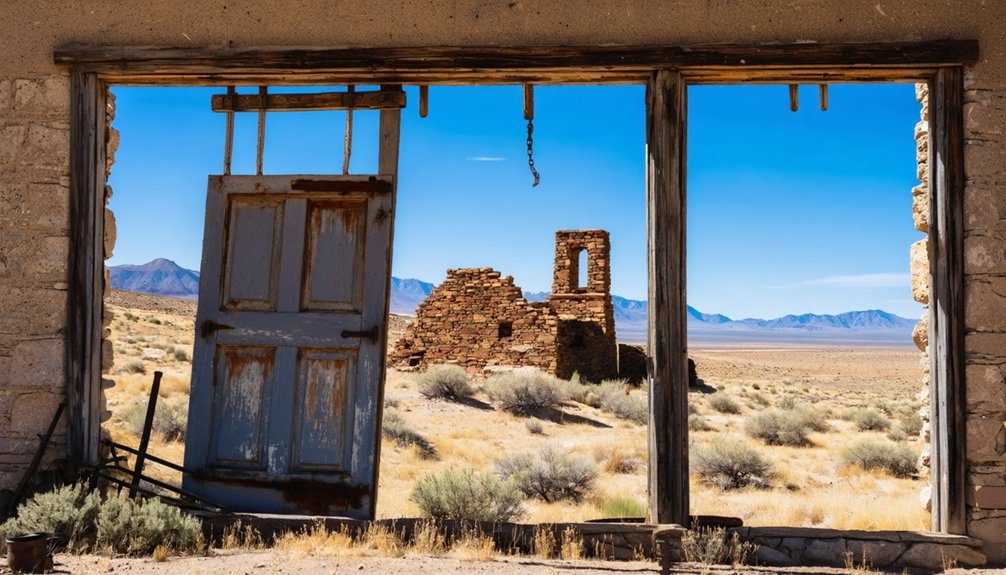
Those logging operations built more than just an industry—they built a town, and you can walk through what’s left of it today. You’ll discover over a dozen log cabins in varying states of collapse, their hand-hewn timbers revealing undiscovered construction techniques that survived a century of brutal winters. Some walls still display original clay chinking from 1916, while tie cutters’ inscriptions mark the interiors—untapped historical narratives waiting in plain sight.
The duplex-style boarding houses housed 50-100 single men at peak operation. Central structures served as stables, mess halls, and company offices. While some cabins remain structurally sound despite missing roofs, others have deteriorated into rotted log piles. You’ll need a standard vehicle—the 2WD-accessible road makes summer through early fall your best visiting window.
Preservation Challenges and Fire Threats
You’ll notice the weathered cabins at Blacks Fork face a precarious future, threatened equally by nature and human carelessness. Forest fires creep closer each summer while abandoned campfires smolder inside the decaying structures themselves, turning these wooden relics into tinderboxes waiting for a spark.
Meanwhile, metal detector scars pockmark the ground around collapsed walls, and modern graffiti mars the century-old tie cutter inscriptions that once told stories of the men who built this remote mountain settlement.
Wildfire Risk and Damage
Rising temperatures across Utah have fundamentally altered the wildfire landscape over the past 45 years, transforming how fires threaten historic structures like those scattered around Blacks Fork. You’re exploring territory where climate-driven fuel aridity has increased by 55% since 1979, making vegetation dangerously flammable. Utah’s record year saw 874 fires, with nearly 70% human-caused—a stark reminder that your campfire or vehicle spark could ignite disaster.
Understanding the threat requires recognizing:
- Vapor pressure deficit now draws moisture from fuels faster, creating tinderbox conditions
- Modern fires like the 363,000-acre Milford Flat Fire demonstrate unprecedented scale
- Community wildfire preparedness starts with individual responsibility during backcountry visits
- Fire mitigation strategies protect both ghost towns and surrounding ecosystems
Your freedom to explore depends on respecting these realities.
Vandalism and Structural Deterioration
While wildfire poses an external threat to Blacks Fork’s weathered structures, human hands inflict their own brand of destruction—sometimes through ignorance, sometimes through deliberate disregard. You’ll notice modern graffiti carved over original tie-cutter messages from the 1900s, erasing irreplaceable voices from isolated winter camps.
Metal detectorists prowl the grounds despite federal prohibitions, yanking artifacts that tell community stories—each missing piece destroys context forever. Those campfire rings inside cabins? They’re accelerating wood deterioration and risking complete structural collapse. The remote location means minimal law enforcement presence, making artifact removal protocols difficult to enforce.
Your responsibility extends beyond admiration—visitor education programs emphasize leaving everything untouched. What seems like harmless exploration contributes to cumulative damage that no restoration effort can reverse.
Getting There: Location and Access Routes
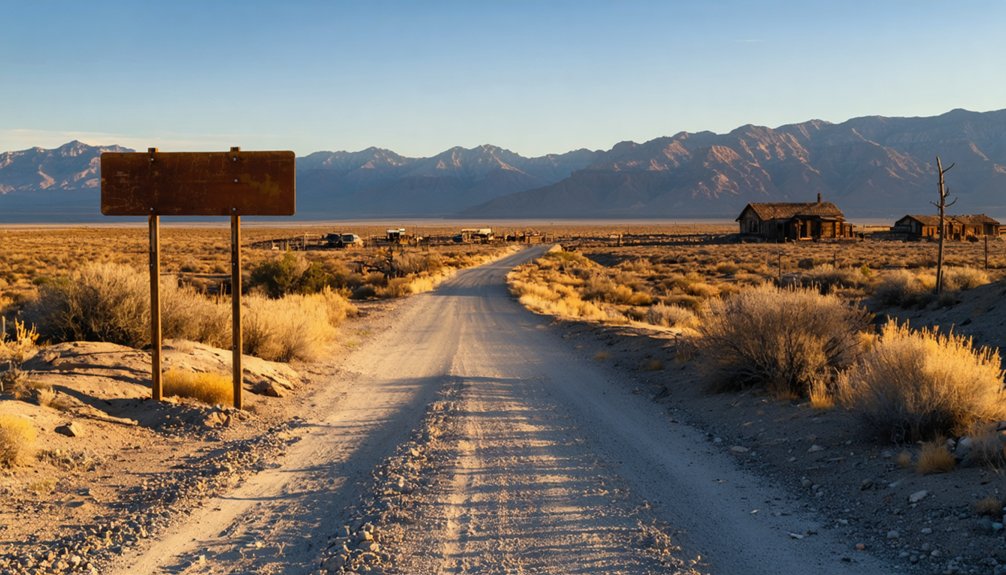
Tucked away at 40.971° N, 110.587° W near the Utah-Wyoming border, Blacks Fork sits in a sprawling meadow west of Forest Road 058, its dozen weathered cabin remnants barely visible until you’re almost upon them.
A ghost town hiding in plain sight—Blacks Fork’s weathered cabins emerge from the meadow only when you’re nearly standing among them.
You’ve got two main approaches to this 1870s logging settlement. From Kamas, take Mirror Lake Highway 47 miles, then tackle the difficult road access eastward on Mill Creek Road’s 18-mile dirt stretch. Wyoming explorers exit I-80 at Fort Bridger, winding south through backcountry until FR058 crosses into Utah.
Essential access details:
- High clearance vehicle handles rough sections best
- Winter gates close Mirror Lake Highway completely
- Currently no restrictions from private landowners
- $6 three-day recreation pass required at forest kiosks
Park roadside and walk west into the meadow where Summit County’s forgotten outpost awaits.
Best Times to Visit This Remote Mountain Site
When September’s golden aspens frame those weathered cabin walls, you’ll understand why fall claims the crown for visiting Blacks Fork. The ideal seasonal conditions between September and October deliver mild 60-80°F days, snow-free trails, and minimal crowds—perfect for unrestricted exploration.
You’ll dodge the mosquito swarms and road closures that plague spring visits, while summer’s scorching heat and tourist hordes stay confined to the crowded national parks below.
The effects of weather patterns shape your access dramatically. Winter’s chest-high snow once aided loggers dragging timber but now blocks roads entirely. Spring’s lingering snowpack keeps high-elevation routes closed through May.
Fall grants you complete freedom to roam Summit County’s backcountry, where stargazing under crystalline skies caps days spent wandering among those high-cut stumps and abandoned cabins.
Nearby Attractions and Outdoor Activities
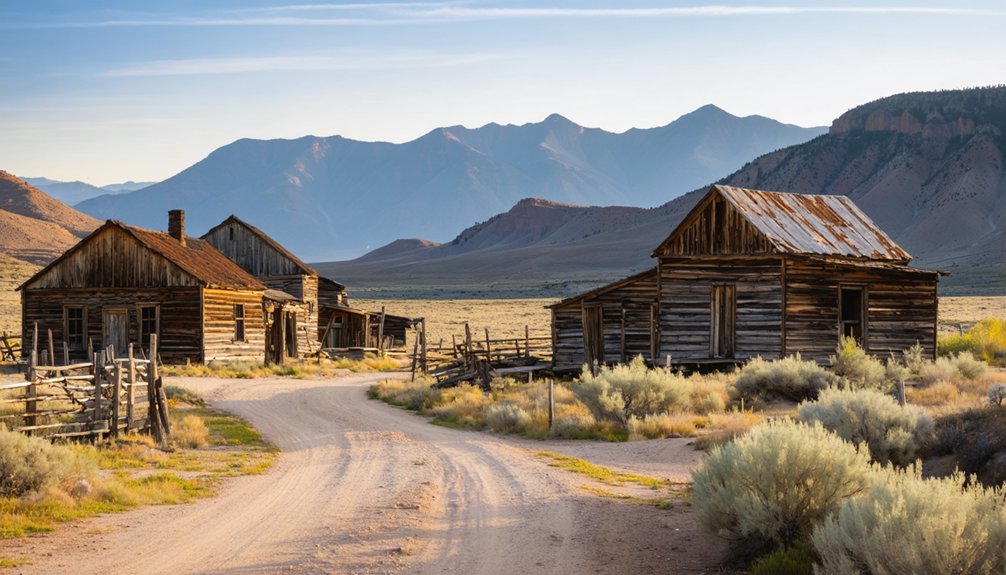
The High Uintas Wilderness sprawls across 456,000 acres just beyond Blacks Fork’s weathered cabins, offering trails that’ll swallow your footsteps for days. The 11-mile trek to Dead Horse Lake gains 1,600 feet through lodgepole forests and alpine meadows, where wildlife spotting opportunities include moose emerging from willows at dawn and raptors circling peaks above 13,000 feet.
Miles of untamed wilderness await beyond weathered thresholds, where lodgepole shadows give way to alpine expanses and wildlife claims dawn’s first hours.
Adventures Within Striking Distance:
- Seasonal trout fishing on three Blacks Fork tributaries targeting Colorado River cutthroats
- Flaming Gorge’s Green River flows 48 miles west for world-class fly fishing
- Seedskadee Wildlife Refuge harbors migrating birds 79 miles downstream
- Winter snowmobiling across Uinta ridgelines when summer trails vanish under powder
You’ll find the Flybrary memorial near Meeks Cabin Reservoir—leave a fly, take a fly, honor guide Ant Greer’s legacy.
Tips for Exploring Safely and Responsibly
Exploring Blacks Fork’s skeletal cabins and surrounding backcountry demands awareness that’ll keep you from becoming another cautionary tale. Those rotting structures with caved roofs aren’t Instagram backdrops—they’re classified Class 2 neglected buildings ready to collapse.
Mine collapse risks lurk throughout Utah’s 17,000 abandoned shafts, where toxic gases and unstable walls have claimed 11 lives since 1982. Respect post mining land use regulations by staying out of sealed areas, even on public land.
Stick to durable surfaces when hiking to protect archaeological sites, and pack out everything you bring. Check fire restrictions before camping—those old cabins aren’t firewood.
Bear country rules apply here: hang food properly and make noise on trails. No cell service means self-reliance matters.
Frequently Asked Questions
Are There Any Camping Facilities or Services Available Near Blacks Fork?
You’ll find primitive campgrounds with fire rings and picnic areas available at East Fork Blacks Fork, plus rustic guard station lodging. While local restaurants nearby are limited, Echo Island and Hope Acres offer modern amenities for comfort-seekers.
What Wildlife Might Visitors Encounter in the Area?
You’ll spot diverse bird species like canyon wrens and red-tailed hawks soaring overhead. Small mammals including chipmunks scurry among sagebrush, while mule deer often graze at dawn. Keep your eyes open for moose in higher elevations.
Is a Four-Wheel Drive Vehicle Required to Reach the Site?
You won’t need 4WD to reach the site. The well-maintained gravel road handles 2WD vehicles fine during dry conditions. Just watch for washboard surfaces and check seasonal accessibility beforehand, as snow limits winter access extensively.
Are There Any Fees or Permits Needed to Visit?
No fees apply to the ghost town itself since it’s on private property, but you’ll need a Mirror Lake Recreation Pass for nearby trailhead parking. Check local regulations beforehand, and guarantee parking availability along forest roads stays legal.
Can Artifacts Be Removed From the Ghost Town?
No, you can’t remove artifacts—that’s undocumented excavation and illegal without permits. Even permitted artifacts require strict authorization. Photograph treasures you discover, but leave them untouched. You’ll preserve history while keeping your freedom from felony charges.