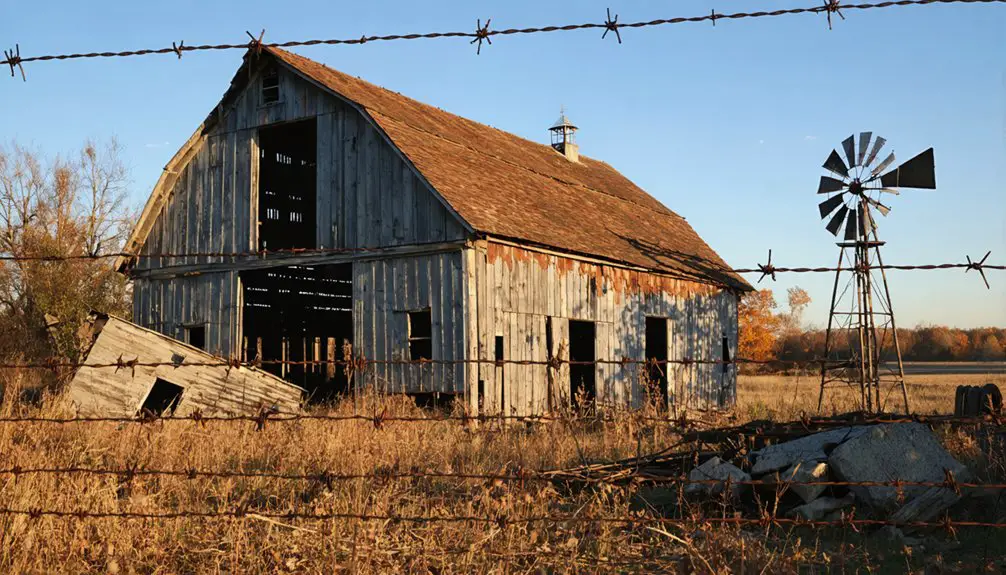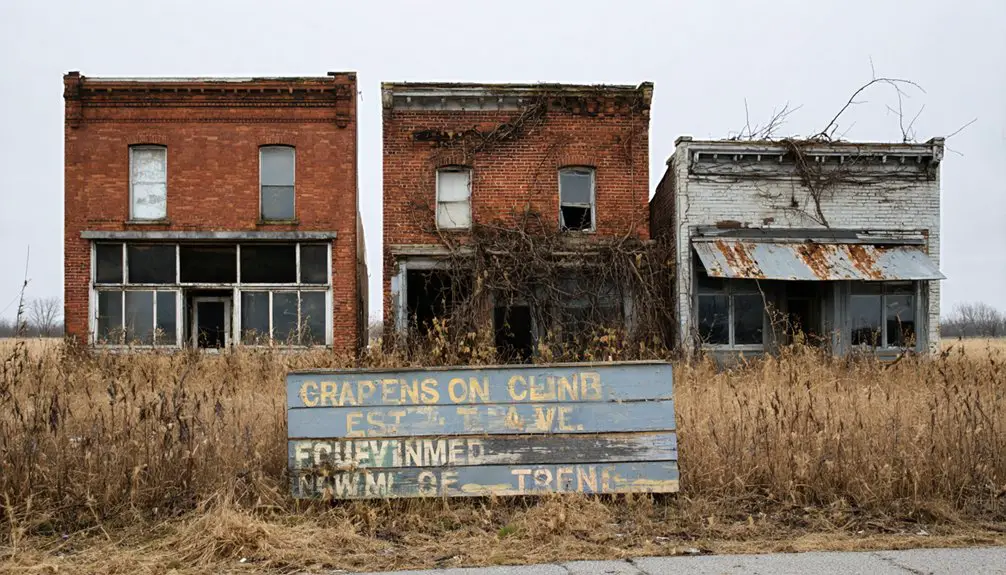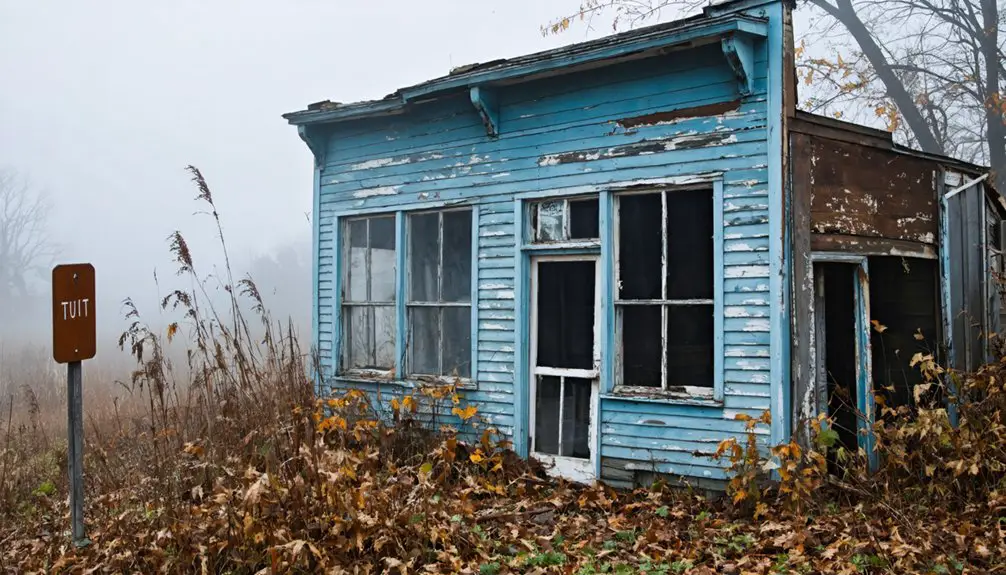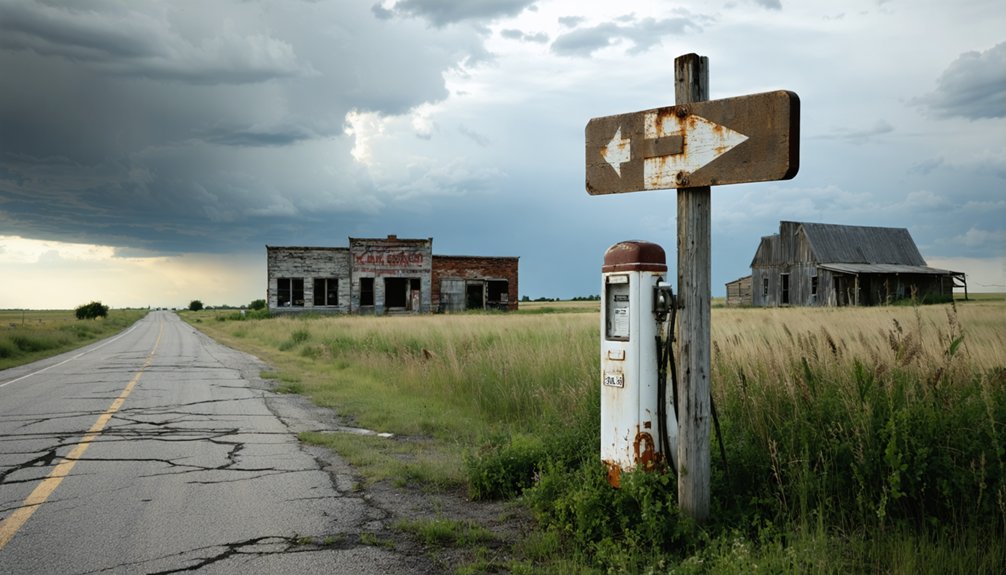
You’ll find Blue Ball at the crossroads of Dixie Highway and Irish Road in southwestern Ohio’s Butler County, where a massive blue sphere has marked this semi-ghost town since 1862. Plan your visit between September and October when fall colors illuminate the preserved Presbyterian Church and original street layout from this 752-resident village. From Cincinnati, Interstate connections make reaching this 745-foot elevation settlement straightforward in any standard vehicle. The surrounding region offers additional ghost town destinations like Moonville’s haunted railroad tunnel and flood-destroyed Claylick, perfect for extending your exploration into Ohio’s forgotten settlements.
Key Takeaways
- Blue Ball sits at the crossroads of Dixie Highway and Irish Road in southwestern Ohio, easily accessible from Cincinnati via Interstate connections.
- The iconic blue ball landmark has marked this semi-ghost town since 1862, with 752 residents maintaining their village identity despite annexation.
- Visit between September and October for peak fall colors, ideal photography conditions, and comfortable temperatures for exploring the historic settlement.
- Download offline maps before visiting, as rural Ohio areas often experience unreliable cell service during ghost town exploration.
- Extend your road trip to nearby ghost towns including Claylick, Moonville’s haunted railroad tunnel, Helltown, Providence, and canal-era Sprucevale.
The Historic Blue Ball Landmark: From Tavern Sign to Tourist Attraction
The weathered crossroads where Dixie Highway meets Irish Road holds a story painted in blue. In 1823, Jonathan Emmons hung a distinctive round ball painted blue above his newly purchased tavern, transforming both the establishment and the settlement from Guilford into Blue Ball.
A simple blue sphere hung above a tavern door rewrote history, giving birth to a town’s enduring identity.
You’ll find this tavern legacy still alive at what’s now Cincinnati-Dayton Road and Roosevelt Avenue, where the fifth blue ball marks the spot since 1976.
The original structure served as more than a watering hole—it embodied pure community spirit as courtroom, town hall, post office, and dance hall. For nearly sixty years, travelers stopped here for drinks, politics, and card games.
Today, you can trace this 1819 landmark’s evolution from simple one-story structure to the thriving village symbol spanning Butler and Warren Counties.
Getting There: Location and Access to Blue Ball
Nestled at coordinates 39°29’36″N, 84°20’11″W in southwestern Ohio’s Butler County, Blue Ball sits within Middletown’s city limits where the Cincinnati metro area sprawls into rural heartland. You’ll find this unincorporated ghost town at 745 feet elevation, accessible via routes branching from historic Dixie Highway—now part of the U.S. Route system established in 1820.
Your GPS will lock onto the coordinates effortlessly, guiding you through scenic byways that wind past the Great Miami River. Interstate connections from Cincinnati make this an ideal stop for recreational activities and exploration. No vehicle restrictions hamper your journey; standard cars handle the terrain perfectly.
From Hamilton, the county seat, local roads deliver you straight to this hidden gem where freedom-seeking travelers discover authentic roadside Americana beyond the tourist trap circuit.
What Remains: Exploring the Semi-Ghost Town Today
Upon arriving at this southwestern Ohio curiosity, you’ll spot the landmark immediately—a massive metal sphere painted brilliant blue, suspended above the crossroads where Roosevelt Road meets Dixie Highway. This stagecoach-era navigation aid has defined Blue Ball since 1862, when the settlement shed its original name, Guliford.
Today’s Blue Ball exists in defiant limbo. Despite Middletown’s 1993 annexation and the earlier loss of its school, 752 residents maintain their village identity. You’ll find preserved signage and the original street layout that reveals community history dating to before 1820.
The Presbyterian Church stands as testimony to this pioneer settlement’s resilience. Walk these streets and you’re experiencing what the pastor meant when he declared Blue Ball would “always live on”—a town that refuses to disappear.
Best Time to Visit and Road Trip Tips
While Blue Ball welcomes visitors year-round, timing your ghost town expedition between September and October transforms a simple road trip into something memorable. You’ll discover peak fall colors painting abandoned structures against crisp autumn skies, while seasonal weather patterns deliver mild temperatures perfect for exploration. Weekend getaway options expand during these months, with harvest festivals and paranormal tours adding depth to your adventure.
Essential road trip tips:
- Pack layers for unpredictable fall weather and early morning temperature drops
- Download offline maps since rural Ohio areas often lack reliable cell service
- Arrive early to maximize natural lighting for photographing weathered buildings
- Bring cash for local farmers markets and small-town diners along your route
Spring offers an alternative with minimal crowds and dramatic waterfall displays from seasonal rainfall, though you’ll miss the atmospheric autumn ambiance that makes ghost town exploration unforgettable.
Exploring Rhea Springs ghost town can reveal unique remnants of history, as the sun casts long shadows over the dilapidated structures. The stillness of the area invites reflection, making it easy to imagine the lives once lived here. Each corner tells a story, urging adventurers to delve deeper into its secrets.
Nearby Destinations: Extending Your Ohio Ghost Town Adventure
Your Blue Ball exploration marks just the beginning of Ohio’s ghost town circuit. Head northeast fifty miles to Claylick, where related flood disasters obliterated everything in 1919 and 1959—nature’s ultimate demolition.
Moonville’s haunted railroad tunnel in Vinton County delivers spine-tingling paranormal encounters through its decaying structures. Near Cuyahoga Valley, Helltown (Boston Township) feeds your appetite for creepy local legends with its abandoned chapel and persistent mutant rumors.
Northwest in Lucas County, Providence’s 19th-century river commerce ruins offer substantial exploration opportunities. Eastern Ohio’s Sprucevale preserves canal-era locks from its 1870 abandonment. You’ll traverse diverse terrain—from flood-ravaged settlements to waterway relics—each site revealing Ohio’s forgotten communities. Pack camping gear, download offline maps, and embrace the freedom of discovering abandoned America.
Frequently Asked Questions
What Happened to the Original Blue Ball Tavern Building?
The abandoned tavern structure vanished entirely from its crossroads location, leaving no trace of the 1819 building. Despite its historical significance as the tavern that named the settlement, you’ll find only modern development where travelers once gathered for refreshment.
Why Was Blue Ball Annexed by Middletown in 1993?
Blue Ball’s population decline and economic factors left it struggling—losing its school and post office over decades. You’ll find Middletown absorbed this unincorporated crossroads in 1993, ending its century-long fight against becoming a ghost town.
Are There Any Annual Events or Festivals in Blue Ball?
Since Blue Ball’s annexation by Middletown, you won’t find designated Blue Ball festivals. However, you’ll discover seasonal farmer’s markets and local community gatherings throughout greater Middletown, where Blue Ball’s spirit lives on through neighborhood connections and grassroots celebrations.
Can Visitors Still Attend Services at Blue Ball Presbyterian Church?
Like a lighthouse still guiding ships home, you’ll find Blue Ball Presbyterian Church welcomes visitors to Sunday services at 6901 Roosevelt Ave. Check their church attendance schedule and historical records by calling 513-423-5848 first.
What Caused the Fire That Destroyed Joseph Parks’ Brick Residence?
The fire’s cause remains unknown, lost to history’s shadows. You’ll find no records explaining what destroyed this historically significant residence around 1880. The possible causes—whether accident, lightning, or human error—vanished with Parks’ pioneering brick home itself.