Bodie State Historic Park sits 13 miles east of Highway 395 in California’s Eastern Sierra, perched at 8,375 feet in high desert wilderness. You’ll drive 10 miles of paved road, then tackle 3 miles of rugged dirt to reach 110 authentically decayed structures frozen in time since the 1940s. Dishes still sit on tables. Tools still lean against walls. Summer hours run 9 AM–6 PM, with an $8 adult admission—and there’s far more to this ghost town than first meets the eye.
Key Takeaways
- Bodie is located 13 miles east of Highway 395 in Mono County, accessed via 10 miles of paved road and 3 miles of dirt road.
- Admission costs $8 for adults and $5 for children aged 4–17, with summer hours running 9:00 AM–6:00 PM.
- Verify road conditions through CalTrans before traveling, as the final dirt road stretch on SR 270 can be rough and unpredictable.
- Pack water, snacks, sunscreen, layered clothing, and sturdy shoes to handle Bodie’s 8,375-foot high desert elevation.
- Summer offers full access to 110 structures, stamp mill tours, and Ghost Walk evenings extending until 10:00 PM.
Why Bodie Ghost Town Is Unlike Any Other California Park
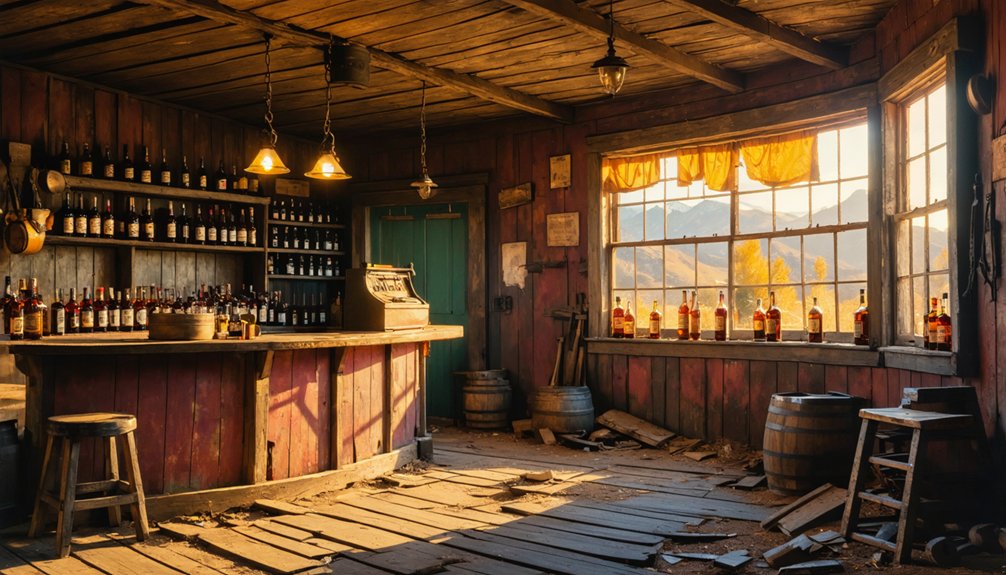
When you step into Bodie State Historic Park, you’re not walking through a reconstructed set or a curated museum — you’re entering a town that time simply abandoned. Furniture still sits where residents left it. Bottles line saloon shelves. A gold mill still stands operational, frozen mid-century.
That’s the power of Bodie’s historical preservation philosophy: “arrested decay.” Nothing gets restored, nothing gets staged. The park maintains structures exactly as they were found, letting honest deterioration tell the real story.
Your visitor experience here isn’t filtered through gift shops or guided narratives — it’s raw, unscripted, and completely authentic. Once home to 10,000 residents, 65 saloons, and every stripe of frontier character, Bodie delivers something no other California park can: an unbroken connection to a genuinely wild past.
How to Get to Bodie State Historic Park
Bodie sits in Mono County’s Eastern Sierra, tucked 13 miles east of Highway 395 along State Route 270—a route that’s paved for the first 10 miles before surrendering to 3 miles of rough dirt road that feels like crossing into another era.
You’ll want to ignore Google Maps if it flags SR 270 as closed, since the road’s open; confirm real-time conditions on CalTrans’ website before you head out.
If you’re visiting in winter, though, the park’s 8,375-foot elevation closes the road to conventional vehicles entirely, leaving skis, snowshoes, and snowmobiles as your only ways in.
Finding Bodie’s Remote Location
Tucked away in Mono County’s Eastern Sierra, Bodie State Historic Park sits 13 miles east of Highway 395 on State Route 270, seven miles south of Bridgeport. You’ll follow 10 miles of paved road before hitting 3 miles of rugged dirt road, placing you at 8,375 feet elevation in genuine high desert wilderness.
The drive takes roughly 30–40 minutes from US 395, rewarding your effort with sweeping mountain landscapes and encounters with local wildlife along the way. This remoteness isn’t accidental — it’s what shields Bodie’s extraordinary historical preservation from urban sprawl and casual visitors.
Before heading out, confirm road conditions on CalTrans’ website, since Google Maps sometimes incorrectly flags SR 270 as closed. The road’s open, and the adventure’s waiting.
State Route 270 is your gateway into one of California’s most extraordinary time capsules, threading east off Highway 395 through sagebrush flats and volcanic terrain toward Bodie Bluff. The 13-mile route demands your attention and rewards your effort.
Here’s what you’ll encounter:
- 10 miles of paved road — smooth travel through open high-desert landscape
- 3 miles of unpaved dirt road — road maintenance keeps it passable for most vehicles, though conditions vary seasonally
- 30–40 minutes total drive time — budget accordingly for traffic safety, especially on blind curves
Google Maps sometimes incorrectly flags SR 270 as closed — don’t trust it. Verify current conditions through CalTrans before departure.
At 8,375 feet, this road isn’t just a route; it’s the beginning of your escape into living history.
Winter Access Considerations
When winter arrives at 8,375 feet, Bodie doesn’t close — it transforms. Snow buries the dirt roads, silences the crowds, and strips the landscape down to something raw and honest. You can still reach the park, but you’ll earn it — on skis, snowshoes, or a snowmobile restricted to designated roads.
That restriction isn’t arbitrary. Uncontrolled travel threatens the historical artifacts scattered across the site, and the park’s preservation techniques depend on minimizing disturbance year-round. Every tire track through the wrong corridor risks damaging what decay hasn’t yet claimed.
Winter Bodie rewards the adventurous. The ghost town under snow looks closer to its abandoned origins than any summer visit could offer. If you’re willing to move through the cold on your own terms, it’s waiting.
The Best Time to Visit Bodie
Your best shot at experiencing Bodie’s haunted streets and untouched interiors is during peak summer season, when the park’s open daily from 9:00 AM to 6:00 PM between Memorial Day and Labor Day.
Winter transforms the site into a frozen, snow-blanketed wilderness at 8,375 feet, where you can only reach it on skis, snowshoes, or snowmobiles restricted to designated roads.
Plan around the season, and Bodie rewards you with either sun-drenched exploration of 110 crumbling structures or an eerily silent winter landscape that amplifies the ghost town’s desolation.
Peak Summer Visiting Season
Summer is the undisputed sweet spot for visiting Bodie State Historic Park, stretching from Memorial Day Weekend through Labor Day when the park’s hours extend from 9:00 AM to 6:00 PM, giving you the most daylight to wander the 110 surviving structures of what was once California’s most lawless boomtown.
Those extra hours matter when you’re chasing local legends through weathered saloons and exploring historical architecture frozen in time.
Make the most of peak season by prioritizing:
- Stamp mill tours — witness the operational gold mill that once drove 10,000 souls to this remote Sierra outpost
- Museum history talks — unpack the raw stories behind 65 saloons and the outlaws who filled them
- Ghost Walk evenings — explore after dark until 10:00 PM when Bodie truly awakens
Winter Access Limitations
Once winter tightens its grip on the Sierra Nevada, Bodie transforms into something far more haunting than its summer self — and you can only reach it on skis, snowshoes, or a snowmobile confined to designated roads.
At 8,375 feet, the snow buries the dirt road entirely, cutting off casual visitors and leaving the ghost town to those willing to earn it.
If you’re heading in on snowshoes, snowshoe safety demands preparation — deep snowpack, rapidly shifting weather, and brutal cold make proper winter gear non-negotiable.
Layer up, carry navigation tools, and never venture out alone.
The reward? You’ll walk through frozen silence where 10,000 people once roared through saloons and gambling halls.
Winter Bodie belongs to the bold.
Admission Fees, Hours, and What’s Included
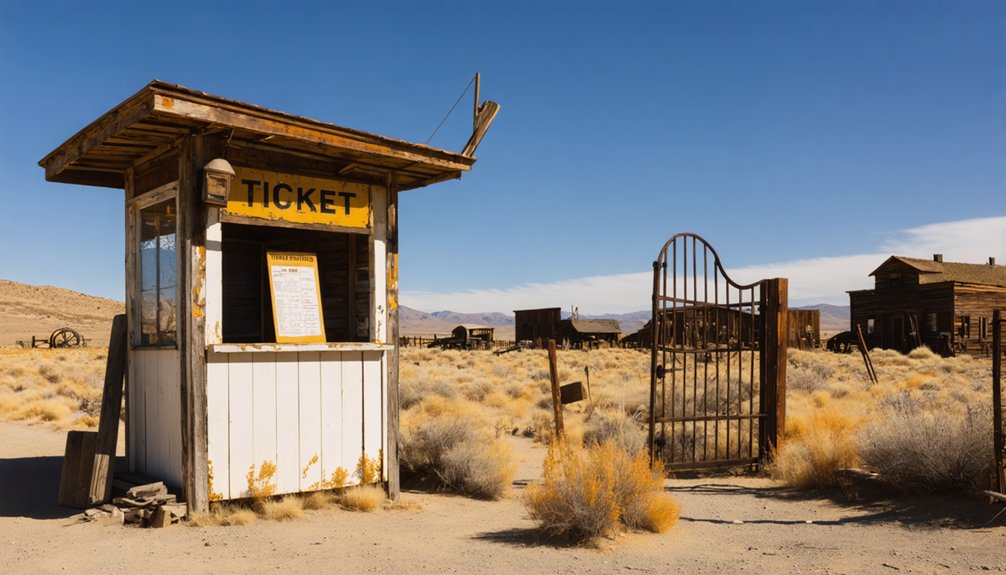
Visiting Bodie won’t break the bank—adult admission runs $8 (parking included), kids ages 4–17 pay $5, and children under 4 get in free. Summer hours run 9:00 AM–6:00 PM from Memorial Day through Labor Day; off-season hours shift to 9:00 AM–4:00 PM.
Here’s what you’ll want to plan around:
- Museum & Visitor Center opens mid-May through mid-October—your check-in hub for history talks and stamp mill tours.
- Ghost Walk evenings extend access until 10:00 PM, offering extraordinary photography tips for capturing Bodie’s haunting silhouettes and any local wildlife roaming at dusk.
- Seasonal weather dictates hours, so verify conditions before departure.
Every dollar you spend directly supports preserving these 110 standing structures frozen beautifully in time.
What You’ll Actually See Inside Bodie Ghost Town
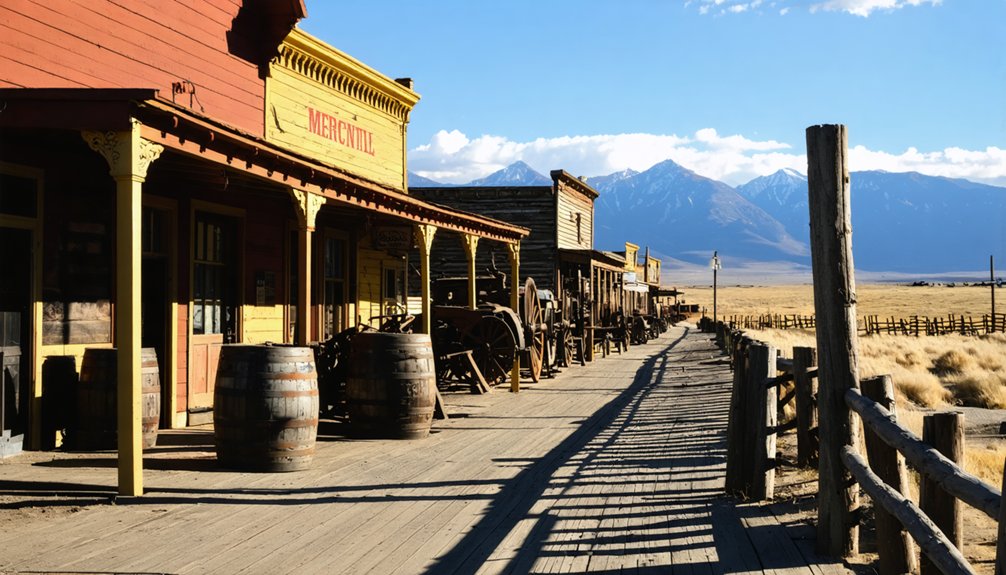
Beyond the admission gate, the real reward unfolds—a frozen moment in time that no museum recreation can replicate. You’ll wander among roughly 110 standing structures, each interior left exactly as the last residents abandoned it—furniture dusty, goods shelved, lives mid-sentence.
The operational gold mill anchors the site, its abandoned machinery still whispering of the frantic 1880 boom when 10,000 souls chased fortune here on Kootzaduka’a land. Local legends breathe through every crumbling wall—gunfighters, miners, immigrants, and brothel workers who built something wild and temporary.
Nothing’s staged. Dishes sit on tables. Tools lean against doorframes. The park’s “arrested decay” model means you experience authentic abandonment, not sanitized history. Bring your camera—physical interaction is prohibited, but the visual freedom here is absolute.
Tours, the Gold Mill, and the Museum
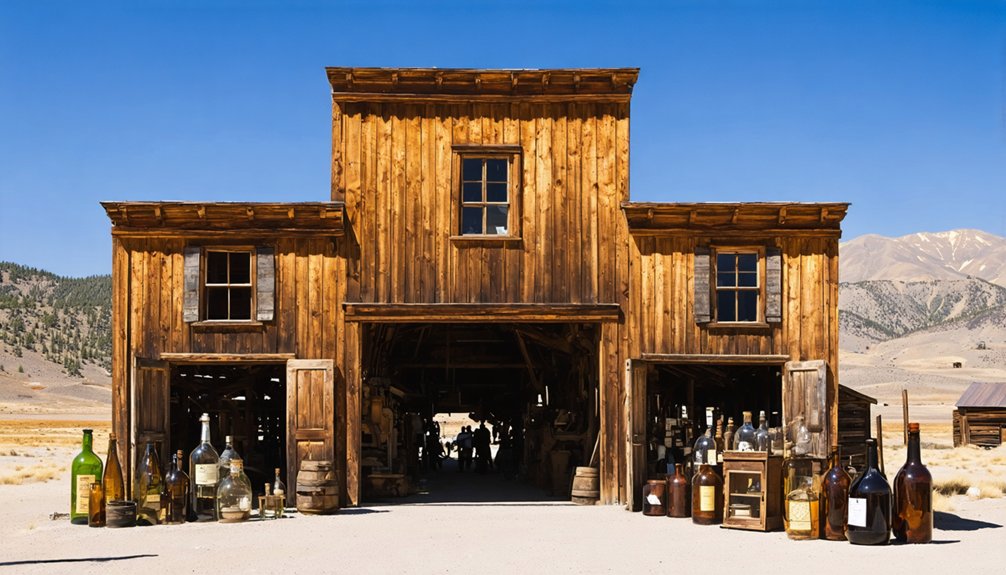
The museum serves as your anchor point at Bodie—check in here, pick up a park stamp, and browse the bookstore before striking out across the grounds. Rangers share local legends that textbooks skip, breathing life into every weathered plank and rusted hinge.
Don’t leave without exploring these three highlights:
- The Gold Mill — the only operational stamp mill surviving from Bodie’s mining era, a thundering monument to industrial ambition.
- Guided History Talks — rangers reveal art preservation strategies behind Bodie’s arrested decay model, explaining how structures stay frozen without becoming fabrications.
- Ghost Walk Evenings — public access until 10:00 PM transforms the town into something genuinely haunting.
Each experience layers history onto landscape, rewarding curious travelers who refuse to rush.
What to Bring to Bodie
Because Bodie sits at 8,375 feet with no food, gas, or shelter on-site, you’ll want to pack deliberately before making the drive out on SR 270’s final three miles of rough dirt road. Bring water, snacks, sunscreen, and layers — mountain weather shifts fast, and you’ll spend hours wandering among 110 structures that preservation efforts have kept frozen in time.
Wear sturdy shoes for uneven terrain and carry a camera, because photographing historical artifacts isn’t only allowed, it’s encouraged. Leave metal detectors and collecting bags at home — removing anything here is illegal and undermines the preservation efforts protecting this landmark.
Pack your curiosity, too. Every rusted hinge and dusty bottle tells a story, and out here, you’re free to chase all of it.
Frequently Asked Questions
Can Visitors With Disabilities Access Bodie State Historic Park Safely?
You can explore Bodie’s rugged, historic grounds, but contact the park at (760) 647-6445 before arriving to discuss accessible pathways and mobility assistance. They’ll help you chart your adventure through this legendary, sun-scorched ghost town freely.
Are Metal Detectors Allowed Inside Bodie State Historic Park?
Like a guardian of buried secrets, Bodie’s metal detecting regulations draw a firm line — you can’t bring metal detectors inside. These rules shield historical artifacts, preserving every hidden treasure exactly where history left it.
What Happens During Bodie’s Ghost Walk Evening Events?
You’ll explore Bodie’s haunted streets until 10:00 PM, where nighttime storytelling breathes life into abandoned saloons and crumbling cabins. Historical reenactments pull you deep into the gold rush’s wild, untamed spirit — freedom found after dark.
Who Originally Lived on the Land Before Bodie Was Founded?
Before gold fever struck, the Kootzaduka’a people called this land home. When you visit Bodie, you’re walking ground where Native tribes thrived long before early settlers ever dared venture into these wild, untamed Eastern Sierra highlands.
Is Camping Available Anywhere Within Bodie State Historic Park Grounds?
You won’t find camping regulations to navigate here — Bodie offers no park amenities for overnight stays. Pack your adventurous spirit for a day visit, then seek nearby freedom under the Eastern Sierra’s vast, star-filled skies.
References
- https://www.parks.ca.gov/bodie
- https://en.wikipedia.org/wiki/Bodie
- https://www.bodie.com/
- https://kids.kiddle.co/Bodie
- https://www.parks.ca.gov/?page_id=509&sm_guid=ODQ3MzUwfDc4NTU1OTE2fC0xfGFsbGlzb25AZnJpZW5kc29mdGhlaW55by5vcmd8Nzc3NTczNnx8MHwwfDI2OTkyMTU3NHwxMTQzfDB8MHx8ODQyNDM5fDA1
- https://www.parks.ca.gov/pages/509/files/BodieSHP_Infosheet_85x11_022625_FINAL.pdf
- https://www.parks.ca.gov/pages/509/files/BodieSHPFinalWebLayout2016.pdf
- https://www.nps.gov/places/bodie-historic-district.htm
- https://www.monocounty.org/places-to-go/bodie/