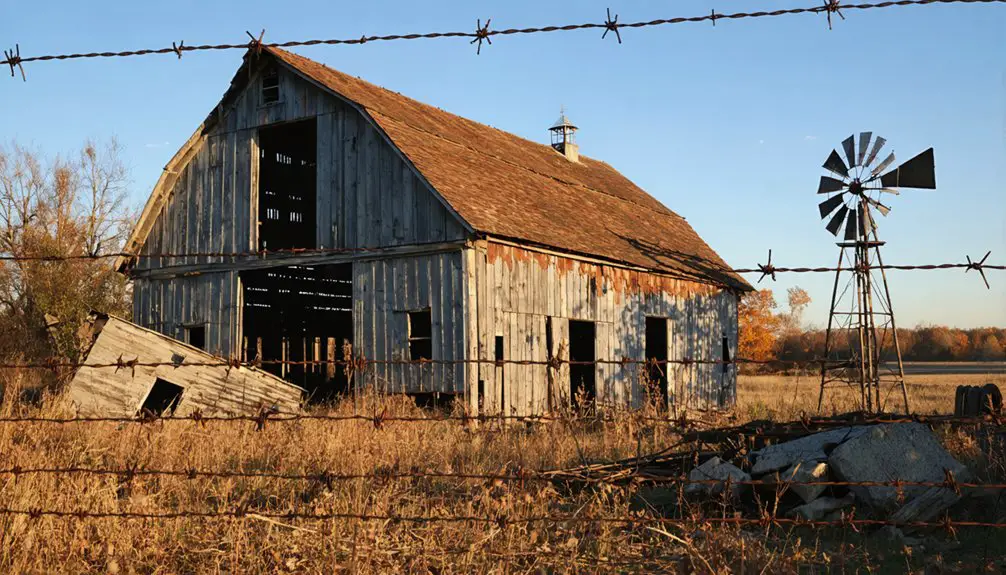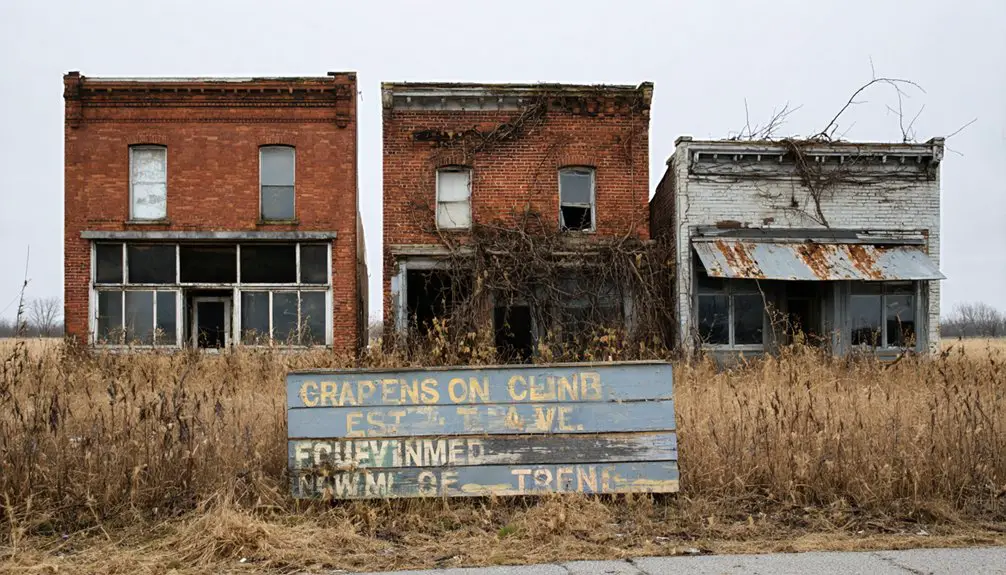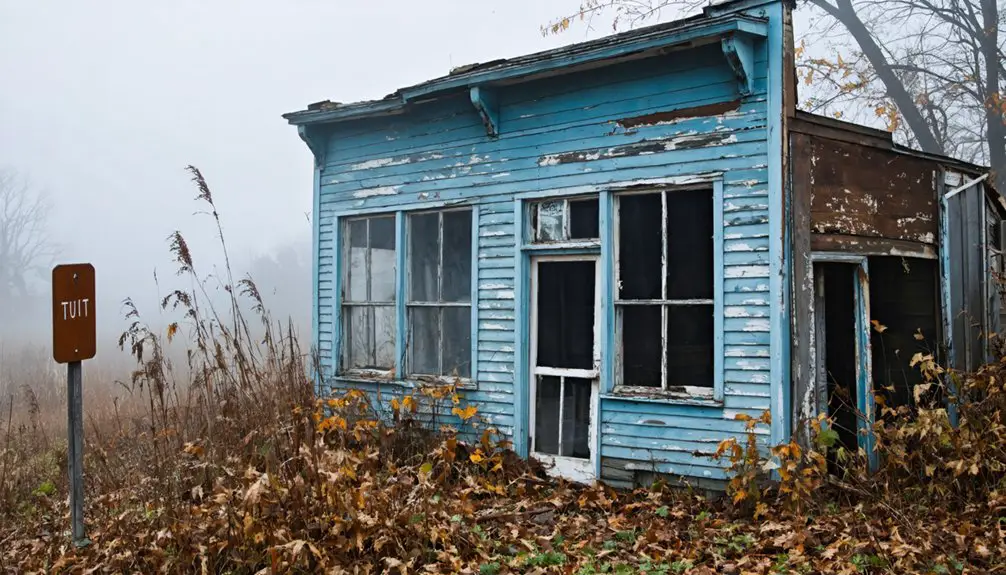
Planning a ghost town road trip to Boston, Ohio means exploring a quietly vanished village tucked inside Cuyahoga Valley National Park. Founded in 1806, Boston thrived along the Ohio and Erie Canal before eminent domain displaced its families in the 1970s. Today, you’ll find overgrown homesites, a historic cemetery, and trails cutting through what was once a bustling community. Pack sturdy boots, check trail conditions, and keep going — there’s far more to this haunted history than meets the eye.
Key Takeaways
- Boston, Ohio, founded in 1806, is now a ghost town within Cuyahoga Valley National Park, accessible via Stanford Road and nearby trailheads.
- Urban legends include haunted school buses, mutant creatures, and Satanic churches, though most stories have straightforward, non-supernatural explanations.
- The Boston Cemetery remains the last standing landmark, making it a focal point for ghost hunters and history enthusiasts alike.
- Pack waterproof boots, layered clothing, a trail map, water, snacks, and a first aid kit before exploring the area.
- Autumn offers peak foliage and ghost story ambiance, while winter reveals hidden town remnants through stripped, bare trees.
What Is Boston, Ohio’s Ghost Town History?
Boston, Ohio’s ghost town story begins in 1806, when Alfred Wolcott and James Stanford settled the land, planting the seeds of what would become Summit County’s oldest village.
The community grew steadily, fueled by the Ohio and Erie Canal‘s construction in the 1820s and later a railroad station that cemented the name Boston Mills. Agriculture and industry shaped resident stories for generations, creating a self-sufficient town full of life.
That all changed in the 1970s when the government acquired properties through eminent domain, displacing families and boarding up homes.
The Urban Legends That Put Boston, Ohio on the Map
Once the homes went dark and the streets emptied, Boston, Ohio didn’t fade quietly into obscurity — it transformed into a magnet for ghost hunters, thrill-seekers, and storytellers.
Urban myths spread fast, and ghostly encounters became part of the town’s identity. Here’s what you’ll hear:
Urban myths spread fast in Boston, Ohio — and ghostly encounters quickly became the heartbeat of its identity.
- A Presbyterian church with upside-down crosses, rumored to signal Satanic worship
- An abandoned school bus haunted by the ghosts of children
- Mutant creatures spawned by chemical spills at nearby Krejci Dump
- A cemetery ghost eternally waiting on a bench for her family
These legends drew curious explorers long before the structures disappeared.
Most myths have rational explanations, but that hasn’t stopped the stories from pulling adventurous spirits toward Boston’s overgrown trails and weathered cemetery.
Which Legends Are Actually True?
How much truth hides behind Boston’s most chilling stories? Less than you’d expect, but the explanations are fascinating.
Those upside-down crosses on the Presbyterian church aren’t Satanic symbols — they’re simply an architectural style choice.
The haunted school bus? A family temporarily lived in it while repairing their home, nothing supernatural.
The mutant creatures and legendary Peninsula Python snake tied to chemical spills from Krejci Dump? Pure local myths, though residents playfully celebrate Python Day annually.
The “Road Closed” signs blocking Stanford Road aren’t cult barriers — they’re standard traffic markers.
What’s genuinely true is that the government used eminent domain to displace real families, demolishing an entire community.
That authentic human story of loss often hits harder than any ghost stories you’ll encounter along these trails.
What’s Left to See in Boston, Ohio Today?
Despite being largely demolished by 2016, Boston, Ohio still offers curious visitors a handful of tangible remnants worth exploring.
You’ll find the area fully absorbed into Cuyahoga Valley National Park, giving you open access to roam freely through history.
Here’s what you can experience today:
- Cemetery visits to Boston Cemetery, the town’s last standing landmark, where legends of a ghostly bench-sitter linger.
- Trail exploration along Stanford Road, letting you drive or walk through the former townsite’s footprint.
- Hiking and biking trails winding through land where homes once stood.
- Natural scenery reclaiming the landscape, offering a hauntingly beautiful contrast to the town’s storied past.
The legends brought you here, but the raw, untamed parkland will keep you exploring long after the myths fade.
Cuyahoga Valley Trails That Pass Through Boston’s Ghost Town
If you’re ready to lace up your hiking boots, Cuyahoga Valley National Park’s trail network winds directly through Boston’s former townsite, letting you walk the same ground where residents once lived and worked.
Stanford Road cuts through the heart of the old village, while nearby trailheads offer easy access to both the historic Boston Cemetery and the overgrown lots where homes once stood.
You’ll find parking at several designated pull-offs along the route, making it simple to explore this hauntingly beautiful stretch of national parkland on foot or by bike.
Top Trails Through Boston
Trails weave through what was once Boston, Ohio, letting you walk the same ground where families lived, worked, and eventually were displaced by eminent domain in the 1970s.
Stanford Road cuts through the heart of the former townsite, offering trail photography opportunities around every bend. You’ll find ghostly encounters lurking in the quiet corners where homes once stood.
Key trails to explore include:
- Towpath Trail – follows the historic Ohio and Erie Canal corridor
- Stanford Trail – winds past Boston Cemetery’s weathered headstones
- Valley Bridle Trail – offers wide-open riding through former residential areas
- Boston Run Trail – traces natural creek corridors through dense woodland
Each path delivers raw history beneath your feet, completely free from fences or fees.
Historic Sites Along Paths
Walking those trails isn’t just exercise — it’s a step through layered history that surfaces in unexpected places along the path.
You’ll pass Boston Cemetery, the town’s oldest surviving landmark, where weathered headstones anchor stories dating back to 1806. Stanford Road cuts through the former townsite, letting you trace where homes and businesses once stood before eminent domain cleared everything out.
Historic preservation efforts here lean heavily on community engagement — the National Park Service maintains interpretive signage that connects you directly to Boston’s agricultural and canal-era roots.
You’re not just hiking through woods; you’re moving through deliberate memory. The landscape itself becomes the exhibit. Every cleared field and remnant tree line quietly marks what this thriving Summit County village once was before it disappeared into the park.
Trail Access And Parking
Several trailheads give you direct access to Boston’s ghost town remnants within Cuyahoga Valley National Park, and knowing which ones to use saves you from dead ends and unnecessary backtracking.
Regular trail maintenance keeps these routes walkable year-round:
- Stanford Road Trailhead – Free lot, direct access to former townsite
- Boston Mill Visitor Center – Paved parking, maps available inside
- Ohio & Erie Canal Towpath – Multiple entry points connecting Boston’s historic corridor
- Happy Days Lodge Area – Larger lot accommodating bikers and hikers
Follow posted parking regulations strictly — rangers actively enforce time limits and overnight restrictions.
Arrive early on weekends since lots fill fast. Each trailhead connects you to Boston Cemetery, former homestead foundations, and open parkland where the ghost town once stood.
How to Get to Boston, Ohio’s Ghost Town Site?
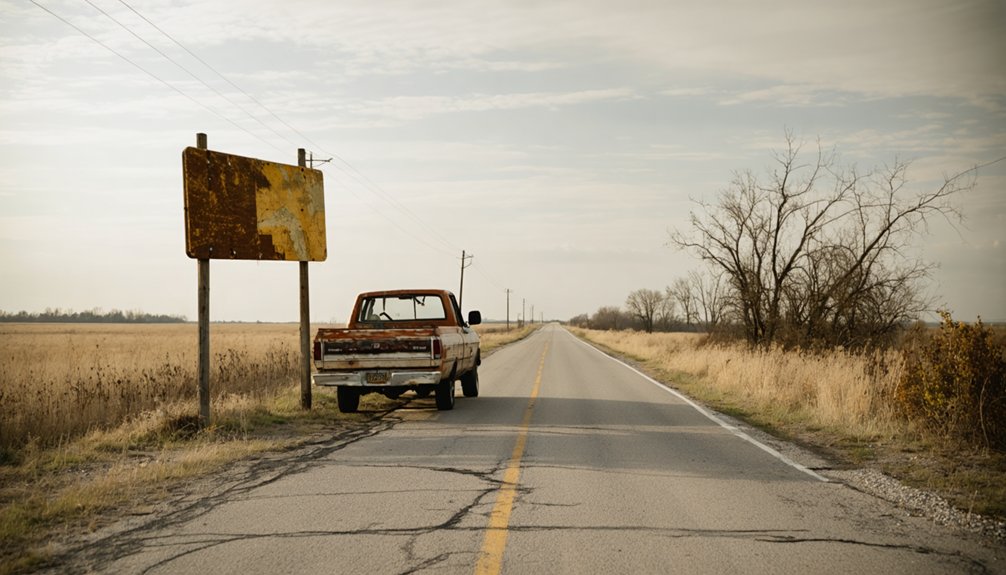
Although Boston, Ohio no longer exists as a functioning town, you can still explore its ghostly remains by heading to Cuyahoga Valley National Park, just south of Cleveland in northern Summit County.
To reach the ghost town origins of Boston, take Stanford Road, which winds directly through the former townsite. From Cleveland, head south on Route 8, then follow signs toward the national park’s Boston area. If you’re coming from Akron, drive north on Route 8 and exit toward the park.
Once inside, you’ll find parking areas near the trailheads leading to the haunted attractions and remaining landmarks, including Boston Cemetery. The roads are well-marked, making navigation straightforward so you can focus on uncovering the town’s eerie, fascinating past.
One-Day Boston, Ohio Itinerary: Cemetery, Trails, and Historic Stops
Whether you’ve got a full day or just a few hours to spare, Boston, Ohio packs in more history, mystery, and natural beauty than you’d expect from a ghost town.
Make the most of your visit with these essential stops:
- Boston Cemetery: Explore the cemetery’s significance as the town’s last standing landmark, where legends of eternal spirits still linger.
- Stanford Road Drive: Cruise through the former townsite, soaking in what once thrived before eminent domain erased it.
- Trail Experiences: Hike or bike Cuyahoga Valley National Park’s scenic paths weaving through Boston’s reclaimed landscape.
- Historic Reflection Points: Pause at marked areas explaining the town’s canal-era prosperity and eventual abandonment.
You’ll leave with a deeper appreciation for how history, nature, and legend intertwine in one remarkable place.
What to Pack for Hiking Boston, Ohio’s Ghost Town Trails
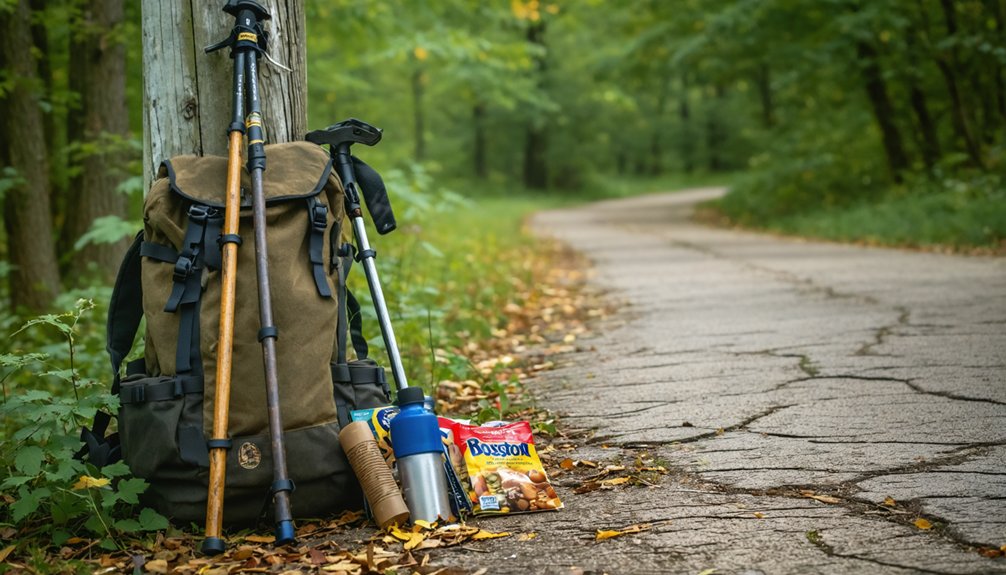
Hitting the trails through Boston, Ohio’s reclaimed ghost town landscape means coming prepared for a mix of rugged terrain, unpredictable weather, and immersive exploration.
Your hiking essentials should include sturdy waterproof boots, layered clothing, and a reliable trail map since cell service can be spotty throughout Cuyahoga Valley National Park. Pack enough water, high-energy snacks, and a small first aid kit for trail safety across longer routes.
Sturdy boots, layered clothing, and a trail map are non-negotiable essentials before stepping into Cuyahoga Valley’s unpredictable wilderness.
A camera captures the eerily beautiful contrast between overgrown nature and remnants of former community life. Bring insect repellent during warmer months when vegetation grows dense along Stanford Road’s corridors.
You’ll want a flashlight too, especially near Boston Cemetery where shadows deepen fast. Travel light but smart — this landscape rewards prepared explorers who respect its wild reclaimed freedom.
Best Time to Visit Boston, Ohio and What to Expect
You’ll find Boston, Ohio most rewarding in spring and fall, when mild temperatures and vibrant foliage make the national park trails ideal for exploring the ghost town’s remnants.
Summer brings heat and humidity but rewards you with lush overgrowth that amplifies the eerie atmosphere around Boston Cemetery and Stanford Road.
Whatever season you choose, expect demolished foundations, winding hiking and biking trails, and the quiet hum of nature reclaiming what was once Summit County’s oldest village.
Ideal Seasons To Visit
Each season brings a different atmosphere to Boston, Ohio, shaping how you’ll experience this eerie stretch of the Cuyahoga Valley.
- Spring: Wildflowers reclaim the abandoned land, making trails vibrant and walkable after winter thaw.
- Summer: Long daylight hours let you explore Stanford Road and Boston Cemetery with ease, though humidity runs high.
- Autumn: Peak autumn foliage transforms the former townsite into a breathtaking backdrop, perfect for ghost stories around the cemetery’s old benches.
- Winter: Snow-covered parkland strips everything bare, revealing the landscape’s haunting emptiness at its rawest.
You’ve got full freedom to visit year-round since the area integrates into Cuyahoga Valley National Park‘s open trail system.
That said, autumn delivers the most atmospheric experience, balancing stunning scenery with the town’s unsettling history.
Weather and Trail Conditions
Weather along Stanford Road and through Cuyahoga Valley shifts dramatically by season, so knowing what to expect keeps your visit from turning into a muddy slog or a cold misfire.
Spring brings unpredictable weather patterns — warm afternoons can flip into cold, wet evenings, leaving trails slick and rutted.
Summer delivers heat and humidity, but trail maintenance stays active, keeping paths through the former townsite clear and accessible.
Fall offers the sharpest visibility and firmest ground, making it the most rewarding season for exploring Boston Cemetery and surrounding parkland.
Winter closes some access points entirely, and icy conditions along Stanford Road demand caution.
Always check the National Park Service’s current trail conditions before heading out — conditions change fast, and you’ll want the freedom to move without obstacles.
What To Expect There
Stepping into Boston, Ohio means stepping into what’s fundamentally a ghost town swallowed by a national park — and what you find depends almost entirely on when you arrive.
The area offers surprisingly varied experiences depending on the season:
- Spring/Fall: Ideal for hiking Stanford Road with clear sightlines to former homestead foundations.
- Summer: Fuller foliage conceals ruins but brings peak trail access for biking and exploration.
- Winter: Stripped trees reveal hidden structural remnants most visitors never notice.
- Year-round: Boston Cemetery remains accessible for those chasing haunted landmarks and ghostly encounters.
You won’t find standing buildings — demolition cleared most structures by 2016.
What remains is atmosphere: quiet trails, cemetery headstones, and the unmistakable feeling that this land carries stories worth discovering on your own terms.
Frequently Asked Questions
Are There Entry Fees to Access Boston, Ohio’s Ghost Town Trails?
Once a thriving town, now free wilderness — you’ll pay no entry fees to explore Boston, Ohio’s ghost town history. Trail accessibility through Cuyahoga Valley National Park lets you roam its haunted past completely free.
Is Boston Cemetery Open to Visitors Year-Round?
You can visit Boston Cemetery year-round, exploring its rich cemetery history at your own pace. Remember visitor etiquette—respect the grounds, tread lightly, and honor those who shaped this fascinating ghost town’s legacy.
Can You Bring Dogs on the Trails Through Boston, Ohio?
Like explorers blazing new trails, you can bring your dog on the dog friendly trails through Boston, Ohio! Just keep them on a leash — leash requirements apply throughout Cuyahoga Valley National Park.
Are There Guided Tours Available Specifically for Boston, Ohio’s Ghost Town?
You won’t find dedicated guided tours for Boston, Ohio’s ghost town, but you can freely explore Stanford Road and Boston Cemetery, uncovering ghost town history and local legends at your own adventurous pace!
Is Overnight Camping Permitted Near Boston, Ohio’s Ghost Town Site?
You can’t camp directly at Boston’s ghost town site, but Cuyahoga Valley National Park’s camping regulations point you toward nearby facilities, letting you explore freely while staying within the park’s designated overnight areas.
References
- https://en.wikipedia.org/wiki/Hell_Town
- https://allthatsinteresting.com/helltown-ohio
- https://pittsburghghosts.com/helltown-boston-township-ohio/
- https://colonialghosts.com/tale-of-helltown-ohio/
- https://www.atlasobscura.com/places/helltown-ohio
- https://www.youtube.com/watch?v=MqeHr-inQ08