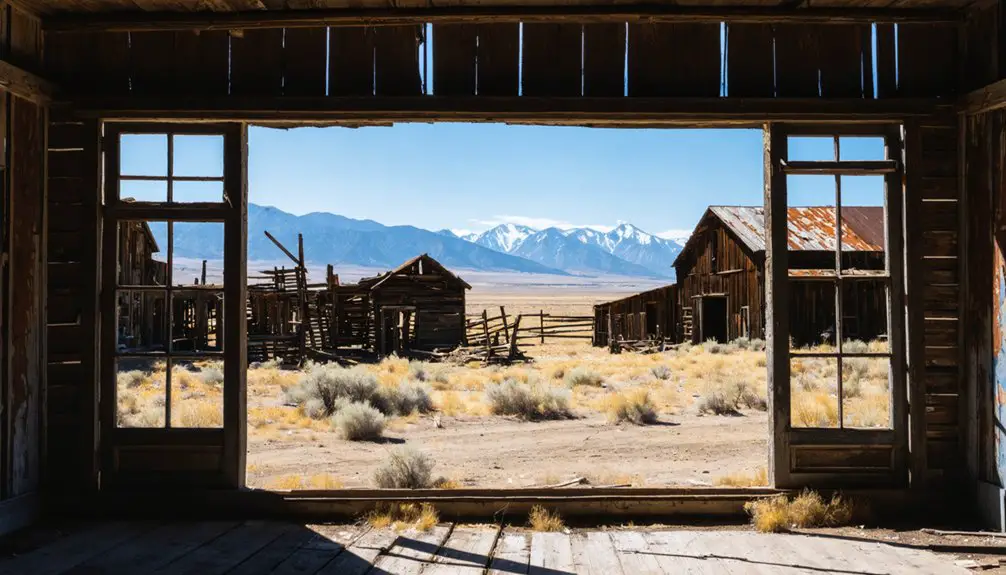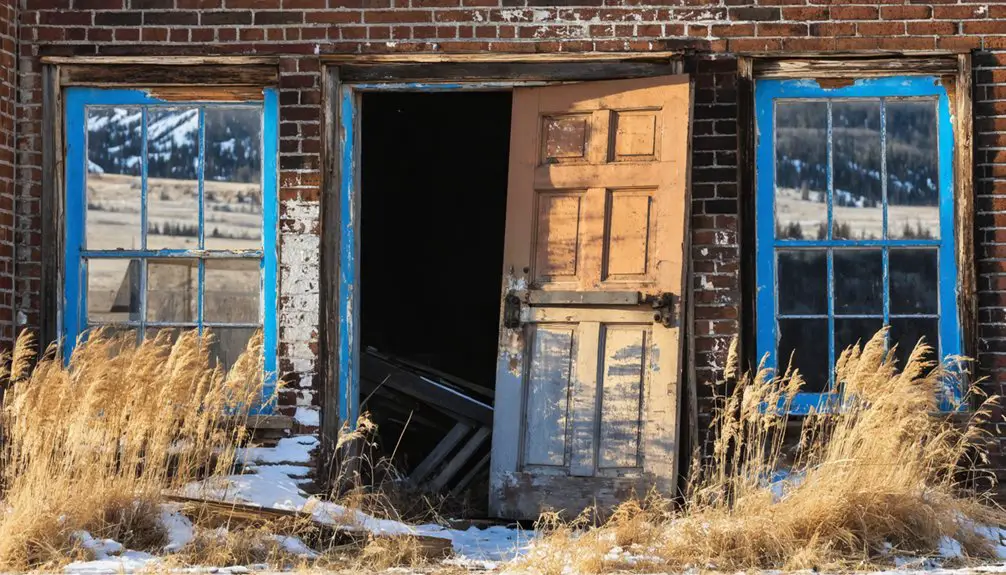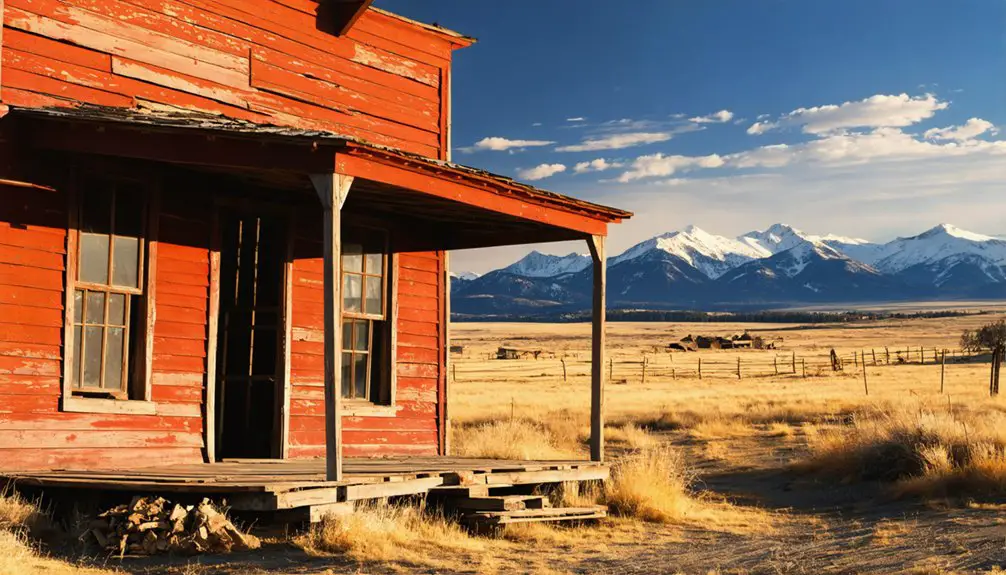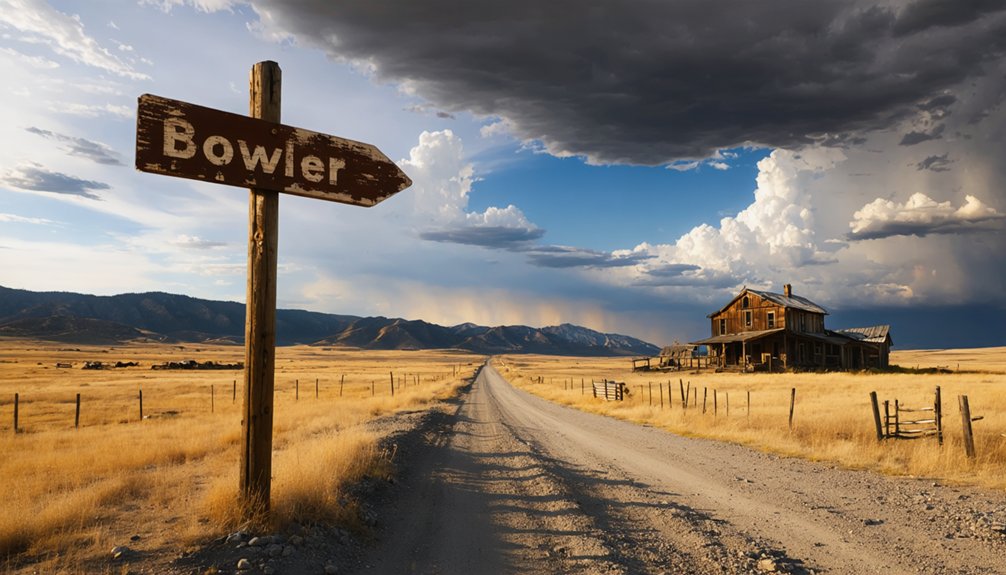
Planning your Bowler ghost town adventure requires serious preparation—you’ll navigate unmarked gravel roads through Carbon County’s rugged mining territory to reach this 6,200-foot elevation site. Pack recovery gear like kinetic straps and traction boards, since these rutted Forest Service roads haven’t seen maintenance crews in decades. September offers your best window for accessible routes before winter closes everything down. Bring redundancy in supplies—two headlamps, spare batteries, and an extensive first aid kit are essential for this remote location. Understanding Montana’s other historic mining sites will help you maximize your entire ghost town expedition.
Key Takeaways
- Bowler requires navigating a maze of gravel roads through Carbon County’s rugged mining territory in southern Montana.
- September offers the best conditions with accessible roads, mild weather, and freedom to explore without crowds.
- Pack recovery gear including kinetic straps, traction boards, and a high-lift jack for rutted remote roads.
- Bring redundant safety equipment: two headlamps, spare batteries, first aid kit, and mechanical tools for self-reliance.
- Weather shifts rapidly in mining territory, transforming passable routes into muddy traps within hours.
Best Time to Visit Ghost Towns in Montana
Spring tempts with 50-60°F days and solitude at Virginia City, but muddy roads may strand you miles from Rimini until June.
Spring’s quiet charm at Virginia City comes with a gamble—muddy back roads might trap your vehicle until summer arrives.
Fall’s cooler air brings spectacular foliage around Marysville and Bannack’s Ghost Walk in October.
Winter closes most sites entirely, limiting visitor experiences to hardy locals traversing sub-zero temperatures.
For maximum freedom, target September—you’ll roam accessible roads and empty boardwalks under Montana’s endless sky.
Essential Gear and Supplies for Your Ghost Town Adventure
Before you steer your pickup down rutted Forest Service roads toward Bowler’s weathered cabins, pack like you’re planning for three emergencies at once—because Montana’s backcountry doesn’t forgive optimists. Your packing checklists should include recovery gear (kinetic straps, traction boards, high-lift jack), basic mechanical tools, and an extensive first aid kit.
Remote location considerations demand redundancy: two headlamps, spare batteries, jumper cables, and a portable compressor for those inevitable tire repairs.
I learned this the hard way outside Bannack, stuck axle-deep in spring mud without traction boards. Don’t repeat my mistake. Throw in layers for Montana’s temperamental weather—temperatures swing forty degrees between dawn and afternoon. Add a fire extinguisher, emergency triangles, and bolt cutters.
This isn’t suburban camping; it’s self-reliant exploration where preparedness equals freedom.
Mapping Your Route Through Historic Mining Territory

Your journey to Elkhorn—likely what you’re seeking near Boulder, Montana—begins one hour south of Helena, where maintained roads wind through the Elkhorn Mountains to a ghost town that once housed 2,500 silver miners. You’ll want to grab the self-guided driving tour brochure from Lewistown Chamber of Commerce, which maps out central Montana’s historic mining sites including nearby Gilt Edge and Maiden, where twenty original structures still stand.
Pack your route with flexibility: if you’re feeling adventurous with a high-clearance vehicle, Independence Ghost Town waits at 9,000 feet elevation, 53 miles southwest of Big Timber via MT-298 and Forest Road 6639.
Essential Route Planning Tips
Getting to Bowler means traversing a maze of gravel roads that slice through Carbon County’s rugged mining territory, where the ghost town sits at 4,698 feet elevation in a valley cradled by the Pryor Mountains. You’ll hit a critical T intersection at 14.7 miles—your turnaround point if road conditions deteriorate. Turn right south toward Warren on US 310, or veer left north toward the Crow Indian Reservation and Pryor Gap.
Weather patterns shift fast at this elevation, transforming passable routes into muddy traps within hours. The Nye-Bowler Fault Zone cuts through your parking area near Weatherman Draw trail, where a signboard marks the trailhead.
Few buildings and foundations scatter away from Pryor Mountain Road—faint whispers of a station relocated twice across nine miles before vanishing completely.
Notable Ghost Towns Nearby
The abandoned settlements scattered across southwestern Montana’s mining country tell competing stories of fortune and failure, each one a potential detour on your journey to Bowler. Bannack’s fifty weathered buildings stand near Grasshopper Creek, Montana’s first territorial capital now frozen in 1860s authenticity.
Virginia City attracts crowds with polished tourist infrastructure, while Garnet offers winter cabin rentals and fewer visitors. Elkhorn’s story hits differently—immigrant families built bowling alleys and schools here, only to watch diphtheria claim one in five residents during 1888-89. You’ll find graves documenting that nightmare in the cemetery.
Rimini’s mining operations infrastructure supported hotels and stagecoach routes through the mountains west of Helena, its lively social scene long silent among the scattered ruins.
Bannack State Park: Montana’s First Territorial Capital
When gold glittered in Grasshopper Creek on July 28, 1862, a group of Pikes Peakers from Colorado unknowingly opened the door through which thousands would rush into Montana Territory.
You’ll find that cultural significance of Montana’s first capital preserved in over 50 original buildings lining Bannack’s windswept Main Street. Walk the wooden boardwalks past the gallows where vigilantes hanged Henry Plummer’s outlaw gang, then explore the hotel, schoolhouse, and cabins where 5,000 fortune-seekers once lived. This frontier life experience feels remarkably authentic—Montana acquired the site through eminent domain, protecting what’s now considered the American West’s best-preserved ghost town.
As a National Historic Landmark and state park, you’re free to wander these dusty streets on self-guided tours, imagining the chaos of 1864 when this remote settlement briefly governed an entire territory.
Virginia City: The Pacific Northwest’s Wealthiest Gold Rush Town
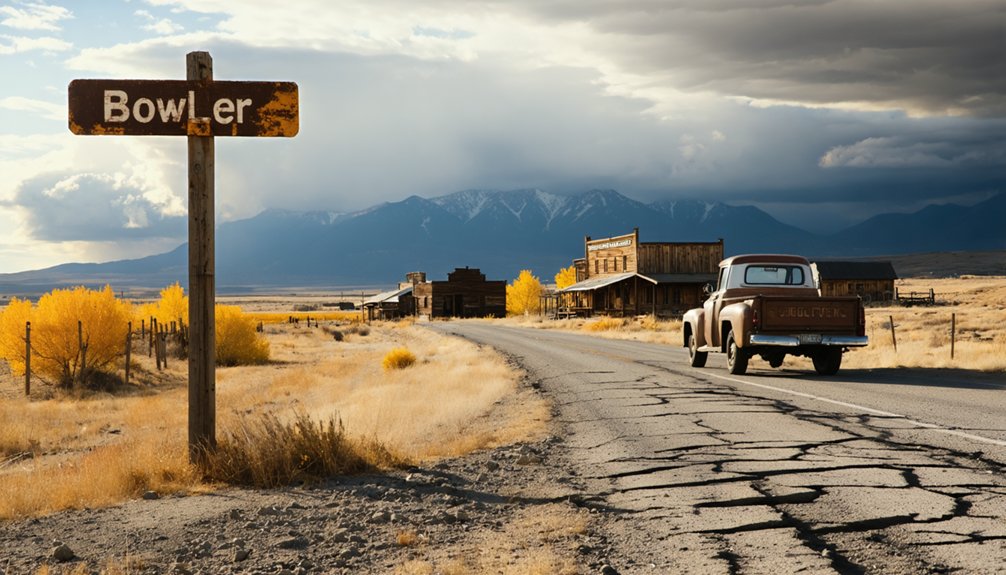
Just eleven months after Bannack’s discovery, six prospectors struck spectacular pay dirt in Alder Gulch on May 26, 1863, triggering what’d become the Pacific Northwest’s richest gold rush. Within weeks, 10,000 fortune-seekers transformed the wilderness into Montana’s territorial capital. You’ll find over $100 million in placer gold deposits were extracted here—$30 million in just the first three years alone.
The boom couldn’t last. By the early 1870s, only hundreds remained after the richest claims played out. What saves Virginia City today are Charlie and Sue Bovey’s historical preservation efforts starting in the 1940s. They purchased and stabilized buildings before decay claimed them, creating one of the West’s most authentic gold rush towns. You’re free to walk streets that genuinely echo 1863.
Garnet Ghost Town: A Preserved Mining Settlement
Since the 1970s, the Bureau of Land Management and Garnet Preservation Association have worked to freeze this ghost town in time—you’ll find furnished cabins exactly as miners left them, with rusted sewing machines beside iron bed frames and glass bottles still cluttering dusty shelves.
The thirteen saloons that once lined these dirt streets tell stories of rowdy Saturday nights when a thousand residents needed places to spend their gold dust wages.
If you’re hungry for more abandoned mining camps, the nearby Coloma ghost town sits just a few miles away, offering another glimpse into Montana’s boom-and-bust mining heritage.
Restoration Efforts Since 1970
The crumbling cabins of Garnet Ghost Town might’ve faded into nothing more than weathered timber and memories if preservation groups hadn’t stepped in during the early 1970s. The Bureau of Land Management partnered with the Garnet Preservation Association to implement a “arrested decay” strategy—stabilizing structures without full restoration to maintain their authentic, weathered character.
You’ll notice hand-hewn logs propped with discrete supports and roofs reinforced just enough to prevent collapse. Funding sources include federal grants, volunteer labor, and modest visitor fees that keep this place accessible without corporate intrusion. These preservation methodologies let you experience Garnet as miners left it, frozen in time rather than reconstructed into sanitized history. It’s raw, real freedom to explore authentic Western decay.
Saloons and Social Life
Thirteen saloons lined Garnet’s muddy streets at the town’s raucous peak—more watering holes than any other type of business. You’ll picture miners crowding these establishments, whiskey flowing freely while cards shuffled and dice rolled in Garnet’s thriving gambling culture. These weren’t just drinking dens—they served as community nerve centers where fortunes changed hands nightly.
But Garnet wasn’t your typical lawless frontier camp. Despite the whiskey and prostitution, rowdy behavior control came through a functioning jail and surprising community standards.
While men gambled in smoke-filled saloons, families gathered for Saturday night dances at the union hall. Women shopped at four stores and avoided the red-light district entirely. Three weekly social functions—picnics, fishing trips, parties—created a dual identity you’d rarely find in mining towns.
Nearby Coloma Ghost Town
What you’ll find today:
- Crumbling cabin foundations disappearing beneath ponderosa pines
- Rusted mining equipment half-buried in hillside tailings
- Hand-split logs from structures that lacked proper foundations
No visitor center exists here. No preservation association maintains interpretive signs. You’re left to explore these remains independently, piecing together stories from weathered wood and scattered artifacts.
Coolidge and Elkhorn: High-Elevation Silver Mining Communities
High in Montana’s rugged mountains where elk still outnumber visitors, the twin ghost towns of Coolidge and Elkhorn cling to steep slopes at over 7,000 feet elevation.
You’ll discover Preston Sheldon’s 1872 silver strike that started it all—300 ounces per ton from the Old Elkhorn claim. The mining operations faced brutal challenges: wagons hauled ore to Utah, then railroads to San Francisco, ships to Wales for smelting.
When William R. Allen recognized the Elkhorn’s potential in 1911, he built Montana’s largest wooden mill by 1922—processing 750 tons daily. The economic impacts were dramatic.
Silver’s 1893 crash shuttered everything for a decade. The 1920s Depression finished what remained, leaving behind weathered structures and the ghosts of 300 fortune-seekers who once called these windswept peaks home.
Photography Tips for Capturing Authentic Ghost Town History
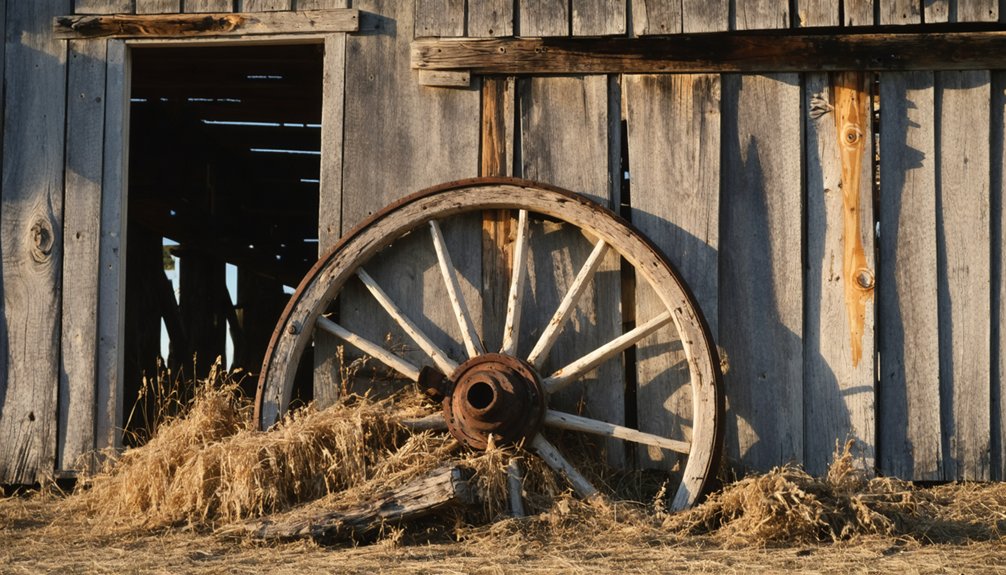
When you step into a ghost town with camera in hand, you’re not just documenting decay—you’re freezing moments that connect present silence to voices long faded. Golden hour transforms weathered planks into storytelling gold, while your tripod stability guarantees sharp long-exposure shots of star trails wheeling above abandoned saloons.
Ghost town photography captures the poetry of abandonment, where every weathered surface becomes a canvas bridging forgotten histories with our witnessing present.
To capture Bowler’s essence authentically:
- Use flashlights strategically to paint hidden interior details—doorknobs, peeling wallpaper, forgotten tools
- Shoot in RAW format for maximum post-processing flexibility with challenging lighting
- Frame through windows and doorways to layer past and present
Wide-angle lenses reveal entire streetscapes, while detail shots of rusted hinges and cracked glass bottles tell intimate stories. Black and white photography strips away distractions, emphasizing texture and time’s relentless passage through these silent witnesses.
Nearby Accommodations and Services for Ghost Town Explorers
After hours exploring Bowler’s weathered structures and dusty streets, you’ll need a place where exhaustion melts into comfortable beds and hot showers wash away the grit of exploration.
Garnet Ghost Town’s rental cabins offer historical significance of accommodations within an authentic 1800s setting, though you’ll need advance reservations through Missoula’s BLM office. For modern amenities for off grid travelers, Bannack State Park’s campgrounds provide electricity and Wi-Fi along Grasshopper Creek at just $8 entry.
The Ranch at Rock Creek delivers luxury with bowling alleys and ice rinks, while Gunslinger Gulch embraces Old West authenticity with propane stoves and horse camping. Boulder Creek Lodge’s Elk Tipi balances rustic charm with clean facilities—perfect for adventurers who demand both freedom and functionality after dusty ghost town rambles.
Frequently Asked Questions
What Safety Precautions Should I Take When Exploring Abandoned Mine Shafts?
Don’t explore abandoned mine shafts—they’re death traps. If you’re determined, use caution when approaching unstable structures, wear proper protective gear when exploring mine shafts, never go alone, and honestly, just admire them from a safe distance instead.
Are Ghost Town Structures Safe to Enter or Strictly Look-Only?
Most ghost town structures aren’t safe to enter due to compromised structural integrity of buildings. You’ll need to respect local trespassing laws and private property boundaries. Stick to exterior viewing unless it’s a designated park with approved access points.
Do I Need Special Permits to Visit Montana Ghost Towns?
Most Montana ghost towns don’t require permits—you’ll pay simple day-use fees like Garnet’s $3. However, always check private property access requirements and local tourism guidelines beforehand, since some sites need special permits for groups or events beyond casual exploring.
What Wildlife Encounters Are Common in Montana Ghost Town Areas?
You’ll spot deer grazing near abandoned buildings and bison roaming open ranges. Watch for rattlesnake encounters in rocky ruins during summer months. Cougar sightings occur occasionally in mountainous areas, while bears frequent remote trails near historic mining sites.
Can I Use Metal Detectors or Collect Artifacts at Ghost Towns?
You’re treading on thin ice here—careful metal detector use requires landowner permission and permits. You can’t legally collect preserved historical items over 100 years old from public ghost towns; they’re protected under ARPA regulations.