Breisons No. 3’s remnants lie near Parker, PA (coordinates 41.0547849° N, -79.7267162° W), though you’ll find scarce documentation of this forgotten coal patch town. You’ll need to rely on the Geographic Names Information System and Pennsylvania Geological Survey records, as traditional mapping won’t reference the site. Respect property boundaries when documenting the deteriorating mine infrastructure—collapsed shafts, rusted railway spurs, and overgrown foundations that vegetation continues reclaiming. The sections below preserve essential details about safely accessing this vanishing archaeological resource.
Key Takeaways
- Located at coordinates 41.0547849° N, -79.7267162° W near Parker, PA in Armstrong County, ZIP code 16022.
- Visit late spring through early fall for optimal 70-80°F temperatures and accessible trails during dawn-to-dusk hours.
- Pack sturdy boots, layered clothing, water, first-aid supplies, navigation tools, and gas detection equipment for safety.
- Expect abandoned mine infrastructure, deteriorating foundations, rusted railways, and overgrown pathways marking the forgotten site.
- Exercise extreme caution around ground instability, cracks, steam vents, and toxic gases from underground coal fires.
The Dark History Behind Breisons No 3’s Abandonment
Centralia’s transformation from bustling mining settlement to abandoned wasteland began with violence long before flames consumed it. The Molly Maguires’ secret society operated here during the 1860s, targeting corrupt mining companies through murders and arson. Alexander Rae’s 1868 assassination and Father McDermott’s legendary curse set an ominous precedent.
The May 1962 landfill fire ignited abandoned coal seams beneath town, though lingering mysteries surrounding fire’s origins persist. Some claim the 1932 Bast Colliery blaze never extinguished. Regardless, temperatures soared past 900 degrees, creating sinkholes that spewed toxic gases. Early attempts to extinguish the blaze proved futile, sealing the town’s fate.
Congress allocated $42 million for evacuation by 1983. The 1918 influenza outbreak devastated the community, killing over 10% of Centralia’s population decades before the underground fire began. Today’s haunting atmosphere around site reveals empty streets where 3,000 residents once lived, documenting freedom’s price when government authority supersedes individual choice.
Understanding this settlement’s troubled past makes finding its physical location all the more compelling for documentary purposes. You’ll navigate to coordinates 41.0547849° N, -79.7267162° W in Armstrong County, positioning your GPS near Parker, PA in ZIP code 16022. The Pennsylvania Geological Survey’s historical geological surveys marked this terrain, though undocumented local legends have obscured precise settlement boundaries over decades.
Your route converges within 200 yards of Bruin’s population center, where 134 housing units now occupy land once tied to coal operations. Use National Map applications for real-time navigation, as traditional road markers won’t reference abandoned sites. The Geographic Names Information System maintains records of historical place names that can help verify location data for abandoned settlements like this one. The U.S. Board on Geographic Names works to ensure consistent and authoritative geographic names across federal databases. Document coordinates carefully—this freedom to explore forgotten communities carries responsibility for preservation.
Print backup maps before departure; cellular signals weaken in these rural Pennsylvania corridors where industrial memory fades into forested hillsides.
What You’ll Discover Among the Ruins
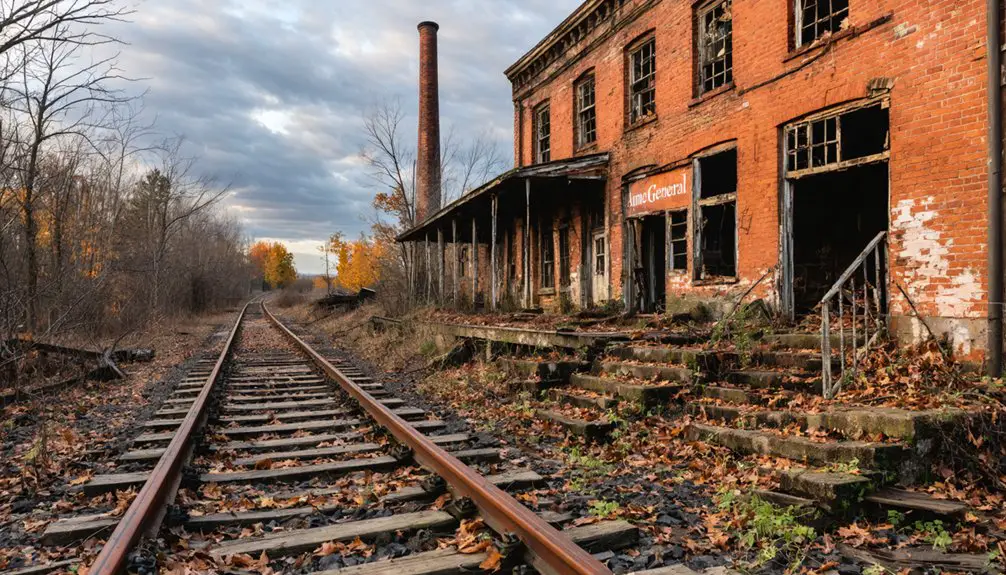
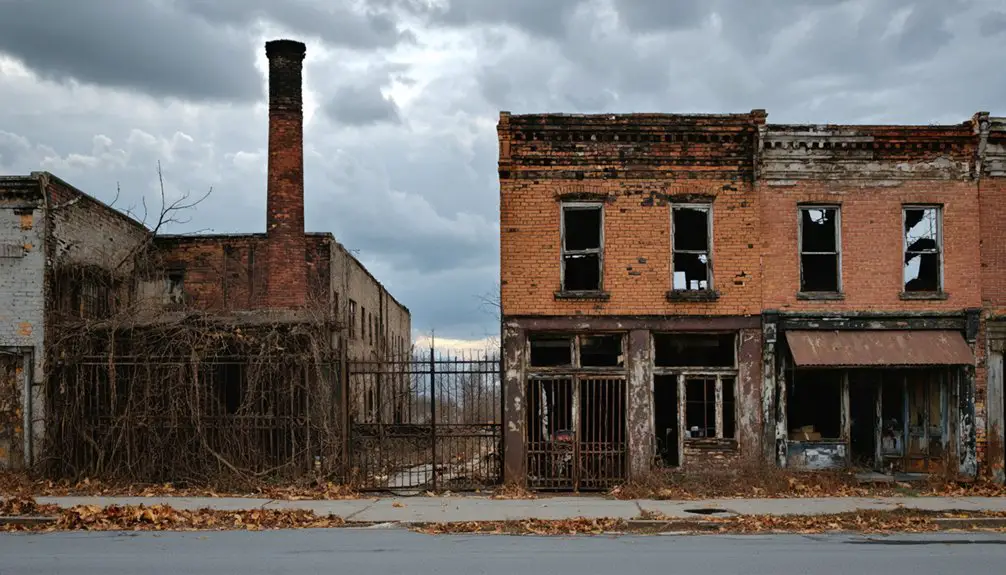
When you approach the scarred landscape where Breisons No. 3 once stood, you’ll encounter physical evidence of Armstrong County’s coal-extraction legacy—though not the catastrophic mine fire that consumed its more famous neighbor, Centralia. You’ll find abandoned mine infrastructure including deteriorating breaker foundations, rusted railway spurs, and collapsed shaft entrances that mark where anthracite operations once thrived.
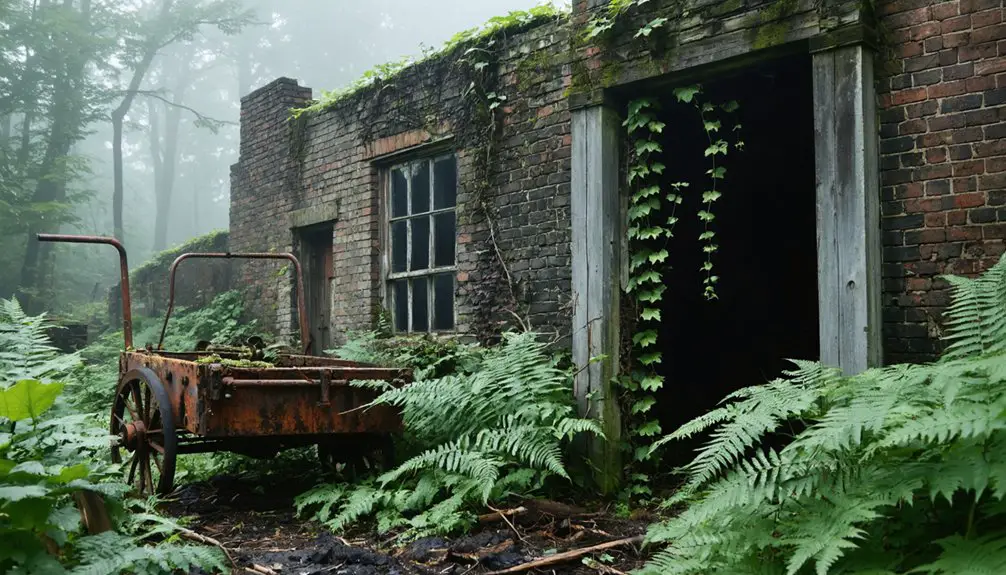
The remnants of daily life persist through crumbling building foundations, scattered brickwork, and overgrown pathways where miners’ families established their community. Documentation efforts reveal these sites face ongoing degradation from vegetation reclamation and weather erosion. Nature gradually reclaims these abandoned structures, much like the overgrown house foundations visible throughout Centralia’s landscape today. Unlike Centralia, which appears on disambiguation pages due to multiple locations sharing that name, Breisons No. 3 remains a singular, largely forgotten chapter in Pennsylvania’s mining history.
You’re free to photograph and record these historical markers before they vanish entirely, though respecting property boundaries and safety protocols remains essential when exploring these unprotected archaeological resources.
Essential Safety Precautions for Visitors
Before venturing into Breisons No. 3’s abandoned landscape, you must recognize that this site presents documented hazards requiring systematic risk assessment rather than casual exploration. Federal condemnation occurred following the 1980s sinkhole incidents, when a 150-foot-deep void nearly claimed a child’s life. Government regulations now prohibit trespassing on state-owned former residences, though posted warning signs mark critical exposure risks throughout accessible areas.
You’ll need to identify ground instability indicators—cracks exceeding two feet wide, visible steam vents, and sulfur-tinged fumes signaling lethal gas concentrations. The decades-old mine fire continues generating methane and toxic emissions through surface fissures. Navigate cautiously around Route 61’s fractured pavement and avoid terrain showing heat damage or structural weakness. Gas detection equipment isn’t just recommended—it’s essential for monitoring the underground fire’s persistent threat to surface stability. While the ground remains warm to the touch, you won’t experience intense surface heat during your visit. The possibility of sudden collapses into hot voids below makes constant vigilance necessary when exploring accessible zones.
Planning Your Visit: Timing and What to Bring
Having established the hazards requiring your attention, proper preparation determines whether your documentation effort succeeds or compounds the site’s tragic history. Target late spring through early fall when temperatures reach 70-80°F and trails remain accessible.
October delivers peak fall foliage among undiscovered attractions, though summer draws crowds. Pack layered clothing for 50-80°F swings, sturdy boots for ash-covered terrain, and waterproof gear for steam exposure. Bring water, first-aid supplies, and navigation tools—signage doesn’t exist here.
Dawn-to-dusk visits align with natural light for safe photography of smoke vents and overgrown structures. Weekdays minimize traffic on narrow Route 61. Local resident perspectives emphasize monitoring wind patterns dispersing toxic gases, strongest during afternoon hours. The underground fire has been burning since 1962 when a landfill burn entered an old mine shaft, making air quality monitoring essential during your visit. Be aware that carbon monoxide can reach lethal levels in certain areas, as was detected by mine inspectors early in the fire’s history.
Check Pennsylvania DOT updates before departure, as winter snow closures compromise access entirely.
As you plan your route, consider adding some ghost town attractions in Andrico to your itinerary. These sites evoke a sense of history and exploration that’s hard to find elsewhere. Make sure to check the opening times, as some may close earlier in the winter months.
Frequently Asked Questions
Are There Any Nearby Accommodations or Lodging Options for Overnight Stays?
You’ll find nearby bed and breakfasts like Station Inn in Cresson, preserving 1866 heritage while offering modern comfort. Local camping options include secluded cabins and rentals throughout Elk Country, letting you explore freely while supporting regional conservation efforts.
Can I Bring My Dog or Pet to Explore the Area?
Pet policies remain undocumented, regulations stay unverified, and restrictions aren’t archived for Breisons No. 3’s hiking trails. You’ll need to contact local authorities directly before bringing your dog, ensuring you’re respecting conservation efforts while exercising your freedom to explore responsibly.
Are Guided Tours Available, or Is It Self-Exploration Only?
You’ll find self-exploration only at Breisons No. 3, with no guided tours available. Document historical artifacts responsibly while respecting the quiet ambiance. You’re free to explore independently, though nearby Yellow Dog Village offers paid guided alternatives.
What Cell Phone Coverage Can I Expect in the Area?
You’ll find Verizon offers the strongest network reliability at 52.9% coverage, though signal strength remains spotty throughout this remote ghost town. AT&T delivers better speeds but less area coverage. Document your connectivity expectations before venturing into these backcountry zones.
Are There Restaurants or Food Options Near Breisons No 3?
You’ll find limited dining options near Breisons No. 3. Document your journey by exploring seasonal farmers markets and local produce availability in nearby Allison Park, where establishments like Barrel Junction and Hartwood Restaurant preserve regional culinary traditions independently.
References
- https://www.youtube.com/watch?v=8QDb8y9Nszs
- https://www.youtube.com/watch?v=Qj5LjacccJ0
- https://pabucketlist.com/the-rise-and-fall-of-centralia-pas-toxic-ghost-town/
- https://en.wikipedia.org/wiki/Centralia
- https://www.youtube.com/watch?v=4I9j30fvz8M
- https://gettysburgghosts.com/centralia-pennsylvania-the-town-that-inspired-silent-hill/
- https://www.atlasobscura.com/articles/centralia-pennsylvania-rebirth
- https://edits.nationalmap.gov/apps/gaz-domestic/public/gaz-record/1170428
- https://www.mapsofworld.com/lat_long/latitude-and-longitude-of-various-locations.pdf
- https://www.unitedstateszipcodes.org/16022/