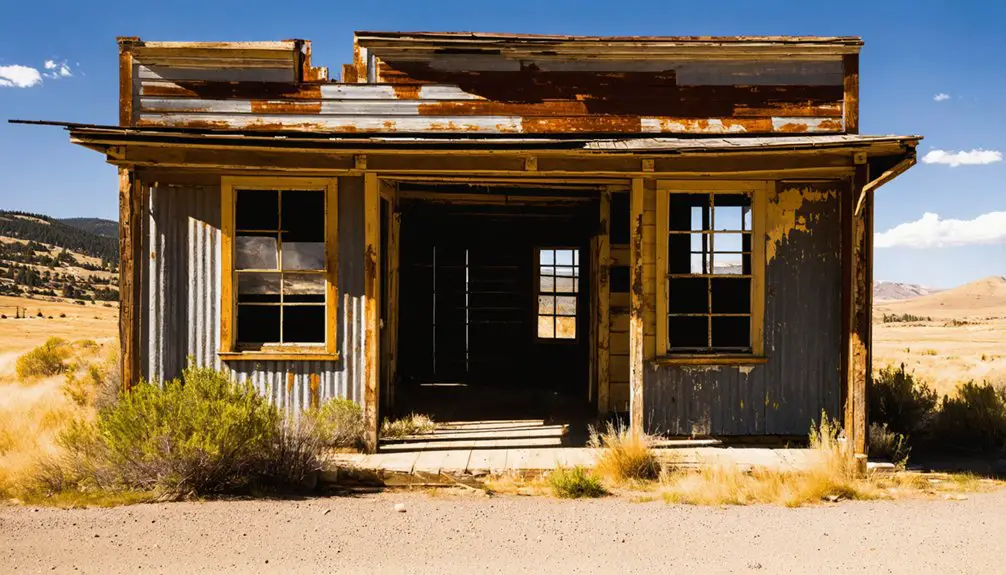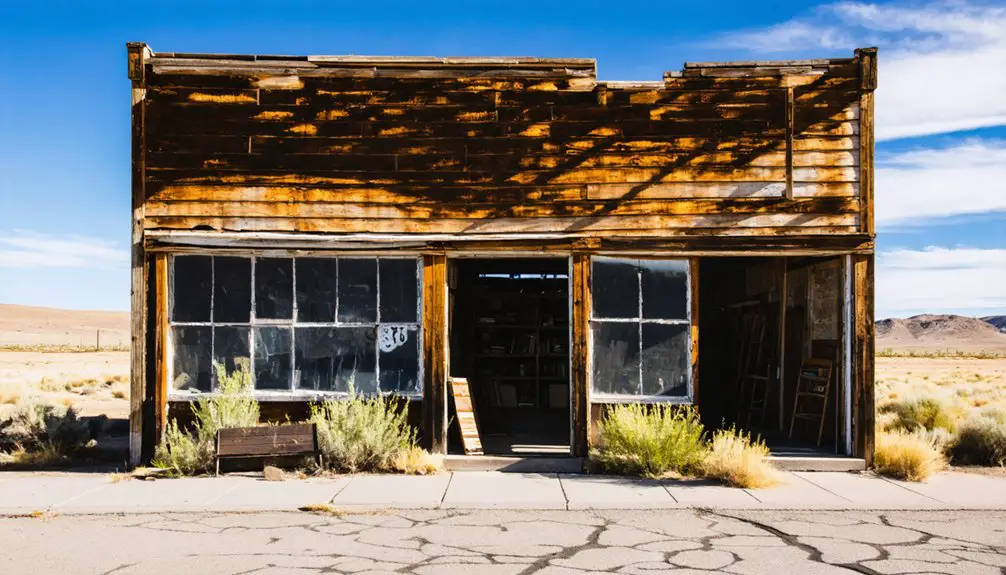
You’ll find Bridal Veil just 42 kilometers east of Portland via I-84 Exit 28, making it an easy half-day escape. This ghost town offers two accessible landmarks: one of America’s tiniest post offices, where you can collect distinctive postmarks from a settlement processing 4,000 hand-stamped envelopes yearly, and a preserved cemetery with 57 graves from the 1886 logging era. Most of the town sits on private timber lands behind locked gates, though the Historic Columbia River Highway provides scenic overlooks worth exploring to discover the complete story.
Key Takeaways
- Bridal Veil is 42.4 kilometers east of Portland via I-84 Exit 28, approximately 31 minutes away by car.
- Visit the tiny post office and historic cemetery, the only two landmarks surviving from the 1886 logging settlement.
- Most areas are on private timber lands with restricted access; respect property boundaries and locked gates.
- Take the scenic Historic Columbia River Highway to view Crown Point Vista House and Bridal Veil Falls Bridge.
- The cemetery contains 57 graves with stories from diphtheria and smallpox epidemics; access managed by preservation society.
The Rise and Fall of a Lumber Boomtown
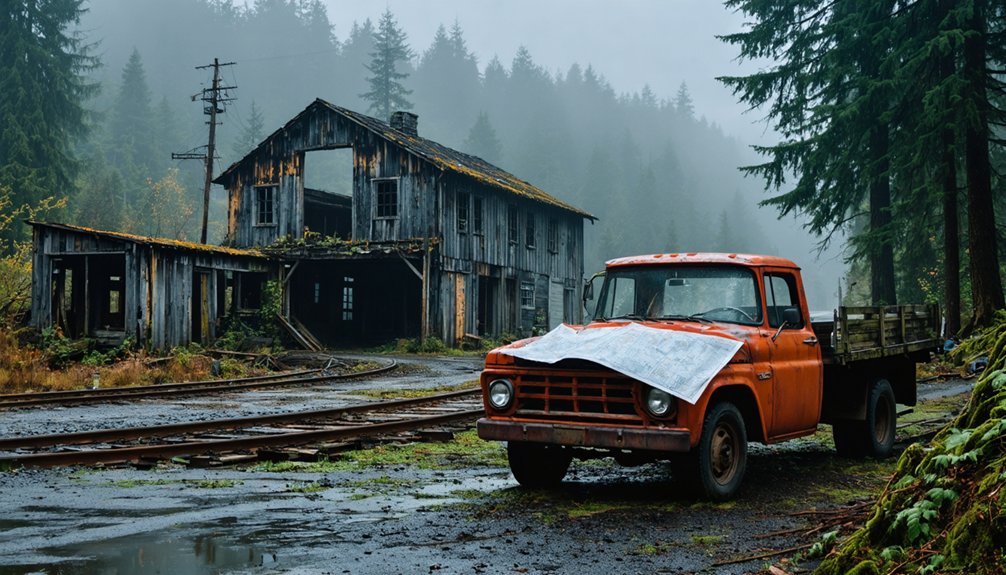
Deep in the Columbia River Gorge, where mist from cascading waterfalls mingles with the scent of ancient Douglas fir, the Bridal Veil Lumber Company carved out a thriving industrial settlement in 1886. You’ll discover this boomtown once sustained several hundred residents with its sawmill positioned one mile up Larch Mountain, complete with hotels, restaurants, and a railroad station.
The logging operations coordinated seamlessly with nearby Palmer, where timber flowed through a mile-and-a-half log flume before processing. However, Palmer’s 1936 closure, devastating mid-1930s fires, and depleted forest resources brought economic challenges that couldn’t be overcome. When the company pivoted to manufacturing wooden cheese boxes for Kraft in 1937, it bought two more decades—but Bridal Veil’s lumber empire had already crumbled.
What Remains Standing Today
When you arrive in Bridal Veil today, you’ll find only two landmarks have survived the demolition: a tiny post office still canceling wedding invitations with its romantic postmark, and a weathered cemetery where the last burial took place in 1934.
The converted tool shed that houses the post office stands as one of America’s smallest, processing roughly 4,000 hand-stamped envelopes each year for couples seeking that distinctive Bridal Veil seal. While the cemetery remains accessible through preservation efforts, much of the surrounding area sits on private property with restricted access.
Active Post Office Operations
Tucked away at 1 W Mill Rd stands Oregon’s tiniest beacon of postal service—a weathered 10-by-10-foot wooden shed that’s outlasted the entire town around it. Since 1886, this one-room outpost has processed mail through logging booms and ghost town decline, celebrating 135 years of uninterrupted service in 2021.
You’ll find postmaster operations running lean here—USPS doesn’t fund a full-time position, so volunteer support efforts keep the doors open. Part-time workers manage 40 PO boxes serving the scattered remnants of Bridal Veil’s lumber community. Despite regular break-ins and vandalism, volunteers have kept this postal landmark alive, installing new roofs, gutters, and doors. It’s America’s third-smallest post office, functioning as the only business left in this ghost town.
Historic Cemetery Still Accessible
Perched on a Columbia River bluff west of the gorge, Bridal Veil’s pioneer cemetery survives as the town’s most haunting remnant. You’ll find 57 documented graves here, their historical burial records preserving stories of diphtheria and smallpox epidemics that ravaged this 1886 logging settlement.
The last burial occurred in 1934, yet weathered stones still mark the Shepperd family plot and infant Elizabeth Dutro’s resting place.
Community preservation efforts secured the site’s future when the Bridal Veil Historic Preservation Society purchased the deed in 2006. You can still visit today—access the obscure gravel driveway off I-84’s north shoulder near coordinates 45°33′32″N 122°10′31″W. These grounds remain open despite the town’s demolition, standing as a memorial to the mill workers and families who carved civilization from Oregon’s wilderness.
Private Property Access Restrictions
Little remains of Bridal Veil’s physical town after the 2001 demolitions claimed nearly every structure. You’ll find restricted access to buildings since most of the area sits on private timber lands, often secured behind locked gates blocking back roads.
The operational post office on the outskirts serves about 50 residents and remains your primary accessible destination. Private landowner considerations mean you can’t freely explore what little stands—the Columbia River Gorge National Scenic Area regulations prohibit unapproved development or alterations on private property.
While Wikipedia classifies Bridal Veil as a Class D ghost town with sparse population and period structures, don’t expect open wandering. The cemetery, now managed by the Bridal Veil Historic Preservation Society, offers controlled access, but the ghost town experience here requires respecting property boundaries.
Getting to Bridal Veil From Portland
You’ll find Bridal Veil just 42.4 kilometers east of Portland along the legendary Historic Columbia River Highway, a scenic route that winds through the Columbia River Gorge’s moss-draped cliffs and waterfalls.
Take I-84 eastbound to Exit 28, then head west on the historic highway for three-quarters of a mile to reach this ghost town turned state park.
The entire journey takes roughly 31 minutes by car, making it an ideal half-day escape into Oregon’s haunting past.
Historic Highway Route Details
From Portland, reaching Bridal Veil’s weathered remnants requires traversing one of America’s most celebrated scenic routes—the Historic Columbia River Highway, a pioneering roadway carved into the basalt cliffs between 1913 and 1922.
You’ll wind through the Columbia River Gorge’s dramatic landscape, where scenic overlook options abound. Crown Point Vista House offers spectacular panoramas before you reach the ghost town. The route’s photogenic bridge features include the 1914 Bridal Veil Falls Bridge, a 100-foot reinforced-concrete structure spanning directly over the 120-foot cascade.
Key Route Highlights:
- First planned scenic roadway in United States
- Historic bridge listed on National Register of Historic Places
- Unique skewed design with solid railings
- Highway passes directly over two-tiered waterfall
- Access from I-84 exits 28 (eastbound) or 35 (westbound)
Travel Time and Distance
Whether you’re planning a quick morning escape or a leisurely gorge exploration, the journey from Portland to Bridal Veil ghost town spans approximately 27 miles and takes just over 30 minutes by car. The straightforward driving route follows I-84 to Exit 28, where you’ll venture west along the Historic Columbia River Highway for three-quarters of a mile to reach this atmospheric relic.
Transit options exist but demand patience—the Line 77 bus requires over an hour, with departures every 30 minutes. Most freedom-seekers opt for their own wheels, as driving route considerations favor independence over scheduled departures.
Your taxi alternative costs $100-120 but delivers the same half-hour freedom as driving yourself. The remote location rewards those who chart their own course through the Columbia River Gorge’s windswept landscape.
How the Town Got Its Romantic Name
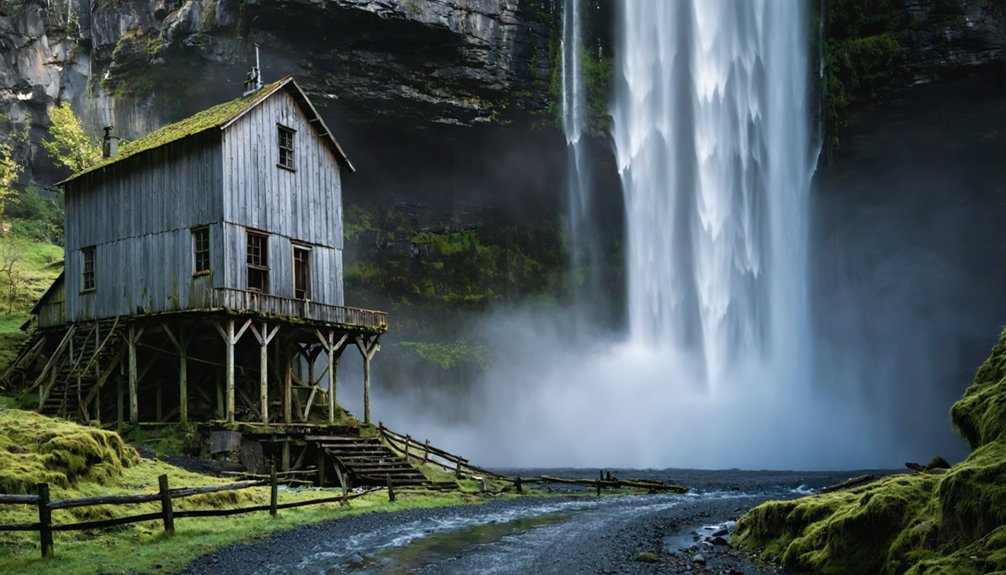
The formal naming process involved several key elements:
- First post office opening circa 1886 cemented the name in official records
- Train station construction provided additional landmark recognition
- Evolution from “Bride’s Veil, Oregon” to its current spelling
- Columbia River Gorge location gave sternwheelers perfect vantage points
- Logging boom establishment coincided with permanent community designation
Today, the name’s enduring appeal attracts brides nationwide seeking those distinctive postmarks.
Exploring the Site: What You Can See
Despite Bridal Veil’s ghost town status, visitors will discover a surprising array of remnants and natural wonders scattered throughout this historic Columbia River Gorge settlement. You’ll find the operational post office still processing those coveted postmarks for wedding invitations, standing defiantly among the ruins. The cemetery, with its last burial dating to 1934, tells silent stories near the former town center.
Nature reclaims the fallen lumber mills—spot corrugated iron sheds, old foundations, and a human-made creek along varied trails leading to spectacular Bridal Veil Falls. The two-tiered cascade drops 120 feet, while the half-mile Overlook Trail reveals Columbia River vistas framed by Eagle Creek Fire-scarred forests. You’ll traverse landscapes where camas, lupine, and trillium bloom freely among Archer Mountain’s dramatic rock formations.
Making the Most of Your Columbia River Gorge Visit

Beyond Bridal Veil’s weathered ruins, the Columbia River Gorge unfolds as an 80-mile wonderland of cascading water and volcanic drama. You’ll discover freedom along the Historic Columbia River Highway, where each bend reveals another natural masterpiece.
Essential stops for adventurous travelers:
- Multnomah Falls – America’s tallest year-round waterfall at 620 feet (reserve your Timed Use Permit for 9am-6pm access)
- Rowena Crest Overlook – Horseshoe curves with seasonal wildflower displays painting hillsides in spring
- Dog Mountain Trail – Panoramic summit views rewarding your climb through wildflower meadows
- Vista House at Crown Point – 360-degree vistas from this octagonal Art Nouveau gem
- Winter waterfall viewing – Experience Latourell and Horsetail Falls at their most powerful during rainy months
The gorge rewards those who venture beyond tourist hotspots.
Frequently Asked Questions
Are There Any Guided Tours Available for Bridal Veil Ghost Town?
No guided tours availability exists for Bridal Veil’s ghost town remnants—you’re the captain of your own adventure here. Drive yourself along the Historic Columbia River Highway, exploring the tiny post office and cemetery at your own pace with complete freedom.
Can You Camp Overnight Near the Bridal Veil Ghost Town Site?
You can’t camp at Bridal Veil itself—no on-site accommodations exist—but you’ll find freedom at nearby campgrounds like Dougan Falls and Lost Lake, plus numerous dispersed camping spots throughout the surrounding national forest areas.
Is There an Entrance Fee to Visit Bridal Veil Ghost Town?
You won’t pay an entrance fee to explore Bridal Veil’s ghost town remnants. Free parking’s available at the viewpoint, with restrooms and picnic tables nearby. However, you’ll need a $2 seasonal highway permit from May through September.
What Are the Best Months to Visit Bridal Veil for Photography?
You’ll capture absolutely breathtaking shots during early spring and late fall when misty conditions create that moody Pacific Northwest atmosphere. Lush moss, dramatic lighting, and rain-kissed scenery transform Bridal Veil into a photographer’s paradise during these seasons.
Are Pets Allowed When Exploring the Bridal Veil Area?
Yes, you’ll find pet-friendly facilities throughout Bridal Veil, though leashes are required on trails. The area offers pet-friendly hotels, dining patios, and wineries. If needed, nearby pet boarding services provide convenient options while you explore restricted zones.