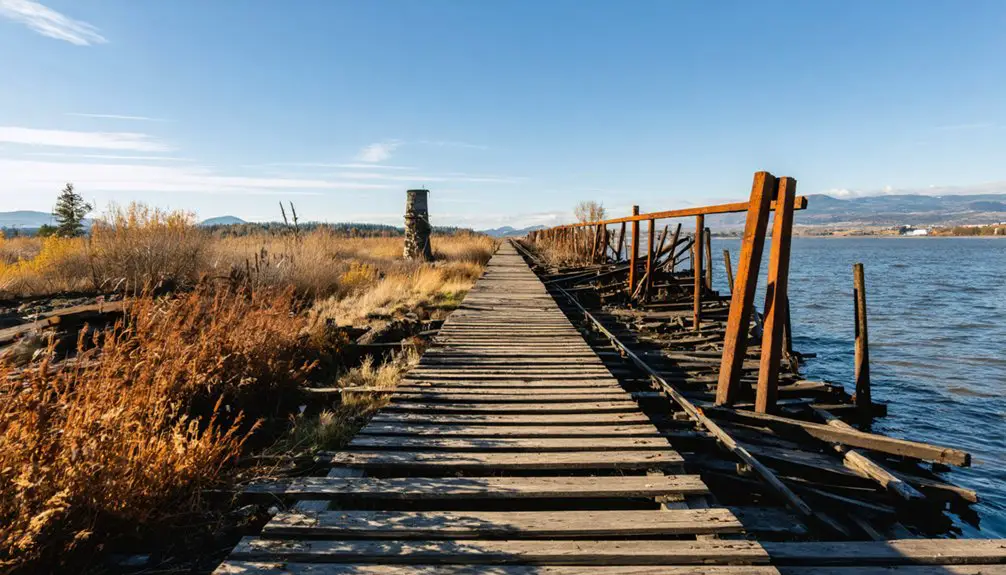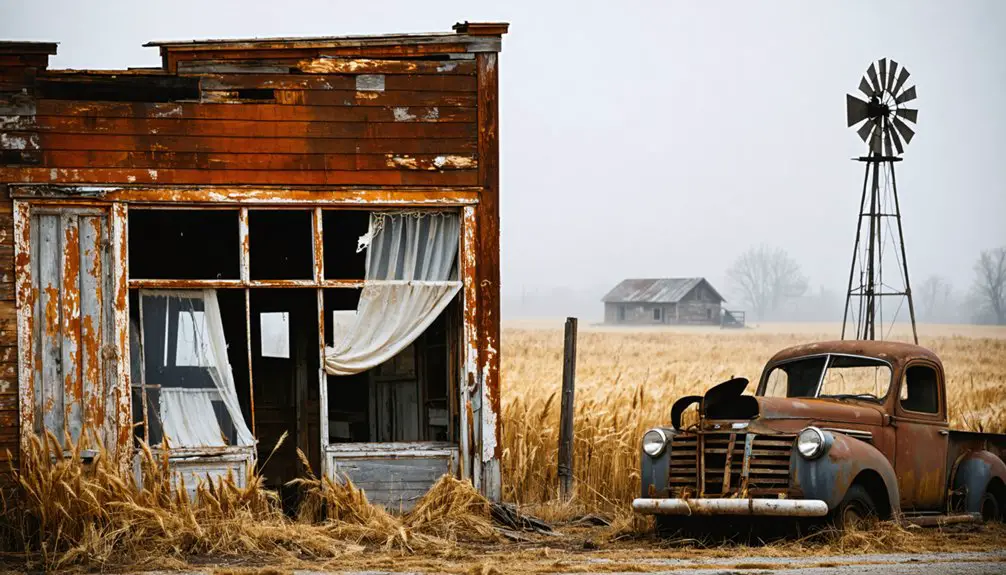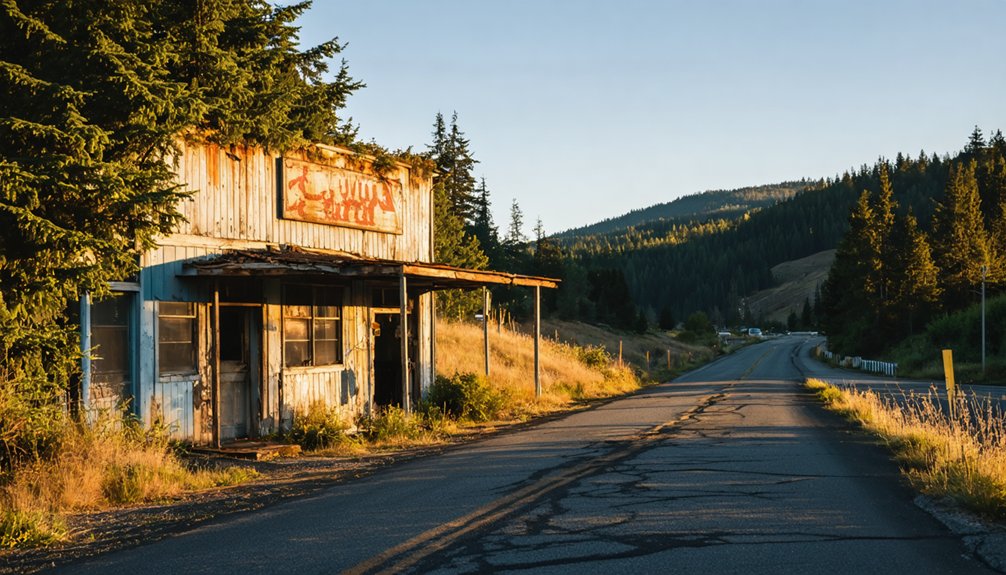
Planning a ghost town road trip in Washington puts you on a trail of gold rush relics, railroad ruins, and abandoned dreams scattered across stunning landscapes. You’ll want to start at Blewett in Chelan County, then wind east through Molson and Bodie before finishing at historic Liberty. Visit during summer or fall for the best access and scenery. There’s far more to discover about each stop, from safety tips to what’s still standing.
Key Takeaways
- Brief, Washington is not listed among the state’s notable ghost towns; consider visiting Liberty, Molson, or Bodie instead.
- Plan your route starting in Chelan County, heading east through Okanogan County, then southwest toward Highway 2.
- Visit during summer or fall for the best road access and photography opportunities at remote ghost town sites.
- Download offline maps before departing, as spotty cell service is common throughout mountainous ghost town areas.
- Pack water, sturdy boots, a first-aid kit, and navigation tools while avoiding entry into unstable, decaying structures.
Six Washington Ghost Towns Worth Stopping For
Washington State is home to dozens of ghost towns, each with its own story of boom, bust, and abandonment—and six of them are worth pulling off the road for.
From gold rush relics to railroad ruins, these destinations carry real ghost town legends and deep historical significance. You’ll find Liberty, Washington’s oldest mining town, tucked into the Cascades, and Molson, a well-preserved border town that boomed and collapsed within a single year.
From gold rush relics to railroad ruins, Washington’s ghost towns carry legends too raw and real to ignore.
Wellington marks the site of America’s deadliest avalanche, while Bodie, Blewett, and Govan each tell their own raw stories of ambition and collapse.
These aren’t polished museums—they’re open-air reminders that fortune is never guaranteed. Pack your curiosity, fuel up, and let Washington’s forgotten towns tell you the rest.
What’s Still Standing at Each Ghost Town Stop?
Each ghost town on this route leaves behind something different—some offer crumbling foundations and rusted machinery, while others have preserved structures still standing tall enough to photograph.
At Molson, you’ll find the best-preserved ghostly architecture in the region, thanks to decades of local preservation efforts. Liberty keeps its historic buildings intact, earning its spot on the National Register of Historic Places.
Wellington’s haunting depot site marks where America’s deadliest avalanche struck. Govan still holds the skeletal remains of its post office and schoolhouse.
Bodie’s abandoned structures invite hands-on exploration of genuine boom-and-bust historical remnants. Blewett’s mining-era foundations anchor the hillside quietly.
Each stop rewards your curiosity differently—bring a camera, wear sturdy boots, and move through these spaces at your own pace.
How to Map Your Route Between Washington’s Ghost Towns
Mapping 6 ghost towns into one cohesive road trip takes some strategic thinking, but Washington’s highway system makes it surprisingly manageable.
Start in Chelan County at Blewett, then push east toward Molson and Bodie near the British Columbia border, where gold rush history runs deep.
Swing southwest through Okanogan County toward Govan off Highway 2, absorbing the mining legacy embedded in each forgotten settlement.
From there, head west to Wellington near the Cascade Tunnel before finishing at Liberty, Washington’s oldest mining town, east of Cle Elum.
This loop covers diverse terrain without excessive backtracking.
Download offline maps before you go since cell service gets spotty in the mountains.
Budgeting two to three days lets you genuinely absorb each site’s ghost town history rather than rushing through.
Best Times to Visit Washington’s Ghost Towns
Timing your visit to Washington’s ghost towns can make or break the experience. Summer offers the clearest roads and best access to remote sites like Molson and Bodie, where you’ll explore abandoned structures without battling snow or mud.
The seasonal attractions shift dramatically by fall, when cooler temperatures and golden foliage create a hauntingly beautiful backdrop perfect for photography.
Spring reveals higher-elevation towns like Liberty after winter closures, showcasing their historical significance through fresh eyes.
You’ll want to avoid winter entirely for most sites, as mountain passes close and treacherous conditions make exploration dangerous.
Check road conditions before departing, particularly for sites off Highway 2 near Govan.
Weekday visits guarantee quieter exploration, letting you connect more deeply with each town’s compelling past.
Is It Safe to Explore Washington’s Ghost Towns?
Exploring Washington’s ghost towns carries real risks you shouldn’t underestimate, but smart preparation keeps you safe.
Decaying structures at sites like Wellington and Molson present genuine exploring risks — rotting floorboards, unstable walls, and collapsing roofs can injure you without warning.
Ghost town safety starts before you leave home: research each site, tell someone your itinerary, and carry a first-aid kit.
Safety begins at home — research your destination, share your itinerary, and pack a first-aid kit before heading out.
Wear sturdy boots and watch every step inside abandoned buildings. Some sites sit on private property, so always verify access permissions to avoid trespassing.
Wildlife encounters, unpredictable mountain weather, and remote locations add layers of complexity. Bring water, navigation tools, and a fully charged phone.
Respecting these environments protects both you and the historical integrity every freedom-seeking explorer values.
What to Pack for a Washington Ghost Town Road Trip?
Packing 10 essential items before hitting Washington’s ghost town circuit can mean the difference between an unforgettable adventure and a dangerous misadventure.
Your packing essentials should include sturdy hiking boots, layered clothing, and a reliable compass since cell service disappears fast in remote areas like Blewett or Wellington.
Don’t underestimate your ghost town gear — bring a first aid kit, flashlight with extra batteries, and enough water for full-day exploration.
Washington’s mountain weather shifts without warning, so pack rain gear regardless of forecasts.
A detailed topographic map, emergency whistle, high-protein snacks, and a fully charged portable battery round out your must-haves.
Pack smart, stay self-sufficient, and you’ll move freely through these abandoned landscapes on your own terms.
Where to Stay Near Washington’s Ghost Town Trail?
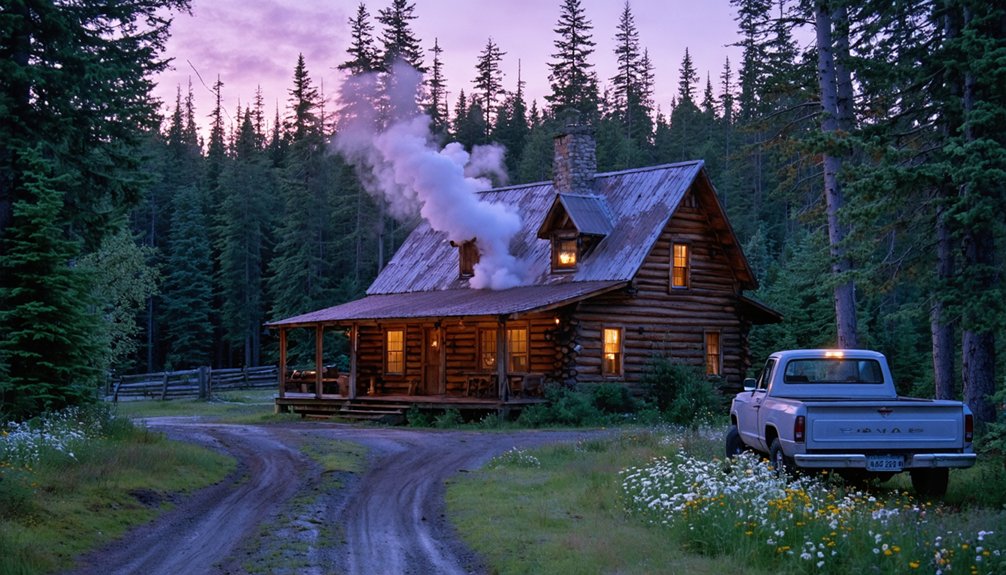
Once your gear’s loaded and you’re ready to roll, knowing where to rest between ghost town stops keeps your road trip running smoothly.
Washington’s ghost town trail runs through diverse regions, so accommodation options vary widely. Near Okanogan County, you’ll find rustic cabins and budget motels that put you close to Molson and Bodie.
Around Chelan County, Blewett sits within driving distance of Leavenworth’s lodges and campgrounds. Cle Elum offers solid base camp options for exploring Liberty.
Camping is your best bet for maximum flexibility and freedom, with national forest sites scattered throughout the Cascades.
Pitch a tent at a national forest site and let the Cascades become your flexible, freedom-filled base camp.
Beyond sleeping arrangements, local attractions like Leavenworth’s Bavarian village and Coulee City’s waterways add richness to your journey between abandoned streets and forgotten histories.
Frequently Asked Questions
Are Photography Permits Required at Washington State Ghost Town Sites?
You’ll want to check each site’s specific photography rules, as requirements vary. Many Washington ghost towns, given their historical significance, are on private land or protected registries, so always verify before you snap!
Which Washington Ghost Towns Allow Metal Detecting or Artifact Collecting?
You shouldn’t metal detect or collect artifacts at any of these Washington ghost towns—it’s illegal on historic sites. Follow metal detecting tips that respect artifact preservation, and you’ll keep these treasures alive for everyone’s freedom to enjoy.
Can You Visit Washington Ghost Towns During Winter Months?
You can enjoy winter exploration at Washington’s ghost towns! Bundle up and embrace ghost town activities amid snow-dusted abandoned structures. Check road conditions first, as some sites like Wellington become especially treacherous during heavy mountain snowfall.
Are Any Washington Ghost Towns Accessible for Visitors With Mobility Limitations?
Like open roads calling you forward, some ghost towns offer accessible routes and visitor accommodations. Molson’s preserved grounds and Liberty’s historic paths make exploration possible, so you won’t miss Washington’s haunting beauty, regardless of mobility limitations.
Do Any Washington Ghost Towns Charge Admission or Parking Fees?
Based on the knowledge provided, none of Washington’s ghost towns explicitly charge admission fees. You’ll find most sites offer free access, though parking options and admission policies can vary, so it’s worth checking locally before heading out!
References
- https://en.wikipedia.org/wiki/Blewett
- https://stateofwatourism.com/ghost-towns-of-washington-state/
- https://www.opb.org/article/2023/10/29/washington-only-living-ghost-town-history-lingering-residents/
- https://www.islands.com/1988063/washington-off-radar-abandoned-mining-ghost-town-molson-free-visit-history/
- https://www.youtube.com/watch?v=JaCRKivIsv4
- https://www.justfrances.com/ghosts-of-wellington-washington/
- https://www.youtube.com/watch?v=C08T7S8bEis
- https://www.crazydsadventures.com/post/govan-washington
- https://en.wikipedia.org/wiki/List_of_ghost_towns_in_Washington
- https://www.wta.org/go-hiking/hikes/wellington-ghost-town