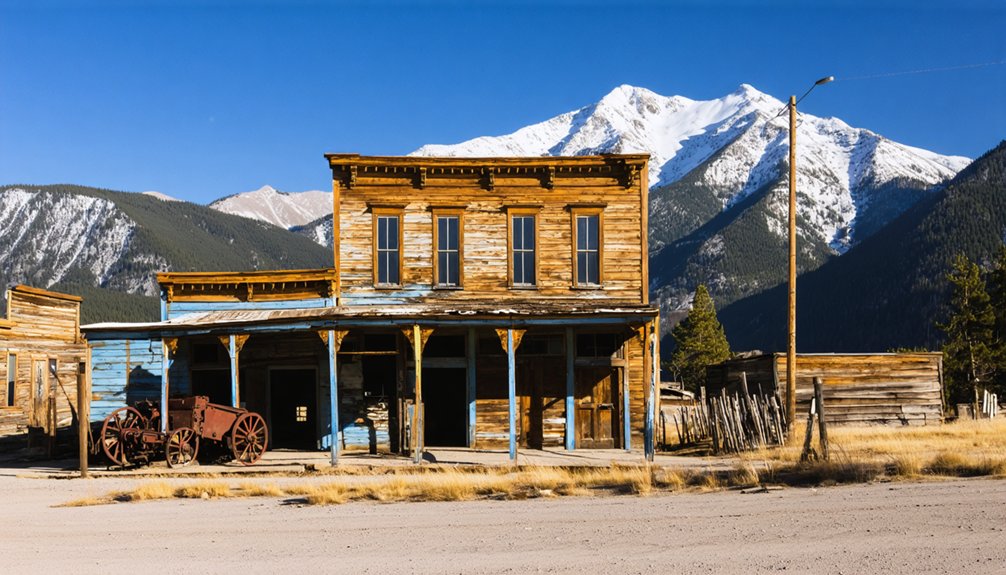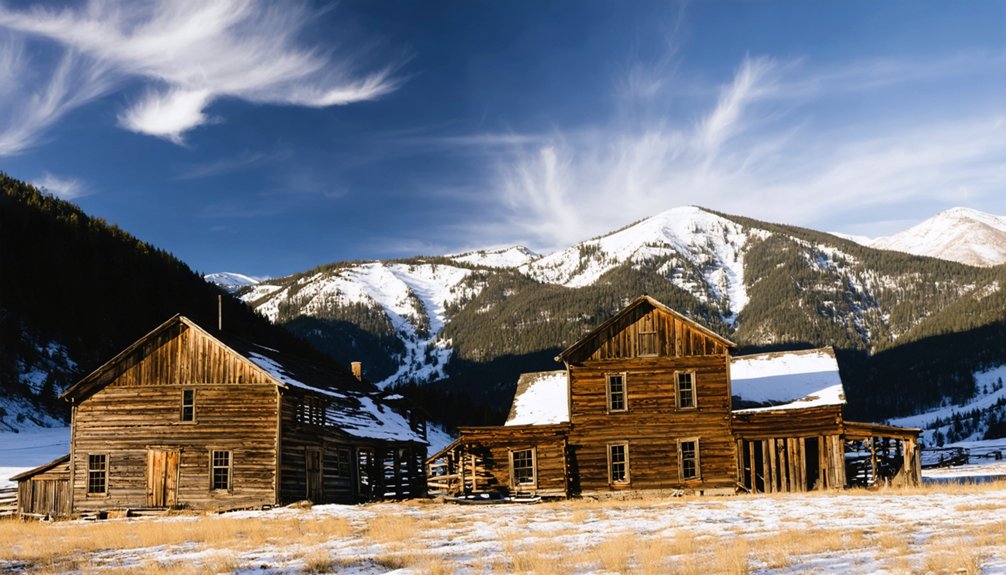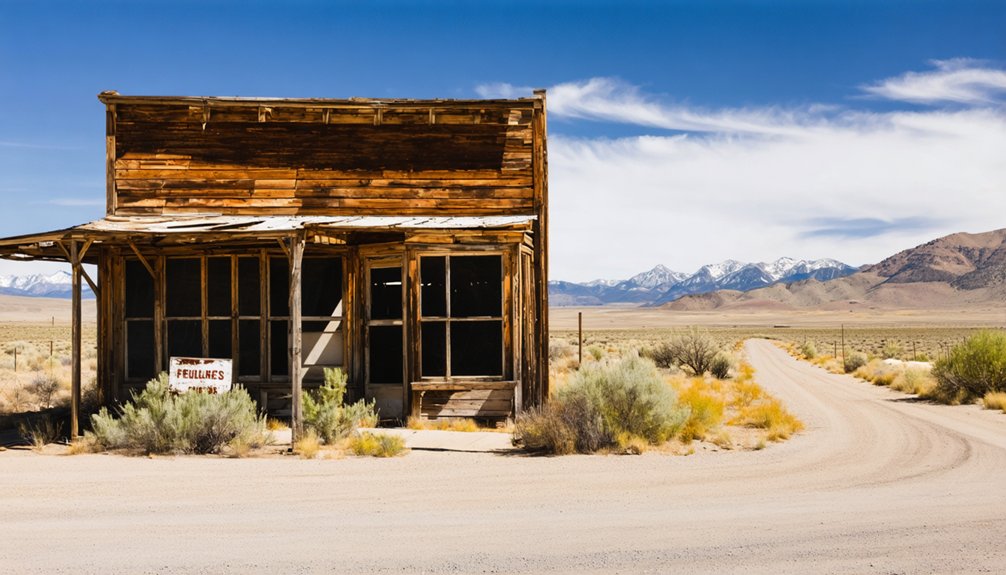
Planning a ghost town road trip to Brodhead, Colorado means stepping into a coal camp that time forgot. You’ll find rusted machinery, crumbling foundations, and the echoes of 200 miners who once carved a living from the earth. The Brodhead brothers built this company town from nothing in the early 1900s, and its slow collapse tells a gripping story. Stick around—there’s far more history waiting to unfold.
Key Takeaways
- Brodhead, Colorado sits at 6,919 feet elevation, featuring scattered mining equipment, corroded machinery, and remnants offering an unguarded glimpse into coal mining labor history.
- The town thrived under the Temple Fuel Company by 1929, employing 200 miners and producing approximately 110,000 tons of coal annually using electric cutting machines.
- The post office closure in 1939 signaled Brodhead’s decline, with complete abandonment following the company’s mid-1960s closure, leaving only foundations and machinery remnants.
- Nearby landmarks include the Ludlow Monument, Trinidad’s museums, and abandoned coal camps like Hastings, Delagua, and Tercio along the Trinidad Corridor.
- Visit between May and September for safe exploration, with fall offering ideal photography lighting; camp near the Ludlow Monument to deepen your historical connection.
Who Were the Brodhead Brothers?
The Brodhead brothers didn’t just stumble into Colorado’s coal country — they built an empire within it. Henry, Albert, and Robert Brodhead each claimed a role: President, Vice President, and Secretary-General Manager, respectively.
Three brothers, three titles, one empire — the Brodheads didn’t discover Colorado’s coal country, they conquered it.
Before establishing their namesake town, they’d already worked a separate mine together from 1896 to 1899, sharpening their instincts for industrial-scale extraction.
Their Brodhead Brothers’ Legacy reshaped Las Animas County, transforming raw land into a functioning community of nearly 300 residents by 1911.
But understanding Company Town Dynamics here is essential — the brothers owned the homes, the stores, and effectively the lives of those who worked for them.
You’re not just visiting a ghost town; you’re walking through a controlled world someone else designed entirely.
How They Built a Company Town From Scratch
Building a town from nothing requires more than capital — it demands control. The Brodhead brothers understood that perfectly. They didn’t just dig coal; they engineered an entire mining community culture around their operation, shaping daily life through deliberate company town dynamics.
They owned it all:
- Most homes where miners’ families lived
- Stores supplying everyday necessities
- Stagecoach routes connecting Aguilar and Lynn
- The post office established in 1902
- Electric machinery and coal transport trains
Every structure, every road, every transaction flowed through Brodhead hands. Residents depended on the company for shelter, supplies, and employment simultaneously.
That’s the paradox you’ll feel walking these grounds today — a community built on industry, bound by dependency, yet alive with the raw energy of people carving survival from Colorado coal country.
Coal, Company Control, and 200 Miners Underground
By 1929, you’re looking at a town completely under the thumb of Temple Fuel Company, which ran the Brodhead Colliery with an iron grip and modern ambition.
Underground, some 200 miners wielded electric cutting machines — a striking contrast to the hand-tool operations of earlier decades — hauling extracted coal out on electric trains that threaded through the dark tunnels.
At its peak, that operation pushed out roughly 110,000 tons of coal annually, making Brodhead far more than a sleepy mountain settlement.
Temple Fuel Company Operations
When you look at Brodhead’s coal operations in their prime, what you’re really looking at is Temple Fuel Company‘s grip on the earth beneath Las Animas County. By 1929, this operation defined the Brodhead legacy through sheer industrial muscle and mining innovation.
Here’s what powered that underground world:
- Electric machinery cut coal with unprecedented efficiency
- Electric trains hauled extracted coal directly from the mines
- 200 miners worked the Brodhead Colliery simultaneously
- Annual production hit approximately 110,000 tons
- Temple Fuel Company controlled every operational decision
That’s not just a coal mine — that’s an industrial empire carved into Colorado bedrock.
Walking these grounds today, you’re standing where machinery hummed, trains rolled, and hundreds of working men shaped an entire region’s economic identity through raw, unrelenting labor.
Electric Mining Machinery Used
Deep beneath the surface of Las Animas County, electric machinery transformed how men extracted coal from Brodhead’s underground labyrinth.
You’re stepping into a world where electric machinery innovations replaced brutal manual labor, giving 200 miners underground a genuine mechanical advantage.
Temple Fuel Company embraced mining technology advancements that few operations could match during this era.
Electric cutting machines sliced through coal seams with precision, while electric trains hauled extracted loads efficiently toward the surface.
The company controlled every aspect of this operation — the machinery, the homes, the stores above ground.
That level of corporate dominance shaped everything miners experienced daily.
Understanding these technological systems helps you appreciate why Brodhead’s production reached approximately 110,000 tons annually, making this quiet Colorado ghost town once a genuinely formidable industrial force.
Coal Production Peak Output
At its peak, Brodhead’s colliery drove approximately 110,000 tons of coal annually out of Las Animas County’s earth — a staggering output powered by roughly 200 miners working the underground passages daily.
By 1929, Temple Fuel Company controlled this coal mining operation, shaping every economic pulse of the region. You’re walking into serious industrial history here:
- 110,000 annual tons fueled homes, railroads, and industries across Colorado
- 200 miners descended underground every shift
- Electric machinery cut coal with unprecedented efficiency
- Economic impact stretched far beyond Brodhead’s 300 residents
- Company ownership locked miners into a controlled, dependent lifestyle
That raw production number tells you something essential — this wasn’t a small-time operation. It was an industrial machine that kept entire communities alive, dependent, and ultimately vulnerable when the coal ran out.
Why Brodhead Eventually Became a Ghost Town
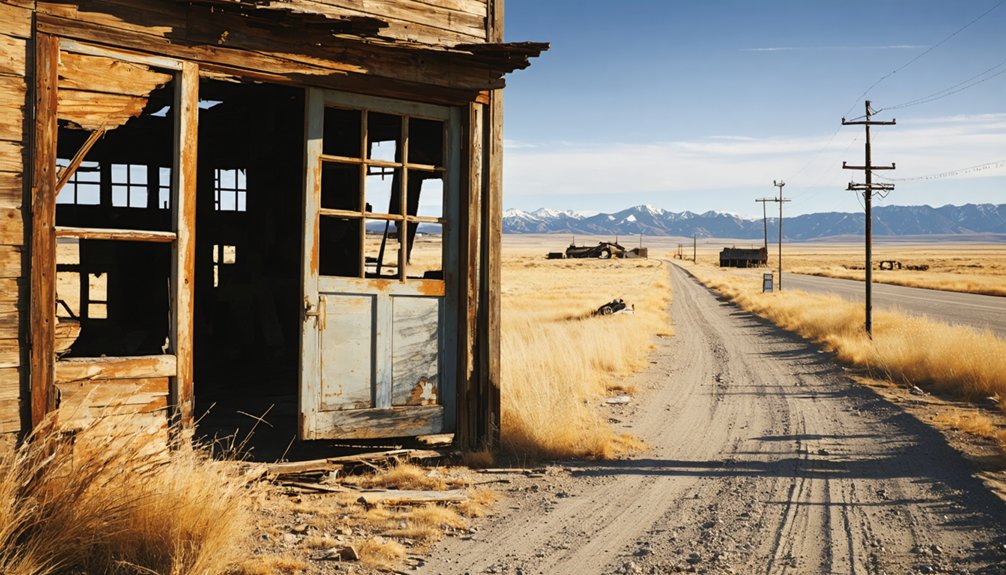
Though Brodhead once hummed with the industry of 200 miners and a population of 300, the town’s fate was sealed long before its last residents departed. The post office shuttered in 1939, stripping away a crucial lifeline and signaling the community’s slow unraveling.
When the company finally closed its doors in the mid-1960s, it took everything with it — the homes, the stores, the purpose.
You’ll find no dramatic single collapse here, just the quiet erosion of a company town wholly dependent on coal. Colorado’s broader mining industry declined, and Brodhead declined with it.
Yet its mining legacy endures in crumbling foundations and regional history, a memorial to community resilience forged in dust and labor. Walk those grounds, and you’re standing inside that story.
What’s Left to See at Brodhead Today?
When you visit Brodhead today, you’ll find scattered remnants of company town infrastructure — foundations, building shells, and traces of the industrial machinery that once powered 110,000 tons of annual coal production.
Keep your eyes open for mining equipment remnants that hint at the electric cutting machines and coal trains that defined daily life here through the early twentieth century.
Just a short drive away, the Ludlow Monument stands as a sobering companion landmark, grounding your exploration in the broader, often violent labor history that shaped this entire stretch of Las Animas County.
Remaining Town Infrastructure
Scattered across the high Colorado landscape, Brodhead’s remaining infrastructure tells a quiet but powerful story of the company town it once was.
Ghost town exploration here rewards the curious traveler with tangible remnants of a working coal community.
Watch for these surviving features during your visit:
- Company-owned homes — skeletal structures that once housed 300 residents
- Colliery foundations — stone remnants marking where 200 miners once worked daily
- Electric train corridors — flattened earthworks tracing former coal transport routes
- Commercial building shells — weathered walls where company stores once operated
- Mine entry points — partially visible shafts cut into Colorado’s high terrain
The remaining infrastructure doesn’t just sit there — it speaks.
You’ll feel the weight of labor history beneath your boots at 6,919 feet.
Mining Equipment Remnants
Beyond the bones of buildings and rail corridors, Brodhead’s industrial past left behind another layer worth hunting for — the rusted, weathered remnants of the machinery that once carved coal from Colorado’s earth.
The Brodhead Colliery ran on electric mining technology, a forward-thinking operation for its era, using powered cutting machines and electric trains to haul extracted coal.
During your ghost town exploration, you’ll want to scan carefully — corroded metal frames, scattered mechanical components, and iron remnants half-swallowed by Colorado soil reward the patient, observant visitor.
These artifacts aren’t behind glass or labeled with museum placards. They’re raw, unguarded, and authentic.
That’s exactly what makes Brodhead compelling — you’re reading history directly through rust and steel, not through someone else’s curated interpretation of it.
Nearby Historical Landmarks
Though Brodhead itself tells a story in rust and rubble, the surrounding landscape amplifies that story considerably — and none more powerfully than the Ludlow Monument, just a short drive away.
This sacred ground honors the coal miners and families killed in the 1914 Ludlow Massacre. Local folklore and historical artifacts connect these sites into one unforgettable journey through Colorado’s raw labor history.
Don’t leave without exploring:
- Ludlow Monument — a sobering tribute to sacrifice
- Las Animas County backroads — unmarked stories at every turn
- Aguilar’s historic district — railroad-era architecture still standing
- Trinidad’s museums — regional historical artifacts collected and preserved
- Interstate 25 corridor — ghost towns dotting Colorado’s spine
You’re not just sightseeing — you’re walking through defiance.
How to Get to Brodhead From Trinidad or Pueblo
Reaching Brodhead means following the same corridor that once carried coal-dusted workers and company supply wagons through Las Animas County. From Trinidad, head north on Interstate 25 approximately 18 miles until you’re near Aguilar.
From Pueblo, you’re driving south on I-25 toward the same exit. Either way, Aguilar serves as your launching point, with Brodhead sitting roughly 2.25 miles north of town at 6,919 feet elevation.
You won’t find polished signage pointing toward Brodhead Legends or roadside markers celebrating Mining Myths — that’s precisely the appeal.
You’re charting your own course, tracing a route that once connected isolated miners to the wider world. Pack coordinates 37°24′39″N, 104°40′35″W and embrace the raw freedom of finding a forgotten Colorado town yourself.
The Ludlow Massacre Monument, 3 Miles From Brodhead
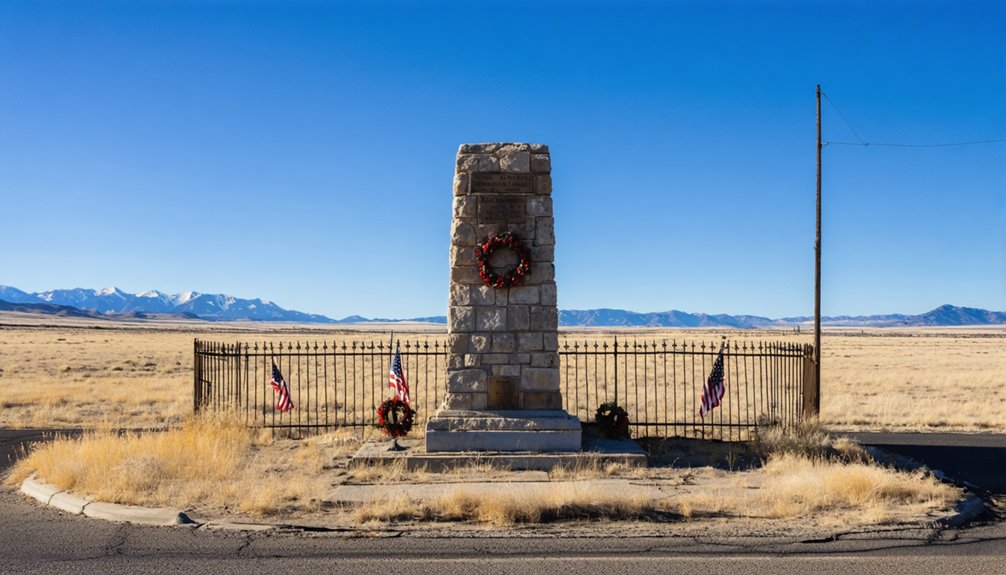
Just three miles from Brodhead, the Ludlow Massacre Monument stands as a sobering reminder of what Colorado’s coal miners and their families endured in 1914, when company guards and National Guard troops attacked a tent colony of striking workers, killing men, women, and children.
You’ll find the site demands quiet reflection, honoring the twenty or so souls who died in what became one of America’s deadliest labor conflicts.
Make time to walk the grounds, read the markers, and let that history settle in before continuing your exploration of the surrounding coal country that shaped it all.
Massacre Monument Historical Significance
Roughly 3 miles from Brodhead, the Ludlow Massacre Monument stands as one of Colorado’s most sobering landmarks, marking the site where, on April 20, 1914, National Guard troops and hired company guards attacked a tent colony of striking coal miners and their families.
This massacre commemoration preserves raw labor history that shaped America’s worker rights movement.
Visit to understand what’s at stake when power goes unchecked:
- 19 people died, including 11 children
- Miners had struck against Rockefeller-owned Colorado Fuel & Iron
- The attack triggered a 10-day armed rebellion across Colorado
- Congress launched federal investigations into corporate abuse
- The site directly influenced national labor legislation
Walking these grounds while exploring Brodhead connects you to the human cost behind every coal ton mined nearby.
Honoring Fallen Miners’ Families
Three miles from Brodhead’s silent coal shafts, the Ludlow Massacre Monument doesn’t just mark a place on a map — it marks a turning point in American history.
In 1914, Colorado National Guard troops attacked a tent colony of striking miners and their families, killing men, women, and children. The monument stands where those family stories ended violently — and where workers’ rights began reshaping the nation.
You’ll feel that weight when you stand here. Touch the stone. Read the names. These weren’t abstract laborers; they were fathers, mothers, and children fighting for dignity.
The miners’ legacy carved into this memorial connects directly to Brodhead’s own workforce, reminding you that every abandoned shaft you’ve explored today once held someone’s entire world.
Visiting The Ludlow Site
The Ludlow Massacre Monument, 3 Miles From Brodhead
A short drive from Brodhead’s abandoned shafts lands you at one of Colorado’s most sobering historical sites — the Ludlow Massacre Monument, roughly three miles south along the I-25 corridor.
This sacred ground brings Ludlow history into sharp focus, reminding you why mining memorials matter.
Here’s what awaits you:
- A stone monument marking where miners and families died in April 1914
- An underground cellar where victims sought shelter
- Interpretive signage detailing the labor conflict
- A quiet, open landscape unchanged by modern development
- A United Mine Workers cemetery honoring the fallen
Walking these grounds connects your Brodhead ghost town experience to something deeper — a raw, unfiltered chapter of American labor history you won’t forget.
Best Time of Year to Visit Brodhead
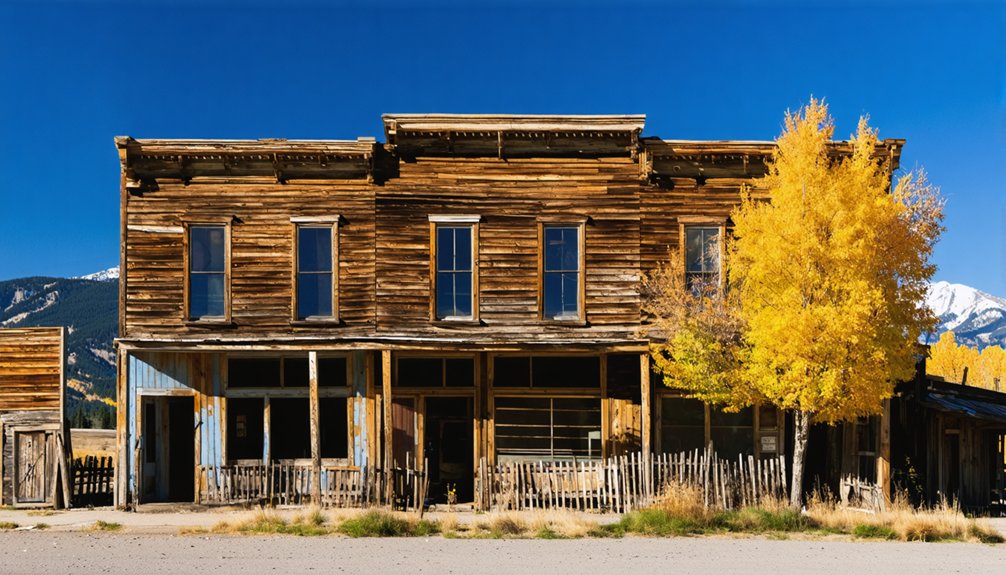
When you visit Brodhead matters as much as why you visit. The best season runs from late spring through early fall, when ideal weather keeps mountain roads passable and daylight generous.
May through September offers mild temperatures at nearly 7,000 feet, letting you explore crumbling infrastructure without battling ice or sudden snowstorms.
At nearly 7,000 feet, May through September keeps Brodhead accessible, its crumbling infrastructure finally free from ice and snow.
Summer afternoons can bring fierce Colorado thunderstorms, so arrive early and watch the western sky.
Fall delivers stunning high-plains light that photographs the ghost town beautifully against golden grasslands.
Avoid winter entirely. Las Animas County roads become treacherous, and the isolation that once defined this company town becomes genuinely dangerous.
Spring snowmelt creates muddy, unpredictable conditions. Choose your window wisely, and Brodhead rewards every step you take across its forgotten ground.
Where to Stay Near Brodhead: Trinidad and Aguilar
Roughly 18 miles south of Brodhead along Interstate 25, Trinidad serves as your most practical base camp, offering motels, historic bed-and-breakfasts, and restaurants that reflect the town’s own deep coal-country roots.
Aguilar, just 2.25 miles south, keeps you even closer to ghost town photography opportunities at dawn.
Consider these staging points:
- Trinidad’s downtown historic district offers local attractions worth exploring
- Budget motels along I-25 provide no-frills freedom for early departures
- Aguilar’s proximity means golden-hour light for ghost town photography
- Camping near Ludlow Monument connects you deeper to labor history
- Trinidad’s restaurants fuel long days of abandoned-town exploration
Both towns let you move on your own terms, waking early, chasing light, and writing your own coal-country story.
Ghost Towns Near Brodhead on the Trinidad Corridor
Brodhead doesn’t stand alone in this stretch of Las Animas County — the Trinidad Corridor shelters a loose constellation of abandoned coal camps that rewarded the same brutal industry and suffered the same collapse.
Ludlow sits nearby, its monument marking ground where miners and their families died in 1914, making it essential context for any serious ghost town exploration.
The Ludlow Massacre of 1914 left scars no monument can fully measure.
Hastings, Delagua, and Tercio each tell their own version of the same story — company control, coal dust, and eventual silence.
Local folklore threads through these communities like abandoned rail lines, connecting tragedies and triumphs that official histories often miss.
Pack the map, drive the corridor slowly, and let the landscape do its talking. Each stop deepens your understanding of why Brodhead matters.
Frequently Asked Questions
Was Brodhead Involved in the 1914 Ludlow Massacre Labor Strikes?
No direct evidence links Brodhead to the Ludlow Massacre labor strikes, but you’re exploring ground zero of Colorado’s coal wars — the nearby Ludlow Monument honors those who fought and died for workers’ freedom in 1914.
Did Brodhead Residents Own Their Homes or Rent From the Company?
You didn’t own your home in Brodhead — the company did. That Brodhead housing ownership history tells a freedom-limiting tale: workers rented from their employer, binding their lives completely to the company’s control.
What Stagecoach Routes Connected Brodhead to Neighboring Colorado Towns?
From bustling mines to quiet dust, you’d have ridden historic trails connecting Brodhead’s stagecoach routes to Aguilar and Lynn — routes steeped in local legends, carrying coal workers and supplies across Colorado’s rugged, freedom-calling landscape.
How Did Electric Mining Machinery Change Daily Operations at Brodhead?
Electric evolution transformed your daily grind at Brodhead! You’d witness mining efficiency surge as electric machinery cut coal faster and electric trains hauled massive loads, liberating miners from brutal manual labor and powering roughly 110,000 tons annually.
Are There Guided Tours Available Specifically for the Brodhead Ghost Town?
No official guided tours exist, but you’ll discover Brodhead’s historical significance through independent guided exploration. Chart your own course across these remnants of Colorado’s coal legacy — freedom awaits those brave enough to seek it themselves!
References
- https://kids.kiddle.co/Brodhead
- https://www.denver7.com/news/local-news/colorado-ghost-towns-their-past-present-and-future-in-the-rocky-mountains
- https://www.facebook.com/groups/CoMinesHistory/posts/1155807378432017/
- https://www.colorado.com/articles/colorado-ghost-towns
- https://www.youtube.com/watch?v=J8dR9D3pJrs
- https://ghosttownmuseum.com/our-story/
- https://en.wikipedia.org/wiki/Brodhead
- https://www.rmpbs.org/shows/colorado-experience/episodes/ghost-towns-b96fft
- https://www.facebook.com/ScienceChannel/videos/what-made-this-a-mysterious-ghost-town-mysteries-of-the-abandoned/1486079889158040/
- https://freepages.history.rootsweb.com/~gtusa/usa/co.htm