Plan your Bromide ghost town adventure for fall when mild temperatures make exploring the crumbling brick ruins comfortable. You’ll drive 21 miles of Oklahoma backroads via Highway 7D from Tishomingo, where mineral-crusted taps and weathered bathhouse foundations still mark where thousands once sought miracle cures. Pack your 4WD vehicle with sturdy boots, layers, water, and a camera for capturing the atmospheric decay. The nearby limestone quarry offers panoramic views, while Chickasaw National Recreation Area provides camping options—though there’s much more to discover about what made this remote destination Oklahoma’s most sought-after healing destination.
Key Takeaways
- Bromide is located 21 miles from Tishomingo via State Highway 7D through Oklahoma backroads.
- Visit in fall for mild temperatures and ideal lighting to photograph crumbling ruins and historic structures.
- Explore the Bromide State Bank ruins, hotel remains, bathhouse foundations, and capped mineral springs in residents’ yards.
- Bring a 4WD vehicle, sturdy boots, water, flashlight, GPS, camera, and bug spray for safe exploration.
- Nearby attractions include Wapanucka Academy ruins, limestone quarry views, and Chickasaw National Recreation Area camping.
The Rise and Fall of Oklahoma’s Forgotten Spa Town
Before it became a whisper on dusty Oklahoma backroads, Bromide thrived as a destination where travelers arrived by the trainload, seeking healing in waters the Chickasaw people had cherished for generations.
You’ll find Judge William H. Jackson recognized what the indigenous tribes knew—these springs held power. He built a town around mineral water branding that promised cures from three separate spouts: bromine, sulphur, and iron-rich flows that drew hundreds seeking relief from ailments modern medicine couldn’t touch.
What Remains: Exploring the Ruins and Historic Landmarks
Today’s Bromide wears its past like weathered skin—crumbling brick skeletons stand where travelers once queued for miracle cures, their hollow windows framing nothing but Oklahoma sky. You’ll find the Bromide State Bank’s floor grid, shells of grand hotels, and bathhouse ruins marked “1910 W.H. Jackson” tucked behind decaying structures. Capped springs still bubble in residents’ yards, reminders of the health resort boom.
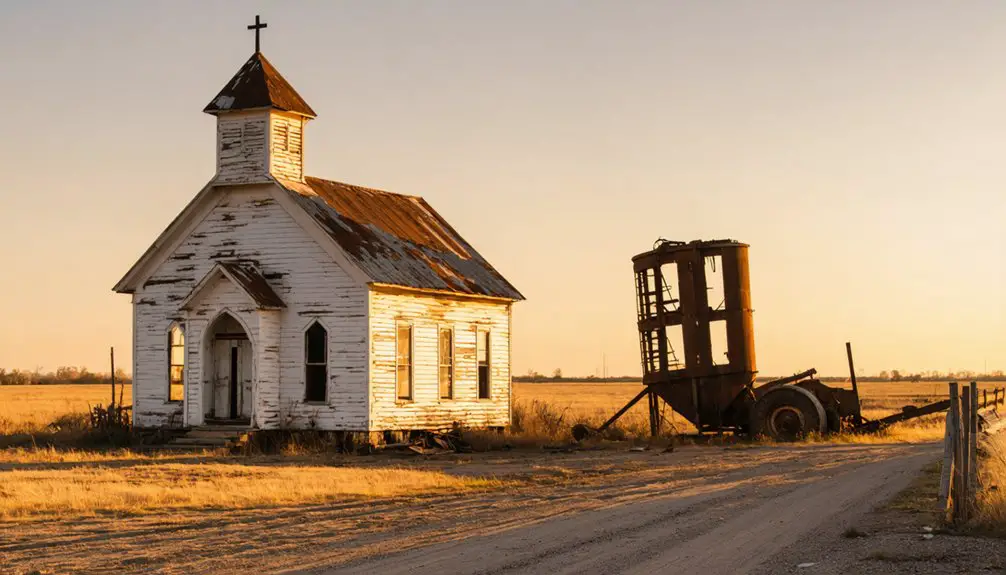
The weathered architecture tells stories worth discovering on foot. An old church persists alongside a working volunteer fire department. Walk the mile-long dirt road to the limestone quarry for panoramic views across Arbuckle foothills. Don’t miss the atmospheric cemeteries or nearby Wapanucka Academy ruins. Highway 7D dead-ends here intentionally—this isn’t a place you stumble through.
The Healing Waters That Drew Thousands
Long before Instagram influencers discovered adaptogenic waters, Bromide’s underground springs drew thousands convinced that the right mineral could cure what ailed them. The Chickasaw Nation understood this power first—indigenous medicinal practices recognized these waters as healing grounds centuries before resort developers arrived.
By the early 1900s, you’d find dedicated spouts dispensing bromine, sulphur, and iron-rich waters, each targeting specific ailments. Mineral water therapeutic claims promised relief from everything: arthritis, asthma, indigestion, even mosquito bites.
At summer’s peak, over a thousand health-seekers descended on this tiny town, traveling hundreds of miles by rail to fill their cups from those mineral-crusted taps. The sulphur stench didn’t deter them—freedom from pain mattered more than palatability. They came to drink, not bathe, gulping down waters that tasted like hope.
Getting to Bromide: Routes and Nearby Points of Interest
You’ll find Bromide tucked into the rolling hills where Johnston and Coal Counties meet, accessible via State Highway 7D—a road that simply dead-ends into what remains of this once-bustling spa town.
The drive from Tishomingo covers 21 miles of Oklahoma backroads, passing through landscape that hasn’t changed much since the Missouri, Oklahoma and Gulf Railway laid its spur here in 1911.
As you continue your journey, you may want to explore richards spur ghost town, a relic of the past that offers a glimpse into the lives of those who once thrived there. The remnants of the old railway and the ghostly ruins create a haunting atmosphere, inviting visitors to imagine the bustling community that existed long ago. This hidden gem of Oklahoma has stories to tell, waiting patiently for those adventurous enough to seek them out.
Within a few miles, you’ll spot the historical marker for Wapanucka Academy to the east and the sprawling 2,000 acres of Camp Simpson, where Boy Scouts now explore the same wilderness that drew health-seekers over a century ago.
Historic Railroad Access Routes
Before highways crisscrossed southern Oklahoma, the Missouri, Oklahoma and Gulf Railway provided the lifeline that transformed Bromide from an obscure mineral springs location into “the best health resort in the southwestern states.” When the MO&G spur finally reached town in 1911—a year after workers laid track three miles east at what became known as Bromide Junction—weekly excursion trains began depositing visitors by the hundreds.
The railway journey involved several connections:
- Durant served as your departure point for excursion trains heading toward Bromide’s healing waters
- Railway construction challenges forced the line to terminate at Bromide Junction rather than downtown
- Buckboards transported you the remaining distance from Junction to town proper
- Route changes over time brought Kansas, Oklahoma and Gulf Railway ownership before 1950’s abandonment
Summer crowds exceeded one thousand visitors before the Depression ended this freedom-seeking pilgrimage.
Nearby Towns and Landmarks
Your journey to Bromide begins 123 miles southeast of Oklahoma City, where State Highway 7D cuts through the Arbuckle Mountains foothills into this mineral springs settlement straddling the Johnston-Coal county line.
You’ll pass Wapanucka seven miles northwest, where 445 residents maintain local businesses near the historic academy site. Tishomingo lies 21 miles southwest—Johnston County’s seat offering supplies before venturing deeper into ghost town territory. Mill Creek sits 12 miles south on Highway 1/7, population 340, your last reliable fuel stop.
The sulphur and bromide springs that named this town once drew health-seekers by rail; now they’re yours to discover without crowds. Coalgate waits 21 miles northeast if you’re continuing through Coal County’s backcountry, where recreational activities mean exploring abandoned structures and forgotten trails rather than tourist attractions.
Best Times to Visit and What to Bring
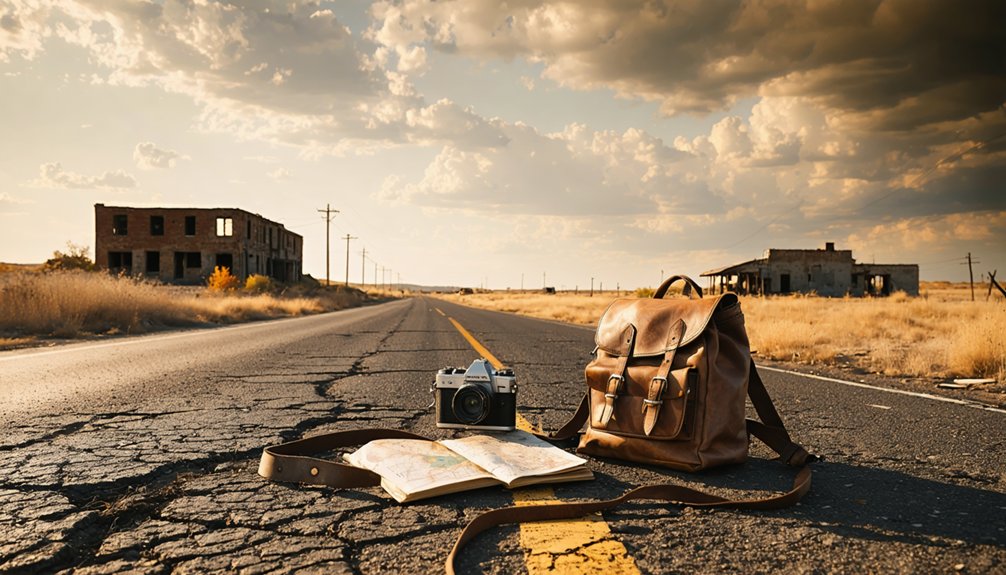
Timing your visit to Bromide can make the difference between a memorable exploration and a sweltering ordeal under the Oklahoma sun. Fall delivers the sweet spot—cooler temps and golden light perfect for photographing crumbling structures without crowds competing for shots. Spring works too, though you’ll want to check forecasts since weather shifts fast in these foothills. Skip summer unless you thrive in furnace-like heat.
Fall offers the ideal window for exploring Bromide—mild temperatures, perfect light, and empty ruins waiting for your camera.
Pack smart for unrestricted exploration:
- 4WD vehicle for traversing dirt roads east to the quarry
- Sturdy boots and layers adapting to temperature swings
- Water, flashlight, and GPS since visitor amenities don’t exist here
- Camera and bug spray capturing seasonal attractions while avoiding insect ambushes
This ghost town rewards the self-sufficient wanderer ready to embrace solitude.
Combining Your Trip: Nearby Attractions and Camping Options
Since Bromide sits within spitting distance of Chickasaw National Recreation Area, you’d be shortsighted to skip the region’s crown jewel after exploring the ghost town’s ruins. The mineral springs history that drew over 100,000 early visitors’ experiences annually still beckons from Bromide Hill’s trails, where century-old cement stairways snake up cliffsides. You’ll find bison roaming beneath waterfalls and natural springs bubbling where Bromide Pavilion once dispensed healing waters.
For basecamp, Bromide View RV Park offers full hookups if you’re rolling in an RV, while Rock Creek Campground suits tent warriors seeking authentic immersion. The Chickasaw Cultural Center adds depth between trail runs, and Bromide Mountain Co. stocks Patagonia gear for impromptu adventures. Most early 1900s visitors camped three days minimum—you’ll understand why once these Arbuckle foothills work their magic.
Frequently Asked Questions
Is It Safe to Drink or Touch the Mineral Spring Water?
You’ll find touching the spring water safe, but drinking’s risky without testing potential toxicity levels first. Officials warn consumption’s at your own risk. If you’re sampling anyway, bring proper protective equipment and avoid swallowing untreated water.
Are the Ruins on Private Property or Accessible to Visitors?
The ruins sit mostly on private property with capped springs in residents’ backyards. You’ll find no clear public access policies here—respectfully seek permission before exploring, as historical ownership status remains with local landowners who value their freedom.
Can You Still See Bromide Deposits or Minerals at the Springs?
Like a dried riverbed hiding ancient secrets, you’ll find no active springs today—the flow stopped in the 1970s. The spring water composition vanished with cessation, though mineral deposit preservation remains visible in the historic pavilion’s weathered stone blocks.
Are There Any Guided Tours or Historical Markers in Bromide?
You won’t find guided tours available or historical museum exhibits in Bromide—it’s pure, unstructured exploration. You’ll discover weathered building shells and fading memories along Highway 7D, where freedom means wandering this forgotten spa town entirely on your own terms.
What Photography Restrictions Exist for the Historic Hotel and Ruins?
You’ll find no photography restrictions at Bromide’s ruins—100% freedom for landscape photography and architectural photography. I’ve captured crumbling walls and prairie vistas without interference. Just respect private property boundaries, and you’re free to shoot these hauntingly beautiful structures.