Planning a ghost town road trip to Brush Point, Illinois, means heading into rural DeKalb County, northwest of Sycamore, where a forgotten settlement once competed for county-seat glory in 1839. You’ll find its story tied to the Kishwaukee River‘s flood-prone banks, a fierce rivalry with Sycamore, and a vanished community that disappeared within years of losing that pivotal election. Plug in the coordinates, pack your curiosity, and there’s much more to uncover about this lost Illinois settlement.
Key Takeaways
- Brush Point sits on the Kishwaukee River’s western bank in DeKalb County, Illinois, with GPS coordinates of approximately 42.02806°N, 88.75361°W.
- The settlement developed around 1830 but disappeared after losing the 1839 DeKalb County seat election to Sycamore.
- Recurring Kishwaukee River flooding made Brush Point uninhabitable, leaving little visible evidence of the original settlement today.
- Nearby towns Sycamore and DeKalb offer historical context and serve as practical base camps for visiting the rural site.
- Download offline maps, respect private farmland, and visit in fall or summer for the best exploration conditions.
What Was Brush Point, Illinois?
Tucked along the western bank of the Kishwaukee River in Mayfield Township, Brush Point was a small DeKalb County settlement that took shape around 1830, built up from modest log houses during Illinois’s early westward expansion. You’re stepping into a place where local legends grew alongside frontier ambition, and where everyday settlers carved out something real from raw land.
Brush Point briefly commanded serious political attention, landing among three finalists in DeKalb County’s 1839 county-seat contest. Prominent resident Dr. Henry Madden, an Illinois State Legislature member since 1836, championed its cause.
But low-lying ground prone to flooding ultimately cost the town that distinction. Once Sycamore claimed the seat, residents departed quickly. Though historical artifacts and the old schoolhouse site remain reference points, Brush Point itself vanished within just a couple of years.
Where Exactly Did Brush Point Stand?
When you trace your route through DeKalb County, you’ll find that Brush Point once stood on the western bank of the Kishwaukee River, northwest of Sycamore.
The settlers who built their small log homes there chose a spot that felt promising, tucked along the river’s edge in what was then the Illinois frontier.
Today, you can orient yourself by looking northwest from Sycamore, where that quiet riverbank still flows, carrying little trace of the community that once called it home.
Kishwaukee River Western Bank
Where exactly did Brush Point stand? You’ll find the answer along the western bank of the Kishwaukee River, tucked into Mayfield Township in DeKalb County. Settlers planted their small log houses here as early as 1830, drawn by the river’s presence and the promise of open land.
Standing at this site today, it’s easy to imagine the local legends that grew from those early years — neighbors building a community from scratch, believing they’d settled somewhere lasting.
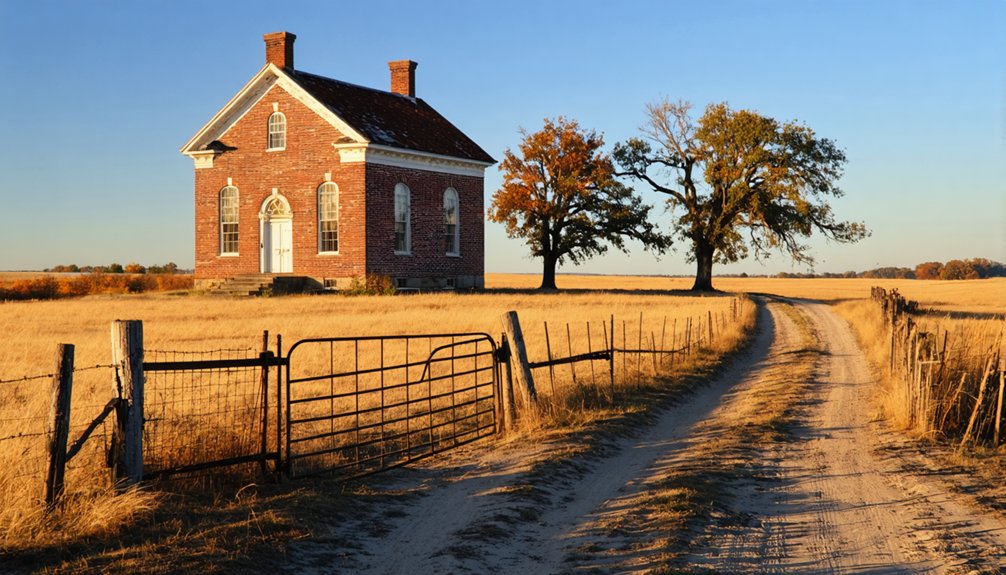
The old Brush Point School remains one of the few historical landmarks anchoring this vanished place to the present.
The location sits northwest of Sycamore and north of DeKalb, making it straightforward to include on your road trip without losing much time.
Northwest Of Sycamore Location
If you’re mapping out your route, Brush Point once stood northwest of Sycamore and north of DeKalb, positioned along the western bank of the Kishwaukee River in Mayfield Township.
Pull up historical maps from the 1830s and you’ll notice how deliberately early settlers chose this riverside spot during Illinois’s westward expansion.
Today, the coordinates 42.02806°N, 88.75361°W mark the old Brush Point School site, giving you a reliable anchor point for your visit.
Local legends still circulate about this ambitious little settlement that nearly became DeKalb County’s seat of power.
The surrounding rural landscape hasn’t changed dramatically, so you’ll get a genuine sense of why settlers once believed this location held real promise.
Stand there and you’re standing exactly where that dream briefly lived.
The 1839 County Seat Fight That Ended Brush Point
Though it lasted only a few years, Brush Point’s most defining moment came in June 1839, when DeKalb County officials needed to choose a permanent county seat. Three towns competed, and Brush Point had a real shot. Dr. Henry Madden, a state legislator and local champion, pushed hard for the town’s selection.
But geography worked against them. The deciding factors sealed Brush Point’s fate:
- Its low-lying land along the Kishwaukee River raised serious flooding concerns
- Sycamore offered higher, more stable ground for lasting development
Residents quickly relocated once officials announced the decision. That loss stripped away Brush Point’s historical significance almost overnight. Within a couple of years, the town vanished entirely. Its community legacy now lives only in records, coordinates, and the quiet land beside the river.
How Flooding on the Kishwaukee Sealed Brush Point’s Fate
When you stand near the old Brush Point site today, you can see exactly why the Kishwaukee River made this settlement a risky bet — the low-lying western bank left early residents vulnerable to unpredictable flooding.
That geographic weakness didn’t just hurt Brush Point’s county-seat bid; it actively drove families to pack up and head toward higher, safer ground in Sycamore.
Within just a couple of years, the water’s persistent threat had done what politics started, erasing a once-promising little community from the map entirely.
River’s Risky Location
Why would settlers choose to build a community on low-lying land beside a river prone to flooding? Early pioneers craved freedom and fresh starts, and the Kishwaukee River offered water, fertile soil, and promise. Yet nature had other plans.
The river’s risky location ultimately doomed Brush Point’s future, erasing its historical architecture and burying its local legends beneath layers of time and floodwater.
- Seasonal flooding made the land unreliable for permanent settlement.
- Low-lying terrain gave rival towns a geographic advantage during the 1839 county-seat vote.
- Residents couldn’t ignore nature’s repeated warnings and began relocating to Sycamore.
You can still feel that tension when you visit the area today — the land quietly tells the story of a community that the river simply refused to protect.
Flooding Doomed Settlement
Every spring, the Kishwaukee River rose without apology, swallowing the low-lying banks where Brush Point’s settlers had staked their futures. That relentless flooding wasn’t just inconvenient — it was a death sentence for the settlement’s ambitions.
When county officials weighed Brush Point against Sycamore in 1839, the geography argued loudly against it. You can imagine decision-makers standing on that soggy western bank, recognizing that no serious historical architecture could survive repeated inundation. No courthouse, no commerce, no permanence.
Local legends suggest residents resisted leaving, clinging to what they’d built. But water doesn’t negotiate. Within a couple of years, the community dissolved, its people relocating to higher, drier ground in Sycamore.
Nature ultimately cast the deciding vote that politics alone might never have settled.
Water Drove Residents Away
Flooding didn’t just threaten Brush Point — it chased its people out. Once Sycamore won the county seat, residents had little reason to stay on low-lying ground near the Kishwaukee River. The water always held the upper hand.
Locals left behind more than cabins — they abandoned local legends, early roots, and a shot at permanence. What remained faded into fields.
Here’s what the flooding ultimately cost Brush Point:
- Historical landmarks vanished as residents relocated to Sycamore within just a couple of years
- Seasonal flooding made the riverbank settlement impractical for long-term growth
- Community identity dissolved once the population scattered
You’re visiting land that water reclaimed. The river didn’t care about ambition — it just kept rising, and the people kept leaving.
What’s Left at the Brush Point Site Today
Though Brush Point itself has long since vanished, you can still visit the site where the old Brush Point School once stood, located at approximately 42.02806°N, 88.75361°W in rural DeKalb County.
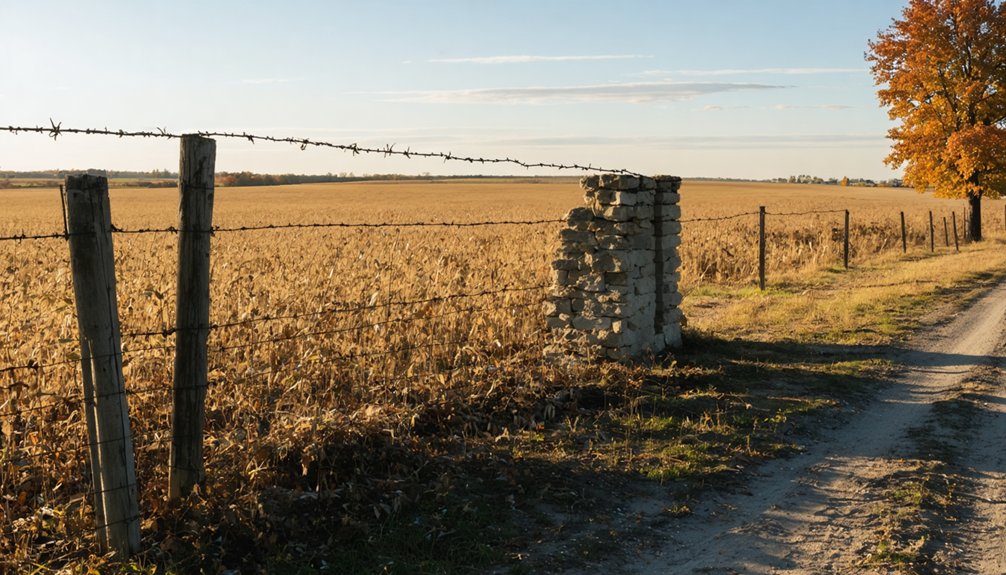
It’s a quiet, rural stretch near the Kishwaukee River where local legends of the 1839 county-seat rivalry still echo through the landscape. Don’t expect preserved historic architecture or interpretive signs — what you’ll find is open land that once held a thriving early Illinois settlement.
That absence tells its own story. Bringing a map, your curiosity, and maybe a little imagination makes the visit worthwhile.
Nearby Sycamore and DeKalb offer easy reference points to orient your drive, making Brush Point a natural stop on any northern Illinois ghost town road trip.
How to Find the Old Brush Point Schoolhouse
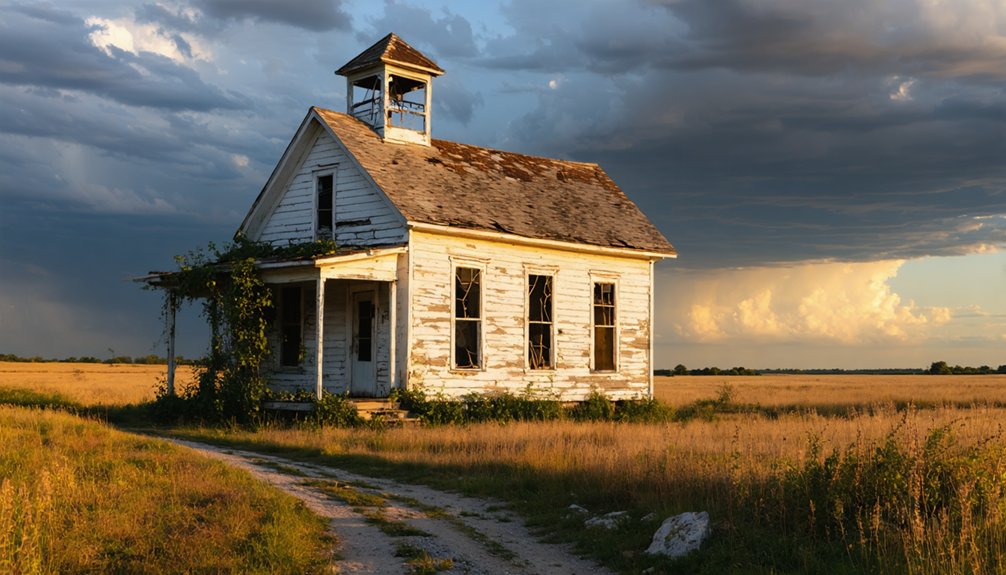
Finding the old Brush Point Schoolhouse site starts with a set of coordinates: 42.02806°N, 88.75361°W. Plug them into your GPS and head into rural DeKalb County, northwest of Sycamore.
The landscape feels open and unhurried out here — exactly the kind of place where local legends take root.
Once you’re on-site, keep these tips in mind:
- Cross-reference nearby roads using Sycamore and DeKalb as anchor points to orient yourself.
- Study the surrounding terrain — the low-lying land near the Kishwaukee River still tells the story of why Brush Point lost its future.
- Photograph any remaining historical architecture for documentation and personal memory.
Standing here connects you to an 1839 decision that quietly erased a community from the map forever.
What to See Near Brush Point: DeKalb and Sycamore Stops
After exploring the ghost of Brush Point, you’re already close to two towns that carry the region’s deeper story — Sycamore and DeKalb, both within easy reach in DeKalb County.
Sycamore won the 1839 county-seat contest that doomed Brush Point, so walking its historic courthouse square hits differently once you know that. Local legends around Sycamore tie directly to that rivalry, giving the town a layered character worth your time.
Sycamore beat Brush Point in 1839 — walking its courthouse square, that history quietly follows you.
DeKalb sits just south, offering its own ghost stories and a grittier, university-town energy that contrasts nicely with the quiet rural stretch you just left behind.
Together, these two stops transform a single ghost-town visit into a fuller picture of how DeKalb County grew, shifted, and left certain places — like Brush Point — permanently behind.
The Best Time of Year to Visit Brush Point
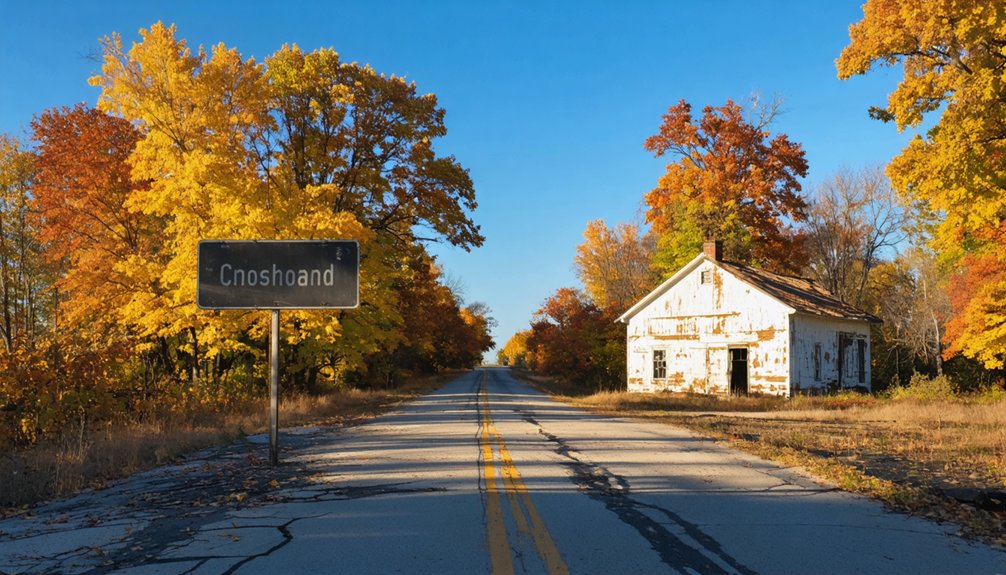
Once you’ve mapped out your stops in Sycamore and DeKalb, timing your visit to the Brush Point site becomes the next practical piece of the puzzle. The rural DeKalb County landscape rewards visitors who plan around the seasons, especially when you want to absorb both the historical significance and the geographic features that shaped this lost community.
Consider these seasonal advantages:
- Spring reveals the Kishwaukee River’s flood-prone lowlands, helping you understand why Brush Point lost the county-seat vote.
- Summer offers long daylight hours for exploring the old schoolhouse site and surrounding fields.
- Fall strips the tree lines back, opening clearer sightlines across the western riverbank where log houses once stood.
Avoid winter visits, when rural roads near the river become difficult to navigate.
Road Trip Tips for Visiting Brush Point and Illinois Ghost Towns
Packing a few key habits into your road trip routine makes all the difference when you’re chasing ghost towns like Brush Point across northern Illinois. Download offline maps before you leave — rural DeKalb County has spotty service.
Bring a notebook to capture local legends you’ll hear from longtime residents near Sycamore and DeKalb. These stories rarely appear online, yet they breathe life into historical preservation efforts that keep forgotten places from vanishing entirely.
Park respectfully near private farmland, and never disturb old schoolhouse sites or markers.
Check road conditions seasonally, since low-lying areas near the Kishwaukee River flood unpredictably.
Travel with curiosity rather than a rigid schedule — ghost towns reward patience. The roads that carried settlers westward still carry stories, and you just have to follow them.
Frequently Asked Questions
Is There Any Parking Available Near the Brush Point Schoolhouse Site?
No official parking options exist, but you’ll find informal access points along the rural roads near the old Brush Point Schoolhouse site. Pull over safely, breathe in that open Illinois countryside, and let history’s quiet freedom wash over you.
Are There Any Guided Tours Focused on Dekalb County Ghost Towns?
You won’t find formal guided tour options for DeKalb County ghost towns, but you can freely craft your own historical site visits, exploring forgotten places like Brush Point at your own nostalgic, unhurried pace.
Can Children Enjoy a Visit to the Brush Point Area?
Yes, kids can absolutely love exploring Brush Point! You’ll find family activities like nature walks along the Kishwaukee River genuinely spark curiosity. Follow basic safety tips near low-lying areas, and you’ll create unforgettable, freewheeling memories together.
Is the Brush Point Site on Public or Private Land?
The Brush Point site likely sits on private land, so you’ll want to confirm property access before you visit. Respect the boundaries of this forgotten place, honoring the freedom its early settlers once sought along the Kishwaukee River.
Are There Any Annual Events Celebrating Dekalb County Pioneer History?
Like echoes from the past, DeKalb County’s pioneer festivals and historical reenactments breathe life into forgotten stories. You’ll want to check with local historical societies, as they’re your best gateway to uncovering these living celebrations of freedom.
References
- https://kids.kiddle.co/Brush_Point
- http://livinghistoryofillinois.com/pdf_files/Brush Point
- https://en.wikipedia.org/wiki/Brush_Point
- https://drloihjournal.blogspot.com/2017/02/lost-towns-of-illinois-brush-point.html
- https://www.youtube.com/watch?v=X-k9IxjPWqc
- https://en.wikipedia.org/wiki/List_of_ghost_towns_in_Illinois
- https://en.wikipedia.org/wiki/Category:Ghost_towns_in_Illinois
- https://kids.kiddle.co/List_of_ghost_towns_in_Illinois
- https://drloihjournal.blogspot.com/p/lost-towns-of-illinois-series.html
- https://en.wikipedia.org/wiki/Category:United_States_ghost_town_stubs