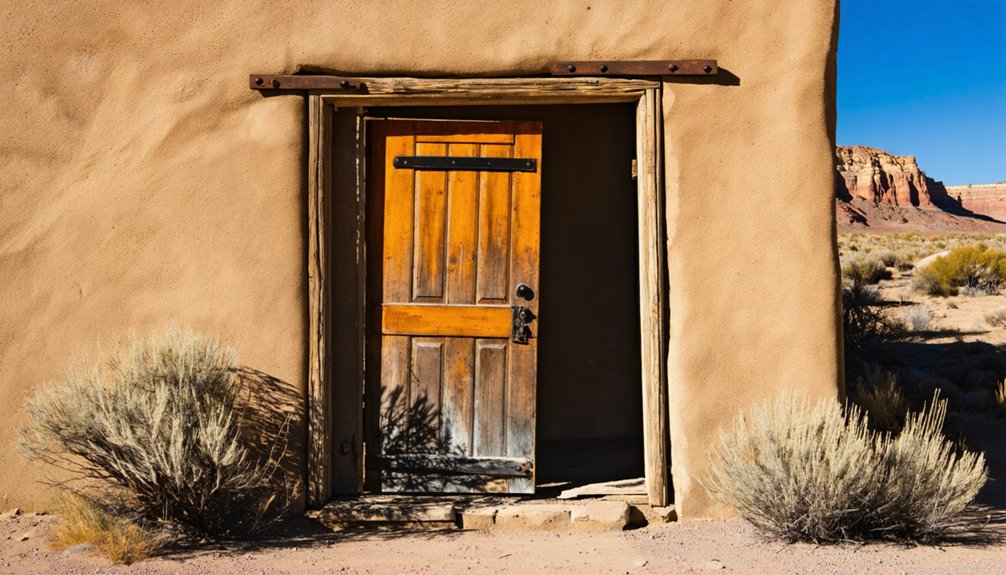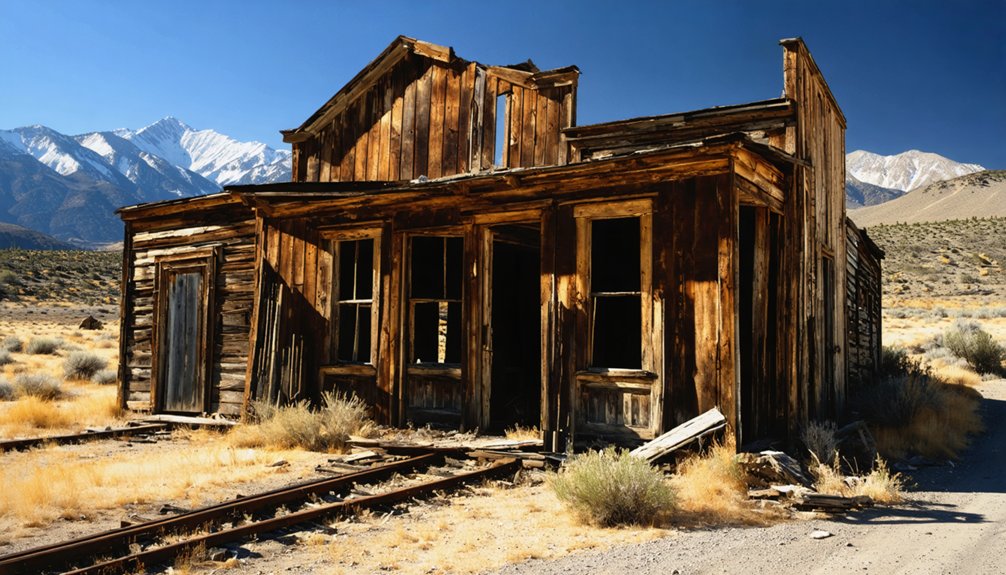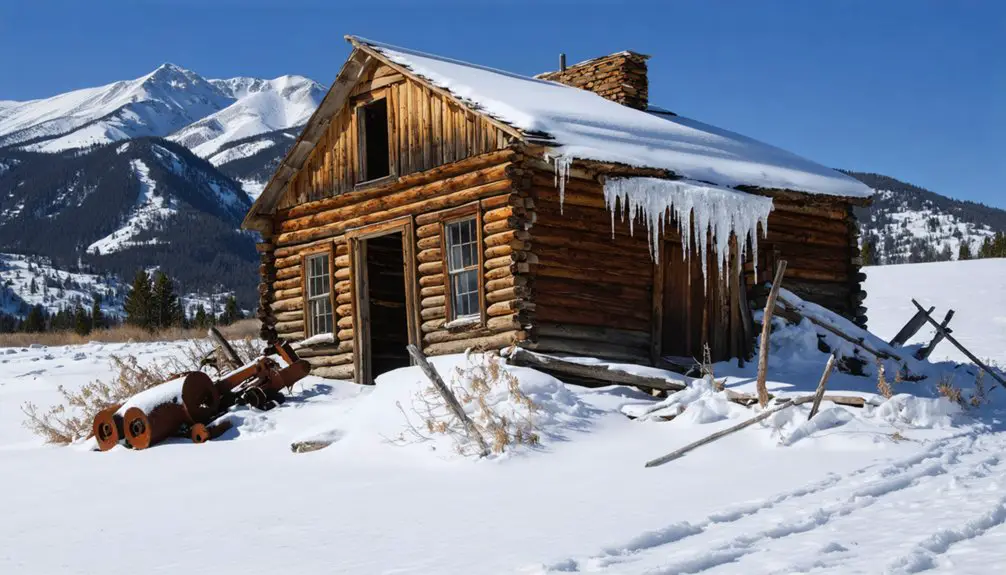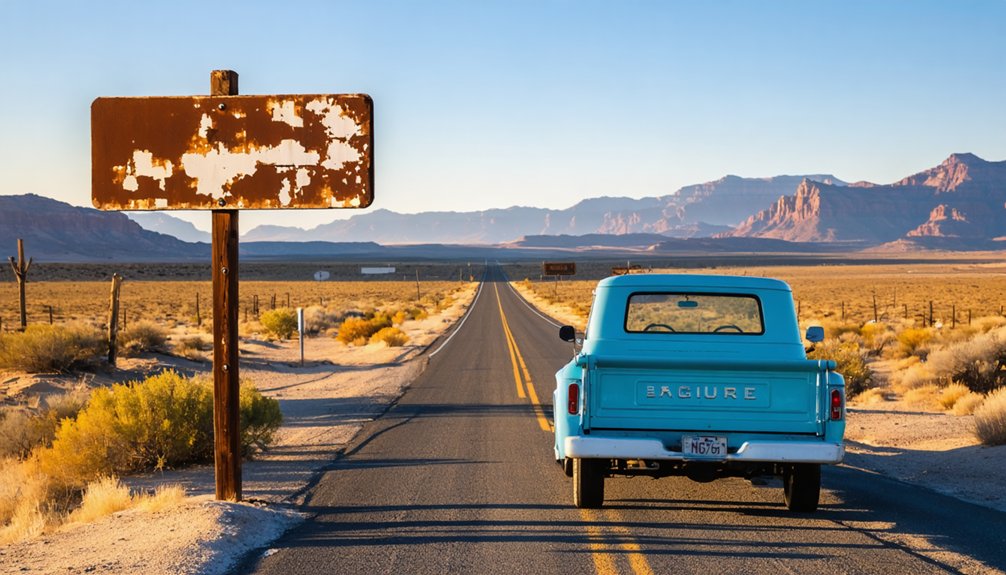
You’ll need a high-clearance 4WD and serious preparation to reach Bullionville’s haunting remains perched above Nevada’s Cathedral Gorge. Pack 3-5 liters of water per person, download offline maps, and tell someone your route—there’s zero cell service on these deteriorating mining roads. Once there, you’ll find crumbling foundations, tailings piles, and Boot Hill’s unmarked graves where 500 souls once chased silver dreams during the 1870s boom. The journey rewards those who respect preservation protocols and come prepared for high-altitude weather shifts.
Key Takeaways
- Bullionville requires a high-clearance 4WD vehicle to navigate rough mountain routes through the Uintah Mountains near Dry Fork.
- Download offline maps and GPS coordinates before departure, as there is no cell service in the remote area.
- Inform someone of your route and expected return time, and pack emergency supplies including 3-5 liters of water per person.
- Visit the cemetery on the windswept hill, tailings piles, crumbling foundations, and nearby Cathedral Gorge Park and Panaca Summit Charcoal Kilns.
- Follow Leave No Trace principles: avoid touching artifacts, don’t climb structures, and check weather advisories especially for spring snow.
Getting to Bullionville: Routes and Road Conditions
Perched at 8,514 feet in the Uintah Mountains of northeastern Utah, Bullionville isn’t the kind of ghost town you’ll stumble upon during a casual Sunday drive. You’ll need to navigate rough Forest Service roads near Dry Fork, where your standard sedan might protest loudly. The route from Vernal winds through Big Brush Creek territory, demanding high clearance and preferably four-wheel drive.
Check winter weather advisories before heading out—snow lingers well into spring at this elevation, transforming accessible trails into impassable barriers. Summer’s your safest bet, though afternoon thunderstorms roll in fast.
Download offline maps from OpenStreetMap beforehand; cell service is nonexistent. Remote hiking hazards include sudden elevation changes and wildlife encounters. Pack emergency supplies, extra fuel, and inform someone of your route. Freedom means responsibility here.
What to Expect at the Ghost Town Site
After conquering those rugged mountain roads, you’ll find yourself staring at what remains of Bullionville—and honestly, “remains” might be generous. The tailings piles dominate the landscape, silent testimony to those 110 stamps that once thundered here.
Bullionville’s tailings piles stand as silent monuments to 110 stamps that once shook this now-vanished boomtown into existence.
You’ll spot iron pipes protecting crumbling foundations, remnants of the water tower with its weathered wooden floors, and scattered building plots where 500 souls once lived.
Don’t expect guided tours availability—this is raw, unfiltered history you’ll explore on your own terms. Site preservation challenges mean what you see today won’t last forever; those protective iron barriers can only slow time’s relentless march.
Wander up to Boot Hill’s cemetery overlook, where unmarked graves whisper stories that wooden markers can’t tell anymore. It’s haunting, authentic, and completely yours to discover.
As you wander further, consider exploring ghost towns in Newbury Center, where echoes of the past linger in the dilapidated structures and the silence speaks volumes. Each corner of these abandoned places reveals remnants of lives once lived, inviting you to imagine their stories. There’s a certain magic in the decay, as nature reclaims what was once vibrant and alive.
Essential Gear and Vehicle Requirements
Ready to tackle Bullionville’s backcountry? You’ll need a high-clearance 4WD vehicle for rough terrain near U.S. Route 93, though 2WD handles main roads fine. Pack emergency communication devices—cell coverage’s spotty at 5,220 feet—plus repair tools and first-aid supplies.
Layer your clothing for high-altitude swings and wear sturdy boots for cemetery trails. Bring GPS coordinates (37.803333, -114.406944), offline maps, and a compass for backup navigation to Nevada Historic Marker No. 203.
Here’s where eco friendly travel considerations matter: stick to existing routes, cross streams only at designated fords, and pack out everything. Site preservation protocols are strict—even square-headed nails are protected artifacts. Tread Lightly training helps you explore responsibly while trail cameras monitor compliance with federal preservation laws.
Exploring the Cemetery and Historical Remains
With your gear checked and route mapped, you’ll find Bullionville’s cemetery perched on a windswept hill just outside the gorge—a stark contrast to the dramatic Cathedral formations below. Most burials here are unmarked graves, their weathered wooden markers having surrendered to a century of desert sun and wind. You’ll need imagination to picture the 500 souls who once called this place home during the 1870s silver boom.
Follow the short trail from Cathedral Gorge State Park for the best access. From this vantage point, you can scan the valley floor where five mills once processed Pioche ore. Few ruins remain—the land’s reclaimed its own. Check out the nearby Panaca Summit Charcoal Kilns for tangible history. Nevada Historical Marker No. 203 along U.S. Route 93 provides context before you explore.
Best Practices for Visiting Remote Ghost Towns
Before you venture into Bullionville’s isolated reaches in the Uintah Mountains, you’ll need more than enthusiasm—this remote copper camp demands serious preparation. Pack 3-5 liters of water per person, bear spray, and a thorough first-aid kit for this cell-service-free zone. Your high-clearance 4×4 isn’t optional—these eroded mining roads have deteriorated since the 1920 abandonment. Download Ashley National Forest maps offline and inform someone of your itinerary before heading out.
Respect archaeological preservation by leaving artifacts untouched and avoiding structure climbing. Practice Leave No Trace principles religiously—pack out everything you bring. Engage with local community involvement through the Utah Ghost Town Project to understand Bullionville’s 1882-1920 copper mining history. Limit your group to 6-8 people, stay on existing trails, and remember: you’re visiting history, not owning it.
Frequently Asked Questions
What Time of Year Is Best for Visiting Bullionville?
Summer’s your only real window for exploring Bullionville’s ruins. You’ll avoid treacherous weather patterns and impassable roads that plague shoulder season visits. Pack light, hit the dirt roads when they’re dry, and you’ll experience total high-desert freedom.
Are There Any Entrance Fees or Permits Required to Visit?
No entrance fees or permits needed—just roll up like a Wild West wanderer. You’ll find zero nearby amenities at this authentic ruins site, so pack everything. The local history remains gloriously free from commercialization and bureaucratic red tape.
How Long Does a Typical Visit to Bullionville Take?
You’ll spend 1-2 hours exploring Bullionville’s scattered ruins and cemetery. Average visitor duration stretches longer if you’re hiking surrounding trails. Accessibility challenges from high altitude and remote location mean you’ll need proper preparation before venturing out.
Is Camping Allowed Near the Ghost Town Site?
You’ll find rustic accommodations on BLM land surrounding Bullionville—primitive camping sites await within the 14-day limit. Scout nearby campsites at least 300 feet from ruins, pack out everything, and embrace that off-grid freedom you’re craving.
Are There Guided Tours Available for Bullionville?
No guided tours exist at Bullionville—you’ll explore freely through self-guided tours instead. Follow interpretive signs through the Canyon of Gold route, discovering historical exhibits like the Dalton cabin and mining relics at your own adventurous pace.