You’ll need a high-clearance vehicle to navigate the 6.4 miles of rocky, unpaved road leading to Cable’s weathered ruins at 6,821 feet. Plan your visit between late June and early November, when Garnet Range Road remains passable and wildflowers dot the landscape around the Gold Coin Mill’s skeletal remains. The drive from Helena takes roughly two hours, positioning you perfectly to explore nearby ghost towns like Garnet and Granite while based in Philipsburg, where detailed trail maps and local insights await your discovery.
Key Takeaways
- High-clearance vehicle or SUV required for 6.4 miles of rocky, unpaved road beyond initial 3.7 miles of paved Garnet Range Road.
- Road closed December 16 through April 30; visit late June for optimal conditions before peak mosquito season in July.
- Explore Gold Coin Mill ruins, sealed mine shafts with coiled cables, and stone foundations scattered across the landscape.
- Obtain permission before entering private property areas; trails lead to shafts and adits at 6,821 feet elevation.
- Combine trip with nearby ghost towns: Garnet, Granite Ghost Town State Park, Marysville, Rimini, and Glendale.
The Rise and Fall of Cable’s Silver Mining Legacy
While searching for lost horses in 1867, prospectors stumbled upon something far more valuable than their wayward animals—a towering quartz pillar glittering with gold. They named their claim the Atlantic Cable Lode, and the surrounding camp simply became Cable. Helena financiers jumped aboard, transforming this remote spot near Silver Lake into a bustling operation.
Lost horses led to found fortune—a gleaming quartz pillar transformed wandering prospectors into discoverers of Cable’s golden destiny.
But disagreements among the original three miners killed the venture within a decade.
New owners revived it in 1883, riding Montana’s silver boom that placed the territory second only to Colorado in production. The 1898 Gold Coin Lode discovery brought fresh hope, yielding $200,000 over ten years.
Yet sporadic operations and Cable mining’s demise by 1940 left lasting local economy impacts, reducing this once-promising settlement to weathered ruins.
What Remains: Exploring Cable’s Historic Ruins and Structures
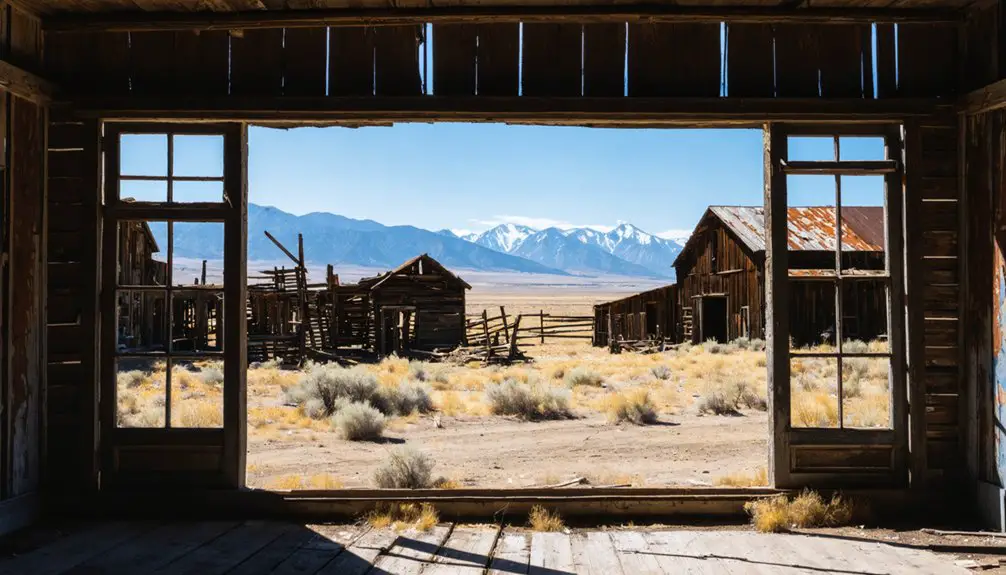
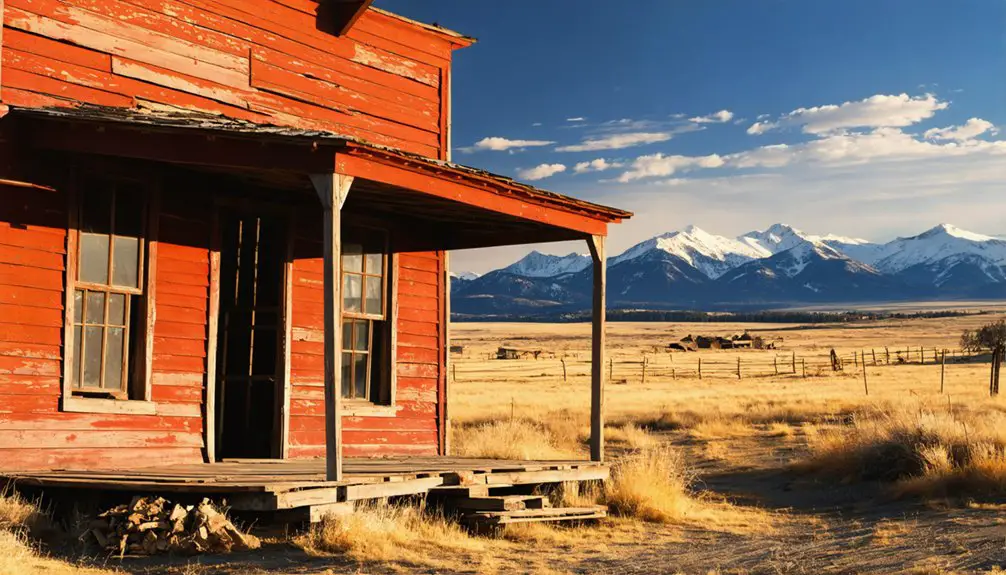
As you navigate the wilderness trails toward Cable’s scattered ruins, the skeletal remains of the Gold Coin Mill rise against Montana’s big sky—a tribute, a memorial, a reminder to the industrial ambition that once transformed raw ore into precious metal.
Your boots crunch over paths once traveled by pack mules, leading you past massive hoist cables still coiled near sealed mine shafts and granite foundations that supported buildings large enough to house an entire mining operation.
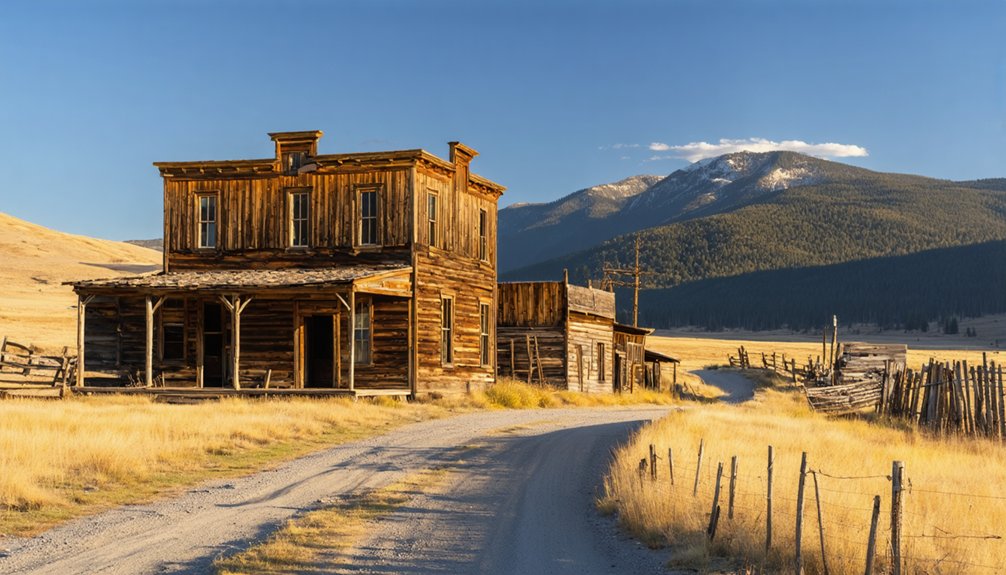
Stone walls emerge from the sagebrush, marking where hotels, restaurants, and homes stood before the mines fell silent in 1940, leaving only these weathered monuments to Cable’s vanished prosperity.
Granite Mill Stone Foundations
The massive stone foundations of Granite’s stamp mills rise from the mountainside like weathered sentinels, their hulking presence dominating what remains of this once-thriving mining community. You’ll walk through substantial brick and stone walls where the 80-stamp mill once processed millions in silver ore.
The mill floor plans reveal the industrial scale of operations—this structure housed equipment that crushed rock from the 8,900-foot tramway overhead. Mining equipment artifacts scatter across the foundations, rusted remnants of the machinery that generated $2.5 million between 1885-1888.
While frame buildings vanished decades ago, these enduring stone foundations let you trace the mill’s expansion from its original 20-stamp configuration. Stand here, and you’re touching Montana’s untamed mining legacy.
Mining Infrastructure and Trails
Hidden among the pines along Montana Highway 1, Cable’s mining infrastructure tells its story through absence as much as presence. You’ll find scattered foundations where the Gold Coin Mill once processed ore, torn down after 1940 but leaving traces across the landscape.
Trails wind upward to 6,821 feet, where three shafts and test pits puncture the mountainside—remnants of operations that pulled millions in gold from the earth. Stream crossings mark your approach to these abandoned structures, water still flowing while human enterprise has ceased.
The private property requires permission, but respectful exploration reveals adit openings and shaft works that served miners from 1866 through 1957. Each crumbling timber and rusted cable speaks to the Atlantic Cable Lode’s legacy—freedom seekers chasing fortune in Montana’s wilderness.
Getting There: Detailed Driving Directions From Major Cities
Journey planning to Cable requires understanding that this remote ghost town sits in the rugged mountains northwest of Laurel, accessible only via backcountry roads that test both your vehicle and your sense of adventure.
You’ll find no public transportation options reaching this isolated site—your own reliable 4WD vehicle becomes essential. From Billings, head west toward Laurel on I-90, then navigate Forest Service roads into the backcountry.
The unpaved mountain routes demand careful attention and seasonal awareness, as snow closes access much of the year. Due to Cable’s extreme remoteness, nearby accommodation recommendations center on Laurel or Billings, where you’ll find hotels before your early-morning departure.
Pack supplies, fuel up completely, and download offline maps—cell service disappears quickly once you leave civilization behind.
Vehicle Requirements and Road Conditions to Expect
You’ll need a high-clearance vehicle or SUV to tackle the unpaved, rocky approaches that lead to Cable’s weathered remains—standard passenger cars won’t survive the rutted terrain and creek crossings.
The access roads transform dramatically with Montana’s seasons: what’s a dusty but manageable trail in July becomes an impassable snowdrift by November, closing off ghost town exploration until spring thaw.
Check MDT’s 511 system before you leave, as mountain passes and gravel routes receive minimal winter maintenance, leaving you stranded if you don’t plan around weather windows.
High-Clearance Vehicle Necessity
While the first 3.7 miles of Garnet Range Road roll out smooth pavement beneath your tires, the character of your journey shifts dramatically once you hit the gravel. The remaining 6.4 miles demand respect—uneven surfaces and embedded rocks will test your vehicle performance mercilessly. Low-clearance sedans face genuine accessibility challenges here, risking punctured oil pans and damaged exhaust systems on protruding stones.
You’ll need an SUV or truck to conquer this 8-mile unpaved stretch confidently. The natural surface of Garnet Jump Over Road proves even more unforgiving, with ruts and washboard sections that’ll rattle your fillings loose. This isn’t just bureaucratic caution—it’s practical wisdom from 28,000 annual visitors who’ve learned the hard way. Your freedom to explore depends entirely on bringing the right machine for Montana’s backcountry demands.
Seasonal Road Accessibility
Having the right vehicle means nothing if Garnet’s gates slam shut on your arrival. Winter access protocols close the road December 16 through April 30—wheeled vehicles banned, period. You’ll park at designated lots and switch to skis or snowmobiles when snow dictates.
Summer delivers your sweet spot: May 1 to December 15, roads open wide across seven miles of passable dirt. Spring roadwork challenges emerge as snowmelt reveals potholes and deep washboard ruts that’ll test your suspension.
Fall mirrors summer’s freedom until creeping snowpack threatens late-season plans. Monitor conditions through Montana’s 511 system or MDT’s live cameras—real-time intel separates successful ghost town hunters from stranded dreamers stuck at locked barriers with nowhere to go.
Best Times of Year to Visit Cable Ghost Town
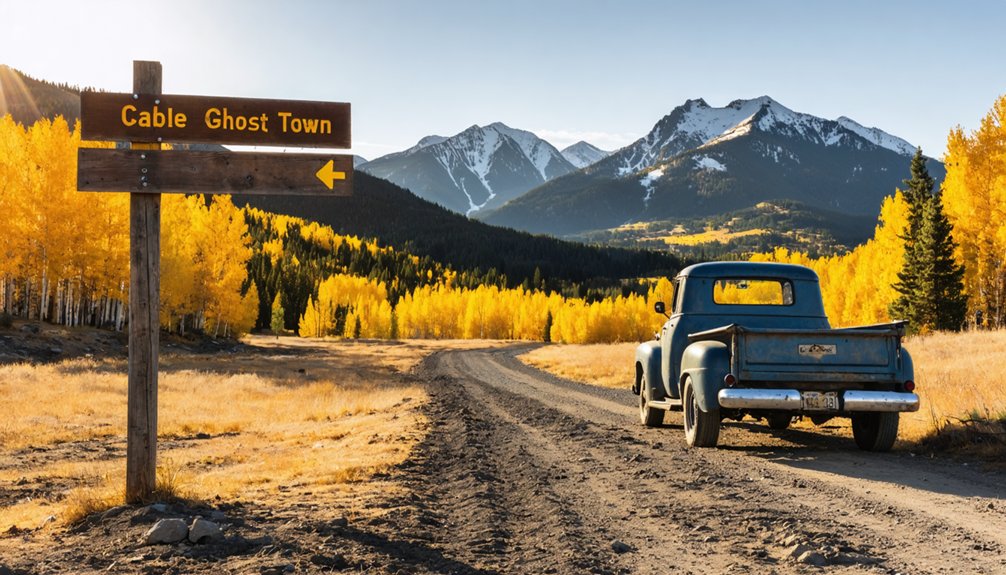
Timing your visit to Cable Ghost Town can mean the difference between battling summer crowds on dusty trails and having weathered mining cabins entirely to yourself. The ideal seasonal months stretch from September through early October, when golden aspens frame decaying structures and trails remain accessible without summer’s tourist surge.
Visit Cable Ghost Town in September or early October for golden aspens, accessible trails, and blissfully empty mining cabins.
You’ll discover varying weather conditions throughout the year—winter roads become impassable fortresses of snow, while spring’s muddy thaw gradually opens pathways.
Optimal visiting windows:
- Fall (September-October): Vibrant foliage, minimal crowds, and lower lodging rates post-Labor Day
- Late spring (May-June): Melting snow reveals hiking routes with wildflower-dotted landscapes
- Early summer (late June): Warm days before peak mosquito season hits in July
Choose shoulder seasons for unrestricted exploration without sacrificing accessibility to this forgotten settlement.
Essential Gear and Supplies for Your Visit
Your journey to Cable Ghost Town demands careful preparation, starting with a high-clearance vehicle to navigate the rugged terrain near Georgetown Lake and reliable GPS or detailed maps to guide you through areas where cell service disappears into the mountain silence.
Pack a thorough first-aid kit and emergency communication device—the remote paths leading to this abandoned mining settlement don’t forgive mishaps.
Before you set out, stow bear spray within arm’s reach and confirm your flashlight batteries are fresh for exploring Cable’s darkened structures, where sunlight barely penetrates the weathered doorways.
Before you point your vehicle toward Cable’s crumbling cabins and weathered storefronts, you’ll need to outfit both car and backpack for Montana’s unforgiving backcountry. Emergency preparedness starts with spare tires, car jacks, and jumper cables—essential when gravel roads turn treacherous miles from help.
Pack gallon jugs of water and roadside repair kits containing ropes and zip ties for unexpected breakdowns.
Connectivity challenges demand analog backup systems. When GPS signals vanish in remote valleys, paper maps become your lifeline—grab free copies at nearby sites like Garnet Ghost Town.
Maintain device power through:
- Solar-powered phone chargers for extended backcountry navigation
- Battery packs and car chargers ensuring continuous operation
- Headlamps doubling as nighttime signaling tools
High-clearance vehicles conquer Cable’s poorly maintained access routes best, giving you freedom to explore without limitation.
Safety and Survival Equipment
Beyond preparing your vehicle, you’ll need gear that could save your life when Cable’s isolation turns dangerous. Pack a thorough first aid kit with bandages, antiseptic wipes, and pain relievers—knowing basic first aid procedures becomes critical when you’re hours from medical help.
Include signaling mechanisms like road flares, reflective triangles, and a high-visibility vest to mark your position if breakdowns occur on desolate stretches. Your survival cache should contain one gallon of water per person, three days of non-perishable food, and a high-powered flashlight with spare batteries.
Don’t forget jumper cables, a multi-tool, and duct tape for quick repairs. A fire extinguisher and whistle round out your emergency arsenal, ensuring you’re self-sufficient in Montana’s unforgiving backcountry.
Safety Considerations and Property Boundaries
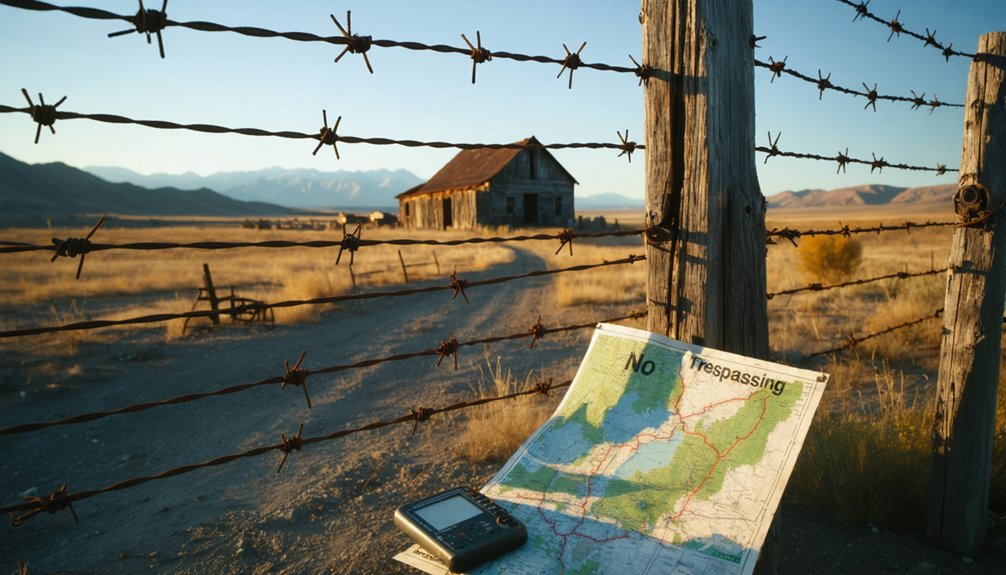
Several critical warnings demand your attention before approaching Cable’s weathered remains. The mining camp sits on private property where trespassing consequences include legal action and substantial fines. You’ll find access gates locked and “No Entry” signs posted throughout the area.
Unauthorized exploration hazards extend beyond legal troubles—unstable structures, open mine shafts, and contaminated water threaten anyone who ventures onto restricted lands.
Essential boundary protocols:
- Obtain written permission from current landowners before approaching any structures
- Stay on public roads along the Pintler Scenic Route for photography and viewing
- Report suspicious activity or open hazards to local authorities
Respect these boundaries not just to avoid prosecution, but because your freedom depends on honoring others’ property rights while exploring Montana’s mining heritage from safe, legal vantage points.
Nearby Ghost Towns Worth Adding to Your Itinerary
Your journey through Montana’s mining country shouldn’t end at Cable’s locked gates. Within striking distance, you’ll find Granite Ghost Town State Park near Philipsburg, where interpretive signage and historical markers bring the boom-and-bust era to life.
Head northwest to explore Marysville and Rimini—both accessible ghost towns that complement your Helena area explorations. Garnet, thirty minutes east of Missoula, stands as Montana’s best-preserved mining town, perched at 6,000 feet where ruby-colored stones inspired its name.
For side trips to nearby ghost towns farther south, Glendale near Melrose offers mining remnants tucked within Beaverhead-Deerlodge National Forest, where hiking trails and wildlife encounters await. Each site adds another chapter to your understanding of Montana’s untamed mining legacy, free from tourist crowds and modern constraints.
Making Philipsburg Your Base Camp
After days of dusty roads and crumbling foundations, you’ll crave a home base with hot showers and civilization’s comforts. Philipsburg delivers with local lodging amenities that blend historic character with modern conveniences.
The Broadway Hotel’s themed rooms celebrate Montana’s mining heritage, while Kaiser House offers intimate Victorian-era charm. You’re positioned perfectly—Georgetown Lake’s fishing lies 10 miles west, while Cable’s ghost buildings wait just beyond town.
Seasonal activity highlights transform your basecamp throughout the year:
- Summer brings free concerts in town parks, sapphire prospecting at Gem Mountain, and theater performances in Montana’s oldest opera house
- Winter transforms Discovery Ski Area into groomed paradise while Winninghoff Park’s ice rink draws locals
- Year-round, Sweet Palace’s thousand candy varieties fuel your adventures
You’ll return each evening to civilization without sacrificing wilderness access.
Photography Tips for Capturing Cable’s Abandoned Beauty
Pack your wide-angle lens for sweeping main street compositions, but don’t sacrifice gear portability when hiking between scattered buildings. Focus on distinctive details: rusted door handles, window latticing, mining equipment half-buried in Montana soil.
Black and white processing enhances decay’s stark poetry. Include surrounding wilderness in your frames—Cable’s isolation tells its own compelling story of frontier dreams abandoned.
Frequently Asked Questions
Are There Any Guided Tours Available for Cable Ghost Town?
Cable Ghost Town doesn’t offer guided walking tours or self guided audio tours—you’ll explore this remote Montana relic independently. Pack your curiosity and camera; the crumbling buildings and mountain silence create your own authentic, unstructured adventure through history.
Can You Camp Overnight Near the Cable Ghost Town Ruins?
You’ll find limited camping options near Cable’s ruins, as 90% of Montana ghost towns lack developed infrastructure availability. You’re free to explore nearby dispersed sites in Beaverhead-Deerlodge National Forest, where adventurous spirits camp beneath star-filled skies.
Is There Cell Phone Service at Cable or Along the Access Road?
You’ll face limited cell coverage at Cable and along most access roads, with spotty internet availability throughout your journey. Pack offline maps and embrace the digital detox—this remote wilderness adventure rewards those who disconnect from modern connectivity.
Are Dogs Allowed at the Cable Ghost Town Site?
Like a faithful companion on frontier trails, your leashed dog can explore Cable’s weathered structures with you. Pet policies at Montana ghost towns typically welcome four-legged adventurers, though visitor facilities remain rustic—bring water for both explorers.
How Long Should I Plan to Spend Exploring Cable Ghost Town?
Plan 30-60 minutes exploring Cable’s remnants and absorbing its historical significance. You’ll discover local legends of gold-rush dreams while wandering the foundations where miners once toiled. It’s perfect for adventurers seeking authentic, off-the-beaten-path Montana history.