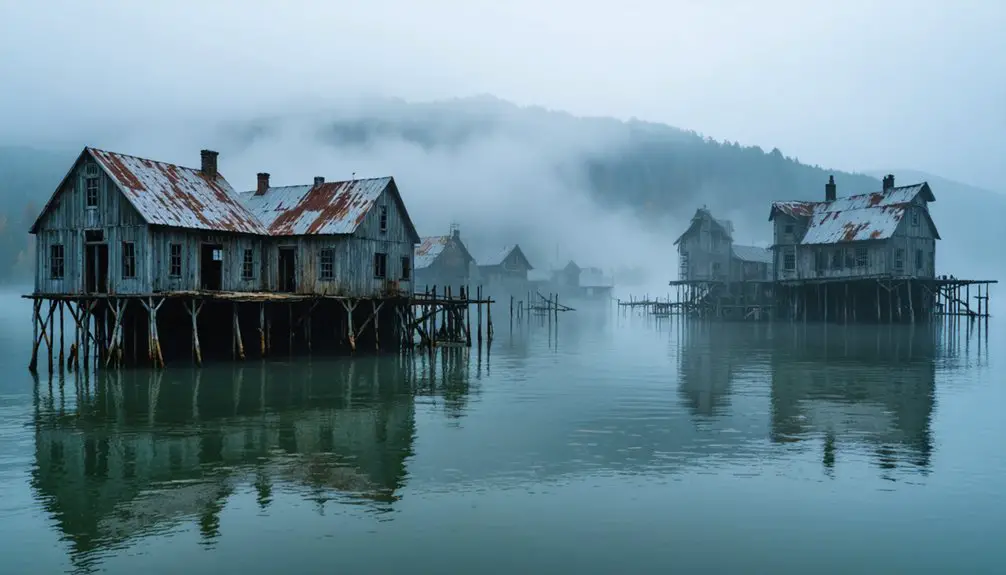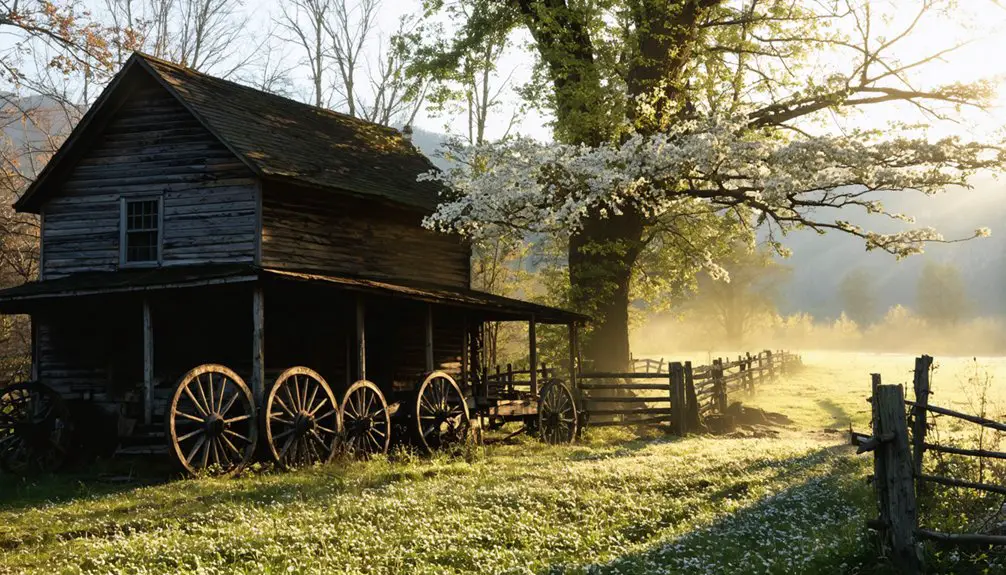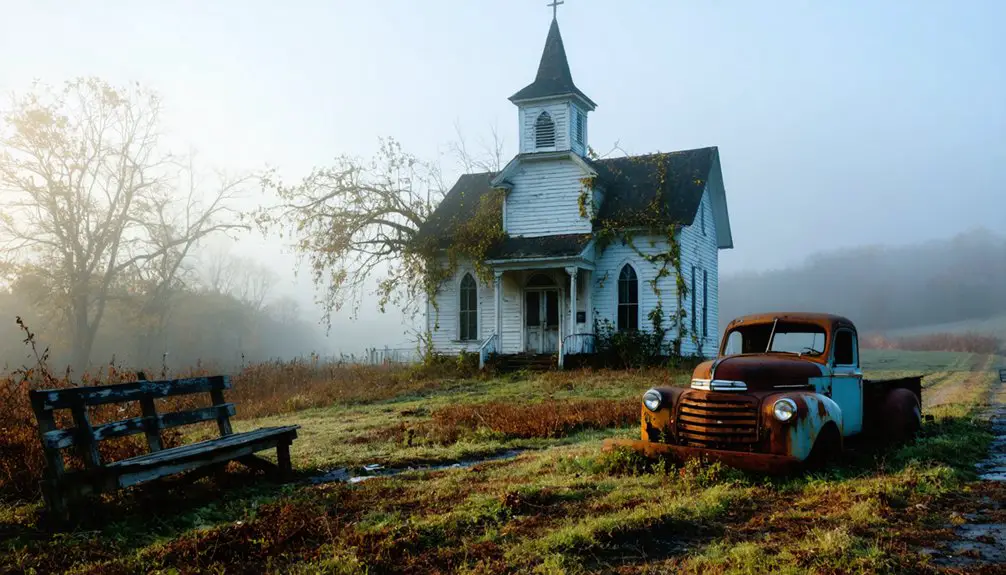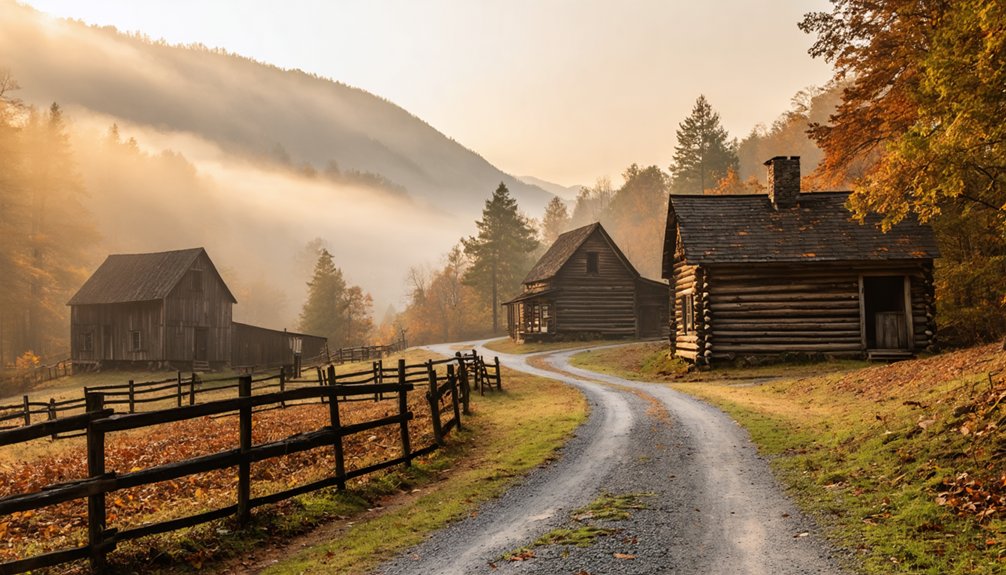
Plan your Cades Cove ghost town adventure by driving the 11-mile loop road early morning, when mist still clings to abandoned cabins from the 1820s. You’ll explore the John Oliver Cabin, Cable Mill, and three historic churches where visitors report unexplained footsteps and shadowy figures. Bring cameras, audio recorders, and bear spray for this isolated Tennessee valley. The 20-mph speed limit lets you absorb each structure’s haunted history while watching for wildlife near former homesteads where 685 residents once lived before the government’s controversial 1930s seizure.
Key Takeaways
- Visit the 11-mile one-way loop road with 20-mph speed limit to explore historic structures from the 1820s settlement era.
- Arrive before 8:00 AM for optimal wildlife viewing and to maximize daylight for exploring abandoned homesteads and cemeteries.
- Tour key historic sites including John Oliver Cabin (1822), Cable Grist Mill, and three 19th-century churches.
- Bring cameras, audio recorders, bear spray, and camping gear to document paranormal activity at haunted locations safely.
- Avoid thunderstorms when exploring due to lightning phenomena and unexplained lights reported throughout the isolated valley.
The Haunted History Behind Cades Cove’s Abandoned Settlement
Long before ghostly apparitions began drifting through its abandoned churches and pioneer cabins, Cades Cove thrived as a vibrant mountain settlement where hundreds of families carved out lives in the shadow of the Great Smoky Mountains. The valley’s story begins with Cherokee settlement at “Tsiya’hi” in 1797, followed by European settlers in the 1820s who built log homes and raised sprawling families. By 1850, 685 residents called this fertile valley home.
But darkness descended during the Civil War when Confederate bushwhackers raided mercilessly, killing Union sympathizers and stealing livestock. The bittersweet Cherokee displacement and contested land acquisition came full circle when Tennessee seized the valley for parkland in the 1930s. Families fought to Tennessee’s Supreme Court, finally leaving Christmas Day 1937 as CCC crews demolished their homes—transforming a living community into the haunted ghost town you’ll explore today. Among the survivors of this mass demolition stands the John Oliver Cabin, one of the oldest log structures in the park, built in the early 1820s as a honeymoon house. Today, Cades Cove remains set up as it was in those early days, creating the perfect home for any spirits still wandering the valley.
Today’s pavement curves through history on the 11-mile one-way loop road, following the same valley routes that Cherokee inhabitants, pioneer families, and logging railroads once traveled. You’ll spend roughly two hours at the 20-mph speed limit, though multiple pull-offs let you set your own pace.
Exploring the road’s logging railroad history reveals how late 1800s timber operations shaped the current route, while traversing shortcuts and access points like Sparks Lane and Hyatt Lane gives you freedom to customize your journey. These two-way cuts connect to broader Cherokee trail networks from the 1700s. Rolling down your windows lets you enjoy fresh mountain air while taking in the scenery. About halfway through the loop, you’ll reach the Cades Cove Visitor Information Center, where you can gather additional historical context and resources.
As you venture further, don’t miss the opportunity to explore ghost towns in Tennessee that offer a glimpse into the past. These remnants of former communities hint at the stories and lives that once thrived there. Each ghost town presents a unique backdrop for photography and reflection, adding an adventurous spirit to your exploration.
Early morning or dusk offers prime wildlife viewing as you bike or drive through this time-warped landscape where 2 million annual visitors discover authentic Appalachian heritage.
Must-See Historic Structures and Their Ghostly Residents
While millions drive the loop searching for wildlife, the valley’s most compelling stories emerge from weathered cabins, barns, and churches that housed actual pioneer families.
Beyond the bears and elk, Cades Cove’s true treasures are the hand-built homesteads where real families endured mountain winters.
Essential Historic Stops:
- John Oliver Cabin (1822) – The valley’s oldest structure where Cherokee neighbors helped desperate settlers survive their first brutal winter with dried pumpkin provisions.
- Cantilever Barn at Tipton Place – This architectural marvel showcases pioneer era construction techniques with its dramatic overhang protecting livestock below while storing crops above. The two log cribs create an empty space between them that farmers used for feeding livestock.
- John P. Cable Grist Mill – Peter Cable’s hand-hewn masterpiece features saddle-notched logs and wooden shingles representing the finest frontier craftsmanship.
- Three Historic Churches – The 1887 Primitive Baptist Church and its neighbors created photogenic historic landscapes where mountain communities gathered for worship and social connection.
Each structure reveals how 137 households carved self-sufficient lives from wilderness. Visitors can explore the eleven-mile loop road that winds through the valley, connecting all these historic sites in a single unforgettable journey.
Best Times and Locations for Paranormal Encounters
As darkness blankets the valley’s weathered structures, paranormal activity escalates dramatically according to decades of visitor reports and documented experiences. You’ll find the Primitive Baptist Church particularly active after dusk, where a female apparition emerges from walls and footsteps echo through empty spaces. Photographers have captured her face on the church’s exterior during twilight hours.
The abandoned homesteads and cemeteries throughout Cades Cove intensify their spiritual disturbances at sunset, with shadowy figures materializing near historic sites. You’ll experience the most spooky nighttime sightings around these preserved structures where early settlers’ restless spirits remain attached to their land. Visitors have also reported hearing unexplained lights and eerie sounds throughout the isolated valley, remnants of the settlement’s haunted history. The area’s abandoned cabins and churches contribute to the overwhelming eerie atmosphere that permeates the cove.
As you delve deeper into these haunting tales from Cades Cove, you’ll uncover the stories of those who lived and died in this secluded valley. Each whispering breeze seems to carry the echoes of forgotten lives, drawing you closer to the mysteries that linger in the shadows. The chilling ambiance invites you to explore the secrets held within the forest, where every rustle might just be a reminder of history’s ghostly inhabitants.
However, avoid exploring during thunderstorms—both for safety and because of the valley’s infamous lightning phenomena, like the unexplained Basil Estep incident.
What to Bring on Your Ghost Town Adventure
Planning your paranormal investigation means packing the right gear to document those eerie encounters and stay safe in the valley’s remote terrain. You’ll need equipment that serves dual purposes—capturing spectral evidence while protecting you during nocturnal wildlife sightings in this isolated wilderness.
Essential items for your ghost-hunting expedition:
- Camera with tripod and extra batteries for stabilizing night shots of haunted cabins and mysterious orbs near historic gravestones
- Audio recorder to capture unexplained voices echoing through the 1887 church and preserved homesteads
- Bear spray and whistle for wildlife protection during evening investigations around remote Cherokee-era sites
- Primitive camping gear including emergency blanket if you’re venturing beyond the loop road for extended documentation sessions
Bring layered clothing, sturdy boots, and navigation tools—cell service disappears quickly in these haunted valleys. The community established a post office in 1833 and grew to include multiple churches and schoolhouses that still stand today. Plan to arrive before the 8:00 AM opening to maximize your daylight exploration time before the truly haunted hours begin at dusk.
Frequently Asked Questions
Are Pets Allowed on the Cades Cove Loop Road?
Yes, you can bring your pets on Cades Cove Loop Road inside your vehicle. Following pet friendly rules and pet safety guidelines, you’ll keep them leashed for bathroom breaks but can’t explore trails or historic structures together.
How Much Does It Cost to Enter Cades Cove?
You’ll enter Cades Cove completely free—no seasonal entrance fees exist here. You only need a $5 daily parking tag. Guided tours availability offers optional paid experiences, but exploring this mountain paradise won’t cost you admission.
Can You Camp Overnight Near the Historic Structures?
You can’t camp directly beside the historic structures, but Cades Cove Campground offers primitive camping sites nearby with no permanent lodging. You’ll experience authentic wilderness while staying close to the valley’s preserved cabins and churches.
Are Bicycles Permitted on the Loop Road?
Pedal your way to freedom—bicycles are absolutely permitted on the 11-mile loop road. You’ll find loop road accessibility year-round, with bicycle rentals available near the campground store. Vehicle-free Wednesdays offer uninterrupted riding bliss.
What Cell Phone Service Is Available in Cades Cove?
You’ll find virtually no cell phone service in Cades Cove since no cell tower coverage exists within the park. Don’t expect cellular data speeds—most carriers report zero bars. Download maps beforehand and embrace disconnecting from technology.
References
- https://www.hhhistory.com/2023/02/cades-cove-ghost-town-in-great-smoky.html
- https://gatlinburghaunts.com/haunted-cades-cove-the-cussing-cover/
- https://theforgottensouth.com/john-oliver-cabin-cades-cove-tennessee/
- https://experiencecadescove.com/blog/haunted-cades-cove-spookiest-places-isolated-valley/
- https://en.wikipedia.org/wiki/Cades_Cove
- https://www.pigeonforge.com/great-smoky-mountains-national-park/cades-cove/history/
- https://mysmokymountainguide.com/gsmnp/brief-history-cades-cove/
- https://www.youtube.com/watch?v=qbjnmgku5q8
- https://www.comfortspringstation.com/2019/07/14/cades-cove-gsmnp/
- https://experiencecadescove.com/blog/interesting-facts-about-the-cades-cove-loop/