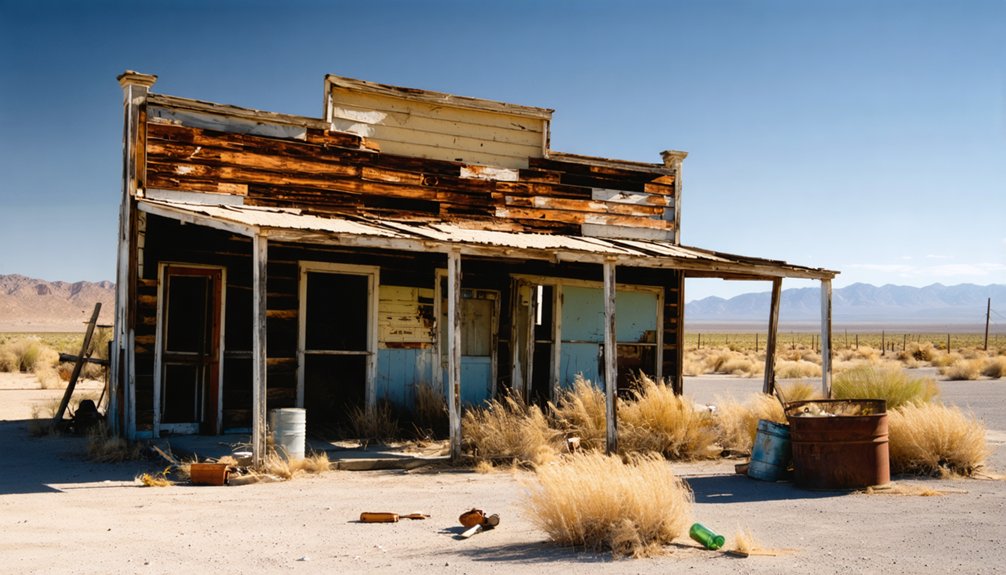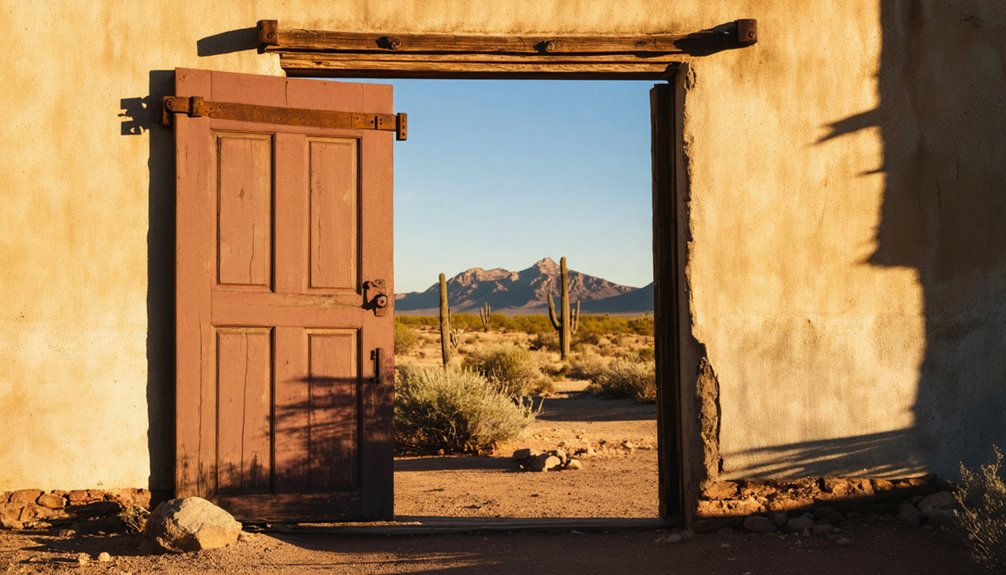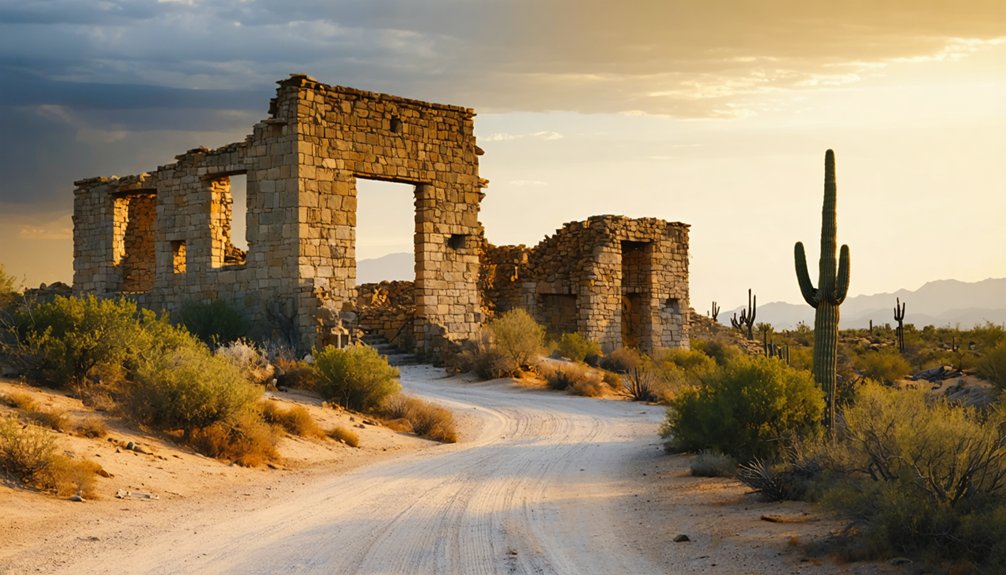
Planning a ghost town road trip to Camp Crittenden means heading three miles outside Sonoita on State Route 82 to find crumbling adobe walls and desert silence where soldiers once fought Apache raids in the 1860s. You’ll want to visit in spring or fall, pack plenty of water, and respect the private land boundaries. Nearby ghost towns like Harshaw and Mowry make the detour even richer. There’s far more to uncover about this forgotten corner of Arizona history.
Key Takeaways
- Camp Crittenden is located near Sonoita, Arizona, off State Route 82 at Milepost 29.5, accessible via a three-mile drive.
- Visit during spring or fall for mild temperatures; avoid summer due to extreme heat and monsoon storms.
- The site sits on private land, so exploration is limited; observe from afar and respect property boundaries.
- Bring water, sunscreen, sturdy shoes, a first-aid kit, and offline maps due to unreliable cell service.
- Nearby ghost towns Harshaw and Mowry offer additional historical stops to enrich your road trip experience.
Camp Crittenden, Arizona: What It Is and Why It Still Draws Visitors
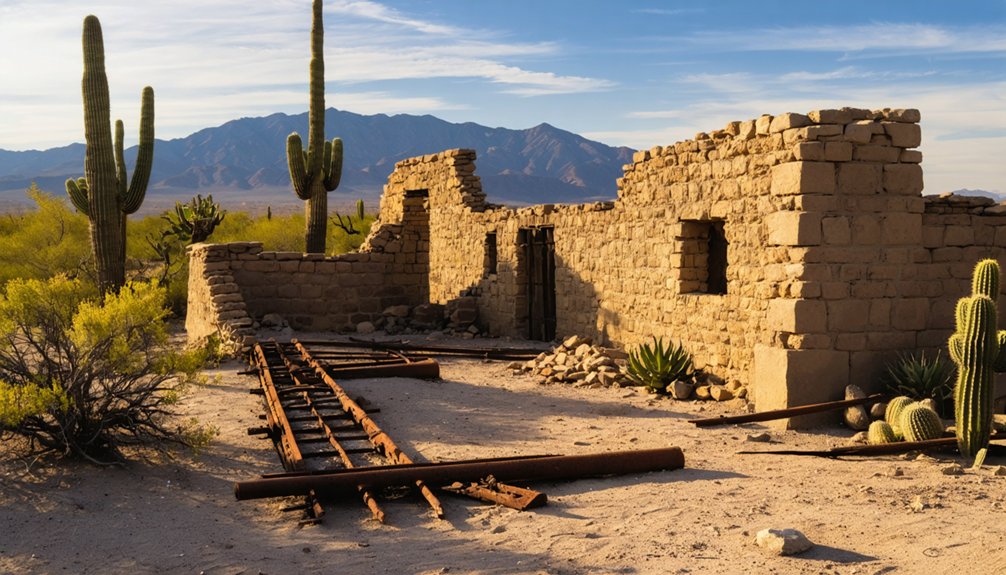
Though little remains standing, Camp Crittenden still pulls history enthusiasts off State Route 82 and onto the shoulder near Milepost 29.5, west of Sonoita, Arizona. Its historical significance runs deep — established in 1867 to shield settlers from Apache raids, this frontier post operated for six years before closing in 1873.
You won’t find restored buildings or guided tours here. What you’ll discover instead are deteriorating adobe walls, dirt mounds, and open sky stretching across Santa Cruz County’s quiet landscape.
Visitor experiences tend to be raw and unfiltered — just you, a roadside marker, and the weight of a violent, complicated past.
That unpolished authenticity is exactly what draws people. You’re standing where soldiers once camped, and that connection to real history hits differently than any museum exhibit could.
The History Behind Camp Crittenden, Arizona
That roadside marker near Milepost 29.5 points to more than a forgotten campsite — it marks a deliberate military response to one of the most volatile periods in Arizona Territory’s history.
When the Army established Camp Crittenden on August 10, 1867, Apache history and frontier life collided hard in the Sonoita and Babocomar valleys. Settlers needed real settlement protection, and military strategy demanded a forward post capable of deploying cavalry fast.
Named for Colonel Thomas L. Crittenden — a Union veteran tested at Shiloh, Stone River, and Chickamauga — the camp replaced the earlier Fort Buchanan nearby.
Named for Union veteran Colonel Thomas L. Crittenden, battle-tested at Shiloh and Chickamauga, the camp replaced nearby Fort Buchanan.
For six years, troops pushed back against Apache raids and kept travel corridors open. By June 1873, the Army declared the threat diminished and shut the post down permanently.
How to Get to Camp Crittenden From Sonoita
Getting to Camp Crittenden takes just 3 miles and a sharp eye for roadside markers. Among Sonoita attractions, this drive ranks as one of the most rewarding for history seekers craving open road and historical significance.
Head west from Sonoita on State Route 82 and watch for:
- Mile markers counting down toward Milepost 29.5, your landmark anchor
- The roadside sign appearing on your right, standing as the primary public indicator of the site
- Private land boundaries beyond the marker, where deteriorating adobe walls and earthen mounds hold the fort’s final footprint
You won’t drive through a gate or buy a ticket. Just pull over, read the marker, and let the desert silence tell you everything the walls no longer can.
What You’ll See at Camp Crittenden Today
What remains at Camp Crittenden today humbles you with its quietness.
You’ll find crumbling adobe walls and low dirt mounds where soldiers once slept, ate, and prepared for Apache campaigns. The site sits on private land, so you can’t wander freely beyond the roadside marker at Milepost 29.5 on State Route 82.
That marker tells the story well enough to spark ghost stories in your imagination — six years of frontier tension reduced to eroded earth and silence.
Local wildlife now commands this ground. Hawks circle overhead, and desert grasses reclaim what boots once wore flat. Sonoita Creek still moves nearby, indifferent to history.
The emptiness isn’t disappointing; it’s honest. You’re standing where the American frontier breathed hard, and that feeling stays with you long after you drive away.
Best Time of Year to Visit Camp Crittenden
You’ll find Camp Crittenden most welcoming in spring and fall, when mild temperatures make the open-air site comfortable for exploring.
Summer heat in southern Arizona can push well above 100°F, turning a leisurely roadside stop into an uncomfortable ordeal.
If you’re planning a winter visit, expect cooler days and crisp nights, but you’ll also enjoy clearer skies and far fewer crowds along State Route 82.
Ideal Visiting Seasons
Although Camp Crittenden sits on private land with only a roadside marker to greet you, timing your visit wisely makes the difference between a comfortable roadside stop and a miserable one.
Santa Cruz County’s high desert elevation delivers ideal weather during two distinct windows, making seasonal attractions worth considering before you hit State Route 82.
- Spring (March–May): Wildflowers bloom across the Sonoita Valley, temperatures hover in the 60s–70s°F, and the landscape feels alive with color.
- Fall (September–November): Monsoon season fades, skies clear dramatically, and cooler air makes standing roadside feel genuinely pleasant.
- Avoid Summer (June–August): Intense heat, monsoon storms, and muddy conditions along rural roads can turn a quick stop into a frustrating detour.
Weather Considerations For Travelers
Santa Cruz County’s high desert elevation shapes every moment of your roadside stop at Camp Crittenden, so knowing what the weather does across the calendar will save you real frustration.
Weather patterns here follow a rhythm that rewards the prepared traveler. Spring brings mild temperatures and clear skies, making it your best window for exploring the adobe remnants and reading that roadside marker comfortably.
Summer’s monsoon season delivers dramatic afternoon thunderstorms that soak State Route 82 quickly, creating hazardous driving conditions.
Seasonal fluctuations swing hard in winter, dropping temperatures sharply after sunset even when midday feels pleasant.
Fall offers the most reliable combination of cool mornings, dry roads, and golden light. Plan your visit between October and early November, and the desert won’t fight you.
What to Bring to Camp Crittenden on Your Road Trip
Before you head out to Camp Crittenden, pack your essentials: sturdy walking shoes, water, sunscreen, and a first-aid kit to handle the rugged Arizona terrain.
Download offline maps and note the coordinates (31.65750°N, 110.70694°W) since cell service can be unreliable along State Route 82.
Bring printed historical notes or a guidebook on Arizona’s frontier forts so you can connect what you’re reading to the crumbling adobe walls and dirt mounds right in front of you.
Essential Road Trip Gear
When you head out to Camp Crittenden, you’re visiting a remote stretch of private land along State Route 82, so packing smart makes all the difference. The nearest services sit miles away, and road trip safety depends on what’s already in your vehicle before you leave.
These camp essentials keep your adventure moving:
- Water and snacks — Southern Arizona heat is relentless; carry at least two liters per person.
- Printed maps or downloaded offline GPS — cell signals drop fast in Santa Cruz County’s rural corridors.
- Camera and binoculars — deteriorating adobe walls and earthen mounds reward a closer, unhurried look.
Pack light, pack purposefully, and you’ll spend less time scrambling and more time absorbing what remains of this forgotten frontier outpost.
Navigation And Maps
Knowing where you’re going matters just as much as what you’ve packed. Camp Crittenden sits on private land near Sonoita, Arizona, so precise navigation tips will save you frustration.
Download offline maps before you leave cell range — service disappears fast in Santa Cruz County. Your target is Milepost 29.5 on State Route 82, approximately three miles west of Sonoita on the right side of the road. A roadside marker confirms you’ve arrived.
For map resources, cross-reference Google Maps coordinates 31.65750°N, 110.70694°W with a physical road atlas as backup.
The Arizona Memory Project and FortWiki both provide historical geographic context worth reviewing before departure. Knowing the landscape ahead keeps your road trip fluid and your freedom intact.
Historical Research Materials
Arriving at a site where almost nothing stands, you’ll appreciate having research materials that reconstruct what your eyes can’t see. Crumbling adobe and dirt mounds tell only fragments of the story.
Historical documents and archival research fill the silence with meaning.
Pack these before you leave home:
- FortWiki and Arizona Memory Project records — detailed historical documents outlining camp layout, troop movements, and operational timelines.
- Wikipedia’s Fort Crittenden entry — quick coordinate and closure date verification you can pull up on your phone roadside.
- Legends of America articles — vivid narrative context connecting Colonel Crittenden’s Civil War legacy to this remote Arizona outpost.
With these resources in hand, you’re not just standing on empty land — you’re standing inside a story.
Ghost Towns Near Camp Crittenden Worth Adding to Your Route
Since you’re already exploring the backcountry roads of Santa Cruz County, it makes sense to string together a few ghost town stops alongside your visit to Camp Crittenden.
The surrounding region holds several historical landmarks worth your time.
Harshaw, tucked into the Patagonia Mountains just southeast, once boomed with silver mining activity before collapsing into weathered ruins.
Mowry, another nearby remnant, carries a turbulent Civil War-era story tied to its controversial owner.
Both ghost towns sit within reasonable driving distance, making them natural additions to your route.
You’re already out here chasing history on open roads — don’t stop at one site.
String these forgotten places together, and you’ll piece together a vivid portrait of Arizona Territory’s restless, violent, and fascinating past.
Where to Eat and Stay Near Camp Crittenden in Sonoita
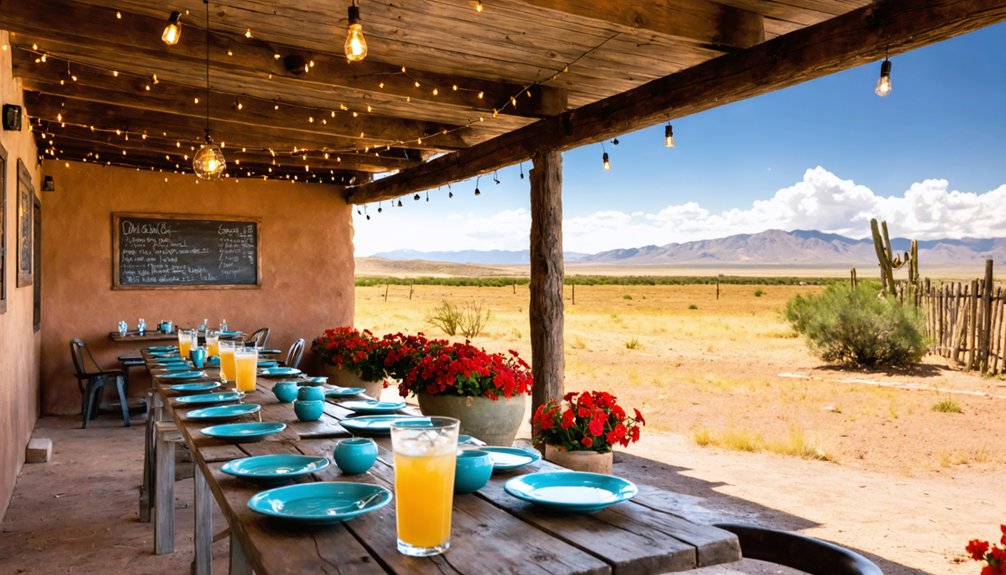
After a dusty afternoon tracing adobe ruins and roadside markers along State Route 82, Sonoita sits just three miles east and ready to reward you. This high-desert crossroads punches above its size for local dining and lodging options.
- Steak Out Restaurant serves hearty ranch-style meals that’ll refuel you after miles of backcountry exploration.
- The Vineyard Bed & Breakfast options scattered across Sonoita’s wine country offer intimate overnight stays surrounded by rolling grasslands and open sky.
- Local wine tasting rooms double as relaxed gathering spots where you can swap road stories with fellow travelers over a glass of Arizona-grown red.
You won’t need a reservation weeks out — Sonoita moves at a traveler’s pace, keeping your freedom intact.
Visiting Camp Crittenden: Private Land Access and Site Conditions
Before you swap that wine glass for a dirt road map, there’s one hard reality worth knowing: Camp Crittenden sits entirely on private land, and you won’t be walking those adobe ruins without permission.
Respect that boundary — it’s both a legal requirement and a matter of site preservation.
What remains is sparse: crumbling adobe walls, scattered dirt mounds where barracks once stood, and silence thick enough to feel historical.
You can still absorb the atmosphere from State Route 82, where a roadside marker near Milepost 29.5 tells the story without requiring trespass.
Treat this private property with the same respect you’d want for your own land.
The less it’s disturbed, the longer its story survives for every road tripper who follows your tire tracks.
Frequently Asked Questions
Was Camp Crittenden Ever Called by a Different Official Name?
Yes, it’s also known as Fort Crittenden! You’ll discover its historical significance runs deep — the name origins trace back to Colonel Thomas L. Crittenden, a celebrated Union Civil War hero who championed frontier freedom.
Are There Any Guided Tours Specifically Focused on Camp Crittenden’s History?
You won’t find dedicated guided history tours specifically for Camp Crittenden, but local tour companies in southern Arizona occasionally include it on broader ghost town itineraries, letting you explore this hauntingly remote frontier outpost on your own terms.
Can You Metal Detect or Artifact Hunt at the Camp Crittenden Site?
You can’t metal detect at Camp Crittenden — it’s on private land, so metal detecting regulations strictly apply. Respect artifact preservation by leaving history undisturbed; the site’s crumbling adobe walls silently guard stories worth protecting, not pocketing.
Has Camp Crittenden Ever Been Featured in Films or Documentaries?
No confirmed film appearances or documentary features exist for Camp Crittenden. You’ll find it’s one of Arizona’s 400+ forgotten frontier forts, quietly crumbling on private land, its six-year history largely undiscovered by filmmakers seeking dramatic ghost town stories.
Are There Any Annual Events or Commemorations Held at Camp Crittenden?
You won’t find official annual gatherings or historical reenactments at Camp Crittenden—it’s private land with little remaining structure. However, you can freely explore the roadside marker near Milepost 29.5, connecting with its rugged frontier spirit independently.
References
- https://www.ghosttowns.com/states/az/crittendon.html
- https://en.wikipedia.org/wiki/List_of_ghost_towns_in_Arizona
- https://activerain.com/blogsview/5011503/visiting-arizona–see-ghost-towns
- https://en.wikipedia.org/wiki/Fort_Crittenden
- https://www.legendsofamerica.com/camp-crittenden-arizona/
- https://www.arizonahighways.com/archive/issues/chapter/Doc.1090.Chapter.5
- https://www.hereandtherewithpatandbob.com/2020/05/camp-crittenden-arizona-where-apaches.html
- https://nmarchives.unm.edu/repositories/17/archival_objects/353106
- https://azmemory.azlibrary.gov/nodes/view/269456
- https://www.ghosttowns.com/states/az/azalphabetical.html