You’ll find Camp Nelson National Monument 20 miles south of Lexington—a 4,000-acre Civil War site that’s far from abandoned. Unlike typical ghost towns, this preserved landscape combines standing structures like the 1846 Oliver Perry House with archaeological evidence of the USCT’s third-largest recruitment center. You can explore Fort Jones earthworks, refugee camp excavations, and the Hall community’s living legacy during Wednesday-Sunday visits (daily Memorial Day through September). The interpretive center’s exhibits and ranger-guided tours reveal how wartime displacement transformed into documented freedpeople’s self-determination.
Key Takeaways
- Camp Nelson served as a major Union supply depot and USCT recruitment center with historic earthworks and archaeological sites still visible today.
- The Oliver Perry House from 1846 is the only original structure remaining after the camp’s 1866 dismantling.
- Visit Wednesday through Sunday, 9:00 am to 5:00 pm, with daily summer hours from Memorial Day through early September.
- Plan 1-2 hours to explore paved trails, the visitor center’s exhibits, and a 17-minute orientation film about the site.
- The Hall community nearby preserves living heritage of USCT soldiers’ descendants who established the permanent settlement in 1868.
What Makes Camp Nelson a Unique Civil War Ghost Town
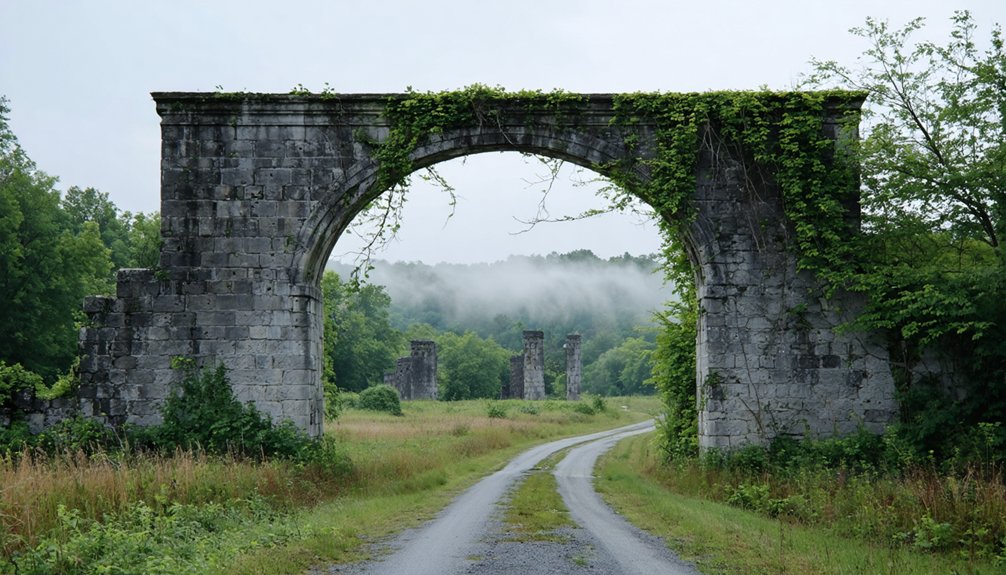
Few Civil War sites embody the change from military necessity to freedom’s crucible quite like Camp Nelson. You’ll discover a place where strategic military significance intersected with liberation’s promise.
Established in 1863 as a Union supply depot protecting the Hickman Bridge crossing, it evolved into the third-largest USCT recruitment center nationwide. Natural palisades provided defensive advantages while hundreds of structures housed operations supporting campaigns across multiple states.
What distinguishes this site is its dual legacy: approximately 10,000 African American men enlisted here after June 1864, with hundreds of enslaved men fleeing bondage to claim freedom through African American military service. Today’s National Monument preserves archeological resources documenting this conversion from slavery to emancipation, offering you tangible evidence of courage that reshaped America.
The Tragic History of Refugee Expulsions at Camp Nelson
Behind Camp Nelson‘s noble mission as a recruitment center lay one of the Civil War’s most harrowing episodes of institutional cruelty. You’ll discover that Brigadier General Speed S. Fry issued removal orders on November 23, 1864, expelling 400 African American refugees during a winter storm. Armed soldiers destroyed their camp structures and forced women and children beyond Union lines under threats of death.
This ninth expulsion proved deadliest—102 perished from exposure and starvation within weeks. Captain Theron Hall’s protest triggered federal accountability when he documented families following soldier-husbands who’d fought for freedom. His affidavits reached Congress, forcing the War Department to rescind orders and establish the Home for Refugees in 1865. This catastrophe ultimately advanced emancipation legislation protecting USCT families.
Historic Structures and Archaeological Sites You Can Still Explore
Today’s Camp Nelson National Monument preserves archaeological evidence and structural remnants across 525 acres of historically undisturbed landscape. You’ll discover three primary exploration zones:
- Oliver Perry House – The sole surviving structure with original architecture from 1846, though currently closed for renovations. General Burnside confiscated this building for officers’ quarters during the war.
- Fort Jones Eastern Fortifications – Accessible earthworks that protected against Confederate assault, complementing natural defenses from 400-500 foot cliffs along Kentucky River and Hickman Creek.
- Owen’s House Archaeological Site – Investigations since 1987 have revealed underground artifacts including burned clothing, seed beads, and buttons from the refugee encampment and commercial district.
The Interpretive Center provides maps and ranger-guided tours, letting you traverse these grounds where Camp Nelson’s dismantling in 1866 left an undisturbed record beneath your feet.
Visiting the Hall Community: A Living Legacy of Camp Nelson
When you venture beyond the National Monument’s archaeological sites, you’ll encounter the Hall community—a living [record, account, chronicle, history] to the Camp Nelson Refugee Camp established in 1863. This settlement demonstrates extraordinary community resilience, evolving from wartime displacement into permanent freedom. You’ll find direct descendants of United States Colored Troops soldiers and refugees who transformed the 7-acre Home for Colored Refugees site into Ariel in 1868, later renamed Hall.
The community’s intergenerational connections remain intact despite economic disruptions from Prohibition-era job losses, the Great Depression, and WWII migration patterns. By 1895, this village of 300 residents operated Kentucky’s premier private educational institution for Black citizens. When you visit today, you’re witnessing preservation of both cultural heritage and physical structures—a documented example of freedpeople’s self-determination persisting across generations at New US 27 and Hall Road, Jessamine County.
Planning Your Visit to Camp Nelson National Monument
Planning your Camp Nelson National Monument visit requires understanding the facility’s operational structure and seasonal schedule variations. You’ll find buildings open 9:00 am to 5:00 pm, Wednesday through Sunday, with expanded seven-day operations Memorial Day through early September. The grounds remain accessible daily from sunrise to sunset, allowing flexible exploration of this historic site.
Visitor center highlights include:
- Award-winning exhibits in reconstructed barracks featuring USCT soldier biographies, uniforms, and Underground Railroad Network to Freedom interpretive panels
- 17-minute orientation film documenting Camp Nelson’s transformation from fortified supply depot to largest Civil War recruitment center for United States Colored Troops
- Front desk resources for trail information and guided tour offerings
Most trails accommodate all abilities across paved surfaces. You’ll need 1-2 hours for thorough site exploration, with no Recreation.gov reservations required for independent visits.
Frequently Asked Questions
What Are the Best Nearby Accommodations for Overnight Stays Near Camp Nelson?
You’ll discover exceptional stays at Asbury Inn & Suites (rated 9.6/10) and historic inn accommodations at Shaker Village’s preserved properties. These nearby bed and breakfasts offer authentic heritage experiences while supporting cultural conservation efforts near Camp Nelson’s storied landscape.
Are There Guided Ghost Tours Available at Camp Nelson National Monument?
You’ll find guided tours aren’t provided by the National Park Service at Camp Nelson. However, private ghost tours are available through certified paranormal investigators on select October evenings, preserving the site’s historical integrity while exploring documented supernatural phenomena.
What Restaurants or Dining Options Are Closest to the Site?
Your culinary compass points to Nicholasville’s local eateries just minutes away, including Cracker Barrel and Fiesta Mexico. For preserved heritage dining establishments, you’ll find Lexington’s diverse options within fifteen miles, offering freedom to explore various cuisines post-visit.
Is Camping Allowed on the Camp Nelson National Monument Grounds?
Camping isn’t allowed on monument grounds due to preservation challenges and visitor management protocols. You’ll need special authorization for approved educational events only. The site’s open sunrise to sunset, protecting artifacts while ensuring you’re free to explore daily.
What Other Civil War Sites Are Within Driving Distance?
You’ll find Richmond Battlefield just 15 miles away, where 5,000 casualties fell in 1862. Perryville’s preserved grounds lie 40 miles west. Both sites exemplify exceptional historic site preservation, offering you extensive civil war history exploration through authentic battlefield landscapes and interpretive trails.