Campbellton, Georgia was once a bustling county seat of 1,200 residents, but today it’s a hauntingly quiet ghost town tucked between Fairburn and Palmetto in Fulton County. You’ll find two historic churches, three mossy cemeteries, a crumbling antebellum house, and a WPA stone marker where the old courthouse once stood. Pack sturdy shoes, offline maps, and a flashlight before you head out. There’s far more to this forgotten town’s story than meets the eye.
Key Takeaways
- Campbellton, Georgia, once a thriving county seat of 1,200 residents, became a ghost town after losing railroad access and political relevance.
- Key sites include two historic churches, three cemeteries, a decaying antebellum house, an old Masonic Lodge, and a WPA stone monument.
- Travel south from Atlanta on Highway 29, then navigate backroads toward the Chattahoochee River, parking near the WPA courthouse marker.
- Pack offline maps, a reliable flashlight, sturdy shoes, a camera, and sufficient water, as no modern conveniences are available.
- Nearby abandoned towns like Shake Rag and Lebanon offer additional exploration opportunities, enriching understanding of Georgia’s forgotten history.
What Made Campbellton a Thriving Georgia County Seat?
Nestled along the banks of the Chattahoochee River, Campbellton wasn’t always the forgotten ghost town you’ll find today. Founded between 1828 and 1830, this vibrant county seat carried deep historical significance as the heart of Campbell County.
Named after Colonel Duncan G. Campbell, who negotiated the Treaty of Indian Springs, the town earned its place on Georgia’s map through strategic positioning at a critical river crossing near an ancient Indian mound site.
Campbellton claimed its place on Georgia’s map where ancient ground met a critical river crossing.
The economic factors driving Campbellton’s early success were undeniable. Grid-pattern streets, a thriving population reaching 1,200 residents, and a two-story brick courthouse built in 1835 reflected genuine prosperity.
Incorporated as a town in 1829, Campbellton represented everything a free-spirited, ambitious community could build — before circumstances beyond its control would eventually erase it all.
How Did Campbellton Become a Ghost Town Almost Overnight?
Campbellton’s rapid downfall traces back to a single devastating decision: the Atlanta & West Point Railroad chose Fairburn over Campbellton due to the challenging terrain, effectively cutting the town off from the economic lifeline that railroads provided in the 19th century.
Without rail access, Campbell County officials relocated the county seat to Fairburn in 1870-1871, stripping Campbellton of its political relevance and commercial activity almost overnight.
You can barely imagine the shock residents felt as the population cratered from 1,200 to just 119 people, leaving behind a ghostly shell of abandoned homes, a crumbling courthouse, and a decaying Masonic Lodge.
Railroad Bypassed the Town
One decision by railroad engineers sealed Campbellton’s fate. When the Atlanta & West Point Railroad needed a route through the region, surveyors chose Fairburn instead, citing more favorable terrain. That single choice triggered devastating railroad impacts that Campbellton couldn’t survive.
Think about what railroads meant in the 1800s — they were economic lifelines. Towns connected to rail lines thrived; towns bypassed by them withered. Campbellton withered fast. Economic decline followed almost immediately, and by 1870-1871, the county seat had relocated to Fairburn entirely.
The population collapsed from roughly 1,200 residents to just 119. Businesses shuttered. Families packed up and followed the railroad’s promise elsewhere.
What once buzzed with courthouse activity and river trade became silent, crumbling streets. Engineers drew a line, and Campbellton simply fell on the wrong side of it.
County Seat Relocated
When the county seat moved to Fairburn in 1870-1871, Campbellton didn’t just lose government business — it lost its reason to exist. The population cratered almost overnight, plummeting from 1,200 residents to just 119.
That’s the brutal reality of Campbellton history: once the railroad bypassed the town and officials packed up the county seat, there was simply no economic lifeline left. Families followed the opportunity. Merchants shuttered their doors. The courthouse fell silent.
You can feel that abandonment when you walk the old town square today. Buildings that once hummed with civic life — the courthouse, the Masonic Lodge, private homes — slowly decayed into ruins.
What took decades to build unraveled in just a few years, leaving behind little more than ghosts and grassy lots.
Population Collapsed Rapidly
Few ghost towns collapsed as fast as Campbellton did. Once the county seat boasted 1,200 residents, a bustling courthouse, and real historical significance as Campbell County’s civic heart.
Then the railroad bypassed it, the county seat moved to Fairburn, and the population decline hit hard and fast.
You can almost feel the abandonment when you visit today. Within years, residents packed up and left, dropping the population from 1,200 to just 119 people.
Homes emptied. The Masonic Lodge went silent. That proud two-story brick courthouse? Slowly decaying.
When you walk these grounds now, you’re witnessing what happens when economic lifelines get severed overnight.
Campbellton didn’t fade gradually — it collapsed, leaving behind an eerie, beautiful skeleton worth every mile of your road trip.
How the Civil War Shaped Campbellton’s Final Years
Though Campbellton had already begun its slow decline before the first shots of the Civil War rang out, the conflict delivered a blow the town couldn’t fully recover from. The Civil War impacts rippled through every corner of community life, pulling men away from farms, businesses, and families.
When you walk the quiet grounds near the Methodist Church, you’re standing where soldiers were buried after a nearby battle. A stone monument marks where thirty survivors of Company A, 21st Georgia Regiment once reunited here, their numbers a haunting reminder of the war’s brutal toll.
Economic decline tightened its grip as antebellum prosperity vanished, leaving grand homes and public buildings to slowly crumble. The war didn’t kill Campbellton outright, but it guaranteed the town never stood a chance.
What’s Still Standing in Campbellton Today?
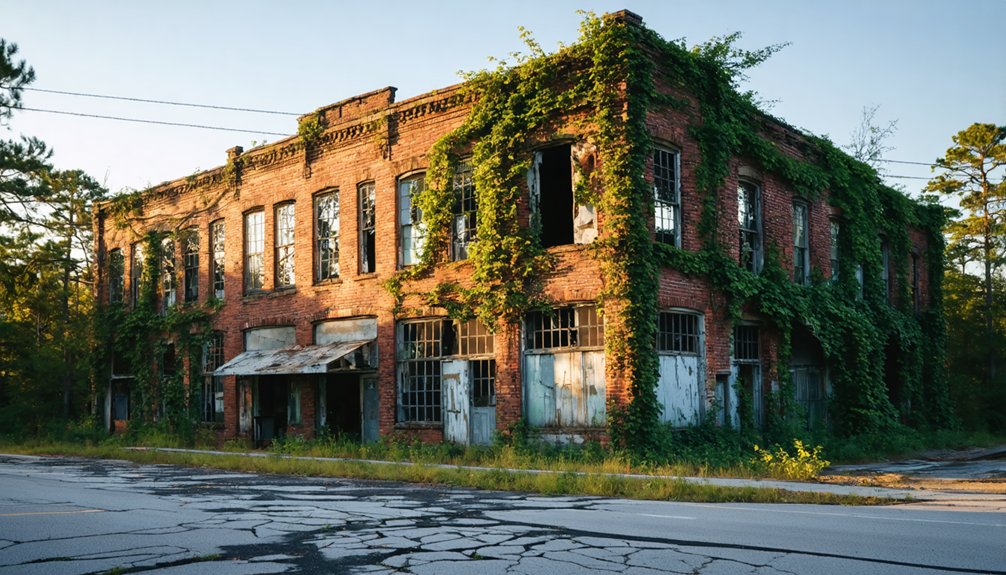
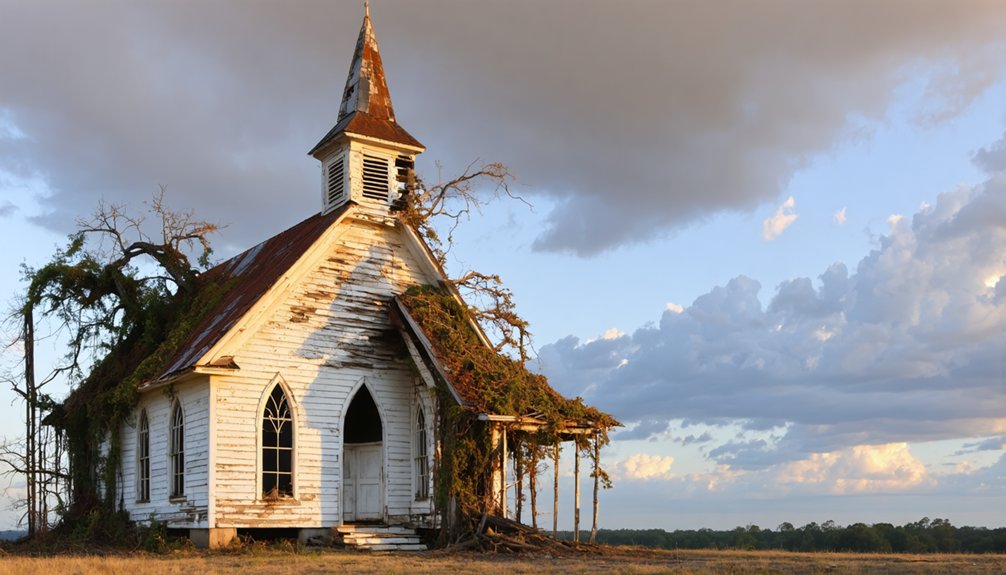
Despite decades of neglect, Campbellton hasn’t completely surrendered to time. You’ll still find two historic churches standing quietly amid the overgrowth, along with three cemeteries where mossy tombstones tell stories of lives lived during the town’s prosperous years.
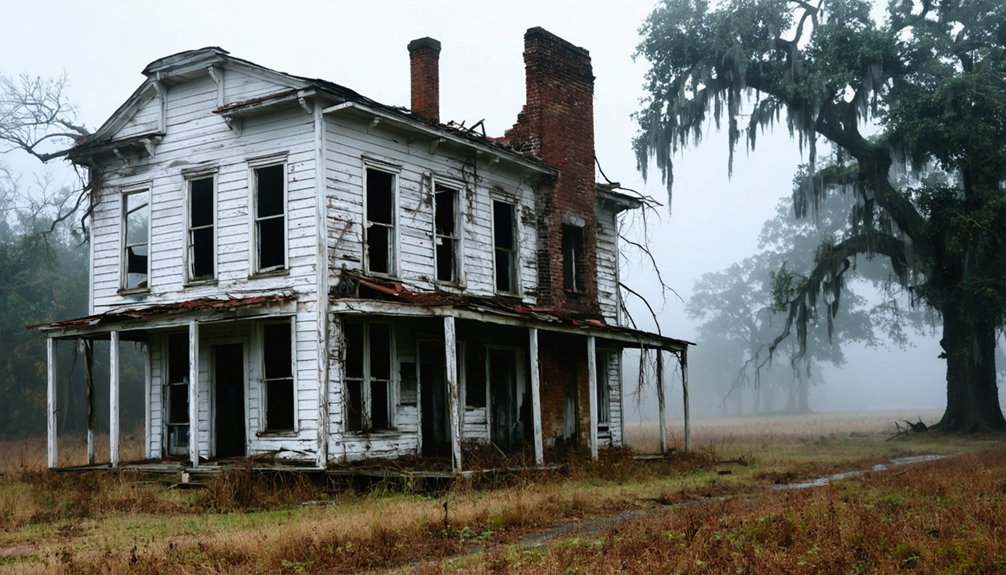
A decaying two-story house hints at the area’s antebellum historic architecture, and the old Masonic Lodge still holds its ground.
At the town square, a WPA-erected stone monument marks where the courthouse once stood. Local legends about eerie lights and unexplained noises draw curious visitors who want more than just history.
A WPA stone monument marks the old courthouse site, where legends of eerie lights still lure the curious.
The Chattahoochee River banks remain accessible, offering views that haven’t changed much since the 1800s. Campbellton rewards explorers willing to look closely — you just have to know where to find what’s left.
Walk Campbellton’s Old Town Square and Find the WPA Marker
When you reach Campbellton’s old town square, you’ll find a grassy, quiet spot where a bustling county seat once stood.
Look for the stone monument marked FU-122, erected in 1936 through a joint effort by the WPA and the United Daughters of the Confederacy, which pinpoints the exact location of the long-vanished 1835 courthouse.
Standing there, you can almost feel the weight of what this place once was—a thriving river town of 1,200 people reduced to little more than a marker in the grass.
Locating the WPA Marker
Few markers in Georgia carry as much quiet historical weight as the stone monument standing at Campbellton’s old town square. Erected in 1936 through the WPA history program and the United Daughters of the Confederacy, this marker carries deep significance as it anchors you directly to where the original courthouse once stood.
You’ll find it designated FU-122, positioned on a grassy patch that feels almost too peaceful given its turbulent past.
Look closely at the inscription — it honors the courthouse site while commemorating the reunion of thirty survivors from Company A, 21st Georgia Regiment. The marker’s significance goes beyond a roadside curiosity; it’s your clearest physical connection to a county seat that vanished almost overnight.
Don’t rush past it — let it speak.
Exploring the Town Square
Standing at Campbellton’s old town square, you’ll notice the space feels almost deceptively ordinary — a grassy, open patch where horses once tied up outside a two-story brick courthouse and a county of 1,200 people went about their daily lives.
Yet its historical significance runs deep. This ground once anchored Campbell County’s civic life from 1829 until 1871, when the railroad bypassed Campbellton entirely, pulling power and population toward Fairburn.
Look for the stone monument marked FU-122, erected in 1936 by the WPA and United Daughters of the Confederacy. It quietly marks where the courthouse once stood.
No crowds, no tour guides, no admission fees — just open Georgia sky, wild grass, and the freedom to piece together a forgotten community entirely on your own terms.
Is Campbellton, Georgia Actually Haunted?
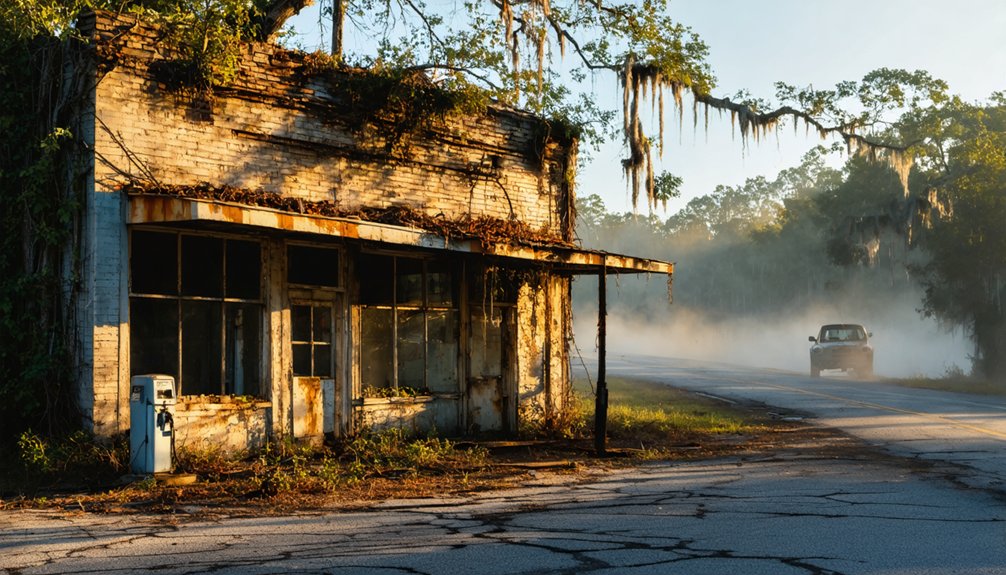
Whether Campbellton is truly haunted depends on who you ask, but visitors consistently report eerie lights, unexplained noises, and an unsettling stillness that lingers long after they’ve left.
The town’s haunted history runs deep — abandoned buildings, overgrown cemeteries, and crumbling ruins create an atmosphere that feels suspended between worlds.
You’ll walk past mossy tombstones, a decaying two-story house, and a silent Masonic lodge that once buzzed with life.
Ghostly encounters aren’t guaranteed, but the weight of forgotten lives is undeniable. Civil War soldiers buried in the Methodist churchyard add another layer of unease.
Whether you’re a skeptic or a true believer, Campbellton delivers something raw and real — a place where history doesn’t just echo, it breathes.
How Do You Get to Campbellton, Georgia?
Tucked into Fulton County between Fairburn and Palmetto, Campbellton isn’t difficult to find once you know where to look.
Head south from Atlanta on Highway 29, then navigate the backroads toward the Chattahoochee River. You’ll notice the landscape shifting as civilization thins out, replaced by quiet stretches that hint at the town’s historical significance.
Look for the old church steeples and roadside markers guiding you toward the forgotten town square. Once you arrive, park near the WPA stone monument marking the original courthouse site.
Follow weathered steeples and faded markers until the forgotten town square reveals itself.
From there, you can freely explore the cemeteries, crumbling structures, and riverbanks at your own pace. Come prepared with comfortable shoes and curiosity — ghost town legends reward those willing to wander off the beaten path and discover what history left behind.
What to Pack for a Campbellton Ghost Town Visit
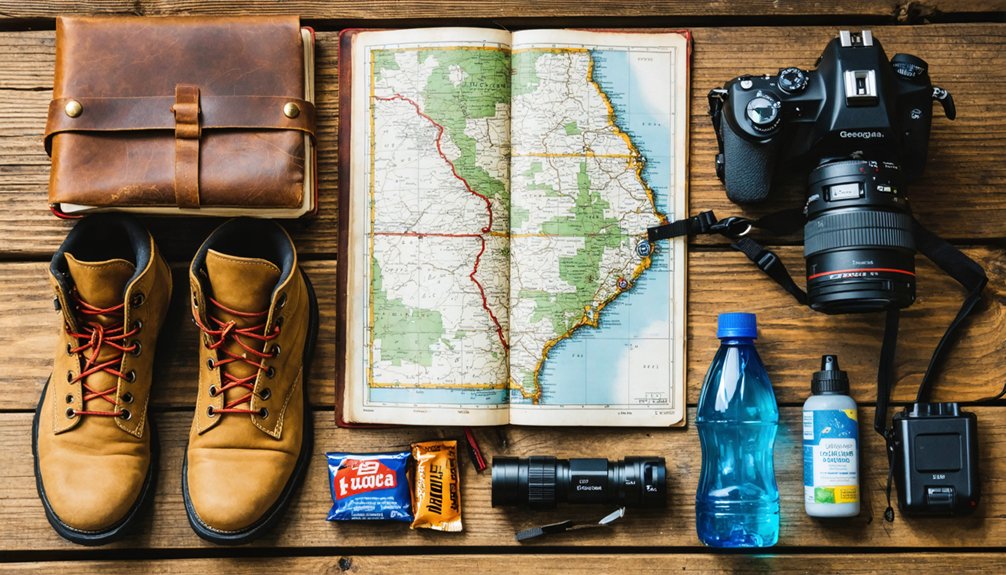
Once you’ve mapped out your route to Campbellton, packing smart makes the difference between a memorable adventure and an uncomfortable one. This forgotten ghost town rewards prepared explorers who respect its historical landmarks and eerie atmosphere.
- Navigation tools – Download offline maps since cell service gets spotty near the Chattahoochee River bottoms.
- Lighting gear – Bring a reliable flashlight or headlamp for exploring dimly lit cemeteries and ruins, especially if you’re chasing ghost stories after dark.
- Documentation kit – Pack a camera, notebook, and extra batteries to capture mossy tombstones, the WPA monument, and decaying structures worth preserving in memory.
Wear sturdy shoes since the terrain’s uneven, and carry water because there aren’t any modern conveniences waiting for you out there.
Other Abandoned Towns in Fulton County Worth Visiting Nearby
Campbellton isn’t the only ghost town Fulton County has quietly swallowed over the decades. Several other abandoned towns dot this region, each carrying fragments of forgotten lives worth discovering.
Shake Rag, once a small rural community, faded as roads shifted and populations migrated toward Atlanta’s growing orbit. Lebanon, another lost settlement, left behind little more than cemetery stones and overgrown foundations.
You’ll find these remnants scattered across Fulton County’s western and southern edges, often unmarked and overlooked by modern travelers.
Pair your Campbellton visit with stops at nearby Fairburn and Palmetto, towns that survived but still hold antebellum architecture connecting you to this region’s layered past.
Exploring these abandoned towns together builds a richer, fuller picture of Georgia’s quietly erased history.
Frequently Asked Questions
Can You Legally Access Campbellton’s Private Cemeteries and Church Properties?
You’ll want to respect legal restrictions before exploring Campbellton’s private properties. Always seek permission for cemetery access from landowners or church officials — trespassing laws apply, even on historically significant sites, so plan your visit responsibly.
Are There Guided Ghost Town Tours Available Specifically for Campbellton?
Guided ghost tours don’t currently exist for Campbellton’s intriguing corridors, but you’ll freely discover its historical significance solo. Explore crumbling churches, weathered cemeteries, and eerie landmarks independently, crafting your own unforgettable adventure through this forgotten Georgia ghost town.
What Native American History Existed at Campbellton Before European Settlement?
You’ll discover rich Cherokee heritage and Creek settlements shaped Campbellton’s land long before Europeans arrived. The town’s very foundation rests near a significant Native American mound site beside the Chattahoochee River, honoring ancient, free-spirited cultures.
Has Any Filmmaker or Documentary Crew Ever Explored Campbellton’s Ruins?
No confirmed filmmaker interviews or documentary showcases exist for Campbellton’s ruins, but you’ll find this hauntingly forgotten ghost town begging for cinematic exploration, with its crumbling structures, eerie silence, and rich Civil War history enchanting any adventurous storyteller.
Are There Any Annual Historical Events or Commemorations Held in Campbellton?
You won’t find regular historical reenactments or community festivals in Campbellton today. However, the 1936 WPA monument and Civil War reunion legacy remind you that locals once actively commemorated the 21st Georgia Regiment survivors here.
References
- https://patch.com/georgia/douglasville/our-history-the-forgotten-town-of-campbellton
- http://douglascountyhistory.blogspot.com/2012/05/forgotten-town-of-campbellton.html
- https://www.youtube.com/watch?v=CXZu5kPSJ4Y
- https://www.ghosttowns.com/states/ga/campbellton.html
- http://www.chatthillshistory.com/campbellton.html
- https://www.dogriverpress.com/single-post/2014/02/10/-lost-city-being-rediscovered