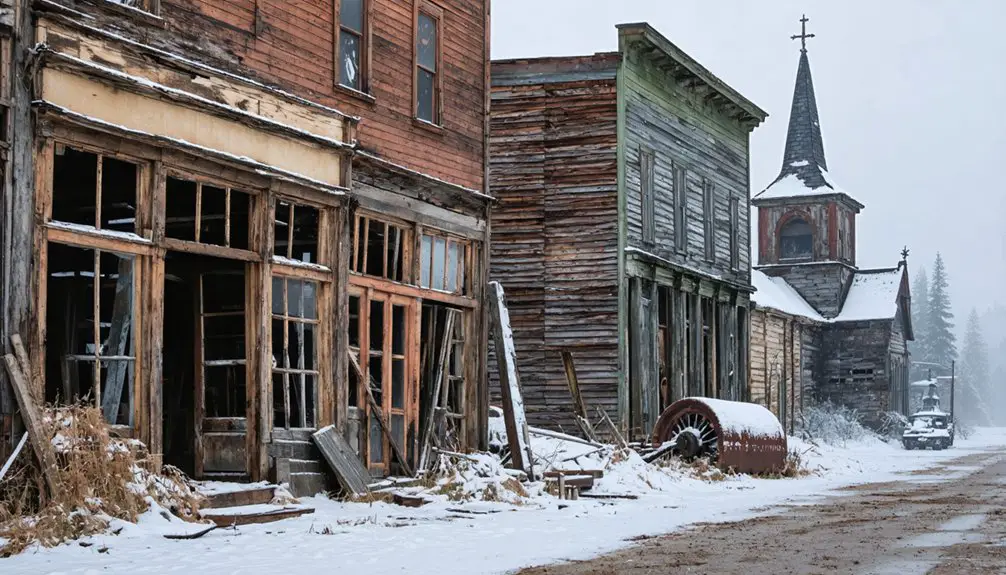
Start your Caperton adventure at Canyon Rim Visitor Center on U.S. Route 19, where you’ll grab maps before tackling the 8-mile trail from Fayette Station. You’ll discover 212 beehive coke ovens, crumbling multi-story foundations, and sealed mine portals scattered through the forest. Visit between mid-September and winter for fewer crowds and clearer views of the ruins. Pack sturdy boots, headlamps for exploring darkened structures, and two liters of water—the steep terrain demands preparation, and there’s plenty more to uncover about combining this ghost town with nearby abandoned sites.
Key Takeaways
- Start at Canyon Rim Visitor Center on U.S. Route 19 to collect maps before hiking the 8-mile route from Fayette Station.
- Visit during winter or mid-September for fewer crowds, clearer views of 212 beehive coke ovens, and easier structure access.
- Wear waterproof hiking boots with ankle support and bring headlamp, GPS, water, first aid supplies, and weather-appropriate layers.
- Explore nearby ghost towns like Nuttallburg, Kaymoor, RushRun, FireCreek, and RedAsh for a comprehensive industrial heritage tour.
- Combine your trip with New River Gorge rafting adventures or zipline activities at multi-activity resorts for diverse experiences.
Getting to Caperton in New River Gorge National Park
Tucked deep within New River Gorge National Park and Preserve, Caperton sits along the southern bank of the New River, roughly two miles east of the better-known Nuttallburg ghost town. You’ll reach this abandoned coal mining settlement by hiking along old railroad tracks from Fayette Station, following the eight-mile self-guided tour route that winds beneath the iconic New River Gorge Bridge.
Start your journey at the Canyon Rim Visitor Center on U.S. Route 19 north of Fayetteville—easily accessible from I-64 and I-77—where you’ll grab essential maps and orientation materials. Plan your visit during winter or early spring when seasonal weather conditions clear the vegetation, revealing remnants of the 1880s Fire Creek seam operation. At its height, Caperton housed over five hundred residents before its abandonment in 1954. Like dozens of other settlements that appeared after the C&O railroad was completed, Caperton emerged to support the extraction of coal from the gorge walls.
On site interpretive signs help you piece together Caperton’s coal-mining past as you explore independently.
What Remains at the Abandoned Coal Mining Town
You’ll find Caperton’s most striking remnants in its deteriorating beehive coke ovens—red brick domes that once burned continuously from 1881 until the early 1950s, now standing like ancient monuments against the hillside.
Stone foundations from hundreds of homes rise at impressive heights across the steep terrain, their cut-stone walls still marking where over 500 residents once lived. The sealed mine portals, rusted tipple structures, and scattered brick remnants complete this industrial graveyard where three coal mines once operated around the clock.
A monitor car still dangles from its cable across the tipple ruins, one of a pair that once lowered coal from the headhouse high on the mountain down to the processing facility below. Look for the remains of a 500-foot walk bridge that once connected the main settlement to the South Caperton mine and community across the river.
Crumbling Coke Ovens
Standing among the weathered ruins today, you’ll find Caperton’s 212 beehive-style coke ovens still terraced into the steep hillsides of the New River Gorge, their brick-lined facings and retaining walls remarkably intact for structures built in 1881.
These abandoned coking operations once ran continuously, converting two tons of coal into one ton of coke for steel production. You’ll discover scattered cut-stone house foundations climbing the hillside, memorial to workers who kept these ovens burning day and night until the late 1940s. A team of 150 men operated the heavy ovens through a 48-hour baking process that burned off impurities from the region’s soft, low-sulfur coal.
The most striking artifact hangs frozen in time—a monitor car suspended from cables across the tipple ruins, still demonstrating the transportation system that moved coal to the ovens below. Flowers still bloom around foundation remnants believed to be the Gaston Caperton family home, perched against the steep hillside. Natural landscape preservation within New River Gorge National Park protects these industrial relics.
Stone Foundation Ruins
Beyond the coke ovens, Caperton’s stone foundations climb the steep hillsides in silent clusters, their precisely cut blocks still stacked where 19th-century masons positioned them to level building sites on impossibly vertical terrain.
You’ll find residential remains scattered near the town center, each foundation revealing sophisticated building site stabilization methods that allowed coal families to construct homes on slopes most modern builders wouldn’t touch. The tallest foundations soar several stories, compensating for dramatic elevation changes.
Park Service documentation identifies post-1880 construction across multiple hollows, though architectural preservation techniques now focus on preventing further collapse rather than restoration. One remarkable boarding house still stands forty feet high—wood and metal clinging together in defiant decay. You’re witnessing engineering ingenuity that tamed West Virginia’s unforgiving mountains.
Higher on the hillsides above Mount Carbon, mysterious stone walls stretch across the landscape, with one ancient structure measuring longer than two football fields and standing 4 feet tall. These pre-colonial walls were constructed using Kanawha black flint, a highly siliceous rock that Native Americans quarried from deposits on the mountainside.
Sealed Mine Portals
The mines themselves now hide behind steel gates and concrete barriers, their once-gaping portals sealed by federal mandate in the decades following abandonment.
You’ll spot these sealed entrances dotting the hillsides on both sides of the New River, marking where coal extraction operations stretched high into the surrounding terrain. The blocked mine shafts represent the dual-sided mining system that required those elaborate cable networks—18,000 feet of aerial buckets crossing south to north, and the 1,460-foot inclined track hauling coal downslope. This bituminous coal from the region was among the richest and most valuable the world has ever known, fueling demand that created towns like Caperton.
While you can’t explore the tunnels that once employed hundreds of workers, these secured portals tell their own story of industrial ambition and eventual decline. They’re sobering reminders of the dangerous underground labor that fueled Caperton’s brief prosperity. The New River Coal Company operated these mines, establishing Caperton as one of the many coal communities that emerged along this stretch of West Virginia.
Exploring the Historic Coke Ovens and Mine Portals
As you navigate the steep terrain near the old tipple site, you’ll spot the first remnants of Caperton’s massive industrial complex—a monitor car still dangling from its ancient cable, frozen mid-journey across what was once a bustling tramway.
The real treasures lie higher up the hillside, where 212 beehive coke ovens terrace into the hills. These 140-year-old structures showcase remarkable architectural uniqueness—their intact stone facings and retaining walls demonstrate craftsmanship that’s withstood over a century of abandonment.
The historical significance becomes tangible when you realize these ovens burned continuously, converting two tons of coal into one ton of coke every 48 hours. Look for cut-stone foundations marking where workers’ houses clung to these impossible slopes, and sealed mine portals that once fed this relentless operation.
Best Time to Visit and What to Bring

You’ll want to time your Caperton adventure between late spring and fall, when mild temperatures let you explore crumbling structures and forest trails without battling winter snow or summer’s oppressive heat. Pack layered clothing and waterproof gear—the New River Gorge’s weather shifts quickly, and you don’t want sudden rain cutting short your investigation of those eerie coke ovens.
Bring sturdy boots, plenty of water, a flashlight for peering into darkened mine portals, and insect repellent if you’re visiting during those sticky summer months.
Optimal Seasonal Visiting Conditions
Whether you’re chasing autumn’s fiery palette or seeking winter’s frozen silence, timing your Caperton ghost town adventure shapes everything about the experience. Mid September crowds thin considerably before peak foliage hits, giving you unfettered access to explore crumbling structures without competition.
By mid October lodging availability tightens as leaf-peepers flood higher elevations, so book early or pivot to winter’s sweet spot.
Winter actually delivers Caperton’s most authentic experience—frozen waterfalls frame the ruins while snow-dusted foundations reveal structural details obscured by summer vegetation. You’ll navigate without battling humidity or tourists, just raw mountain cold and haunting solitude.
Spring’s May rains create dramatic waterfall backdrops but muddy access roads. Summer’s long daylight maximizes exploration time, though muggy conditions and vacation crowds diminish that untamed, forgotten-world atmosphere you’re really after.
Essential Gear and Supplies
Selecting the right season means nothing if you show up unprepared for Caperton’s unforgiving terrain. These crumbling coke ovens and deteriorating foundations demand proper equipment for safe exploration.
Your essential gear includes:
- Sturdy hiking boots with ankle support and waterproof capability for traversing steep hillsides and moisture-laden ground near the New River
- Headlamp with high-beam function to examine stone arch facings and red brick construction inside sealed beehive ovens while keeping hands free
- Topographic survey tools like detailed maps and GPS devices for orientation across the three-quarter-mile abandoned townsite
- Hazards awareness items including first aid supplies, insect repellent, emergency whistle, and two liters of water for remote exploration
Pack extra snacks, weather-appropriate layers, and backup batteries—no services exist at this isolated gorge location.
Combining Your Trip With Nearby Ghost Towns
Since Caperton sits within Fayette County‘s remarkable concentration of abandoned coal settlements, you can transform a single ghost town visit into an immersive multi-site expedition through New River Gorge‘s industrial past. RushRun, FireCreek, RedAsh, Kaymoor, and Nuttallburg lie within striking distance, each offering distinct industrial infrastructure remnants to explore.
You’ll discover crumbling company stores at RushRun, depleted mine portals at RedAsh, and Nuttallburg’s hulking rusted tipples—preserved historical artifacts that reveal the coal era’s boom-and-bust cycle. These long-abandoned settlements emerged after railroad construction in the 1870s, then faded when demand plummeted post-World War II.
Plot your route using early 1900s topographical maps, since modern highway maps won’t show these reclaimed sites. Pack your vehicle for a full day traversing overgrown forest trails between multiple locations.
Adding White Water Rafting Adventures to Your Journey

After exploring Caperton’s silent coal ruins, you’ll find West Virginia’s thundering whitewater rivers provide the perfect adrenaline counterpoint to your ghost town contemplations. The state holds the country’s highest density of whitewater runs, with guided tours ranging from peaceful floats to class IV+ rapids.
From contemplative ghost town silence to heart-pounding rapids—West Virginia delivers dramatic contrasts that transform any mountain journey into an unforgettable adventure.
Prime rafting destinations near your route:
- New River Gorge – Nearly year-round trips (April-October) with class III/IV rapids and bridge views
- Gauley River – World-class fall runs featuring gigantic waves and intense sections
- Cheat Canyon – 13 miles of wild rapids through steep Appalachian walls
- Multi-activity resorts – Combine rafting with aerial challenges like ziplining and climbing
Spring delivers peak water levels, while licensed outfitters provide equipment, expert guides, and riverside meals. Book trips with free 24-hour cancellation for maximum flexibility.
Frequently Asked Questions
Are There Any Safety Concerns When Exploring Caperton’s Steep Hillsides?
Yes, you’ll face steep terrain hazards traversing Caperton’s crumbling hillsides. Loose debris dangers lurk everywhere—rotting structures can collapse without warning, overgrown paths obscure footing, and the isolated location means help won’t arrive quickly if you’re injured.
Can I Camp Overnight Near the Caperton Ghost Town Site?
No designated camping exists at Caperton itself—overnight parking availability remains uncertain on private land. You’ll find camping restrictions throughout, but nearby alternatives like Erskine Ghost Town’s campsite or Seneca Shadows offer legal basecamp options for your ghost town exploration adventures.
Are Guided Tours Available for Caperton’s Historic Ruins?
No guided tours exist for Caperton’s ruins—you’ll explore independently through self-guided walking routes. The reclaimed site offers total freedom to wander, though private tour options aren’t available for this fully abandoned coal town.
How Long Should I Plan to Spend Exploring Caperton?
Plan 1-2 hours to explore Caperton’s abandoned buildings and absorb local history. You’ll navigate overgrown trails, discover crumbling coke ovens, and climb steep terrain. Combine it with nearby ghost towns for a liberating half-day adventure through Appalachian wilderness.
Is Caperton Suitable for Children or Elderly Visitors?
Caperton’s ghost town isn’t ideal for elderly or young children—it requires hiking off-trail with limited accessibility options. However, you’ll find Morgantown’s paved rail-trail nearby offers easy exploration with local amenities like restaurants and parking for all ages.
References
- https://theclio.com/entry/136111
- https://www.latimes.com/archives/la-xpm-1989-04-23-tr-1673-story.html
- https://theclio.com/tour/1943
- https://en.wikipedia.org/wiki/List_of_ghost_towns_in_West_Virginia
- https://www.youtube.com/watch?v=3AnFBgeg7Tk
- https://www.trainorders.com/discussion/read.php?11,4901941
- https://eos.org/features/the-new-river-gorge-ancient-river-old-mines-new-national-park
- https://en.wikipedia.org/wiki/New_River_Gorge_Bridge
- https://summersvillelakeretreat.com/new-river-gorge-national-park-glen-jean-wv/
- https://www.youtube.com/watch?v=R0wptY1O4Jw