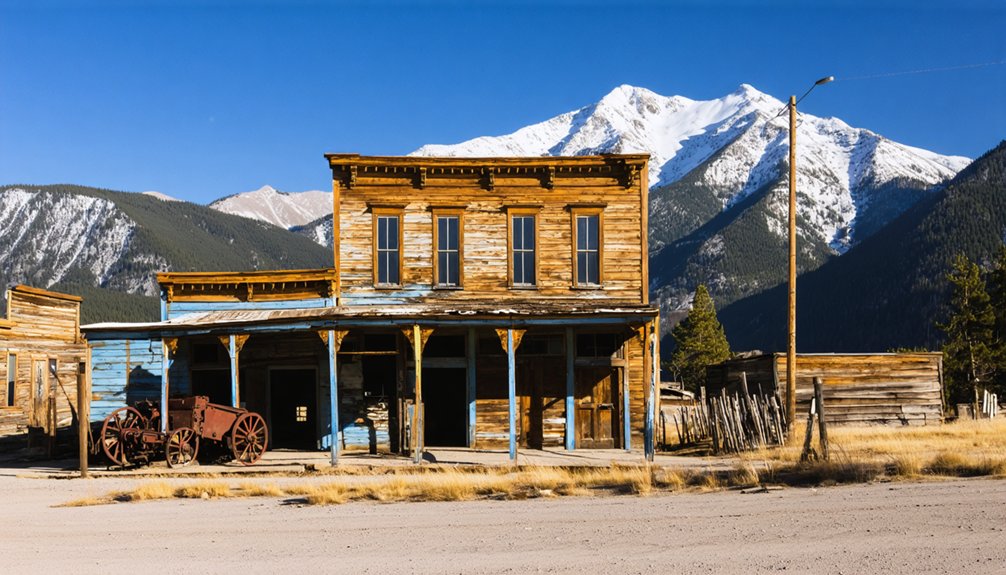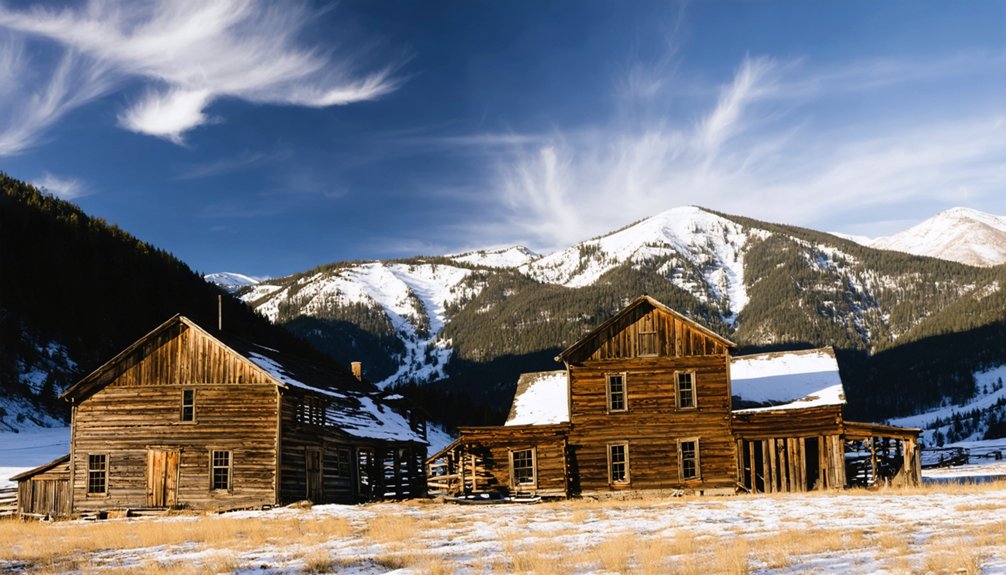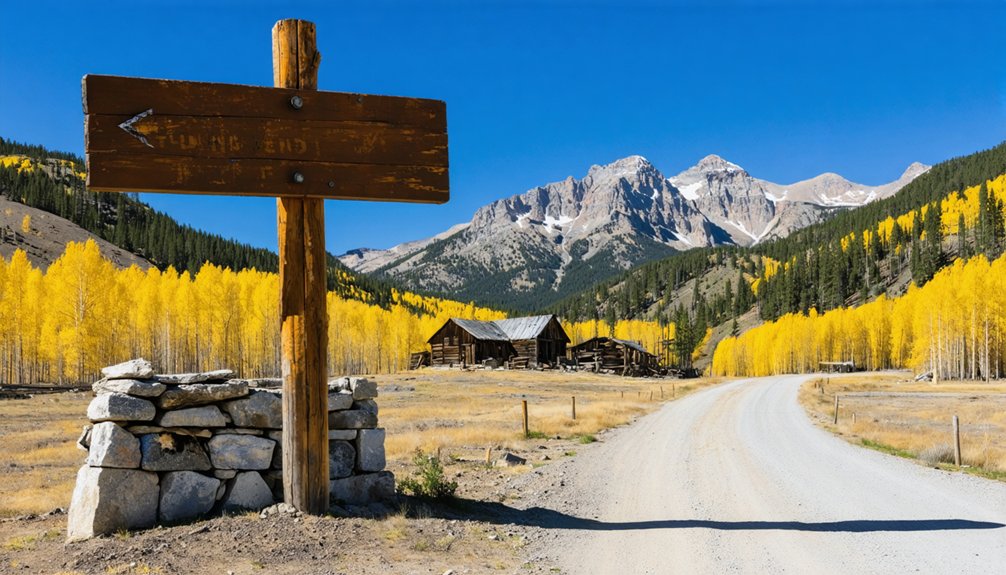
You’ll find Capitol City 9 miles west of Lake City along County Road 20, accessible by standard vehicles during summer and fall months. At 9,480 feet, this 1874 silver boom town offers visible remnants including the 1877 post office, Lee’s smelter stack, and brick foundations scattered across 200 acres. Visit between Memorial Day and early October when weather cooperates and wildflowers or golden aspens frame your photography. The site mixes private property with public viewing areas, so stick to roadways and respect posted boundaries while discovering what transformed a silver baron’s mansion into haunting rubble.
Key Takeaways
- Capitol City sits at 9,480 feet elevation, accessible via a 9-mile route west from Lake City along Engineer Pass Road.
- Visit between Memorial Day and early October; fall offers golden aspens and ideal temperatures, while winter closes all access.
- Standard 2-wheel drive vehicles can handle the Lake City approach, but always check current road conditions before departing.
- Explore remnants of the 1877 Post Office, Lee’s Smelter Stack, and brick structures across the 200-acre historic townsite.
- Follow preservation guidelines by photographing from roadways, respecting posted warnings, and honoring protective regulations.
The Rise and Fall of a Silver Boom Town
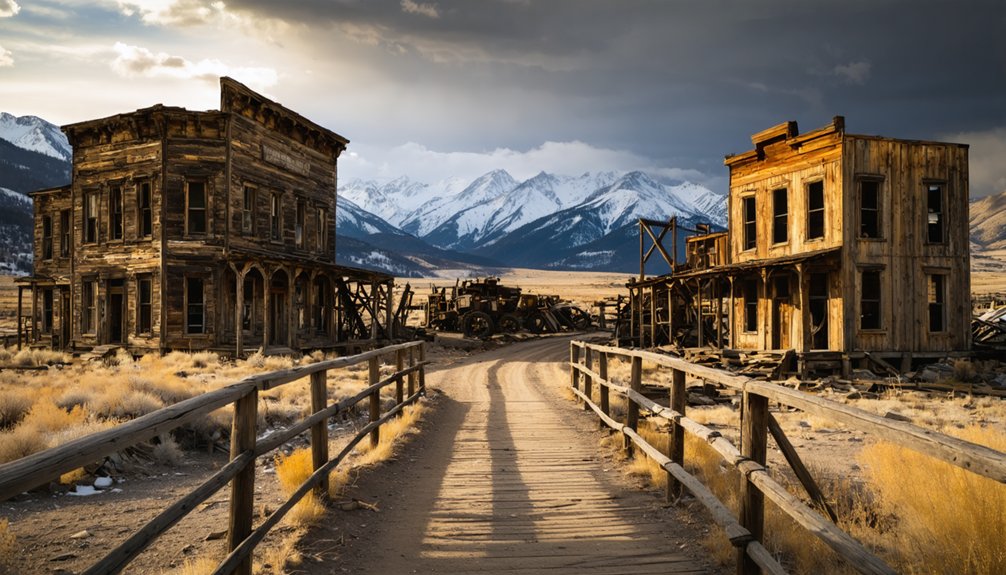
In 1871, prospectors struck silver in the Ute and Ule mines, and within three years the Galena Mining District had taken shape high in Colorado’s San Juan Mountains. George Lee founded what he’d ambitiously rename Capitol City at 9,480 feet, building a grand mansion and smelter to capitalize on the region’s wealth.
The town’s boom bust cycle mirrored the larger Colorado Silver Boom—federal silver purchases through the Bland-Allison and Sherman Acts kept prices high and miners working through the 1880s. But economic factors driving decline hit hard when Congress repealed the Sherman Act in 1893, cratering silver prices overnight. Lawsuits and depopulation followed swiftly. By 1920, the post office closed for good, leaving only Lee’s mansion and scattered ruins behind.
Getting to Capitol City: Routes and Requirements
Reaching Capitol City requires heading west from Lake City along County Road 20, also known as Henson Creek Road or Engineer Pass Road. You’ll cover nine miles through the San Juan Mountains, climbing to 9,480 feet elevation along the Alpine Loop National Scenic Back Country Byway. Your standard 2-wheel drive vehicle handles this route just fine—no specialized equipment needed from the Lake City approach.
Seasonal timing factors heavily into your journey. Late spring through fall offers your best window, though exact dates depend on snowmelt and maintenance schedules. Winter conditions shut down access completely. Check current road conditions before departing, especially during shoulder seasons.
Once there, respect accessibility considerations: private homes and property boundaries exist throughout the townsite. Lake City provides your base for supplies and accommodations.
What You’ll Find at the Townsite Today
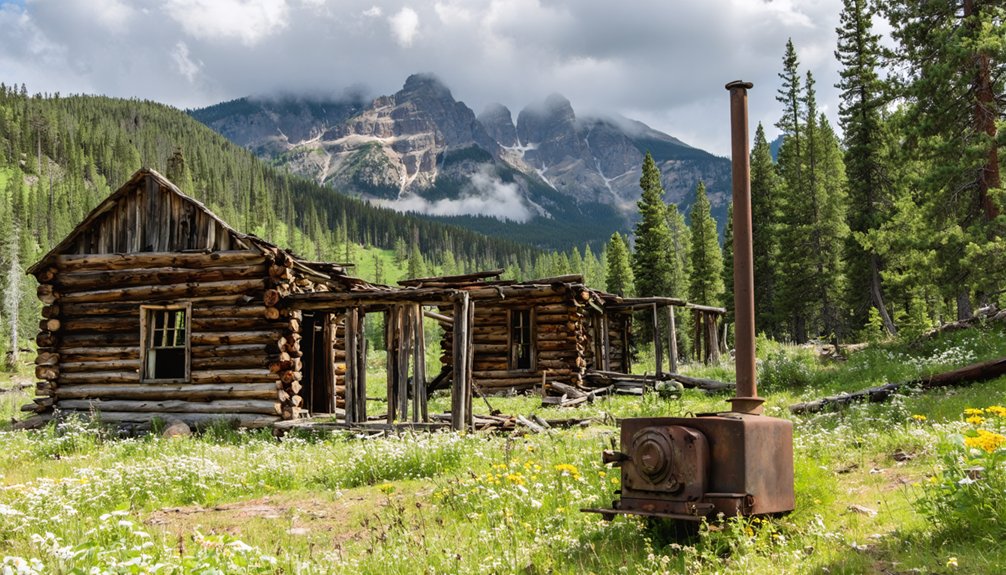
Capitol City greets visitors with whispers of its boom-town past rather than grand architectural statements. You’ll discover the 1877 U.S. Post Office still standing, alongside Lee’s Smelter Stack piercing the mountain sky. Remaining brick structures dot the landscape—testament to those expensive $1-per-brick shipments from Pueblo. The founder’s once-grand mansion now exists as scattered rubble, reclaimed by aspens and evergreens across the 200-acre site.
Don’t expect pristine ruins. This ghost town blends private homes, restored cabins, and modern conveniences like a gas station with historical fragments. You’ll spot smelter foundations, sawmill remnants, and debris from saloons and hotels. At 9,711 feet elevation, nature’s winning its battle against history. While historical excavation projects remain limited, you’re free to explore visible traces of Capitol City’s 800-resident heyday.
Best Times to Visit and Weather Considerations
Your window to explore Capitol City opens with the snowmelt and closes when winter reclaims these mountains. Late spring initial road opening via Engineer Pass Road marks your earliest access from Lake City, though spring snowmelt challenges create muddy, unpredictable conditions through May.
Capitol City awakens with spring snowmelt and slumbers under winter’s grip—your adventure window opens and closes with the seasons.
Summer delivers prime exploring from Memorial Day through Labor Day—expect 60s-70s°F days, wildflowers painting the alpine meadows, and 2WD-friendly roads. You’ll trade solitude for accessibility during peak season.
Fall becomes your sweet spot. September through early October brings golden aspens, fewer crowds, and comfortable temperatures before the first snows fly. You’ll catch the second half of September for peak colors across southwest Colorado.
Winter renders Capitol City completely inaccessible—snow buries these high-elevation roads from November through April, sealing off your adventure until spring returns.
Respecting Private Property and Preservation Efforts
Preservation efforts require your cooperation. Since the 1980s, organizations have worked to protect Colorado’s ghost towns through National Register listings and Forest Service permits.
A deeper understanding of the history of carrizo city town can reveal valuable insights into the challenges faced by these communities. Learning about the economic and cultural dynamics that shaped their existence may inspire further preservation initiatives. Additionally, engaging local residents in storytelling can help keep the town’s legacy alive for future generations.
Ghost town preservation laws under Colorado Revised Statutes Title 24 establish protective oversight, while local zoning regulations balance access with safety. You’ll find freedom in responsible exploration—photograph from roadways, honor posted warnings, and recognize that your regard today safeguards these haunting landscapes for tomorrow’s adventurers.
Frequently Asked Questions
Are There Any Nearby Campgrounds or Lodging Options for Overnight Stays?
You’ll find Capitol City Campground right there, plus Central City KOA and Columbine Campground nearby. Nearby bed and breakfasts offer cozy alternatives in Lake City. Check seasonal lodging availability—most sites operate April through October, with limited winter options.
What Other Ghost Towns Can Be Visited Along the Alpine Loop?
You’ll discover Animas Forks at 11,200 feet and Ironton’s weathered cabins along the Alpine Loop. These hidden mining towns offer high altitude hiking trails through stunning San Juan terrain, letting you explore Colorado’s wildest backcountry at your own pace.
Are Guided Tours Available for Capitol City and Surrounding Historic Sites?
Capitol City offers no guided tours of historic buildings—you’ll chart your own path through abandoned saloons and smelters. Meanwhile, Denver’s Capitol Hill provides structured self-guided walking tours of town if you prefer paranormal investigators leading your ghostly adventure instead.
What Supplies and Emergency Equipment Should I Bring for the Trip?
You’ll need a thorough first aid kit with altitude meds, spare tire and tools for rocky terrain, water purification supplies, emergency food, communication devices, and layered clothing. Pack like you’re truly on your own out there.
Can I Use a Regular SUV or Is a Modified 4×4 Necessary?
You’ll find the journey pleasantly forgiving—a regular SUV handles the route beautifully. Vehicle requirements stay modest for Capitol City’s seasonal accessibility from Lake City, though venturing beyond demands proper 4×4 capability for those rougher mountain passages.