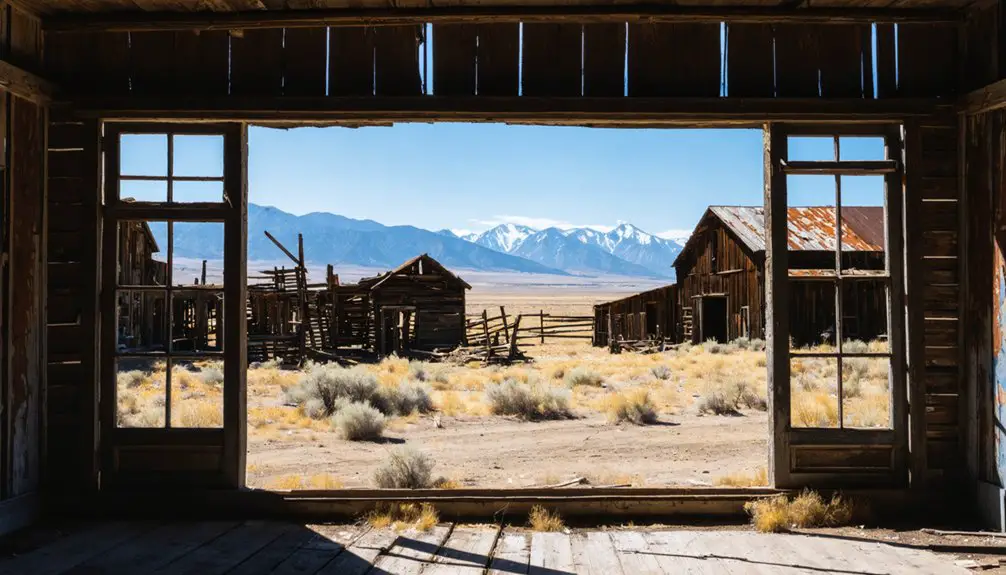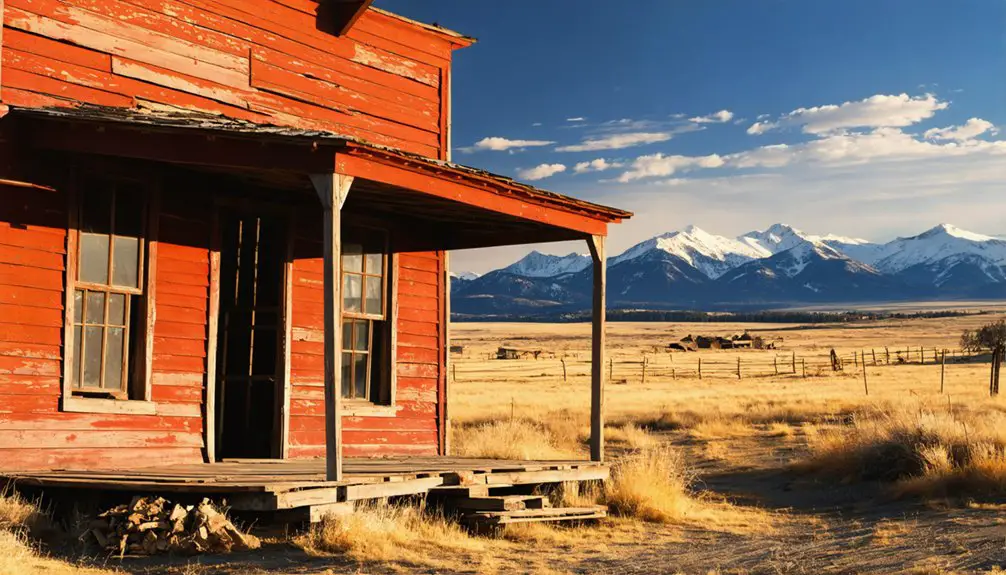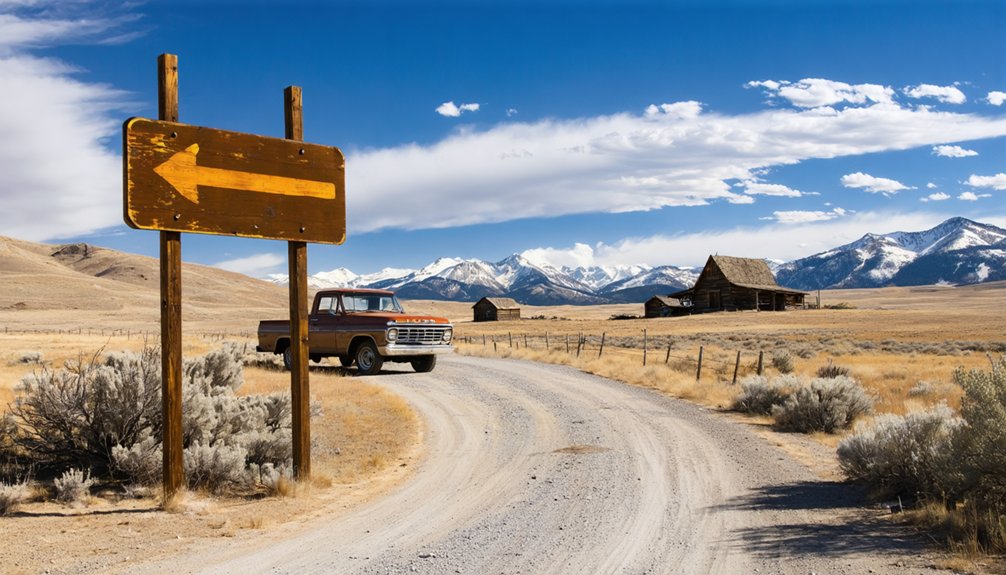
Your Montana ghost town road trip begins at Bannack State Park, where 60 weathered structures mark the state’s 1862 territorial capital, then winds through Virginia City’s 300 preserved buildings and living history reenactments. You’ll discover Coolidge’s intact silver mine perched above 7,000 feet, explore Rimini’s cabins near Helena, and venture into hidden settlements like Coloma in the Garnet Range. This 300-mile corridor through five counties reveals where fortune-seekers once swelled populations to 10,000 before abandonment froze these communities in time, with essential planning details awaiting below.
Key Takeaways
- Montana lacks a ghost town named “Capitol,” but visit former territorial capitals Bannack (1862) and Virginia City (1864) instead.
- Bannack State Park preserves 60+ structures from Montana’s first gold rush town, accessible year-round as a National Historic Landmark.
- Virginia City offers 300 original buildings, living history reenactments, and remains Montana’s oldest incorporated community with authentic Victorian architecture.
- Create a loop route through Beaverhead County visiting Bannack, Virginia City, and nearby mining remnants like Coolidge and Rimini.
- Plan for mountain roads above 7,000 feet at sites like Coolidge; check seasonal accessibility and prepare for remote conditions.
Bannack State Park: Montana’s First Territorial Capital
When gold glinted in the icy waters of Grasshopper Creek in 1862, prospectors known as Pikes Peakers—veterans of Colorado’s gold fields—sparked a rush that would birth Montana’s first territorial capital. You’ll find Bannack nestled in Beaverhead County, where 400 hardy souls braved brutal winter conditions, swelling to 10,000 at its peak.
Bannack’s legacy runs deeper than politics—vigilance committee activity defined its frontier justice, with Sheriff Henry Plummer and 21 others hanged without trial.
Today, Bannack’s architectural preservation stands unmatched. Over 60 weathered structures—hotels, saloons, the gallows—remain frozen in time within this National Historic Landmark, inviting you to walk streets where lawlessness once reigned.
Brief territorial glory arrived in 1864 before Virginia City claimed the capital.
Virginia City: A Living Museum of the Wild West
As Bill Fairweather and Henry Edgar‘s picks struck gold in Alder Gulch on May 26, 1863, they triggered what would become the Rocky Mountains’ richest placer strike—a discovery that transformed bare wilderness into Montana’s second territorial capital within two years.
You’ll find nearly 300 original structures standing where 10,000 fortune-seekers once crowded Virginia City’s streets. The Bovey family’s restoration preserved this National Historic Landmark exactly as it appeared during the vigilante era. Unlike sanitized reconstructions, you’re walking through authentic buildings housing gold mining artifacts that survived $100 million worth of extraction.
Living history reenactments bring the lawless Confederate-sympathizing settlement back to life. Between gold panning and exploring saloons, you’ll experience Montana’s oldest incorporated community—a Victorian mining town that escaped modernization simply because residents couldn’t afford it.
Coolidge: Silver Mining Remnants in the Mountains
While prospectors flooded Virginia City’s placer deposits in 1863, Preston Sheldon’s 1872 discovery in the Elkhorn district revealed something far more valuable—silver ore assaying an extraordinary 300 ounces per ton.
You’ll find Coolidge’s remnants perched above 7,000 feet in the East Pioneer Mountains, where William R. Allen’s 1911 vision materialized into a two-acre mill processing 750 tons daily by 1922.
Coolidge mining camp’s decline accelerated through:
- The 1927 flood destroying Wise River infrastructure
- The Great Depression’s devastating silver price collapse
- Decades of salvage efforts stripping structures bare
Today, Coolidge stands as Montana’s most intact mine site on the National Register. You’re free to explore the townsite each summer, though unstable slopes keep the mill closed—these mountains reclaim what we temporarily borrowed.
Rimini: Historic Mining Hub Near Helena
Just beyond Helena’s eastern hills, Rimini’s silver lodes sparked a rush that would outlast most Montana camps by decades. Silver strikes in 1864 built a town that peaked at 300 souls by 1890, shipping 400 tons of ore weekly to Wickes smelter. The district produced over $7 million before the 1893 silver crash emptied the streets.
You’ll find mining infrastructure remnants scattered through Ten Mile Creek Valley—restored cabins housing year-round residents, crumbling structures surrendering to wilderness. The Porphyry Dike worked gold until 1926, when mill tailings fouled Helena’s water supply. Now environmental reclamation efforts tackle a century’s mining waste as part of the Superfund cleanup. It’s freedom bought at earth’s expense, wealth extracted and consequences deferred.
Hidden Gems: Coloma, Hell Gate Ronde, Taft, Comet, and Granite
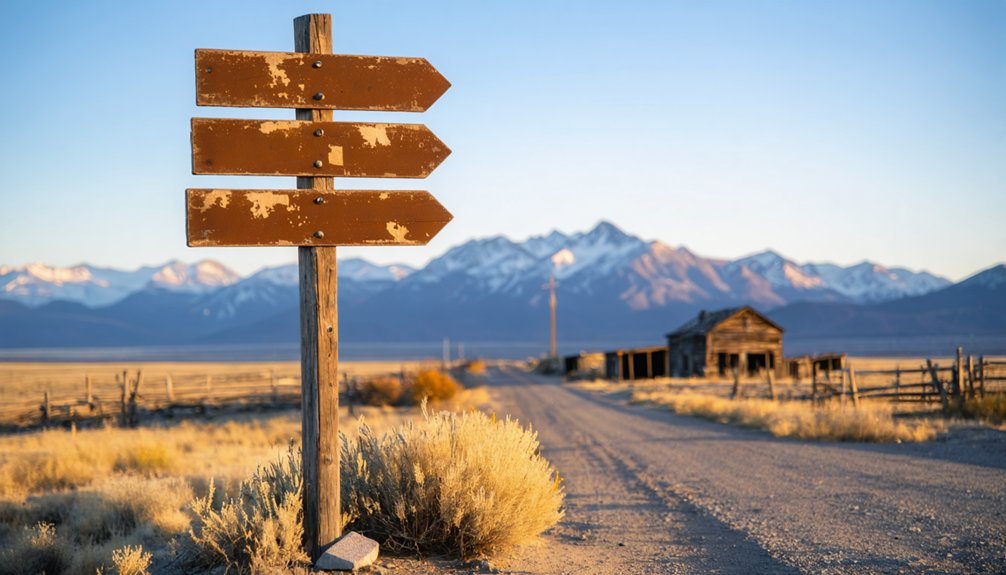
Beyond the well-trodden paths to Garnet and Bannack, Montana’s backcountry conceals mining camps where fewer travelers venture. Coloma stands out among these forgotten settlements, perched at 5,928 feet in the Garnet Range. You’ll find remnants of an 1893 boomtown where gold production estimates reached $250,000, though much wealth washed away in tailings.
Ghost town archaeology reveals Coloma’s layered history:
- Dr. Kelly Dixon’s 2009 University of Montana excavations uncovered artifacts from the 1865 placer rush
- Two stamp mills operated between 1896-1918, crushing ore from surrounding claims
- The Mammoth Mine survived into the 1940s, outlasting most competitors
While Hell Gate Ronde, Taft, and Comet remain elusive—possibly misidentified camps—Granite in Philipsburg offers another destination. Its 3,000-strong silver mining community left substantial stone ruins you can still explore.
Essential Tips for Your Montana Ghost Town Adventure
Your Montana ghost town adventure demands careful preparation to balance exploration with respect for these fragile historical sites. The state’s unpredictable weather and remote terrain require strategic timing—visit between May and September when roads are passable and buildings are accessible, though winter transforms places like Garnet into snowbound wonderlands for the properly equipped.
Before entering any structure, assess its stability, stay alert for wildlife and rattlesnakes, and capture these haunting landscapes through your lens while treading lightly on the remnants of frontier dreams.
Safety Precautions for Exploring
Exploring Capitol’s weathered buildings and abandoned streets demands careful preparation, as this remote ghost town sits far from modern conveniences and emergency services. Pack recovery gear including winches and straps for self-extraction on unpaved roads, and never venture alone—groups provide essential backup when vehicles bog down in winter mud. Wildlife encounters require defensive awareness on these isolated public lands where predators roam freely.
Essential Safety Protocols:
- Respect structural integrity—avoid entering collapsing buildings and permanently closed mines that pose imminent danger
- Honor legal requirements—removing artifacts violates federal law, and trail cameras monitor protected sites
- Prepare for isolation—expect zero cell service and inform others of your route
Your freedom to explore hinges on responsible stewardship and realistic assessment of backcountry risks.
Best Seasons to Visit
Montana’s dramatic seasonal shifts transform Capitol into four distinct ghost town experiences, each offering unique advantages for your backcountry adventure.
The abandoned buildings of Capitol, Montana, give visitors a glimpse into the past, where stories of the town’s former glory linger in the air. Exploring the remnants of old storefronts and homes invites a sense of nostalgia that enriches the backcountry experience. Each crumbling facade tells a tale, beckoning adventurers to uncover the history hidden within these shadows.
Spring brings unpredictable weather variability—expect snow in March transitioning to 66°F May warmth—perfect for photographing thawing landscapes with minimal crowds.
Summer delivers ideal exploration conditions with 16-hour daylight and temperatures reaching the high 70s, though you’ll share sites with peak-season visitors.
Fall stands out as the premier shoulder season, offering mild 70°F days, vibrant foliage, and intimate experiences without summer’s congestion.
Winter transforms Capitol into a snow-covered sanctuary accessible 9am-5pm, where you’ll experience profound solitude exploring unlatched buildings.
Understanding these seasonal differences helps you choose between comfortable weather with crowds or atmospheric isolation requiring self-sufficiency—the choice reflects your adventurous spirit.
Photography and Documentation Tips
Capturing Capitol’s haunting beauty demands more than casual snapshots—it requires purposeful gear selection and technical preparation. Pack a sturdy tripod for low-light interiors and powerful flashlights to illuminate shadowed corners. Shoot during golden hours when natural light transforms weathered structures into dramatic subjects.
Interior lighting strategies separate ordinary photos from extraordinary documentation:
- Expose for window highlights, then use fill flash for shadow detail
- Employ strategic flashlight positioning to spotlight artifacts naturally
- Set ISO between 1000-2000 for sharp handheld shots in dim wood buildings
Focus on Capitol’s distinctive features—the jail, saloon, and schoolhouse—capturing architectural details like door handles and window latticing. Atmospheric post processing enhances your work: adjust contrasts carefully, consider monochrome conversions for emotional impact, and merge multiple exposures without compromising the town’s authentic ghostly character.
Frequently Asked Questions
What Is the Best Time of Year to Visit Montana Ghost Towns?
September offers the best weather conditions for Montana ghost towns—you’ll find ideal tourist seasons with mild temperatures, open facilities, and fewer crowds. Experience authentic solitude while exploring preserved buildings under brilliant autumn skies, perfectly capturing that untamed frontier spirit.
Are These Ghost Towns Safe to Explore With Young Children?
Yes, but supervision’s essential. Since Bannack’s 1954 state park designation, maintained structures offer safer exploration. Follow child safety precautions like staying together, testing floorboards, and avoiding deteriorated areas. Supervision recommendations include setting boundaries and consulting caretakers before entering buildings.
Do I Need a Four-Wheel Drive Vehicle to Reach These Locations?
You won’t need four-wheel drive for most locations under dry conditions. Vehicle requirements vary—Garnet and Virginia City offer standard-accessible routes, while Granite demands high clearance. Road conditions change seasonally, so check current weather before departing.
Can I Camp Overnight Near Any of These Ghost Town Sites?
“Home is where you park it”—overnight camping availability abounds near Montana’s ghost towns. You’ll find lodging near ghost towns at Bannack’s campgrounds, dispersed forest sites near Glendale, and private options surrounding Granite, embracing total freedom.
Are There Entrance Fees Required for Visiting These Ghost Towns?
Yes, you’ll encounter admission costs at some ghost towns depending on their preservation status. Garnet charges $3 (proposed $10), while Bannack State Park requires $8 per vehicle. Many remote sites remain free to explore independently.