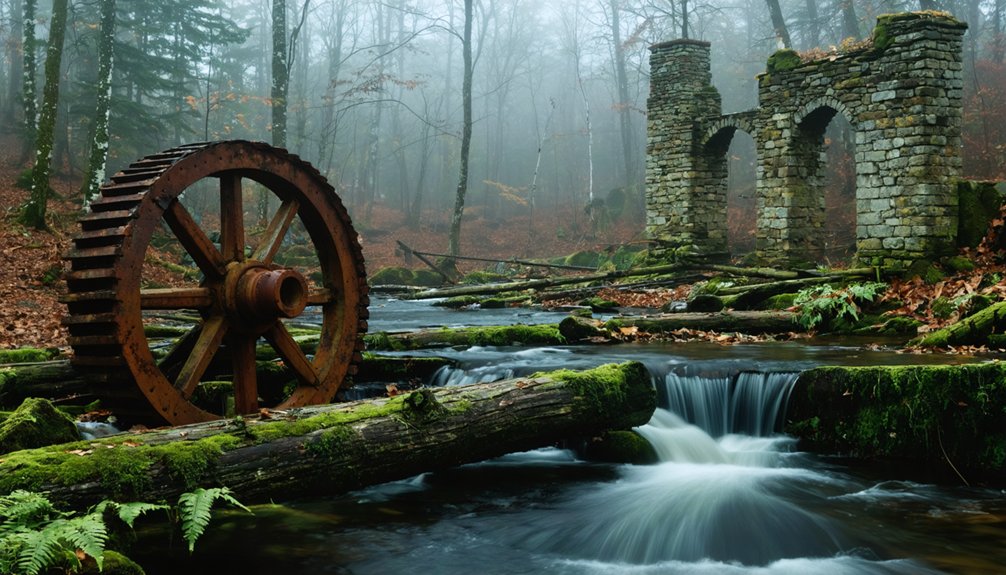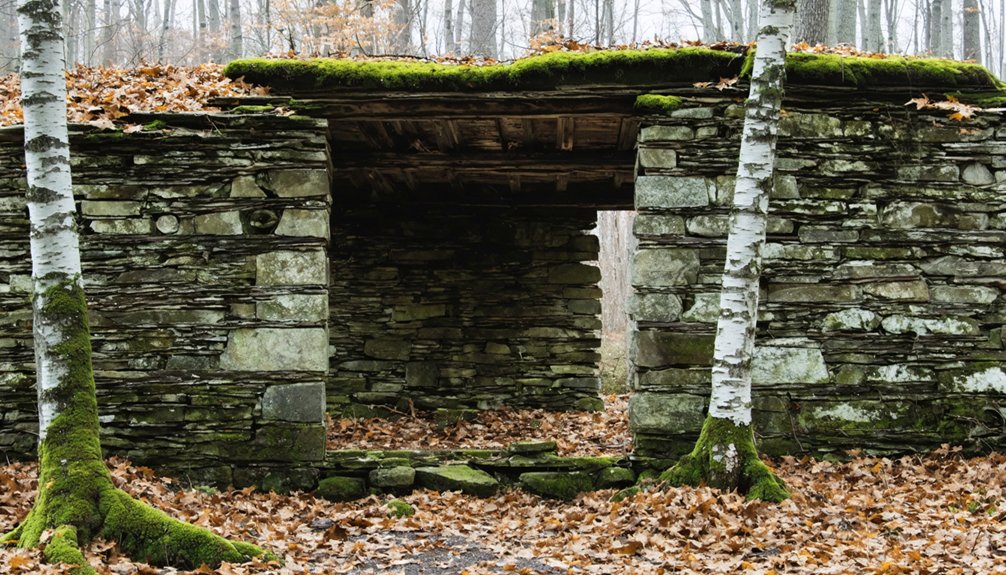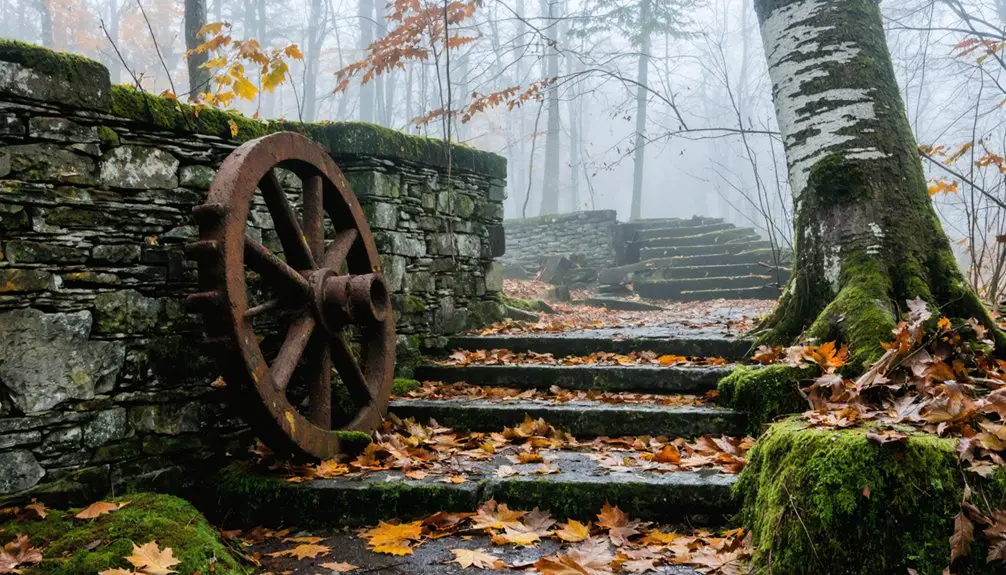
You’ll find Carrigain’s ghost town remnants near Zealand Campground in White Mountain National Forest, though nature has reclaimed most evidence of the lumber town that vanished after just seven years. Plan to visit during weekday shoulder seasons to avoid crowds, starting early from North Conway with proper supplies. Look for subtle foundation depressions and rusted metal fragments near the Ammonoosuc River, but contact Forest Service rangers first about off-trail protocols. The scattered traces tell a darker story about industrial logging‘s devastating speed than nearby Livermore’s more visible ruins reveal.
Key Takeaways
- Carrigain existed from 1891 to approximately 1900 as a lumber town before timber exhaustion caused complete abandonment.
- Zealand Campground marks the former site, with scattered metal fragments and depressions remaining from J.E. Henry’s logging operations.
- Contact White Mountain National Forest rangers before exploring off-trail to respect archaeological protocols and locate remnants safely.
- Visit during shoulder seasons on weekdays to avoid crowds, and start early for solitude at the site.
- Combine your trip with nearby Livermore ghost town to compare how timber depletion erased both communities.
The Rise and Fall of a White Mountain Lumber Town
Deep in New Hampshire’s White Mountains, Carrigain emerged as a classic lumber town in 1891, its fate tied entirely to the Saco Valley Railroad that snaked through the wilderness west of Livermore. You’ll find it remarkable how quickly the settlement rose—churches, schools, and steam-powered sawmills materialized seemingly overnight as the railroad carried millions of board feet annually from surrounding forests.
But here’s the brutal truth: by 1892, operations were already shifting elsewhere. Timber pricing impacts and changing logging practices couldn’t save Carrigain from its own success. The mature trees that fueled initial prosperity vanished faster than anyone anticipated. Without dense timber stands, the railroad lost purpose. Unlike towns with diverse economies, Carrigain offered nothing beyond lumber. When the trees disappeared, so did everything else.
What Happened to Carrigain in Just Seven Years
How could a bustling lumber town vanish in less than a decade? You’ll find Carrigain’s story tragically simple: the timber ran out. Between 1892 and 1899, industrial logging stripped these mountains bare. The massive virgin spruce and pine that built Carrigain’s economy—and its future—disappeared into sawmills operating around the clock.
When you hike the trails today, you’re walking through second-growth forest. The original timber giants are gone. Once the J.E. Henry Company exhausted the valuable old-growth stands, there was nothing left to harvest. No trees meant no work. Families packed their belongings onto railcars and left. The company town, built specifically to house loggers and mill workers, became obsolete overnight. By 1900, Carrigain was already fading into the wilderness that would eventually reclaim it completely.
Finding the Mill Remnants at Zealand Campground
Today’s Zealand Campground sits on ground once dominated by J.E. Henry’s logging empire, though concrete evidence remains elusive. Your search for industrial artifacts at Zealand requires persistence—most remnants have vanished beneath decades of forest regrowth.
The historical significance of Zealand Campground lies more in its location than visible ruins. You’ll find scattered depressions where mill foundations once stood, and if you’re observant, oxidized metal fragments near the Ammonoosuc River’s edge. The campground’s interpretive signs acknowledge the area’s industrial past, but don’t expect dramatic ruins.
Contact White Mountain National Forest rangers at 603-536-6100 before venturing off-trail. They’ll direct you to authenticated sites and respect archaeological protocols. Sometimes ghost towns leave whispers rather than monuments.
How Carrigain Compares to Nearby Ghost Town Livermore
The White Mountains harbored a constellation of lumber towns that blazed briefly and vanished completely, and Carrigain’s story intertwines closely with nearby Livermore’s. Both settlements emerged in the 1890s to service nearby mill operations, building churches and schools around steam-powered sawmills.
You’ll notice Carrigain’s decline came swifter—just a year after its 1891 founding, operations relocated, and a devastating fire in the late 1890s sealed its fate. Livermore lasted longer but faced similar shared infrastructure challenges when floods destroyed its mills in the 1920s.
Today, you’ll find even less remaining at Carrigain than Livermore’s scattered stone foundations. Both ghost towns demonstrate how quickly timber exhaustion could erase entire communities from White Mountain valleys.
Planning Your Visit to the White Mountain Region
White Mountain ghost towns like Carrigain reward visitors who time their explorations carefully. I’ve learned that shoulder seasons—late spring and early autumn—offer the best experience, though these windows have narrowed as year-round tourism has surged. Popular trailheads now face carrying capacity issues, especially during fall foliage when 3.7 million visitors descend on the region.
You’ll find parking and trail access easier on weekdays. The White Mountain National Forest has implemented sustainable tourism strategies, including seasonal closures and permit systems at overcrowded sites. Start early—dawn arrivals guarantee solitude at Carrigain’s remnants.
Consider visiting nearby North Conway for supplies, but explore the backcountry where tourism’s $384 million ski industry hasn’t penetrated. These forgotten logging settlements remain authentically uncrowded, preserving the freedom you’re seeking.
Frequently Asked Questions
What Amenities Are Available at Zealand Campground for Overnight Visitors?
You’ll find essential comforts at Zealand: picnic tables and fire rings at each site, drinking water availability through potable spigots, and restroom facilities with two vault toilets. They’ve got firewood for sale, plus trash disposal and ADA-accessible features throughout.
Are There Hiking Trails Connecting Carrigain’s Remains to Other Ghost Towns?
No direct trails link Carrigain’s abandoned buildings to other ghost towns. You’ll find overgrown pathways following old logging railroads through wilderness, but they connect to active trailheads like Kancamagus Highway, not forgotten settlements seeking exploration.
What Safety Precautions Should Visitors Take When Exploring Mill Remnants?
You’ll want to watch out for structural instability in rotting beams and floors. Avoid disturbing any hazardous materials like asbestos or old chemicals. I’d recommend sturdy boots, staying alert, and never exploring alone—freedom requires responsibility.
Can Visitors Access Carrigain’s Site During Winter Months?
You’ll find reduced winter access to Carrigain’s remote site, with minimal visitor infrastructure once snow arrives. The unplowed approach road adds four challenging miles, but you’re free to explore if you’re prepared for serious backcountry conditions.
Are There Guided Tours Available for White Mountain Ghost Towns?
You won’t find specialized guided tours availability for White Mountain ghost towns like Carrigain or Thornton Gore. Local tour operators focus on general hiking and seasonal adventures, so you’ll need to explore these forgotten settlements independently.