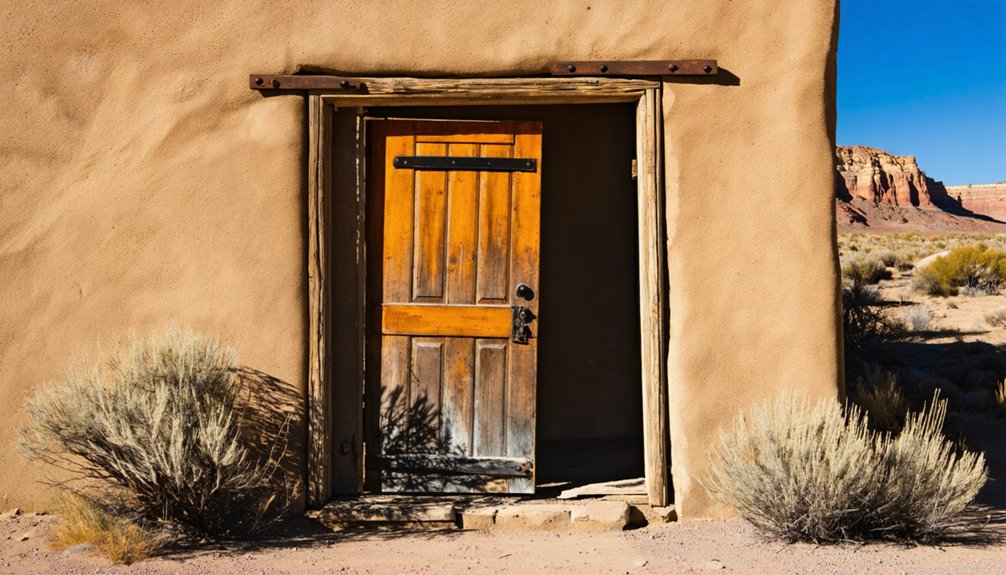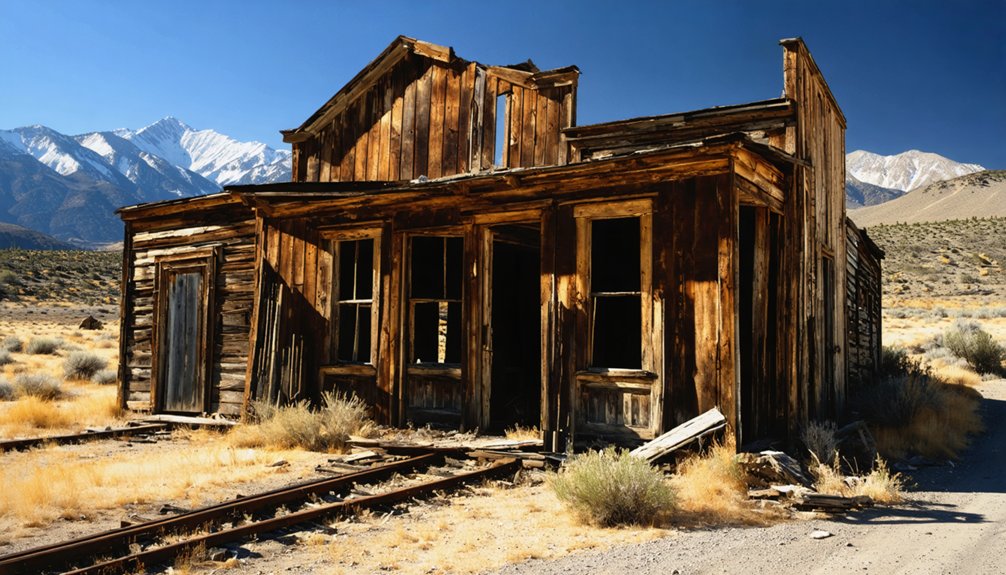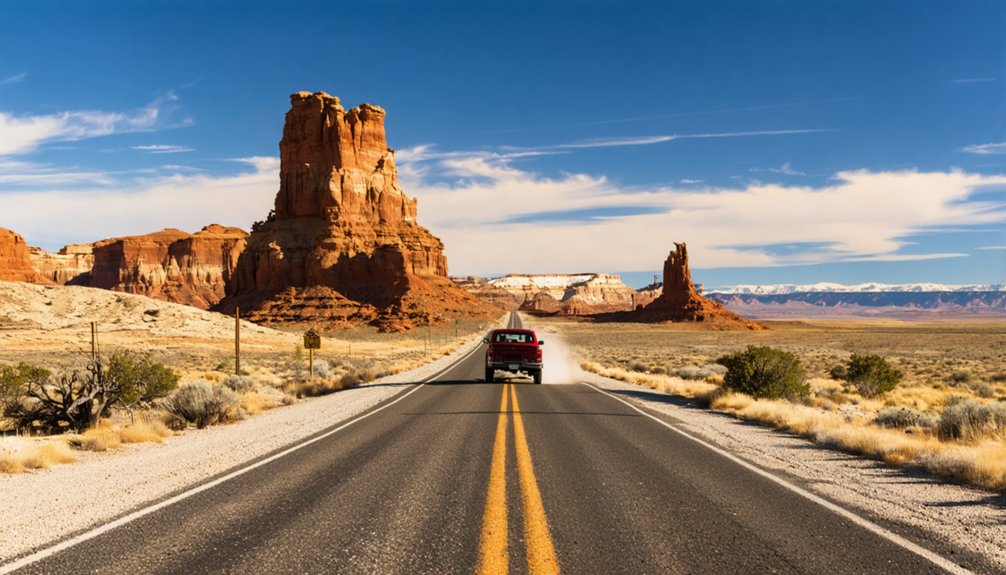
You’ll find two Castle Rocks in Utah, so plan carefully. The Summit County site near Echo Canyon off I-80 Exit 185 features a sprawling car graveyard and relocated Pony Express station ruins, though it’s on private property. The Carbon County location near Castle Gate offers dramatic geological formations accessible via I-70 Exit 17. Both sit roughly an hour from their nearest major cities—Salt Lake City and Price respectively. Understanding each site’s unique history, access restrictions, and what makes them worth visiting will help you choose your destination.
Key Takeaways
- Drive east on I-80 from Salt Lake City for one hour to exit 185 near Echo Canyon in Summit County.
- Castle Rock features a sprawling junkyard with classic cars and remnants of an 1858 Pony Express station.
- The site sits on private property and is closed to public access; aerial photography offers the best views.
- Nearby Cache Cave contains historic pioneer inscriptions but also requires permission to visit due to access restrictions.
- Explore neighboring attractions like Castle Gate Cemetery, commemorating 172 miners, and scenic Price Canyon for additional stops.
Getting to Castle Rock: Directions and GPS Coordinates
Finding Castle Rock requires more precision than most ghost town hunts, since Utah actually has multiple sites sharing this name. You’ll want the Summit County location near Echo Canyon—not Castle Gate in Carbon County. From Salt Lake City, drive east on I-80 for about an hour to exit 185. The junkyard sits at coordinates 41.124115° N, -111.188413° W, perched above the canyon with dramatic freeway views.
The original Pony Express station (41.11238° N, 111.20466° W) lies roughly 1.5 miles down canyon from today’s junkyard. While seasonal accessibility stays open year-round via I-80, private land restrictions prevent you from wandering freely. You’re limited to roadside observation and drone photography. The fenced property means respecting boundaries while still capturing this haunting collection of rusted vehicles against Utah’s rugged landscape.
What You’ll Find at This I-80 Ghost Town and Junkyard
While most ghost towns offer weathered buildings and mining equipment, Castle Rock delivers something entirely different—a sprawling automotive graveyard frozen in time above Echo Canyon. You’ll spot dozens of classic vehicles concentrated in the back area, their rusted frames speaking to decades of abandonment. The junkyard car restoration potential here is significant, though the site’s closed to public access—you’ll need drone footage to truly explore the collection.
Down canyon from the automotive sprawl, you’ll find remnants of the original townsite, including a relocated Pony Express station built from logs and sold in 1867. Nearby Cache Cave holds pioneer inscriptions, though it’s also on private land. The commercial salvage opportunities remain locked away, making this more voyeuristic adventure than hands-on exploration—unless you’re skilled with aerial photography.
The History of Castle Rock and Frenchie’s Pony Express Station
Long before rusted Chevrolets and Fords colonized this windswept plateau, George Chorpenning established Castle Rock Station in late 1858 as a critical relay point along the Omaha to Salt Lake Valley Road. You’re standing where legendary trails converged—the Donner-Reed party’s desperate 1846 route, Mormon Pioneers’ path, and Johnston’s Army’s march.
What Made Castle Rock Essential:
- Pony Express operations launched April 3, 1860, with riders thundering through every 10-15 miles
- Station keeper “Frenchie” ran the original log structure at canyon’s head
- $5 per ounce bought 10-day coast-to-coast delivery—revolutionary for 1860
- Station ownership changes began when a French trapper relocated the building in 1867
- Union Pacific demolished the structure in 1931, leaving only Echo City’s ghost
The telegraph killed the Pony Express after just 18 months, but stages continued until 1867.
Exploring the Ruins and Remnants at 6,152 Feet
At 6,152 feet above sea level, Castle Rock’s weathered landscape reveals layers of geological drama and frontier history beneath your boots. You’ll discover the geological composition tells an ancient story—Permian Organ Rock Shale at the base, De Chelly Sandstone forming the towering middle section, and Triassic Moenkopi Formation capping the summit. The softer shale eroded faster, creating this dramatic butte.
The topographic features here demand exploration. Access the Castle Rock Campground via I-70 Exit 17, then drive one mile up Joe Lott Creek road. You’ll spot intricately carved cliffs of Sevier River Formation flanking both sides. Look for light tan to pink-brown welded tuff—volcanic remnants from the Marysvale field’s explosive past. These outcrops aren’t roped off or restricted; they’re yours to examine freely.
Nearby Attractions: Castle Gate Cemetery and Price Canyon
Just a mile down Highway 191, you’ll find Castle Gate Cemetery perched on a hillside—watch carefully for the poorly marked turnoff where the road drops sharply from the highway.
This solemn ground holds the graves of miners killed in the catastrophic 1924 explosion that claimed 172 lives, making it far more than a historical footnote.
After paying your respects, continue through Price Canyon where towering sandstone walls frame the Price River, and you’ll understand why early settlers named this dramatic rock formation “Castle Gate.”
Castle Gate Cemetery History
Perched on a hillside above the former Castle Gate No. 2 Mine, this cemetery holds the remains of roughly one-third of the 172 miners who perished in Utah’s second-worst mining disaster. On March 8, 1924, methane gas and coal dust ignited, claiming Castle Gate miners’ lives from 27 nationalities. You’ll find Castle Gate disaster memorials honoring these men who sought opportunity in America’s coalfields.
What You’ll Discover:
- Entrance plaque listing all 172 victims’ names from the No. 2 Mine explosion
- Graves of unidentified miners whose remains couldn’t be separated after the blast
- Greek, Italian, Japanese, and American sections reflecting segregated mining camps
- Monument marking where explosions hurled timber across the canyon
- Silent testimony to 110 widows and 264 orphaned children left behind
The cemetery stands as raw proof that freedom’s price sometimes came underground.
Price Canyon Scenic Route
After paying respects at Castle Gate Cemetery, you’ll wind through Price Canyon on US-6/191—a dramatic descent where every mile reveals another chapter of eastern Utah’s mining legacy. Watch for coal seams slicing through red cliffs like black lightning—these aren’t historical relics but active operations still carving prosperity from stone.
The sandstone mesas along canyon will stop you cold with their sculptural brilliance, twisted by millennia into formations that defy logic. Pull off at the BLM-managed recreation area three miles up from the highway entrance for proper exploration.
The same barren plateaus yielding coal harbor vibrant dinosaur fossil findings, a reminder that freedom-seekers have always roamed these wild spaces. Price awaits below with fuel, food, and affordable lodging.
Best Time to Visit and Road Trip Planning Tips
Timing your Castle Rock ghost town adventure can make the difference between a miserable slog through triple-digit heat and an unforgettable journey through Utah’s red rock wilderness. Understanding regional weather patterns helps you escape the masses while maximizing exploration time.
April through May and September through October deliver that sweet spot—mild temperatures hovering in the 40°F to mid-70s°F range, golden photography light, and crowd avoidance that lets you experience Castle Rock’s eerie silence authentically.
Essential planning considerations:
- Book accommodations near Price or Helper months ahead for spring and fall visits
- Hit trailheads by sunrise during popular seasons for solitude and cooler temps
- Target winter months (November–February) for 90% fewer visitors despite potential snow
- Combine Castle Rock with nearby Bryce Canyon or Canyonlands during shoulder seasons
- Pack extra water for summer exploration—heat exceeds 100°F at lower elevations
Safety Considerations for Exploring Abandoned Sites
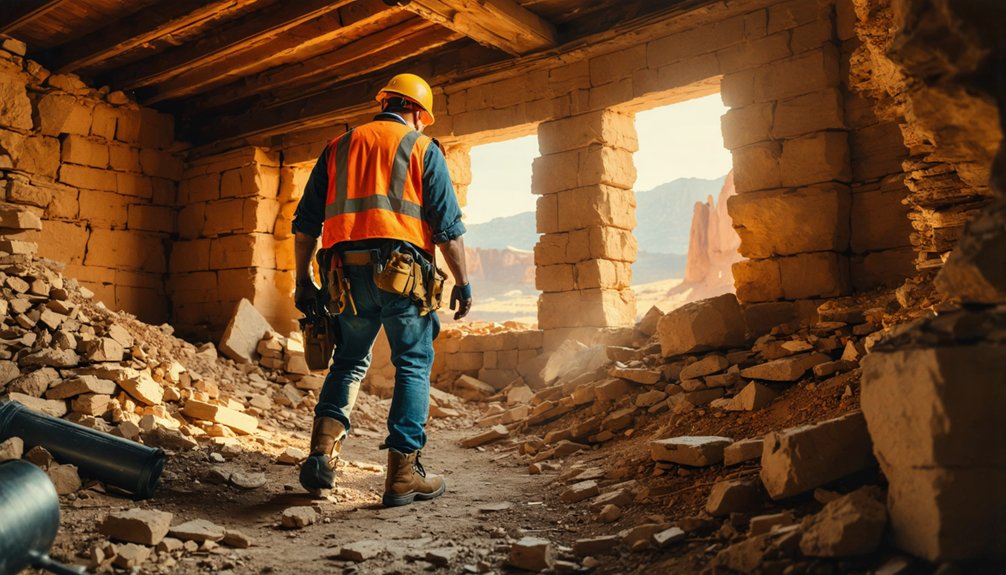
When you step into Castle Rock’s crumbling structures, you’re entering buildings that’ve weathered decades of neglect—floors weaken from water damage, ceilings sag with asbestos-laden materials, and rusted metal can slice through skin without warning. I’ve watched seemingly solid floorboards give way under my weight in similar ghost towns, reminding me that what looks stable often isn’t.
Beyond structural threats, you’ll also contend with rattlesnakes seeking shade in dark corners, scorpions hiding under debris, and Utah’s intense desert sun that can quickly lead to dehydration if you’re not prepared.
Structural Hazards and Instability
The crumbling walls of Castle Rock’s abandoned buildings tell a silent story of structural failure that spans decades. You’ll encounter unsafe construction methods that mining companies rushed during boom times, now manifesting as partially collapsed roofs and tilting walls.
Weathered building materials have surrendered to Utah’s harsh climate, creating death traps where solid ground once existed.
Critical hazards you’ll face:
- Mine shafts with failing cement caps that could give way beneath your feet
- Burnt timber debris compromising already weakened floor structures
- Seismic cracks in foundations allowing water infiltration and accelerated decay
- Fallen machinery from nearby mills creating unstable, uneven surfaces
- Undermined ground from historical mining operations risking sudden cave-ins
Test every foothold. Trust nothing that looks stable—it isn’t.
Wildlife and Environmental Dangers
Beyond the decaying structures and unstable ground, Castle Rock’s wilderness harbors dangers that move, breathe, and defend their territory with lethal force. Moose—Utah’s deadliest wildlife—roam these abandoned ranch lands year-round. Don’t play dead; stand your ground and keep bear spray ready. Wildlife encounters demand respect: give animals clear escape routes, make noise, and appear large if approached.
Rattlesnakes coil in shadowed ruins. Master snake identification and maintain five feet distance—killing them’s illegal and increases bite risk. Keep dogs leashed; it’s unlawful to let them chase hoofed wildlife. Black bears sprint 35 mph, mountain lions stalk from ridgelines, and ninety-nine songbird species watch from weathered fence posts. Secure your trash, hike with companions, and never approach any creature. This landscape belongs to them—you’re just visiting.
Frequently Asked Questions
Can I Take Souvenirs From the Castle Rock Junkyard?
Absolutely not—you’ll face massive legal headaches! Do not take souvenirs from Castle Rock’s junkyard due to potential legal issues under theft and antiquities laws. Respect the property, avoid trespassing, and preserve these historic relics for fellow adventurers to discover.
Are There Restrooms or Facilities Available at Castle Rock?
No, you won’t find restrooms or facilities at Castle Rock’s remote location. There aren’t any portable toilets or vending machines available. You’ll need to plan ahead and bring your own supplies for this off-grid adventure.
Is Camping Allowed Near the Castle Rock Ghost Town Site?
You’ll find camping isn’t permitted directly at Castle Rock ghost town, but nearby campground options exist at Fremont Indian State Park’s Castle Rock Campground. Check camping regulations—31 sites accommodate tents and RVs, offering restrooms and showers for your adventure.
Do I Need a 4×4 Vehicle to Access Castle Rock?
While not strictly mandatory, you’ll want a high-clearance 4×4 for ideal off-road capabilities. Road conditions deteriorate considerably approaching Castle Rock, with rough terrain and steep grades that’ll challenge standard vehicles. Come prepared for backcountry adventure.
Are There Any Guided Tours Available for Castle Rock?
While Castle Rock itself doesn’t offer structured guided tours, you’ll find private guided tours available in nearby areas like Grafton Ghost Town. Consider self-guided audio tours for historical information, giving you freedom to explore at your own pace.