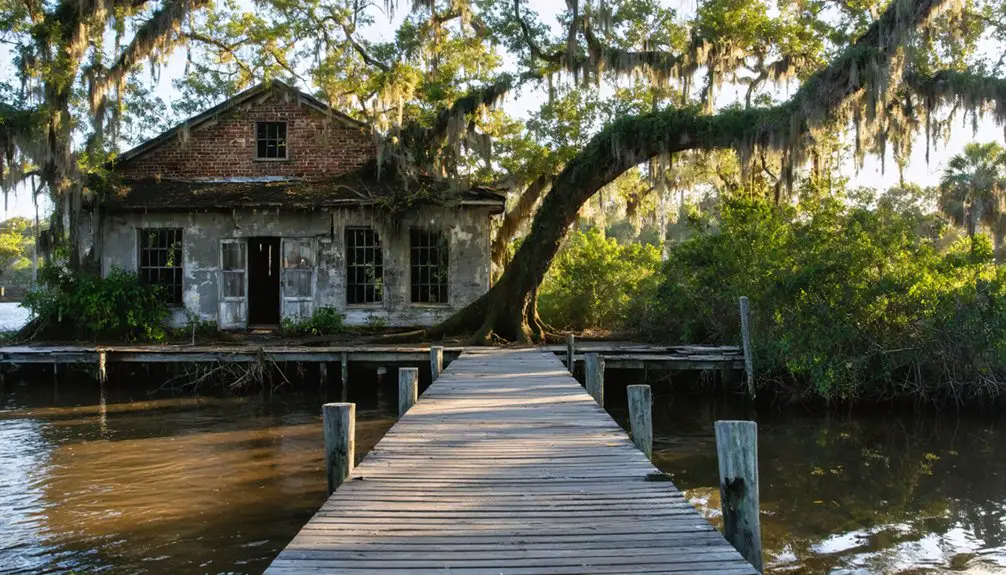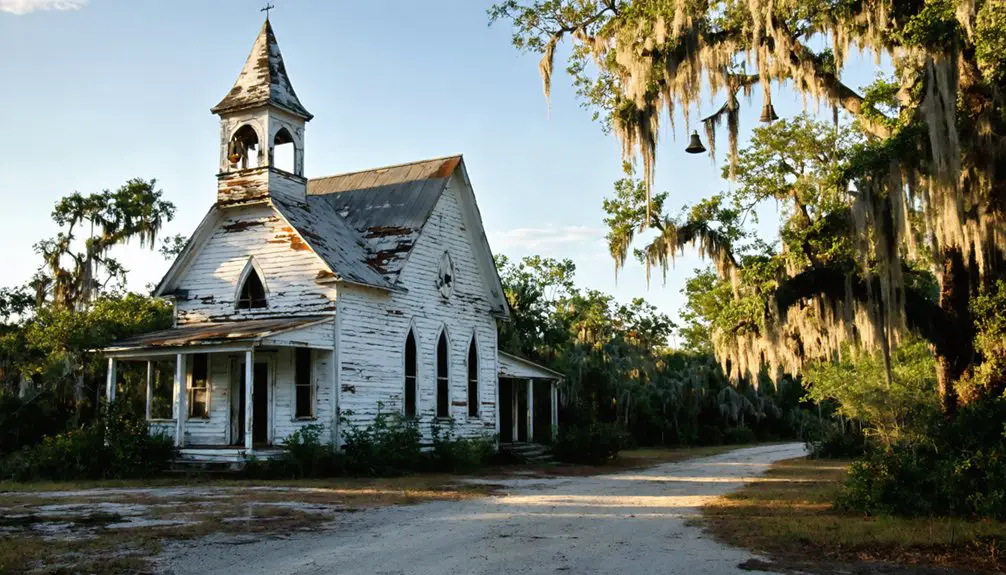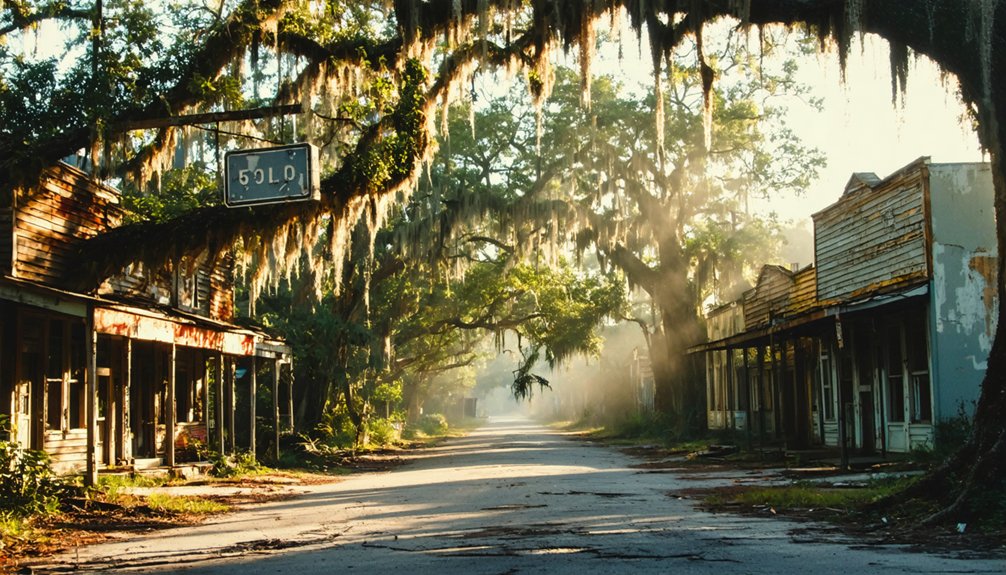
You can’t drive to Castor Town, but that’s what makes this ghost town road trip uniquely memorable. This abandoned coastal community on Egmont Key, Florida, once held around 20 buildings before resource depletion and economic shifts erased it from the map. You’ll reach it by ferry from Fort De Soto Park or St. Pete Beach, then explore nature-reclaimed trails where subtle ground depressions hint at former life. Stick around to uncover everything you need to plan your trip.
Key Takeaways
- Castor Town on Egmont Key is only accessible by ferry from Fort De Soto Park or St. Pete Beach, so check seasonal schedules in advance.
- No structures remain, but visitors can explore foot trails where ground depressions and reclaimed clearings reveal the former community’s layout.
- The town declined due to resource depletion, economic shifts, severe 1894-95 freezes, epidemics, and the island’s limited resupply options.
- Nearby ghost towns like Centralia, Osceola, Orleans, and Croom offer additional historical stops to enrich your road trip itinerary.
- Respect protected preserve boundaries, avoid digging for artifacts, and prepare supplies for varying terrain and outdoor hiking conditions.
What Was Castor Town, Florida?
Castor Town was a small, unincorporated community tucked away on Egmont Key in Hillsborough County, Florida, that once featured around 20 buildings during its early 1800s heyday.
Understanding Castor Town history means recognizing it as a product of 19th-century coastal expansion, where settlers built lives around available natural resources.
Castor Town was shaped by 19th-century coastal expansion, where settlers carved out lives from the natural resources around them.
Like many Florida ghost towns, its Castor Town significance lies in what it reveals about ambition, impermanence, and the relentless pace of economic change.
Resource depletion, potential industry collapse, and shifting trade routes likely contributed to its eventual abandonment.
Today, no structures or population remain. When you visit Egmont Key, you’re walking ground that once hummed with human activity, now reclaimed entirely by nature — a powerful reminder that even thriving communities can quietly vanish from the map.
Where Exactly Is Castor Town on Egmont Key?
Tucked within Hillsborough County’s coastal waters, Egmont Key sits at the mouth of Tampa Bay, and that’s precisely where Castor Town once stood. This small barrier island offers you a raw, unfiltered glimpse into Castor Town geography — a place where 20 structures once defined a working coastal community in the early 1800s.
Egmont Key history reveals a strategically positioned settlement, accessible only by water, surrounded by Gulf breezes and tidal rhythms.
Today, the island’s natural landscape has reclaimed nearly every trace of human settlement. You won’t find street signs or foundations marking the spot, but you’ll feel the weight of what once existed beneath your feet.
Exploring this island means stepping into Florida’s forgotten past on your own terms, completely unscripted.
Why Did Castor Town Disappear?
Like most ghost towns scattered across Florida’s coastline, Castor Town didn’t vanish overnight — it eroded through a combination of pressures that small, isolated communities simply couldn’t survive.
Resource depletion likely stripped away whatever industries kept residents employed and invested in the area. Once the natural or economic foundation crumbled, people left — and they didn’t come back.
Economic shifts compounded the problem. Railroads bypassed certain coastal settlements, redirecting trade and opportunity elsewhere.
The brutal freezes of 1894-95 devastated Florida communities that depended on agriculture, and epidemics hit isolated populations especially hard.
When you’re living on an island with limited resupply options and no growing economy, every setback cuts deeper.
Castor Town simply couldn’t absorb enough of them, and the land quietly reclaimed what settlers had built.
How to Reach Castor Town on Egmont Key Today?
Getting to Egmont Key — and what remains of Castor Town — requires a short but memorable trip across Tampa Bay.
You’ll board a ferry from Fort De Soto Park or St. Pete Beach, so check ferry schedules before you go, since crossings run seasonally and seats fill fast.
Once you land, the island opens up freely before you, welcoming exploration on foot. Follow the island trails through sun-bleached landscape, where subtropical vegetation now reclaims the ground that once supported 20 structures.
No cars, no crowds — just salt air, historical echoes, and your own pace. You’re basically stepping into a protected natural landscape, so bring water, wear sturdy footwear, and respect the terrain.
Castor Town won’t announce itself loudly, but it rewards those who look closely.
What’s Actually Left to See at the Castor Town Site?
Once you’re on Egmont Key and walking those trails, the real question shifts from how you got there to what you’re actually looking at.
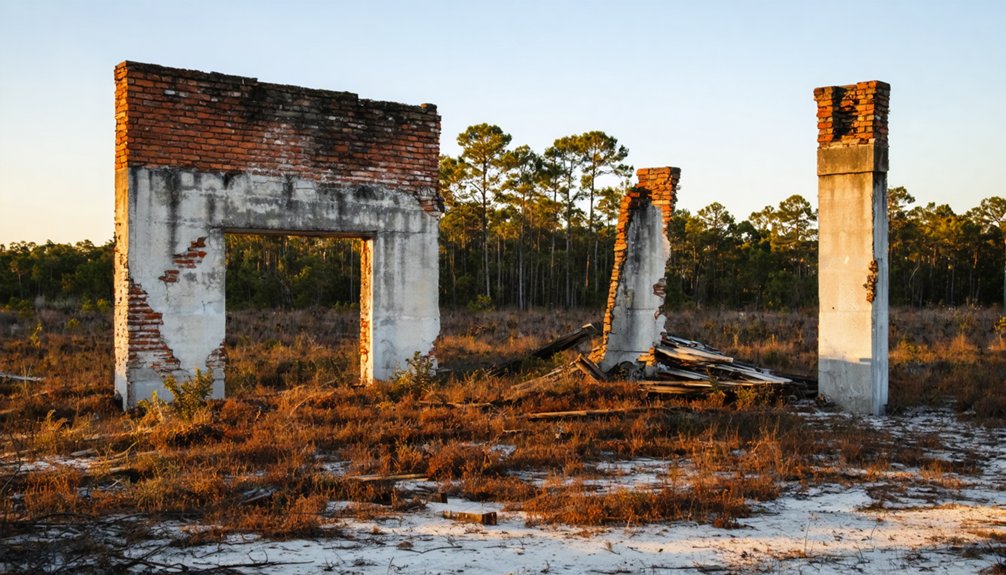
Castor Town’s abandoned structures haven’t survived in any dramatic way. No walls stand. No rooflines remain. What you’ll find instead are subtle ground depressions, scattered foundation traces, and nature-reclaimed clearings that hint at where those early 1800s buildings once stood.
No walls. No rooflines. Just subtle ground depressions and nature-reclaimed clearings where a community once stood.
The historical significance isn’t in grand ruins — it’s in reading the landscape itself. Overgrown pathways suggest former movement patterns. Soil irregularities mark where roughly 20 buildings once created a functioning coastal community.
You’re fundamentally decoding the earth beneath your feet. Bring sharp observation skills rather than expecting preserved structures, and you’ll leave with a far richer understanding of what once existed here.
What Should You Know About Ferry Access and Egmont Key Rules?
Reaching Egmont Key means committing to a ferry, and you’ll want to plan that logistics carefully before you ever pack your bag.
Ferry schedules vary seasonally, so check current departure times before committing to a date.
Once you’re on the island, follow these rules to keep your visit legal and respectful:
- No digging or artifact removal — island regulations strictly prohibit disturbing historical remnants.
- Pack out everything you bring — leave no trash behind.
- Stay on designated trails — protected wildlife habitat surrounds the entire area.
- Check ferry schedules in advance — missing the last departure leaves you stranded overnight without authorization.
Respecting these boundaries isn’t just required — it preserves the freedom for future explorers to experience the same untouched, time-frozen landscape you came to witness.
Which Nearby Tampa Bay Ghost Towns Are Worth the Detour?
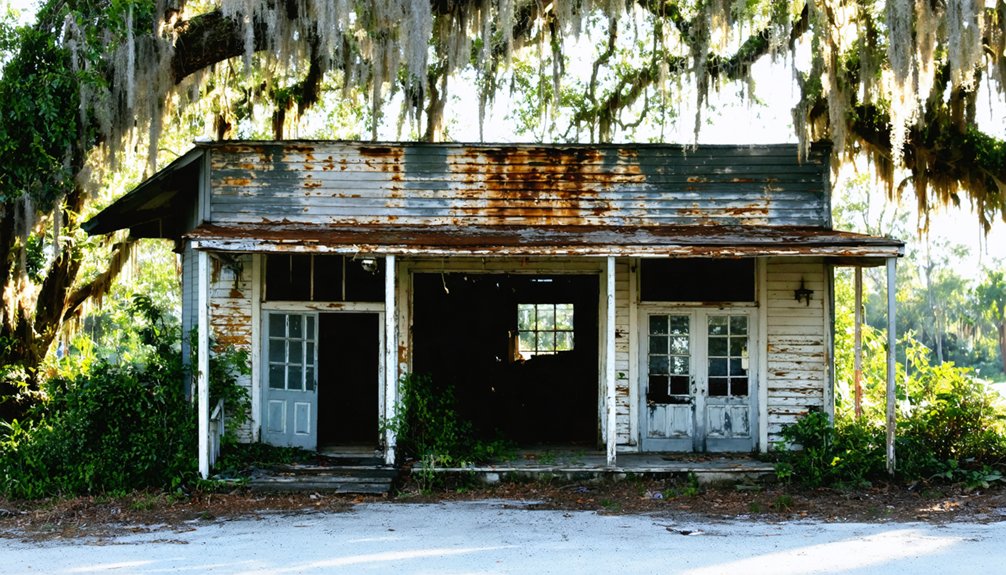
Once you’ve explored Castor Town’s quiet shores, you’ll find several Tampa Bay–area ghost towns worth adding to your route, including Centralia in Hernando County, a logging settlement that thrived briefly from 1910 to 1922, and Orleans in Citrus County, a once-modest community of roughly 100 settlers established in 1885.
For the best experience, you’ll want to research access points in advance, since many of these nature-reclaimed sites sit within wildlife management areas or protected preserves where digging artifacts is strictly prohibited.
Pack sturdy footwear, a detailed regional map, and a curiosity for overgrown foundations and forgotten cemeteries, because these remnants reward the travelers who look closely.
Nearby Ghost Towns Overview
While Castor Town makes for a fascinating destination, several ghost towns scattered across the Tampa Bay region are worth adding to your itinerary. Each site carries its own ghost town history and abandoned structures that tell compelling stories of Florida’s past.
- Centralia (Hernando County) – A logging town that thrived from 1910 to 1922 before disappearing into the wilderness.
- Osceola (Seminole County) – A sawmill town that once supported a population of 2,000 people.
- Orleans (Citrus County) – Settled in 1885, this small community of 100 residents left behind cemetery remnants worth exploring.
- Croom – A railroad and turpentine hub whose industry-driven rise and fall mirrors Florida’s broader economic shifts.
Each stop rewards curious, freedom-seeking explorers with raw, unfiltered history.
Worth The Detour Picks
Not every ghost town on your list deserves equal road time, so knowing which stops deliver the most payoff helps you plan smarter.
Centralia in Hernando County offers haunting histories tied to its brief logging boom from 1910 to 1922, leaving wilderness trails worth your boots.
Orleans in Citrus County carries forgotten legacies stretching back to 1885, with cemetery remnants and crumbling foundations still visible through encroaching vegetation.
Croom rewards curious travelers with layered industrial history connecting railroads, logging, and turpentine operations across the same landscape.
Each site gives you something tangible to stand beside, photograph, and absorb.
Prioritize these three if your schedule tightens, because they deliver genuine historical weight without requiring you to dig through vague local legends for substance.
Tampa Bay Exploration Tips
Shifting your focus toward Tampa Bay opens a different layer of Florida’s ghost town landscape, where coastal geography shaped and ultimately doomed small communities like Castor Town on Egmont Key.
Tampa Bay’s coastal history rewards explorers who move beyond the obvious tourist corridors.
Plan your route around these four stops:
- Egmont Key – Walk where Castor Town’s 20 buildings once stood
- Croom – Discover logging and turpentine remnants near Brooksville
- Centralia – Explore Hernando County’s short-lived 1910–1922 lumber community
- Chassahowitzka Wildlife Management Area – Hike nature-reclaimed foundations and historical traces
You’ll move freely through landscapes that swallowed entire communities whole.
Respect protected preserve boundaries, skip artifact digging, and let the terrain tell its own unfiltered story.
Frequently Asked Questions
What Time of Year Is Best to Visit Castor Town?
You’ll want to visit during fall or winter—the best seasons for exploring Castor Town’s coastal location. Local weather stays mild and comfortable, letting you freely roam Egmont Key’s nature-reclaimed landscapes without summer’s intense Florida heat and humidity.
Are There Guided Ghost Town Tours Available in the Tampa Bay Area?
You’ll find several guided tours exploring ghost town history and local legends across the Tampa Bay area. They take you through eerie, abandoned sites, uncovering fascinating stories of forgotten communities that’ll ignite your adventurous, freedom-seeking spirit.
Can You Camp Overnight on Egmont Key Near Castor Town?
Like a wild frontier calling your name, you can’t camp overnight on Egmont Key due to strict camping regulations. Respect the island wildlife, but you’re free to explore its haunting, historic beauty by day.
What Should Visitors Bring for a Castor Town Island Excursion?
Pack water, sunscreen, sturdy boots, and a camera to capture Castor Town’s historical significance. You’ll want insect repellent for local wildlife encounters, plus a map—you’re exploring a hauntingly beautiful, freedom-filled island adventure!
Are There Any Documented Photographs of Castor Town’s Original Buildings?
Like whispers lost to time, documented photographs of Castor Town’s original historic architecture remain elusive. You’ll find local legends outnumber verified images, so embrace the mystery and let your imagination reconstruct those 20 vanished buildings.
References
- https://floridatrailblazer.com/tag/ghost-towns/
- https://en.wikipedia.org/wiki/Castor_Town
- https://www.youtube.com/watch?v=Lv9sIPn3NgU
- https://cccourthouse.org/wp-content/uploads/2023/12/Ghost-towns-and-Cemeteries-of-Citrus-County.pdf
- https://www.journaloffloridastudies.org/0102ghosttowns.html
- http://www.shrimpnfishflorida.com/forums/threads/lake-county-fl-ghost-towns.5641/