You’ll find Celestia 1.5 miles west of Laporte on State Route 42, where parking’s available through the Sullivan County Historical Society. Before you go, download the walking tour brochure—it’s essential for traversing the marked paths that wind past 20 moss-covered foundations, a stone-lined spring, and gnarled apple trees from the original 1850s orchard. Wear sturdy boots, especially in winter, and bring your camera for golden hour shots through the forest canopy. Below, we’ve mapped out everything you’ll encounter among these sacred ruins.
Key Takeaways
- Celestia is located 1.5 miles west of Laporte on State Route 42, with parking at Sullivan County Historical Society property.
- Download the walking tour brochure before arrival to navigate the marked path through approximately 20 building foundations.
- Wear sturdy boots year-round; winter trails require proper footwear to explore the new-growth forest safely.
- Key features include stone-lined spring, overgrown apple orchard, mill remnants, and moss-covered foundations from the 1850s settlement.
- The site is accessible year-round on private property; visit during golden hour for optimal photography and atmosphere.
The Fascinating History Behind Celestia’s Founding
Deep in the mountains of Sullivan County, a Philadelphia preacher named Peter Edward Armstrong set out to build heaven on earth. In 1850, driven by religious fervor stemming from the Millerite movement, he purchased 181 acres of wilderness between Laporte and Eagles Mere. Armstrong believed Christ had cleansed the heavenly sanctuary in 1844, and now it was time to prepare.
He took Isaiah’s words literally: “In the wilderness prepare ye the way of the Lord.” His messianic expectations shaped every decision. Armstrong laid out a nine-block grid with a central space reserved for the temple where Jesus himself would reside. He called it the “City of Heaven,” selling over 300 lots at $10 each to fellow believers who shared his vision of Christ’s imminent return.
What Remains of the Abandoned Settlement Today
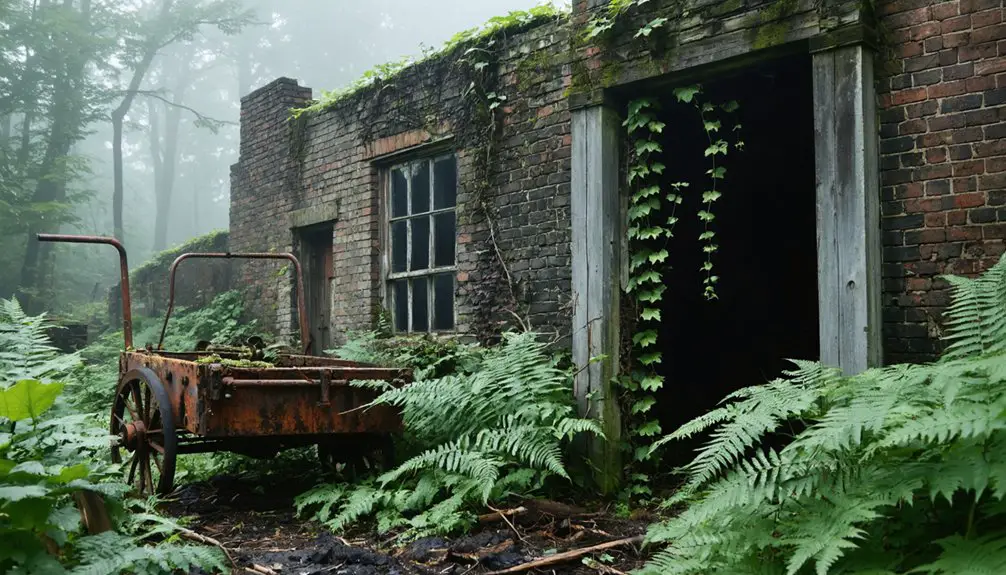
Today, wilderness has reclaimed what was once meant to be Christ’s earthly throne. You’ll discover stone foundations of roughly 20 buildings scattered through new-growth forest—homes, barns, and the general store barely visible beneath vines and overgrowth. The current condition of the structures reveals nature’s patient victory: no walls stand, only foundation outlines marking where believers once lived.
The various natural features of the site include a still-flowing spring with stone lining, accessible via forest paths. Overgrown apple trees mark the former orchard, while mill remnants hide near the water source. You’ll walk through quiet woods where pastures once sustained livestock. Old papers peek from ruins, physical memories of faith-driven freedom. The atmosphere remains peaceful, haunting—a chronicle to abandoned idealism slowly dissolving into Pennsylvania wilderness.
Getting to Celestia: Directions and Access Information
Finding Celestia requires traversing Pennsylvania’s winding mountain roads, but the journey’s straightforward once you know the way. Head 1.5 miles west of Laporte on State Route 42, watching for the Pennsylvania historical marker. Your parking area’s just before the sign—turn right when traveling south. These coordinates’ll get you there: N 41.42297, W 076.52448.
You’re parking on private property maintained by Sullivan County’s Historical Society, so respect their parking policies and tread lightly. Historical preservation depends on visitors leaving no trace.
Download the walking tour brochure before you arrive—it’ll guide you through the remaining foundations, each marked to match a painting hanging in the Museum. The site’s accessible year-round, though winter trails demand proper boots and determination.
Taking the Self-Guided Walking Tour
Once you’ve parked and gathered your downloaded brochure, the short walk south from the roadside leads you into what feels like stepping backward through time. The marked path guides you through twenty building foundations—homes, barns, a general store, and sawmill—all slowly surrendering to the wilderness.
Traversing the walking tour becomes an exercise in matching your brochure’s map to moss-covered stone remnants. You’ll spot the spring that once sustained this self-sufficient community, trace the boundaries of old pastures, and walk beneath gnarled apple trees descended from the original orchard.
Exploring the ruins feels less like trespassing and more like witnessing—this ‘City of Heaven’ built by believers awaiting Christ’s return now rests in profound silence, exactly as Isaiah’s wilderness prophecy suggested.
Making the Most of Your Visit to This Historic Ghost Town

The mossy ruins of Celestia reward visitors who arrive prepared with sturdy boots, downloaded brochure, and a willingness to let imagination fill the gaps between crumbling foundations. You’ll discover community member experiences etched into every collapsed barn and overgrown orchard—families who believed this mountaintop would witness Christ’s return.
Restoration efforts undertaken by Sullivan County Historical Society preserve pathways through the 300-lot grid where millennialists once built their utopia. Bring your camera during golden hour when sunlight filters through second-growth forest, illuminating spring-fed water sources still flowing after 170 years. Respect the private property hosting these sacred grounds.
Touch the fieldstone foundations gently, considering the hands that laid them in 1850s fervor, then watch the Endless Mountains horizon as those believers once did.
Frequently Asked Questions
Are There Nearby Accommodations or Campgrounds for Overnight Stays?
You won’t find on-site camping facilities at Celestia’s ruins, but nearby lodging options exist in Laporte, just 1.5 miles east, and Eagles Mere. The wilderness setting welcomes day explorers seeking freedom among abandoned foundations and overgrown trails.
What Are the Best Seasons to Visit Celestia’s Ruins?
You’ll hit the jackpot visiting during fall when autumn foliage frames crumbling foundations dramatically. Local folklore suggests spirits stir most in October’s twilight. Spring through autumn offers ideal exploration conditions—you’ll avoid winter’s treacherous terrain while maximizing your ghostly adventure.
Can I Bring My Dog to the Historic Site?
You’ll love exploring Celestia’s ruins with your leashed dog beside you. Pet policies welcome responsible owners who clean up waste. The accessible outdoor terrain offers visitors with disabilities freedom to roam these historic foundations together.
Are There Guided Tours Available or Only Self-Guided Options?
Only self-guided experiences are available at Celestia—there aren’t any guided tours. You’ll explore independently using downloadable brochures that correspond with museum paintings, following marked pathways through the ruins at your own pace, completely free to wander.
What Other Attractions Are Near Celestia in Sullivan County?
Looking for adventure beyond the ghost town? You’ll discover scenic hiking trails through Worlds End State Park’s waterfalls, explore local artisan shops in Eagles Mere, and wander historic covered bridges—all celebrating Sullivan County’s untamed spirit and independent character.