From Delta, you’ll head south on Highway 257 until you spot D.U.P. marker #577 at 16000 South, where pavement gives way to rough dirt roads requiring high-clearance vehicles. Navigate using GPS coordinates near 39° 8′ 45″ N, 112° 43′ 0″ W to find foundation stones, crumbled walls, and a roofless boarding house where Clear Lake once thrived before residents dismantled their homes in 1937. Spring and fall offer ideal conditions for exploring these ruins, where wind-resistant jackets, sturdy boots, and emergency supplies prove essential in this remote desert location that holds fascinating stories of water rights battles and ecological resurrection.
Key Takeaways
- Take Highway 257 south from Delta to D.U.P. marker #577 at 16000 South, the starting point for Clear Lake.
- Use a high-clearance vehicle to navigate rutted dirt roads leading to GPS coordinates 39° 8′ 45″ N, 112° 43′ 0″ W.
- Visit during spring or fall for ideal temperatures; July offers the clearest weather conditions for exploration.
- Bring wind-resistant jacket, sturdy boots, flashlight, emergency kit, sun protection, and offline maps for remote terrain.
- Explore foundation stones, crumbled walls, roofless boarding house, deteriorating graveyard, and derelict mining equipment at the townsite.
The Rise and Fall of a Desert Settlement
Railroad tracks sliced through Utah’s western desert in 1890, transforming barren alkali flats into landscapes of possibility. The Aldrach families abandoned Kansas for this frontier, joining forces with 100 Quakers around 1893 to build their vision: Clear Lake.
They weren’t waiting for church sponsorship—this was pure enterprise, powered by the ambitious Swan Lake Reservoir project. You’d have found schools, homes, and commercial buildings rising from dust, all sustained by precious irrigation water.
But infrastructure failures devastated everything when the dam burst, draining their lifeblood. Then legal challenges stripped away their remaining water rights through court decisions favoring competing interests. By 1937, residents dismantled their homes board-by-board, hauling their dreams to Fillmore and Delta. Unlike Eureka, which still has residents and businesses on Main Street today, Clear Lake couldn’t survive its catastrophic losses. Similar to Terrace in Box Elder County, where remaining pieces are no larger than a pebble, Clear Lake’s fragments tell stories that written records never captured. Freedom sought, freedom lost.
What Remains at the Abandoned Townsite Today
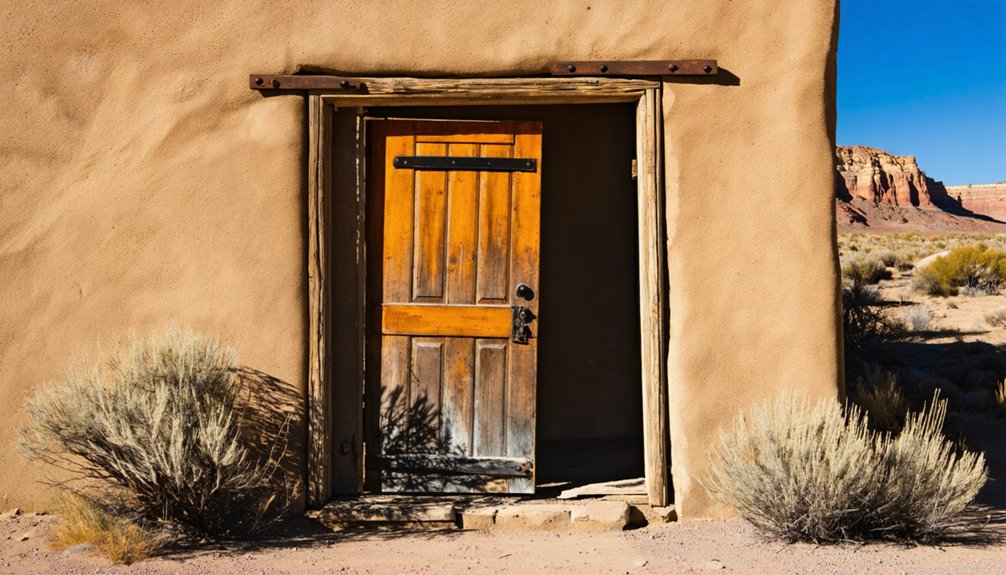
Time and weather have reduced Clear Lake to skeletal whispers of its ambitious past. You’ll find foundation stones where homes once stood, their walls crumbled to rubble beneath advancing sagebrush. Derelict mining equipment rusts across the landscape—ore processors frozen mid-operation, charcoal kilens collapsing inward, tailings burying what were once bustling streets. Near-surface mine shafts beckon the curious, though caution’s essential.
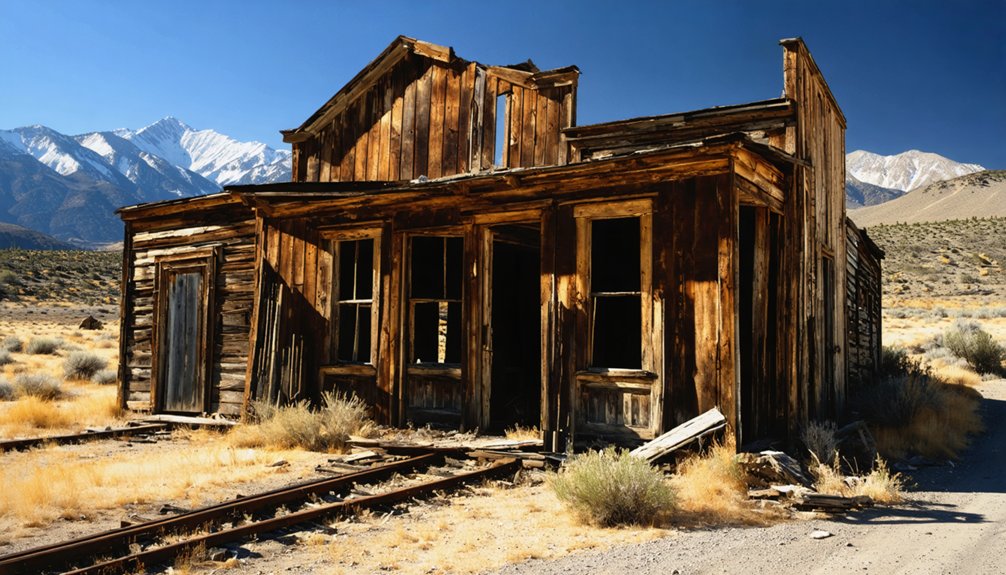
The roofless boarding house stands as the townsite’s most recognizable remnant, its hollow frame exposed to relentless desert winds. Beyond the settlement, a deteriorating graveyard sprawls across hillsides—wooden markers toppled, graves unmarked, tombstones scattered among sage. No paths remain, no fences contain the dead.
You’ll navigate rough dirt roads to reach these ruins, where nature systematically reclaims what miners abandoned decades ago. Clear Lake joins Utah’s extensive ghost towns that make for excellent day adventures, especially for history buffs and photographers seeking glimpses into the past. For genealogical research, check the nearest city’s public records where court houses and libraries may hold information about former residents.
Getting to Clear Lake Ghost Town in Utah’s West Desert
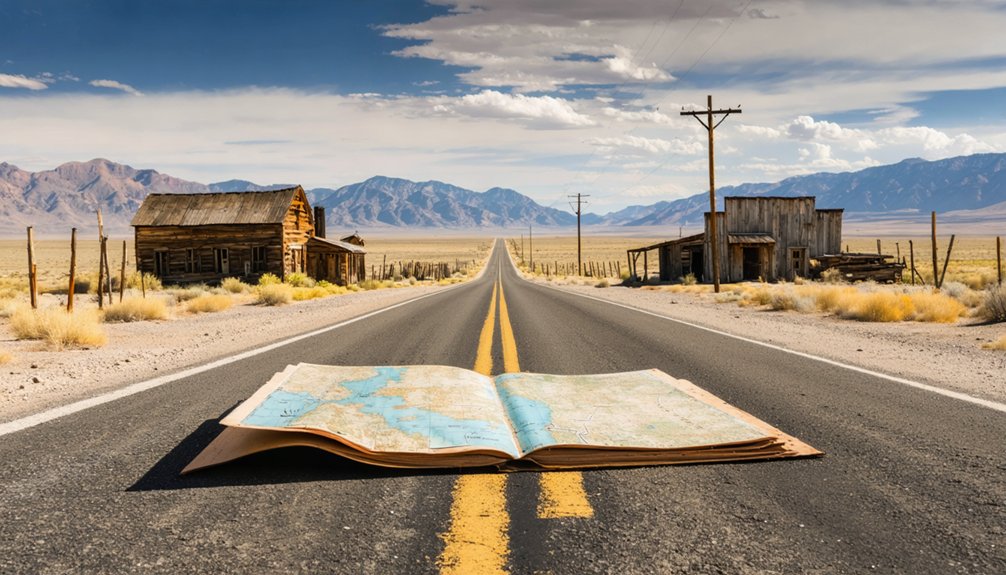
Reaching Clear Lake’s scattered ruins demands commitment to West Desert isolation. You’ll navigate Highway 257 south from Delta, approximately 15-20 miles into raw terrain where pavement yields to dust and silence. The D.U.P. marker #577 at 16000 South marks your jumping-off point—the ghost town sprawls west along the historic 1880 railroad grade.
Essential Navigation Points:
- High-clearance vehicle recommended for rutted dirt roads beyond the highway
- GPS coordinates near 39° 8′ 45″ N, 112° 43′ 0″ W guide you to Sunstone Knoll vicinity
- Parking options exist along roadside pullouts near the monument
- Nearby lodging requires backtracking to Delta or continuing to Milford
Fuel up before departing civilization. The West Desert forgives nothing, but rewards the prepared with authentic frontier solitude. Along your route, watch for old railroad tracks where sections have been undercut by water erosion, with ties scattered below and rails suspended above. Note that multiple locations share the Clear Creek name, so verify your destination coordinates before departure to avoid confusion with other Western sites.
Exploring the Wildlife Refuge and Historic Ruins
Where crumbled concrete meets protected wetlands, Clear Lake tells two contradictory stories—one of human defeat, another of ecological resurrection. You’ll find scattered foundation remnants near Highway 257, all that remains of the settlement abandoned by the 1900s after Utah diverted the town’s water to establish the 46,460-acre wildlife refuge in 1911.
Today’s landscape rewards those who appreciate raw wilderness over manicured attractions. The refuge protects 20,000 acres of open water surrounded by bunchgrass and sagebrush—crucial terrain for 350 wildlife species. The town’s origins trace back to 1880 when the railroad arrived, creating a settlement at the crossing of a wagon road running west from Fillmore.
Habitat restoration efforts focus on preserving one of northeastern California’s last greater sage-grouse leks, where spring counts once tallied over 60 displaying males. Ecological monitoring programs track these remarkable birds, whose populations crashed from historical highs to just five males by 2004. Conservation work includes removal of exotic trees and replanting of native vegetation to restore the natural ecosystem that once supported the region’s diverse wildlife populations.
Best Time to Visit and What to Bring
Planning your Clear Lake expedition means matching your tolerance for desert extremes against peak wildlife viewing seasons. Seasonal weather patterns shift dramatically—spring’s 62°F highs and fall’s stable 82°F September temperatures offer ideal windows, while winter’s 38.2°F maximums and sudden snowstorms threaten your journey.
Budget travel recommendations for your ghost town adventure:
- Spring layers combat temperature swings from 31.7°F lows to comfortable afternoons
- Wind-resistant jacket handles variable gusts across exposed terrain
- Sturdy boots and flashlight navigate crumbling structures safely at dusk
- Emergency kit with blankets protects against 13.4°F winter nights if you’re caught off-guard
Pack sun protection for high-elevation UV exposure, rain gear for unpredictable spring showers, and offline maps—this remote destination demands self-sufficiency. You’ll need that reusable water bottle in Utah’s parched climate. July offers the clearest weather conditions, with 74% of time featuring clear, mostly clear, or partly cloudy skies. December brings the cloudiest conditions, with overcast or mostly cloudy skies 74% of the time, making ghost town photography challenging.
Frequently Asked Questions
Are There Any Guided Tours Available for Clear Lake Ghost Town?
No guided tours availability exists for Clear Lake—coincidentally, this absence enhances your freedom to explore independently. Without tour operator options restricting your schedule, you’ll discover this remote ghost town’s abandoned foundations and weathered remnants at your own pace.
Can Visitors Camp Overnight Near the Clear Lake Townsite?
The Clear Lake townsite itself doesn’t offer overnight camping facilities. However, you’ll find designated campsites available at White Sands and Oasis campgrounds in the West Desert region, plus nearby accommodation options through dispersed BLM camping opportunities.
Is There an Entrance Fee for the Wildlife Refuge Area?
You’ll discover absolute freedom—no entrance fees exist at Clear Lake Wildlife Refuge! Nearby wildlife viewing areas remain completely free year-round, though seasonal accessibility considerations affect road conditions. You’re welcome to explore without spending a single dollar.
Are Dogs Allowed at the Clear Lake Ghost Town Site?
Dogs are welcome at Clear Lake’s ghost town site under pet-friendly policies requiring leash control. You’ll find excellent accessibility accommodations on multi-use trails, though you should bring extra water and consider protective booties during hot weather conditions.
What Photography Equipment Works Best for Capturing the Ruins?
You’ll want a camera with high resolution sensors to capture intricate decay details, paired with wide angle lenses for sweeping architectural shots. Bring a sturdy tripod for low-light conditions and spare batteries—the desert drains them quickly.
References
- https://www.deseret.com/utah/2024/06/03/how-to-visit-utah-ghost-towns/
- https://www.ksl.com/article/50263094/a-history-gold-mine-excavations-from-utah-ghost-town-uncover-important-artifacts
- https://kelseyguidebooks.com/life-on-the-desert-a-history-of-clear-lake-utah/
- https://kasbyrealestate.com/2022/11/22/7-utah-county-ghost-towns-and-the-fascinating-stories-behind-them/
- https://www.visitutah.com/things-to-do/history-culture/ghost-towns
- https://www.ghosttowns.com/states/ut/clearcreek.html
- https://marigoldmoose.com/2020/05/27/utah-ghost-towns-dividend-to-silver-city/
- https://neon.reviewjournal.com/entertainment-columns/trip-of-the-week/utah-ghost-town-is-rich-in-pioneer-history/
- https://jacobbarlow.com/2022/04/06/clear-lake-settlement/
- https://www.utahlifemag.com/blog/post/4-ghost-towns