You’ll find Clifton ghost town not in Wyoming, but across the border in Utah’s Tooele County at 8,202 feet elevation. The drive threads through high desert sagebrush to reveal the dovetail-cornered Oliver Young Cabin, hillside mining dugouts with timber supports, and a tilted pioneer cemetery slowly disappearing into the prairie. Pack water and check your spare tire—this remote site rewards those who venture beyond marked highways. The article ahead covers access routes, safety essentials, and what mining remnants still stand.
Key Takeaways
- Clifton sits in Tooele County, Utah, near Nevada at 8,202 feet elevation, not in Wyoming despite common misconceptions.
- Visit the Oliver Young Cabin with dovetail corners and gingerbread trim, one of few intact structures remaining from mining days.
- Explore mining dugouts carved into hillsides, storage structures, and scattered foundations throughout the remote townsite.
- The overgrown pioneer cemetery features weathered, tilting headstones and unmarked graves reclaimed by nature and sagebrush.
- Mine shafts are dangerously unstable and require professional exploration; stick to surface structures and visible dugout openings.
Understanding Clifton’s Mining Heritage and Historical Timeline
Before you pack your bags for a Wyoming ghost town adventure, there’s something you should know: Clifton isn’t actually in Wyoming at all. This mining operation sits in Tooele County, Utah, right on the Nevada border at 8,202 feet elevation.
You’ll find Clifton’s story begins in 1987, when prospectors discovered silver and gold deposits across 5,100 acres of rugged terrain. The Clifton Mining Co. staked their claim here, eventually transferring complete control to American Consolidated Mining Co. by 1997. Their mineral deposit assessment revealed over 444,000 tons of proven resources—enough to justify building a 200-ton daily processing facility.
What set Clifton apart was its use of hydrometallurgy processing techniques rather than traditional smelting, extracting precious metals through open-pit mining methods that scarred the high-desert landscape.
What Remains Standing at the Clifton Ghost Town Site
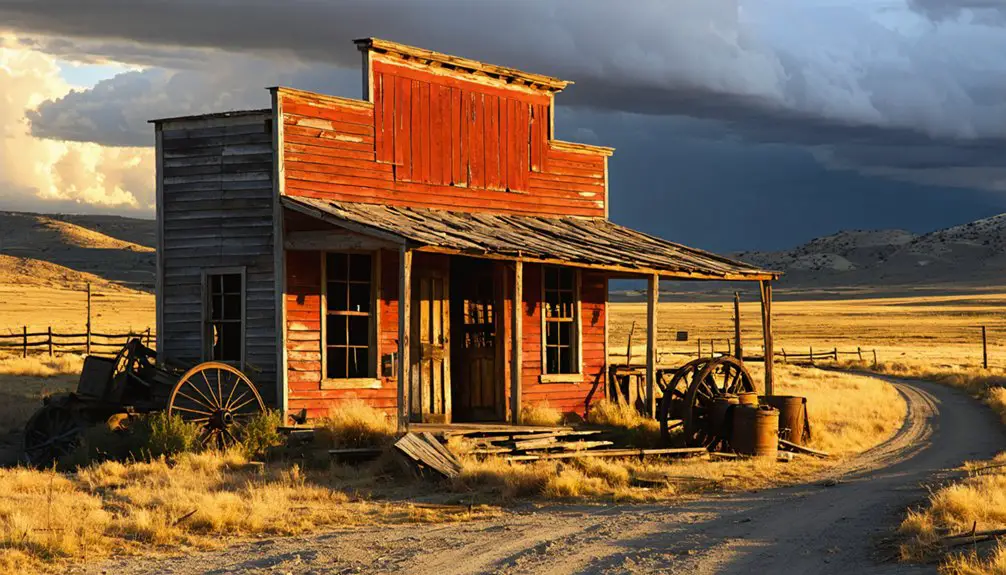
When you crest the windswept hill, the Oliver Young Cabin‘s dovetail corners emerge from the sagebrush—one of the few structures still holding its shape against Wyoming’s relentless gusts.
Nearby, mining dugouts carved into the hillside reveal themselves as dark mouths in the earth, their timber supports still visible where miners once descended into silver-bearing rock.
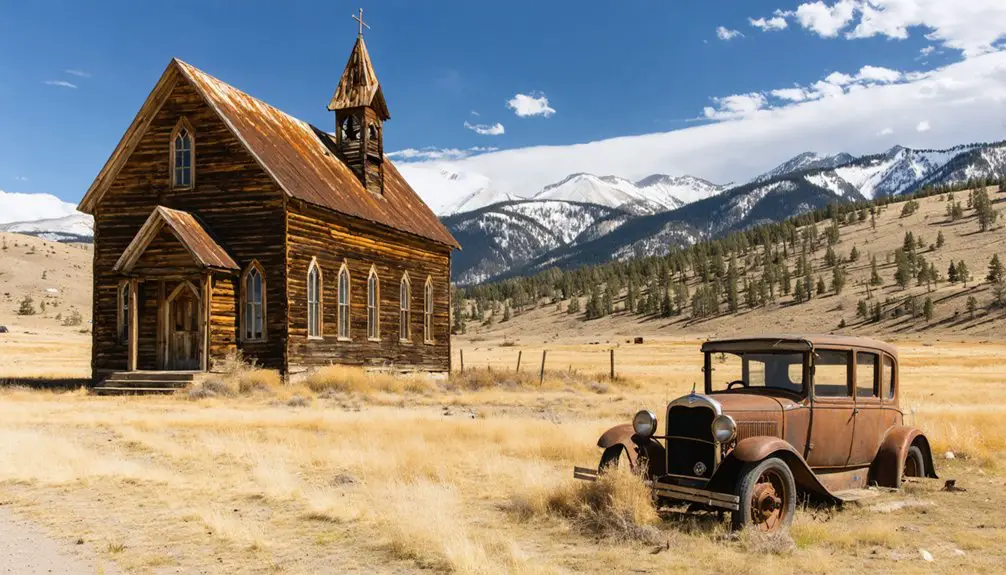
A short walk north brings you to the overgrown cemetery, where leaning headstones tilt toward the prairie like old friends sharing secrets about the boom that never lasted.
Historic Oliver Young Cabin
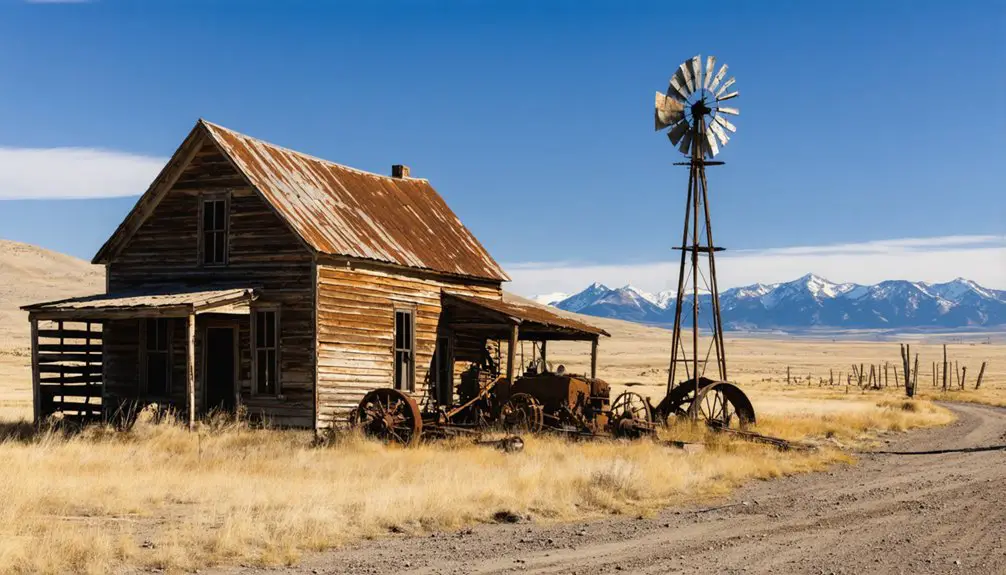
The weathered logs of the Oliver Young Cabin rise from the sagebrush like a monument to Clifton’s vanished coal mining days. You’ll find this late 1800s structure standing alone—the last residential building where miners once sought shelter after grueling shifts underground. Hand-planed timber walls frame a simple rectangular footprint, built to withstand Wyoming’s brutal winters without the rust and decay that claimed neighboring structures.
While the cabin interior design remains largely stripped of period furnishing examples, you can still envision frontier life through its preserved form. The gingerbread trim hints at craftsmanship uncommon in remote mining camps. There’s no admission fee to explore this tangible link to southwestern Wyoming’s coal heritage—just you, the open road from Evanston, and history standing defiantly against time’s erosion.
Mining Structures and Dugouts
Beyond Oliver Young’s solitary cabin, Clifton’s skeletal remains stretch along what locals still call Main Street—a rutted track where dugouts, outhouses, and crumbling foundations tell stories the cabin alone cannot.
Behind the cabin, you’ll find a surprisingly intact storage dugout, its earthen walls still holding against Wyoming’s brutal seasons. Across the street stands a wooden outhouse—once attached to a vanished building—with its seat eerily preserved. These picturesque dugout structures and decaying mining relics scatter throughout the townsite, each hinting at lives lived in isolation.
Higher in the surrounding hills, mine-related buildings cling to slopes above town. The mines themselves burrow deep and dangerously unstable—venture near entrances only, leaving underground exploration to professionals who understand collapsing timber and toxic gases.
Overgrown Pioneer Cemetery
Farther from the main cluster of buildings, where sagebrush reclaims what settlers once tamed, Clifton’s pioneer cemetery sits barely visible against the Wyoming landscape. You’ll find weathered headstones tilted at odd angles, some markers reduced to fragments barely breaking through wild grass. Pioneer gravesite preservation isn’t a priority here—nature takes what it wants, just as it did when settlers first carved homesteads from unforgiving terrain.
The cemetery upkeep challenges mirror those faced across Wyoming’s backcountry, where unmarked graves dot old emigrant roads and snowdrifts once claimed 150 handcart pioneers in a single storm. Walking among these forgotten plots, you’re witnessing raw history without sanitization. Some markers remain legible; others have surrendered their stories to wind and time, reminding you that freedom sometimes means accepting impermanence.
Getting to Clifton in Utah’s Deep Creek Mountains
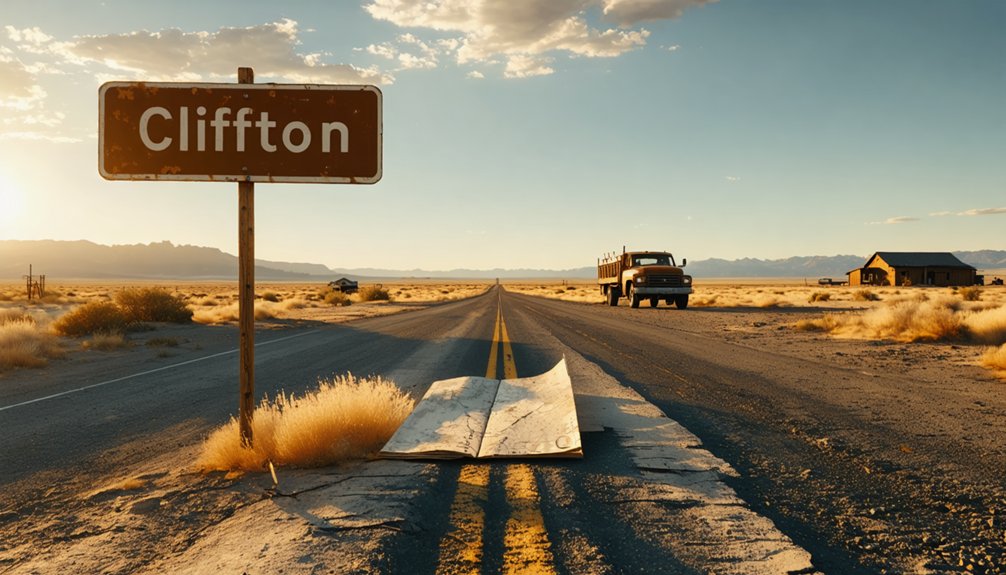
You’ll need to embrace solitude on this journey—Clifton sits roughly 55 miles south of Wendover, the nearest town with services, accessed only by a web of graded dirt roads that slice through Utah’s western desert.
I’ve driven these routes where cell service vanishes completely, and you’ll trade pavement for dust after just a few miles, traversing by landmarks like old foundation stones and weathered junction signs.
The Deep Creek Mountains rise dramatically from the Great Salt Lake Desert, but reaching the ghost town means committing to remote BLM roads where encountering another vehicle feels like an event worth noting in your travel log.
Remote Desert Road Conditions
Getting to Clifton demands respect for the remote desert terrain that guards this ghost town like a sentinel. You’ll navigate deep sand that’ll test your tire pressure, washouts that appear without warning, and loose rock that rattles undercarriages.
The route transforms with unpredictable weather patterns—what’s passable in summer becomes impassable mud when storms roll through.
High-clearance 4WD isn’t optional here; it’s survival equipment. Pack extra fuel because there’s no safety net, and prepare for self-rescue. Potential wildlife hazards emerge at dusk when animals cross these lonely paths.
The landscape shifts from sagebrush flats to rocky outcrops where only your judgment matters.
Check conditions with the local BLM office before attempting this journey. Freedom means self-reliance on these backcountry roads.
Distance From Major Towns
Clifton sits in the extreme western edge of Utah’s Tooele County, where civilization thins to nothing and the Nevada border feels close enough to touch. You won’t find regional public transportation out here—this territory demands your own wheels and self-reliance. The closest major highways remain hours away, with SR-36 serving as your jumping-off point near Vernon.
Critical distances you’ll navigate:
- Gold Hill to Clifton: 3.9 miles south on graded dirt road, turning left at the hilltop junction
- Callao: 8.3 miles south from Toms Creek, your last semblance of community before Baker, Nevada
- Pony Express Route: 6 miles east-northeast from pavement over gentle ridges to Clifton Flat
Pack fuel. Check your spare. The desert doesn’t forgive poor planning.
Exploring the Winton Coal Mining Settlement
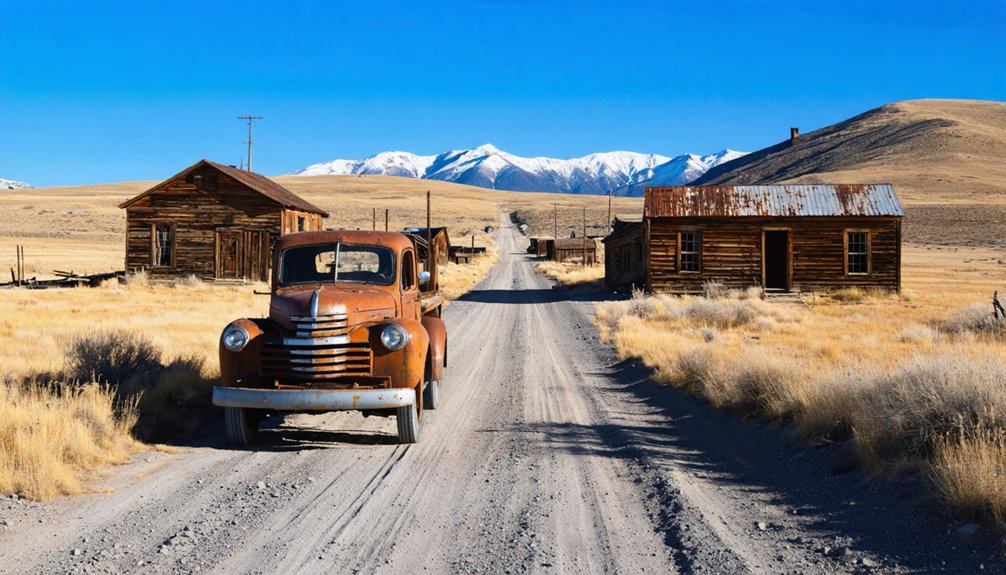
Deep in the rugged terrain of southwestern Wyoming, the abandoned settlement of Winton stands as a weathered memorial to the coal mining boom that once defined Sweetwater County. You’ll find remnants of a once-thriving community where 700 souls from diverse nationalities built their lives around three operational mines.
The environmental impact remains visible—scarred earth where Mine One, Mine Three, and Mine Seven extracted coal until 1952. As you explore crumbling foundations of the company store, boarding house, and schoolhouse, you’re walking through community traditions that dissolved when disease and mining deaths hollowed out the population.
The skeletal structures whisper stories of bath houses and pool halls where miners sought respite from constant underground dangers. Bring your four-wheel drive—this authentic ghost town demands effort to reach.
Reaching this isolated ghost town requires more determination than your typical scenic detour, especially once darkness settles over the Deep Creek Mountains. Evening light conditions transform the landscape into surreal terrain that’ll test your navigation skills. Your GPS waypoints become essential as generic internet printouts only get you so far.
Local resident attitudes in Gold Hill tend toward wariness, so pass through quietly during daylight hours—you’ll want access for future explorations.
Essential preparation for the route:
- Vehicle capability: High-clearance or 4×4 recommended for rugged mountain passes requiring slow coasting
- Navigation tools: GPS receiver, compass, and maps—your forgotten Boy Scout orienteering skills matter here
- Hiking readiness: Park where roads end, then trek with Camelbak through overgrown brush concealing cemeteries and mining structures
Essential Safety Considerations for Your Visit
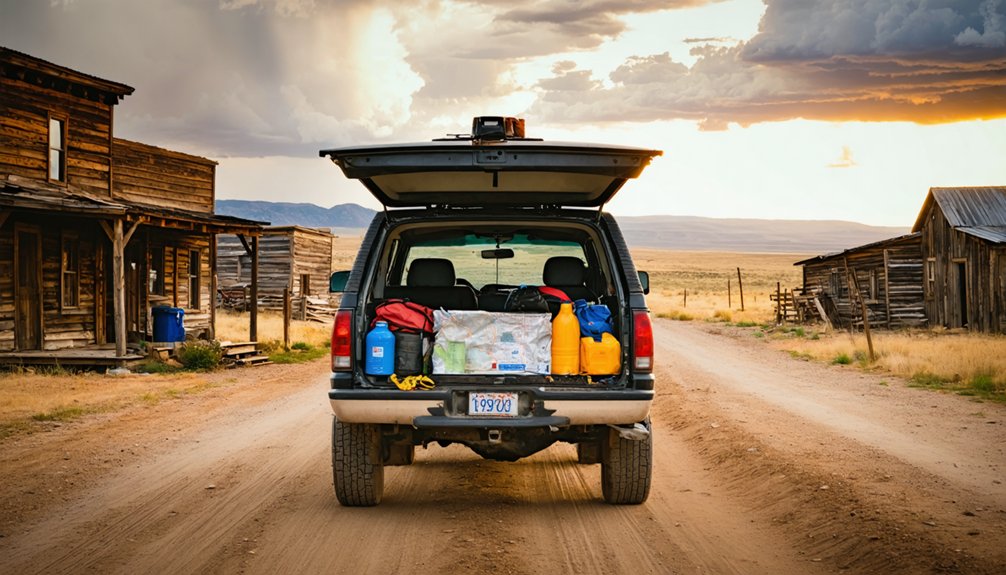
Your vehicle sits loaded with maps and coordinates, but the real challenges begin when you step onto Clifton’s weathered ground. Personal first aid preparation means packing more than band-aids—bring supplies for serious cuts, fractures, and temperature emergencies alongside your satellite communicator.
Responsible off road practices include carrying recovery gear and training in self-extraction techniques, since trees for winching are scarce in Wyoming’s open terrain.
Wyoming’s treeless expanses require off-roaders to master self-recovery techniques and pack proper extraction gear before venturing into remote backcountry.
Stay clear of mine portals where rotting timbers conceal cave-in risks and hidden shafts lurk beneath vegetation. Those dark openings sometimes harbor unstable explosives and toxic chemicals—hazards that claim twenty to thirty lives annually.
Pack extra water, emergency shelter, and proper clothing as your first defense against the elements. Wildlife demands respect: maintain distance, make noise in blind terrain, and skip the headphones.
Nearby Attractions and Extended Road Trip Options
Beyond Clifton’s crumbling foundations, Wyoming’s backcountry unfolds like chapters in a frontier chronicle, each destination deepening your connection to the territory’s untamed past.
Three Essential Extensions to Your Ghost Town Journey:
- Kirwin Ghost Town – Navigate 27.1 miles of rugged 4WD terrain through scenic wilderness landscapes at 9,000 feet, where abandoned buildings and Amelia Earhart’s unfinished cabin await discovery among crystal-clear streams and wild raspberry patches.
- South Pass City – Pan for gold in Willow Creek at this restored historical site featuring twenty authentic structures, sarsaparilla tastings, and mining demonstrations that’ll transport you straight into 1867.
- Point of Rocks Stage Station – Explore the Overland Trail’s sole surviving 1862 station, where a quarter-mile path leads to weathered gravesites marking pioneers who never completed their westward journey.
These diverse outdoor activities blend history with adventure across Wyoming’s untamed terrain.
Frequently Asked Questions
What Camping Facilities Are Available Near Clifton and Winton Ghost Towns?
You’ll find primitive campsites along Big Wood River and Brown Mountain, both with vault toilets. For true freedom, dispersed camping beyond established grounds offers scenic river views—just pack bear-safe containers and embrace the wild solitude.
Are There Guided Tours Offered at Either Clifton or Winton Sites?
No guided tours operate at Clifton or Winton—you’ll navigate self-guided tours through rugged terrain independently. There aren’t historical reenactments either. You’ll need 4WD capability and solid navigation skills to explore these remote, abandoned sites freely.
What Is the Best Time of Year to Visit These Ghost Towns?
You’ll find May through September delivers perfect seasonal weather conditions for exploring freely, with shoulder months offering uncrowded trails and available recreational activities. September’s golden aspens frame abandoned buildings beautifully while warm days let you wander these ghost towns unhurried.
Can Visitors Enter the Oliver Young Log Cabin in Clifton?
The Oliver Young Log Cabin’s accessibility challenges mean you’ll likely view it from outside, respecting its historical significance. Check locally before visiting—preservation efforts may restrict entry, but you’ll still capture incredible photos of this weathered frontier treasure.
Are There Fees or Permits Required to Explore These Ghost Towns?
Looking for adventure without breaking the bank? Entry fees vary by location—you’ll pay $2-$8 at Wyoming historic sites, while Clifton remains free to explore. Most ghost towns don’t require permit requirements for casual wandering.