You’ll find Cold Springs ghost town within Great Plains State Park, accessible via Highway 183 south of Hobart—just 41 minutes from Lawton. October through April offers ideal exploring conditions, when you can walk among abandoned homes, trace the overgrown street grid, and discover remnants of the 1880s resort that thrived until the railroad bypassed it in 1909. Pack sturdy boots, navigation tools, and plenty of water for traversing uneven terrain and hazardous mining features. The sections ahead cover everything you’ll need for a safe, rewarding visit.
Key Takeaways
- Cold Springs is located in Great Plains State Park, 41 minutes from Lawton via Highway 183 south of Hobart.
- Explore abandoned homes, overgrown streets, and mining remnants from the 1880s settlement that became a ghost town by 1969.
- Visit October through April for ideal conditions; weekdays offer fewer crowds than summer weekends.
- Bring sturdy boots, GPS, offline maps, first-aid supplies, and over 2 liters of water for safe exploration.
- Camp at Cold Springs Campground year-round with RV and tent options, plus hiking trails in nearby areas.
Getting to Cold Springs in Great Plains State Park
Cold Springs rests in the embrace of Great Plains State Park, where 487 developed acres sprawl across Kiowa County’s rugged terrain between the Wichita Mountains and Tom Steed Reservoir‘s 31-mile shoreline. You’ll find it at 22487 E 1566 Rd, Mountain Park, accessible south of Hobart off Highway 183. The drive clocks in at 41 minutes from Lawton, while Oklahoma City sits 1 hour 52 minutes away.
Drive-in access lets you park directly beside your chosen spot, whether you’re hauling an RV or pitching a tent. Hiking trail options branch from the park entrance, and dispersed camping awaits in the nearby Wildlife Management Area. While off road vehicle access isn’t specified for the main park, the surrounding terrain offers exploration opportunities beyond the developed campground’s 56 RV hookups and 30 tent sites.
What Remains of This Forgotten Settlement
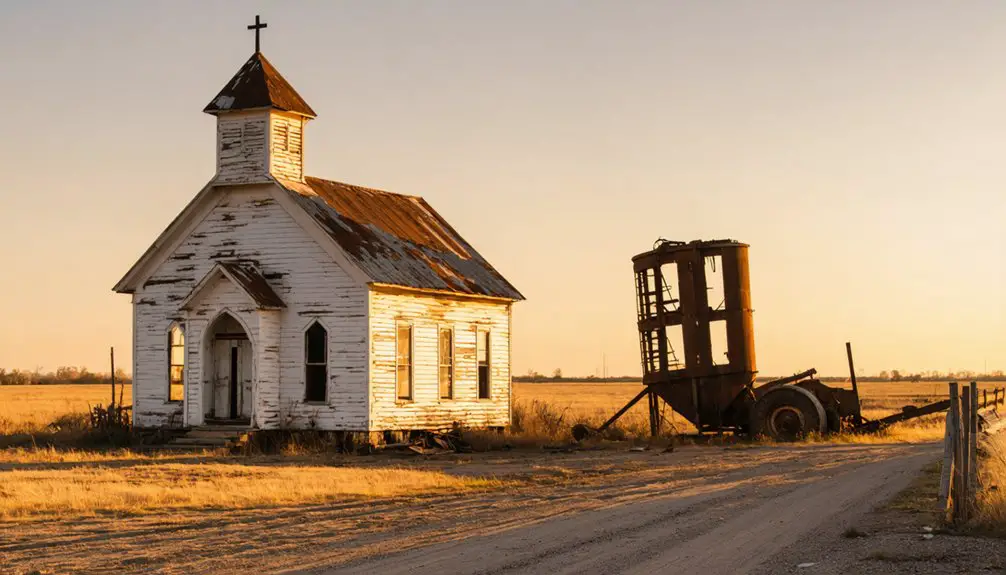
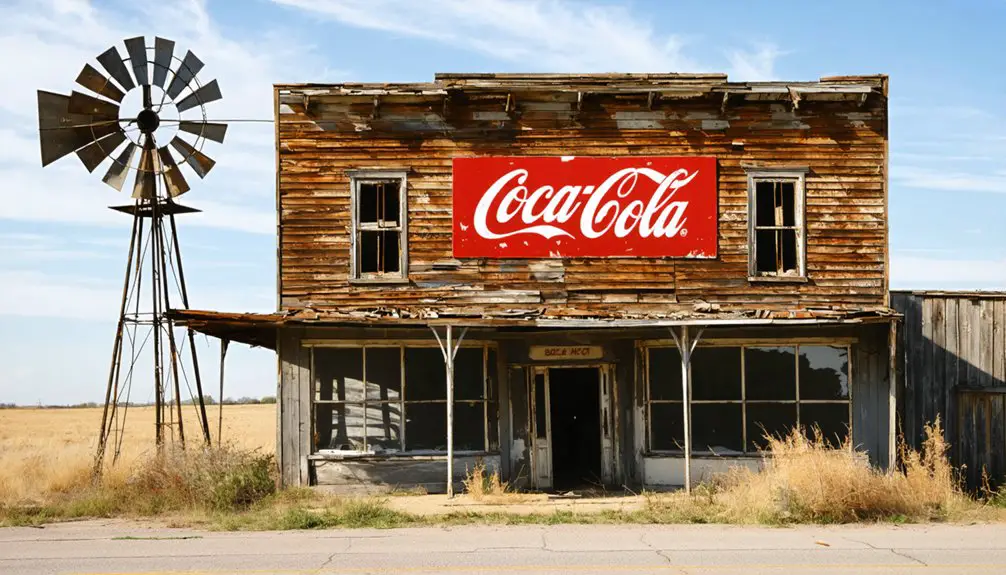
Where hundreds once bustled through a thriving settlement, you’ll now find nature reclaiming its territory among scattered foundations and skeletal structures. As you explore on foot, you’ll encounter abandoned homes ranging from surprisingly intact dwellings to completely collapsed ruins.
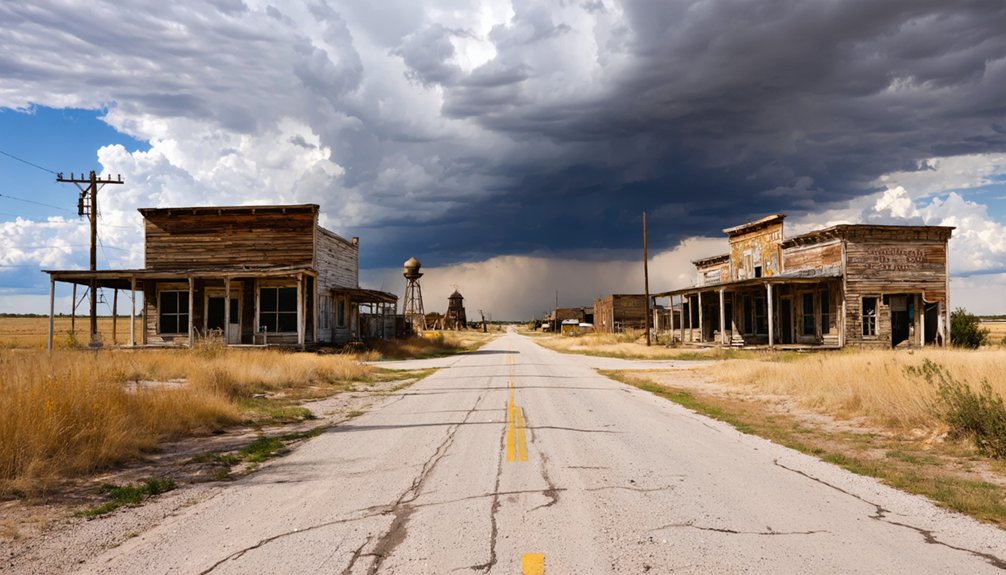
The overgrown street grid still traces the town’s original layout, while utility poles lean at precarious angles overhead. Watch for structural hazards throughout your exploration—14,000 abandoned mine shafts honeycomb the area, creating unstable ground and potential sinkholes. Massive chat mounds of heavy-metal-laden mining waste tower across the landscape, alongside foundations marking where storefronts once served the community.
Among this eerie emptiness, you’ll spot signs of the 21 residents who still call this place home, their occupied houses standing defiant amid the decay.
The Rise and Fall of a Resort Town
Long before petroleum transformed this landscape, pioneering families from Gainesville, Texas, saw promise in the natural springs bubbling through Stony Valley’s limestone formations. Doctor Gilmore and the McCall brothers established Cold Springs Resort in the 1880s, constructing two grand hotels that drew health-seekers from across Indian Territory. You can picture the massive structures depicted in 1857 drawings—architectural marvels promoting rest and healing.
The settlement thrived until 1909, when the Missouri, Oklahoma and Gulf Railway bypassed the springs by half a mile. Early prosperity from railroad access ironically triggered the town’s demise—businesses stampeded toward free lots at the new depot. The decline of tourism industry followed swiftly as Cold Springs became abandoned, its healing waters forgotten. By 1969, it earned official ghost town status.
Best Times to Explore the Ghost Town Site
Planning your visit to this abandoned settlement requires understanding the rhythms of Chickasaw National Recreation Area, where Cold Springs now rests within protected boundaries. You’ll find ideal exploration from October through April, when the park sheds its summer masses.
December through February deliver minimal crowds and an eerie stillness that amplifies the ghost town’s haunting character.
Quiet weekdays transform your experience—Tuesdays through Thursdays eliminate the parking chaos plaguing summer weekends. Shoulder season crowds in spring and fall offer balanced conditions without extremes.
The Cold Springs Campground operates year-round now, letting you base camp beside history. While peak summer months (late May-September) draw families to nearby swimming holes, you’re seeking solitude among ruins. Choose weekdays during cooler months for uninterrupted communion with this vanished world.
What to Bring for Your Visit

Before your boots touch the cracked foundations of Cold Springs, pack with intention—this isn’t a manicured museum but raw Oklahoma backcountry where preparation separates adventure from misadventure. Packing efficient layers proves essential as temperatures swing wildly between sun-baked afternoons and cool creek-side evenings.
Durable footwear considerations matter most—choose hiking boots with ankle support for traversing rubble-strewn floors and uneven terrain where wooden structures once stood. Your backpack should carry navigation essentials like GPS devices and offline maps, a thorough first-aid kit, and hydration supplies exceeding two liters.
Don’t forget sun protection, insect repellent for mosquito-heavy wooded areas, and documentation tools for capturing weathered murals. Pack out everything you bring—leave only footprints across these abandoned homesteads where Oklahoma’s forgotten stories wait.
Frequently Asked Questions
Are There Any Entrance Fees for Great Plains State Park?
No entrance fees await you at Great Plains State Park. You’ll enjoy year round accessibility to public recreation facilities without paying admission. Just park free with campsite rentals, or grab a seven-day pass for exploring nature’s freedom.
Can You Camp Overnight Near the Cold Springs Ghost Town Site?
You’ll find overnight camping options at Cold Springs Campground year-round, just minutes from the ghost town site. With 65 tent-friendly sites nestled beneath ancient oaks, you’re perfectly positioned to explore freely without seeking nearby accommodation alternatives.
Were Any Historical Artifacts Recovered Before the Lake Was Constructed?
Historical preservation efforts likely documented Cold Springs before flooding, though specific records aren’t widely publicized. You’ll find that potential archaeological excavations typically occurred at Oklahoma lake sites, recovering artifacts like foundations, ceramics, and tools before submergence.
What Happened to Residents Who Lived There Before the 1970S Relocation?
Families packed belongings as petroleum dried up, facing relocation challenges that scattered tight-knit communities. Impacts on former residents meant abandoning homesteads for urban opportunities, leaving behind generations of memories when Cold Springs vanished beneath West Otter Creek’s waters.
Are Guided Tours Available at the Ghost Town Location?
No guided tours operate at Cold Springs—you’ll explore freely on your own terms. There’s no interpretive signage either, so you’re traversing pure abandonment. Bring your curiosity and metal detector for self-guided tours through authentic, untamed ruins.