Colokan, Kansas, is a ghost town that barely lasted a decade before railroad politics erased it from the map. It’s tucked in Greeley County, half a mile from the Colorado border, with almost no physical structures remaining. You’ll want to visit between late April and early June when temperatures stay manageable. Bring offline maps, set realistic expectations, and embrace the solitude. There’s far more to uncover about planning your trip than you’d expect.
Key Takeaways
- Colokan, Kansas, established in 1886 by Civil War veterans, became a ghost town by 1897 after losing its railroad depot to Towner, Colorado.
- Located in Greeley County, half a mile from the Colorado border, navigation relies on county maps, GPS, and nearby Rogers Cemetery as a reference.
- Visit between late April and early June or September to October to avoid extreme summer heat exceeding 100°F and harsh winter road closures.
- Tribune, Kansas, 25 miles southeast, is the closest supply stop; driving from Kansas City takes approximately six hours via U.S. Route 50.
- Bring detailed maps, set low expectations for physical remains, and embrace the solitude while exploring nearby ghost towns throughout Greeley County.
What Was Colokan, Kansas: and Why Did It Disappear?
Tucked half a mile from the Colorado–Kansas border, Colokan was a short-lived frontier settlement that burned bright and vanished fast. Its Colokan history begins in 1886, when 42 Civil War veterans from Murphysboro, Illinois, staked their claim on the High Plains, building a community around local agriculture and frontier ambition.
The town’s name blended Colorado and Kansas into one word — a fitting symbol of its border identity. Businesses opened, a newspaper launched, and settlers’ lives took shape quickly.
But railroad impact proved decisive. When Colokan lost its D. M. & A. depot to rival Towner, Colorado, in 1888, decline followed swiftly. The post office closed in 1892, and the Kansas Legislature vacated the townsite in 1897, completing Colokan’s ghost town evolution.
Where Exactly Is the Colokan Ghost Town Site?
You’ll find Colokan’s ghost town site tucked into Greeley County, Kansas, sitting roughly half a mile from the Colorado border in the heart of the High Plains.
Because the townsite was officially vacated in 1897 and has left almost no physical evidence behind, you’ll need to rely on county maps and GPS coordinates rather than visible landmarks to pinpoint the location.
Plan your route along the western Kansas border region, where the flat, open terrain makes navigation straightforward but also makes it easy to drive right past a site that history has nearly erased.
Greeley County Location Details
Few ghost towns sit as close to a state line as Colokan does — you’ll find its former townsite in Greeley County, Kansas, barely half a mile from the Colorado border.
Greeley geography shapes this High Plains landscape into wide-open terrain that rewards explorers chasing local history.
Here’s what anchors this location in context:
- Greeley County sits in the far western edge of Kansas
- Colokan developed along the Colorado–Kansas state line corridor
- The High Plains border area offers minimal landmarks today
- Nearby extinct towns add depth to any regional ghost town drive
- Rogers Cemetery remains a notable historical reference point in the area
You’re fundamentally standing at the edge of two states when you visit — a fitting setting for a town that literally borrowed its name from both.
Distance From Colorado Border
Sitting just half a mile from the Colorado border, Colokan’s former townsite places you at one of the most geographically precise ghost town locations in western Kansas.
That proximity to the state line wasn’t accidental — Colokan history reveals a settlement deliberately planted near railroad activity along the Colorado–Kansas boundary. The name itself reflects that dual identity, blending “Colorado” and “Kansas” into a single word.
When you stand near the site today, you’re fundamentally straddling two states with nothing but open High Plains stretching in every direction.
The railroad significance that once made this location valuable ultimately doomed it — once the depot closed in favor of Towner, Colorado, Colokan had no geographic advantage left.
That border location is now its most defining characteristic.
Navigating The High Plains Site
Finding the Colokan ghost town site means traversing one of the emptiest stretches of the High Plains, where Greeley County’s sparse road grid and minimal landmarks make precision essential.
This land shaped by frontier agriculture offers little physical evidence today, yet the ghost town history here rewards determined explorers.
Use these navigation essentials before heading out:
- Download offline maps — cell service is unreliable across western Greeley County
- Mark the Colorado–Kansas border as your primary landmark reference point
- Expect gravel or dirt county roads leading toward the townsite
- Visit Rogers Cemetery nearby to anchor your sense of the area’s history
- Pair your stop with other extinct Greeley County towns for a fuller High Plains ghost town drive
Best Time of Year to Visit Colokan and the Greeley County Ghost Towns
When you visit Colokan and the surrounding Greeley County ghost towns, timing matters more than you might expect. The best season for exploring this High Plains borderland runs from late April through early June, then again from September through October.
You’ll enjoy mild temperatures, manageable winds, and enough daylight to cover multiple sites in a single drive.
Weather considerations are serious here. Summer heat on the Kansas-Colorado border turns brutal fast, pushing temperatures above 100°F with little shade available at abandoned townsites.
Winter brings harsh winds and unpredictable snow that can close remote county roads entirely.
Spring and fall give you the freedom to roam comfortably, photograph the open landscape clearly, and navigate dirt roads without weather cutting your trip short.
Plan accordingly, and you’ll get the most from western Kansas.
How Far Is Colokan and How Do You Get There?
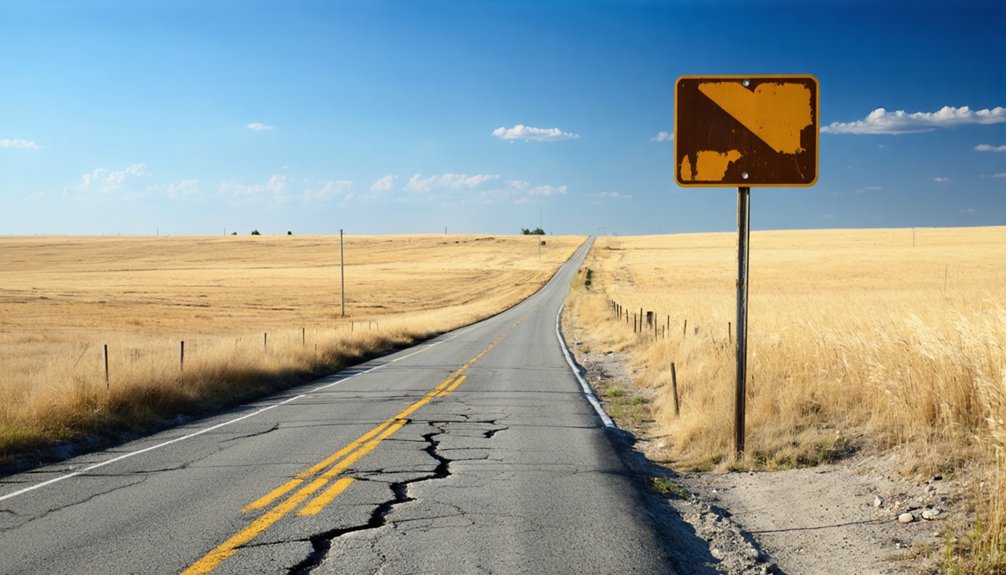
Colokan sits in Greeley County, western Kansas, roughly half a mile from the Colorado border, placing it about 200 miles east of Denver and nearly 350 miles west of Wichita.
If you’re driving from Kansas City, you’re looking at roughly a six-hour trip heading west on U.S. Route 50 through Dodge City before pushing into the High Plains.
From Colorado, you can cross into Kansas along U.S. Route 40 or Route 96, making Colokan a natural stop on a broader border-region ghost town loop.
Colokan’s Distance From Cities
Tucked against the Colorado–Kansas border in remote Greeley County, Colokan sits roughly one-half mile from the state line, making it one of western Kansas’s most isolated ghost town destinations.
Understanding Colokan history and its railroad significance helps frame why this remote location once drew settlers seeking frontier opportunity.
Here’s how far you’ll travel from nearby cities:
- Tribune, KS – approximately 25 miles southeast, your closest supply stop
- Lamar, CO – roughly 60 miles northwest via US-385
- Garden City, KS – about 90 miles east along US-160
- Pueblo, CO – approximately 160 miles west
- Wichita, KS – nearly 280 miles east, ideal for a multi-day road trip launch
Plan fuel and supplies before heading out — services thin dramatically past Tribune.
Routes To Reach Colokan
Knowing how far you’ll travel is only half the battle — you’ll also need a reliable route across western Kansas’s open terrain to actually reach the site.
From the east, U.S. Highway 40 cuts straight through the High Plains, delivering you into Greeley County with sweeping, uninterrupted views. From the south, U.S. Highway 160 connects well with county roads heading north toward the Colorado border.
Watch for historical markers along these corridors — they add meaningful context to the landscape you’re crossing. The scenic routes through this region reward patient travelers who appreciate wide skies and frontier solitude.
Once you’re near Tribune, Kansas, local county roads guide you the remaining distance to where Colokan once stood along that wind-swept state line.
What You’ll Find (and Won’t Find) at the Colokan Site
If you’re expecting crumbling storefronts or a weathered depot to photograph, Colokan will likely disappoint you. The railroad impact that ultimately doomed this settlement left almost nothing standing. The site is open High Plains terrain, reclaimed entirely by prairie.
Here’s what the ghost town history of Colokan actually offers:
- Open land where the original townsite once operated
- No standing structures from the 1886–1897 settlement period
- No depot remnants from the D.M. & A. railroad rivalry with Towner
- Rogers Cemetery, a nearby historical point worth locating
- Raw frontier solitude, ideal for those who value unfiltered, uncrowded exploration
You’re visiting an idea more than a place. Bring curiosity, good maps, and low expectations for physical artifacts—you’ll leave richer for the experience.
Which Ghost Towns Near Colokan Are Worth the Detour?
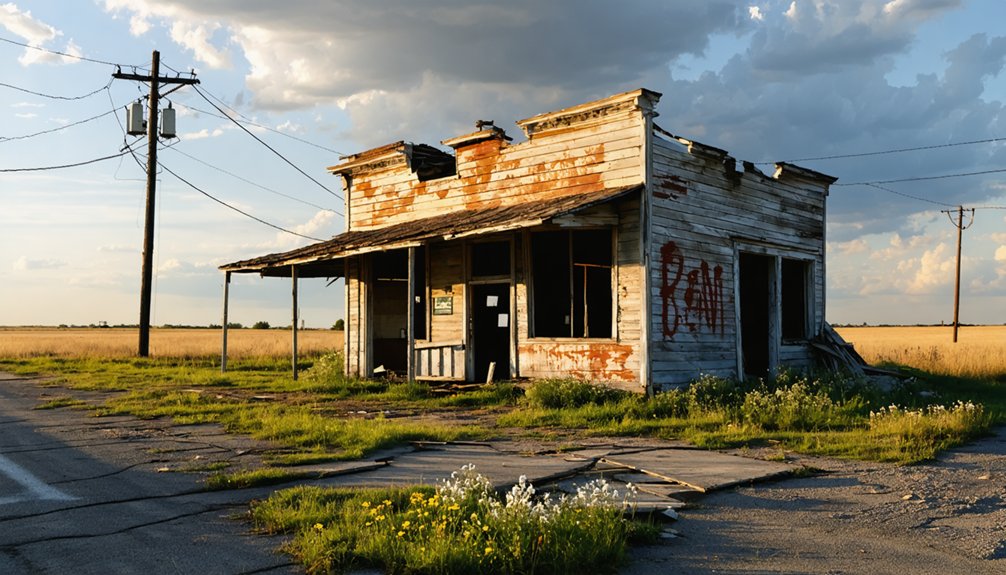
Once you’ve absorbed the quiet emptiness of the Colokan site, the surrounding High Plains reward you with more ghost town territory worth exploring.
The quiet emptiness of Colokan lingers, but the High Plains hold more forgotten places waiting to be found.
Greeley County holds several extinct towns, each carrying its own historical significance, and they fit naturally into a single efficient loop. You’ll find ghost town attractions scattered across this border region where railroad decisions once determined whether settlements survived or vanished entirely.
Towner, Colorado, directly shaped Colokan’s fate by winning the D. M. & A. depot rivalry, making it a meaningful stop for context.
Rogers Cemetery anchors the local landscape with tangible historical significance, connecting you to the region’s early settlers. Together, these stops build a fuller picture of frontier life, railroad power, and the thin line between a thriving community and a forgotten name on a map.
Frequently Asked Questions
Was Colokan Ever Considered for Official Incorporation as a Kansas Town?
Colokan never achieved official incorporation—instead, you’ll find it woven into Kansas settlements and ghost town history as a community the Kansas Legislature officially vacated in 1897, leaving behind only echoes of frontier freedom.
How Many Civil War Veterans Originally Founded the Colokan Settlement?
Like battle-hardened seeds carried by the wind, 42 Civil War veterans planted Colokan’s Settlement History in 1886, marching from Murphysboro, Illinois, to stake their claim on Kansas’s untamed frontier — you’d call them true freedom-seekers.
What Does the Name Colokan Actually Mean and Where Did It Originate?
You’ll love this piece of Colokan history — the name’s a portmanteau blending “Colorado” and “Kansas,” reflecting its bold border identity. Among ghost town legends, few names capture a settlement’s spirit quite so cleverly and meaningfully.
Did the Colokan Graphic Newspaper Survive Longer Than the Town Itself?
No, the Colokan Graphic didn’t outlast the town. Printed pages perished before the post office closed, making the newspaper legacy brief in Colokan history. You’ll find the paper ceased publishing in July 1888, years before official abandonment.
Is Rogers Cemetery Still Accessible and Maintained for Visitor Exploration?
Rogers Cemetery’s accessibility isn’t fully confirmed, but you’ll likely find it’s a quiet, weathered site. Cemetery conditions vary seasonally, so your visitor experience may include overgrown paths—pack sturdy boots and embrace the raw, untamed freedom of exploring forgotten High Plains history.
References
- https://en.wikipedia.org/wiki/Colokan
- https://www.youtube.com/watch?v=Y8c1wguU4dw
- https://www.youtube.com/watch?v=YQHVP21sYC8
- https://www.youtube.com/watch?v=8dtIPX7pIqI
- https://www.facebook.com/TravelwithaWiseguy/posts/todays-video-was-of-me-driving-around-central-kansas-finding-random-ghost-towns-/879468841534477/
- https://www.onlyinyourstate.com/trip-ideas/kansas/kansas-ghost-town-road-trip
- https://www.youtube.com/watch?v=LNAm0sZuNyw
- https://legendsofkansas.com/greeley-county-extinct-towns/
- https://lan-portal.uob.edu.ly/file/PAGE/5QN8546505/ghost-towns__of-kansas-a-travelers__guide.pdf
- https://www.facebook.com/christopherkirkhamphotography/videos/this-semi-ghost-town-is-extremely-resilient-even-to-this-day-kansas-photography-/1286579436668444/