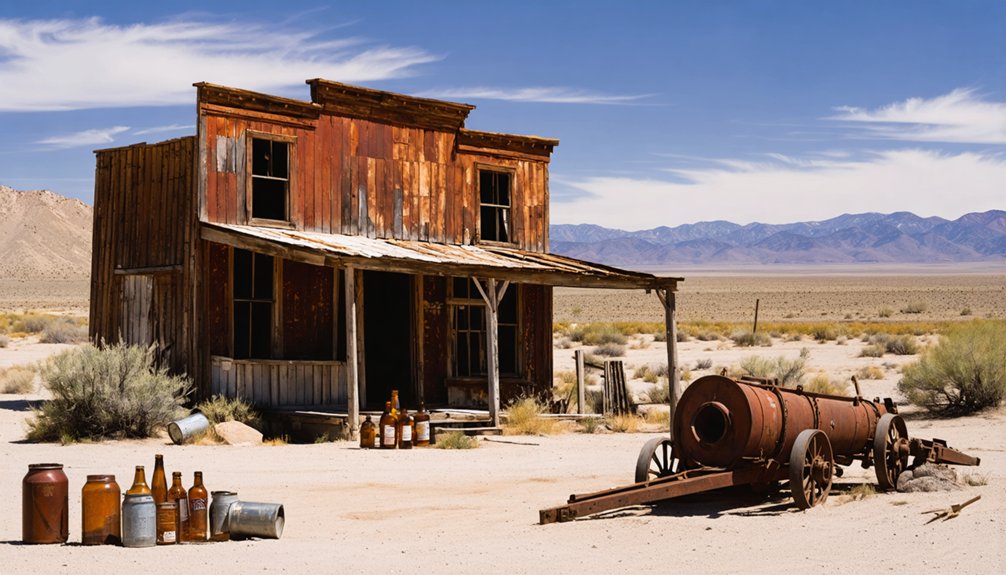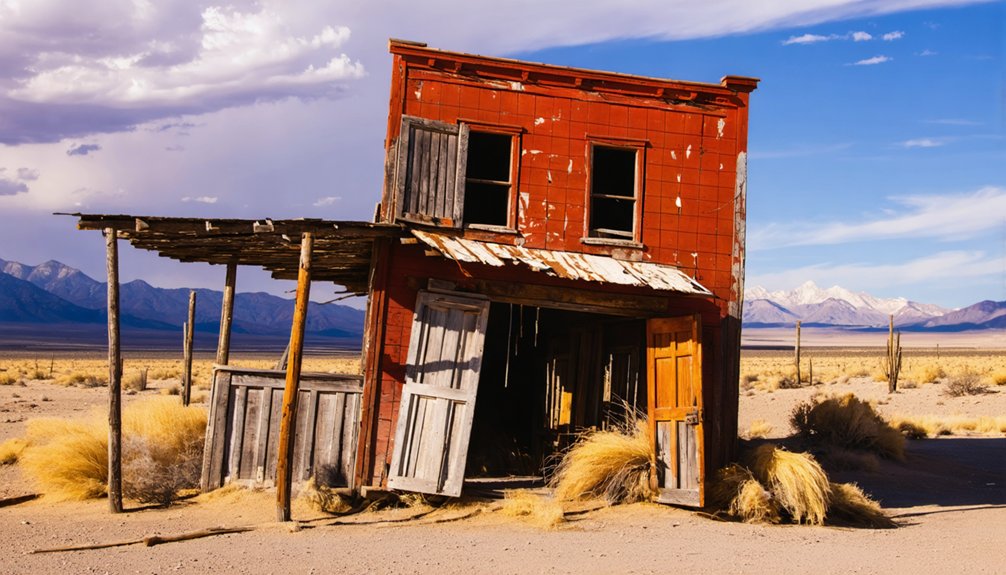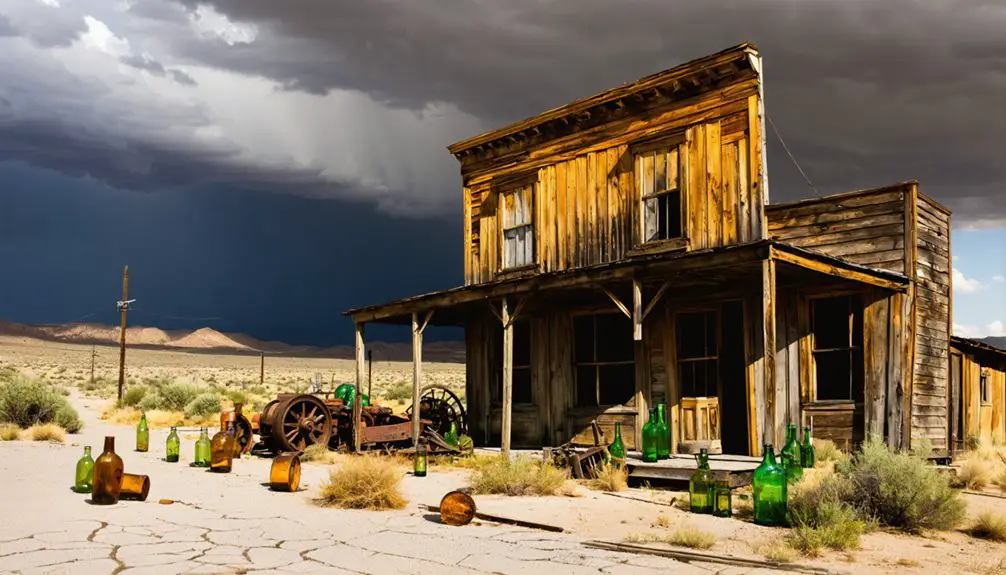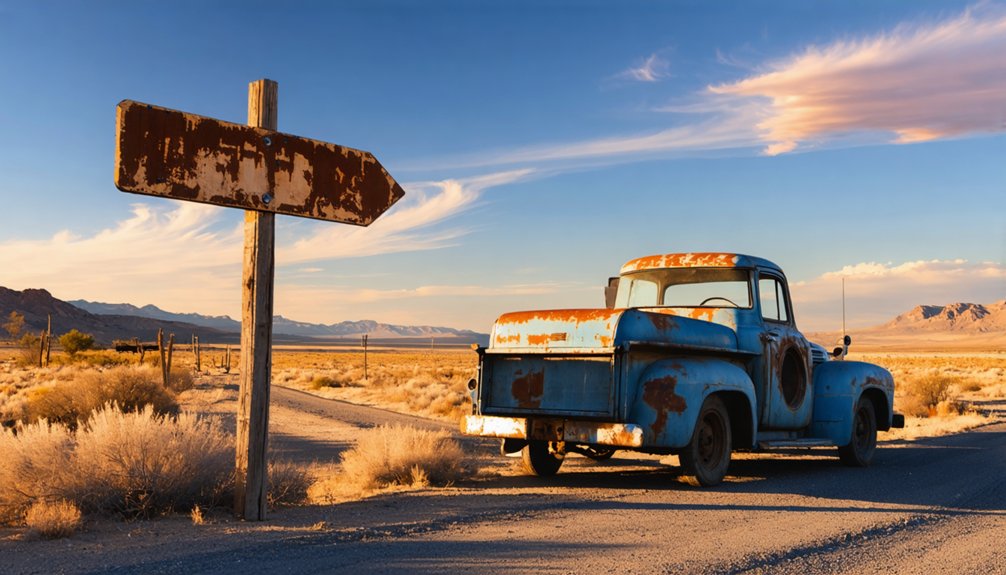
Your ghost town road trip to Colorado City, Nevada leads to a place that no longer exists above water—a Prohibition-era construction camp now submerged beneath Lake Mead’s turquoise depths. From Boulder City, take US 95 and veer onto Highway 165, where high-clearance vehicles navigate the rugged 10.8-mile El Dorado Canyon trail. Winter’s mild temperatures make exploration ideal, while nearby Techatticup Mine and Nelson’s Landing offer accessible above-ground adventures through Nevada’s wildest mining history and the secrets these sunken settlements still hold.
Key Takeaways
- Colorado City is now submerged beneath Lake Mead; visit nearby El Dorado Canyon and Nelson’s Landing instead for accessible ghost town experiences.
- Access the area via US 95 from Boulder City, then Highway 165; a high-clearance 4×4 vehicle is recommended for trails.
- Visit during winter months to avoid dangerous summer temperatures that can reach 120 degrees in the desert canyons.
- Tour the deadly Techatticup Mine with 500-foot descents into restored tunnels; reservations required for three daily tours by Werly family.
- Combine your trip with nearby ghost towns like Rhyolite and Nelson’s Landing for a comprehensive Wild West mining history experience.
The Rich History of Colorado City: From Mining Camp to Submerged Ghost Town
Before Lake Mead‘s waters rose to swallow it whole, Colorado City clung to the edge of the Colorado River as a rough-and-tumble construction camp that serviced the building of Hoover Dam. You’ll find this wasn’t your typical mining ghost town—it was born from concrete and ambition in the early 1930s. Workers flooded here seeking wages and escape, creating a wild outpost where bars, brothels, and boarding houses lined dusty streets beyond federal jurisdiction.
The formation of this ghost town came swiftly when the dam’s completion rendered it obsolete. As Lake Mead filled behind Hoover Dam, the lake levels of the Colorado River steadily climbed, drowning Colorado City beneath turquoise depths. Today, drought occasionally reveals its skeletal remains—a sunken reminder of boom-and-bust freedom.
Getting There: Routes and Access Points to the El Dorado Canyon Area
Since Colorado City lies submerged beneath Lake Mead, you’ll access its ghostly remnants through the surrounding El Dorado Canyon area, where desert highways carve through volcanic ridges about an hour south of Las Vegas.
You’ll reach the wilderness via US 95 from Boulder City, then veer onto Highway 165 between the Colorado River and main highway. Dirt road navigability becomes essential here—high-clearance 4×4 vehicles handle the 10.8-mile El Dorado Canyon OHV Trail best, with its rock crawling sections and off-camber challenges.
Seasonal accessibility considerations matter greatly. Winter offers ideal exploring conditions, while summer’s 120-degree heat makes ventures dangerous.
Plan your approach from Nelson or via Old Como Road from Dayton Valley Road, where flat terrain eventually descends into rugged canyons protecting this historic landscape’s secrets.
Exploring the Underwater Ruins of Lake Mohave
Beneath Lake Mohave‘s surface, an abandoned dredge rests in permanent stillness, its rusted hulk marking just one point in an underwater landscape of submerged history. You’ll find a sunken van at 35 feet and a bus at 50 feet north of Katherine Landing, their metal frames leading divers down an 80-foot ravine scattered with boat wreckage. These underwater archaeological sites tell stories of the river’s transformation.
The real treasure lies deeper—Callville, once a bustling Colorado River steamboat port during the Civil War era, now sits beneath 400 feet of water and 80 feet of sediment. Hoover Dam construction remnants remain preserved in the depths: concrete tunnels, mollusk-covered girders, and train tracks where wood grain still shows through decades of submersion.
Techatticup Mine and El Dorado Canyon Adventures
Deep in Eldorado Canyon‘s rust-colored walls, the Techatticup Mine cuts into Nevada’s hills like a scar that won’t heal. This wasn’t just another mining operation—between 1861 and 1942, it pulled $10 million in gold and silver from these tunnels while earning its reputation as the deadliest site in the Wild West. Historic mining operations here meant more than pickaxes and stamp mills; violent lawlessness ruled these shafts, where claim-jumping and shootouts exceeded even Tombstone’s brutality.
Today, you’ll descend 500 feet into restored tunnels where unmined veins still glitter in your headlamp’s beam. The Werly family’s tours wind through rickety structures and deep pits three times daily—reservations required. No law enforcement dared enter then; now you can explore freely, camera ready, bloodshed long settled into dust.
Nelson Ghost Town: A Must-See Stop Along Your Journey
Where the Eldorado Canyon opens to meet the Colorado River, Nelson Ghost Town sprawls across 51 acres of sun-bleached history. You’ll discover authentic structures preserved since southern Nevada’s wildest mining days, when $10 million in gold flowed from these hills and lawlessness ruled. The Werly family’s restoration transformed this abandoned settlement into visitor experiences that honor its gritty past.
Your recreational opportunities include:
- Hard-rock mine tours through Techatticup Mine’s legendary tunnels
- Photography sessions among weathered buildings and vintage vehicles
- Self-guided exploration of graffiti-covered Jubilee Mine passages
- Historical interpretation via information kiosks mapping the 1859 founding
Located 45 minutes south of Las Vegas, this destination delivers unfiltered Western authenticity. You’ll walk where gunfighters once battled, where fortune-seekers struck it rich, where desert winds preserved genuine frontier remnants for modern adventurers.
Additional Ghost Towns and Historic Sites in the Region
Beyond Colorado City, you’ll discover a constellation of ghost towns that reveal the American West’s turbulent mining legacy. Rhyolite’s crumbling concrete ruins stand sentinel in the desert, while Nelson clings to canyon walls where outlaws once traded stolen goods in shadowy saloons.
As you venture deeper into this arid landscape, you’ll find that exploring paradise ghost town history offers a unique glimpse into the lives of those who carved out an existence in such unforgiving surroundings. The stories etched into the remaining structures tell of hope, despair, and resilience. Each town, with its own tantalizing tales, beckons adventurers and history buffs alike to uncover the secrets hidden within the sands of time.
Further along your route, Overton’s drowned Puebloan villages emerge from Lake Mead’s receding waters, their ancient stone walls exposing a civilization that thrived centuries before prospectors ever struck gold.
Rhyolite’s Preserved Gold Rush
On August 4, 1904, Shorty Harris and E. L. Cross discovered gold-laden quartz in the Bullfrog Hills, igniting a rush that transformed desert into civilization. You’ll find Rhyolite’s preserved ruins standing as evidence to those frenzied days when 5,000 souls chased fortune beneath Nevada’s scorching sun.
The Bureau of Land Management’s preservation efforts protect these remarkable structures:
- Tom Kelly’s Bottle House — 50,000 beer and liquor bottles mortared into habitable walls
- Cook Bank Building — Nevada’s most photographed ghost town ruin, its three-story frame commanding the landscape
- Spanish-style Train Depot — once worth $130,000, now housing museum artifacts
- Goldwell Open Air Museum — featuring Albert Szukalski’s haunting *Last Supper* sculpture
You’re free to wander these silent streets where prosperity vanished as quickly as it arrived.
Nelson’s Outlaw Trading Hub
Along the Colorado River’s ancient corridor, Nelson’s Landing emerged as a dusty sanctuary where legitimate commerce and outlaw enterprise blurred into a single dust cloud. You’ll find stone remnants where Charles Nelson ran his ferry crossing and general store after 1905, stocking everything from saddles to liquor for miners, ranchers, and less savory clientele.
This trading hub connected directly into outlaw networks stretching through Brown’s Park, offering neutral ground where Butch Cassidy and Matt Warner restocked supplies between jobs. Warner himself worked the ferry intermittently, while locals whispered about robbery proceeds cached in surrounding canyons.
Today you can explore these weathered structures via dirt road from Eldorado Canyon, where interpretive signs mark the spots where frontier law dissolved into desert heat and river mist.
Overton’s Submerged Puebloan Ruins
When Hoover Dam’s concrete walls sealed the Colorado River in the 1930s, Lake Mead’s rising waters swallowed one of Nevada’s most remarkable archaeological treasures—Pueblo Grande de Nevada, a sprawling Ancient Puebloan settlement that had stood for over eight centuries.
You’ll find the Lost City Museum in Overton preserving what salvage archaeology efforts rescued before submersion claimed hundreds of pit houses and pueblos. The Civilian Conservation Corps worked frantically to excavate baskets, weapons, and graves from sites dating back to 300 A.D.
Today’s preservation studies continue mapping what remains:
- Ancient salt mines south of Overton Beach
- Scattered homesteads along six miles of valley edge
- Hundreds of sites surviving above waterline
- Artifacts revealing dense Basketmaker and Puebloan populations
This inundation sparked the Southwest’s first large-scale archaeological salvage operations.
Planning Tips for Your Nevada Ghost Town Road Trip
Before you hit the open desert highway toward Colorado City, you’ll want to time your expedition for the cooler months between October and April, when temperatures hover in the comfortable 60s and 70s rather than the punishing triple-digits of summer. Your packing essentials should include three liters of water per person, sun protection, and sturdy boots for traversing crumbling foundations.
A high-clearance 4WD vehicle proves indispensable for the four-mile gravel approach road that tests rental sedans.
Fill your tank in Searchlight or Boulder City, and carry an extra ten gallons—the nearest services sit thirty miles away. While photography runs unrestricted across the ruins, drone regulations prohibit flights within the adjacent national recreation area. Budget ninety minutes one-way from Las Vegas, allowing daylight hours for safe exploration.
Frequently Asked Questions
What Permits or Fees Are Required to Dive Lake Mohave’s Submerged Ruins?
You’ll need to contact the National Park Service directly for diving permits, as Lake Mohave’s submerged ruins require special authorization. Underwater exploration risks include strong currents and limited visibility, so you’ll want proper certification before attempting this adventure.
Are There Camping Facilities Near Colorado City and El Dorado Canyon?
You’ll find excellent camping at Big Bend of the Colorado State Recreation Area nearby, offering full hookups and primitive campsites. The area’s perfect for exploring El Dorado Canyon’s scenic hikes while enjoying your freedom under Nevada’s wide-open skies.
What Wildlife or Safety Hazards Should Visitors Expect in the Area?
The desert’s hidden dangers lurk beneath every rock. You’ll face rattlesnake encounters in rocky terrain, scorpions under stones, flash flood risks in narrow canyons, and extreme heat exceeding 100 degrees—nature’s reminders to tread carefully.
Can You Swim or Fish in Lake Mohave Near the Submerged Town?
You can both swim and fish near the submerged town in Lake Mohave’s clear waters. Just follow fishing regulations—you’ll need a valid license if you’re over 12, and respect spearfishing restrictions near swimming areas.
What Cell Phone Coverage Exists in Remote Nevada Ghost Town Regions?
You’ll find yourself stranded without cell tower coverage range across Nevada’s ghost towns—dead zones stretch 500 miles. Freedom demands preparation: carry satellite internet availability devices like Garmin InReach or Starlink to maintain connection when civilization disappears.