You won’t find Connellsville on any road sign — Utah’s first commercial coal town sank beneath Electric Lake decades ago. Start your road trip on Utah Highway 31 through Huntington Canyon, where you’ll spot a reconstructed coke oven near the shoreline. Plan your visit between June and October for the best access. Nearby ghost towns like Winter Quarters and Hiawatha round out the route, and there’s far more to this sunken story than the surface reveals.
Key Takeaways
- Connellsville, Utah’s first commercial coal town, now lies submerged beneath Electric Lake, accessible via Utah Highway 31 through Huntington Canyon.
- Visit between June and October for clear roads, accessible shorelines, and optimal exploration conditions, with late September offering calm water reflections.
- One reconstructed coke oven near Electric Lake’s shoreline marks Connellsville’s industrial legacy and remains open for visitor access.
- Extend your road trip to nearby ghost towns Winter Quarters, Hiawatha, and Castle Gate for a complete Utah mining heritage experience.
- Pack offline maps, emergency supplies, layered clothing, and photography gear, as canyon conditions and afternoon thunderstorms can create unexpected hazards.
Utah’s First Coal Town Now Sits at the Bottom of a Lake
Most ghost towns let you walk the streets, peer into crumbling doorways, and touch the weathered wood of buildings that time forgot.
Connellsville doesn’t play by those rules. Utah’s first coal town now rests beneath Electric Lake, flooded when the dam went up in 1972.
That submerged town carries a remarkable Connellsville history — it was Utah’s earliest commercial coal settlement, carved into Coal Canyon around 1874 to fuel Salt Lake Valley smelters.
The mining legacy lasted only four years before poor coke quality and brutal rail logistics killed the dream.
Today, industrial archaeology enthusiasts find little above the waterline, just a reconstructed coke oven standing as a lone sentinel.
You’re not visiting ruins here — you’re visiting a story that an entire reservoir swallowed whole.
How Coal Mining Built and Buried Connellsville in Four Years
Few towns rose and fell as fast as Connellsville. The Fairview Coal Mining and Coke Company built this settlement in 1874, betting that Wasatch Plateau coal could fuel Salt Lake Valley smelters.
Connellsville history unfolded quickly — miners arrived, coke ovens fired up, and the operation hummed with industrial ambition.
But the mining techniques of the era couldn’t overcome the coke’s poor quality, and railroad construction from Springville proved economically impossible. By 1878, the project collapsed.
Here’s what drove the rise and fall:
- Coke demand from Salt Lake smelters created the original economic justification
- Inferior coke quality destroyed the business case almost immediately
- Railroad costs sealed the town’s fate permanently
You’re left with a powerful lesson: ambition without infrastructure rarely survives.
The One Coke Oven You Can Still Visit Above the Water
When Utah Power flooded Connellsville in 1973, crews didn’t let every trace of the town vanish beneath the rising water.
Before the reservoir swallowed the site, workers reconstructed one coke oven above the water line, preserving a tangible link to the town’s industrial past.
That single coke oven carries enormous historical significance.
It represents the first commercial coal mining operation in Emery County and the broader ambitions that brought settlers into Huntington Canyon nearly 150 years ago.
When you visit Electric Lake today, you can stand beside this surviving structure and picture the full operation that once hummed around it.
It’s a rare, hands-on connection to a story that’s otherwise locked underwater, making the detour genuinely worth your time.
How To Get to Connellsville and Electric Lake
To reach Electric Lake and the ghost town site of Connellsville, you’ll head into Huntington Canyon via Utah Highway 31, following the canyon northeast from Huntington until the reservoir comes into view.
Watch for key landmarks along the way, including the dramatic canyon walls and the Huntington Creek drainage that eventually leads you to the dam area.
Once you’re there, you’ll find limited but accessible parking near the shoreline, where the reconstructed coke oven stands as the one above-water remnant worth seeking out.
Starting Your Route
Getting to Electric Lake and the submerged ghost town of Connellsville takes you deep into Huntington Canyon along Utah Highway 31, one of the most scenic mountain drives in central Utah.
This route cuts through towering canyon walls, aspen groves, and open mountain terrain, rewarding you with Scenic Stops that feel genuinely remote.
Route Highlights worth noting:
- Start in Huntington — Head north on Highway 31 through Huntington Canyon toward the Wasatch Plateau.
- Watch for the reservoir — Electric Lake appears as the canyon narrows near the right fork of Huntington Creek.
- Locate the reconstructed coke oven — It sits above the waterline and marks the original Connellsville townsite.
You’re not following a tourist corridor here — you’re carving your own path through Utah’s forgotten industrial history.
Key Landmarks En Route
Once you’re rolling through Huntington Canyon on Highway 31, the landmarks start doing the guiding for you.
Watch for the canyon walls to narrow as you climb toward the Wasatch Plateau — that’s your signal you’re closing in on Electric Lake territory. The reservoir itself comes into view dramatically, its blue water sitting quietly over what was once Utah’s first commercial coal settlement.
You’re basically driving above ghost town archaeology without realizing it. Pull off near the reconstructed coke oven above the waterline — it’s the one tangible artifact connecting you to Connellsville’s industrial past.
While underwater exploration of the submerged townsite isn’t practical, standing at that shoreline and knowing an entire settlement rests below gives the stop a genuinely haunting weight.
Parking And Site Access
Reaching Electric Lake and the Connellsville site takes you along one main corridor — Utah Highway 31 through Huntington Canyon. Parking options are informal, so you’ll pull off near the reservoir’s edge where the terrain allows.
- No designated trailhead exists, so scout a flat, stable shoulder before stopping.
- Site accessibility centers on the reconstructed coke oven above the waterline — that’s your primary tangible landmark.
- A four-wheel-drive vehicle isn’t required, but a high-clearance vehicle helps on rougher pullouts.
You’re not walking into a preserved town here. Most of Connellsville sits beneath Electric Lake, submerged since 1973.
What you’re really doing is standing at the edge of history, looking out over water that swallowed Utah’s first commercial coal settlement whole.
Best Time To Visit Electric Lake and Connellsville
Summer and early fall offer the best conditions for visiting Electric Lake and the Connellsville site, when Huntington Canyon’s mountain roads are clear and the reservoir’s shoreline is accessible.
The best season runs from June through October, giving you open highways, manageable temperatures, and stunning alpine scenery framing the lake. Ideal weather arrives in July and August, though afternoon thunderstorms can roll in quickly at elevation, so plan morning visits.
Spring snowmelt can leave canyon roads muddy or partially closed, and winter brings serious hazards above 8,000 feet.
If you’re chasing that perfect combination of calm water reflections, visible shoreline remnants, and comfortable exploration conditions, late September hits the sweet spot before seasonal closures begin.
Pack layers regardless of when you go.
What To Pack for a Remote Canyon Reservoir Visit
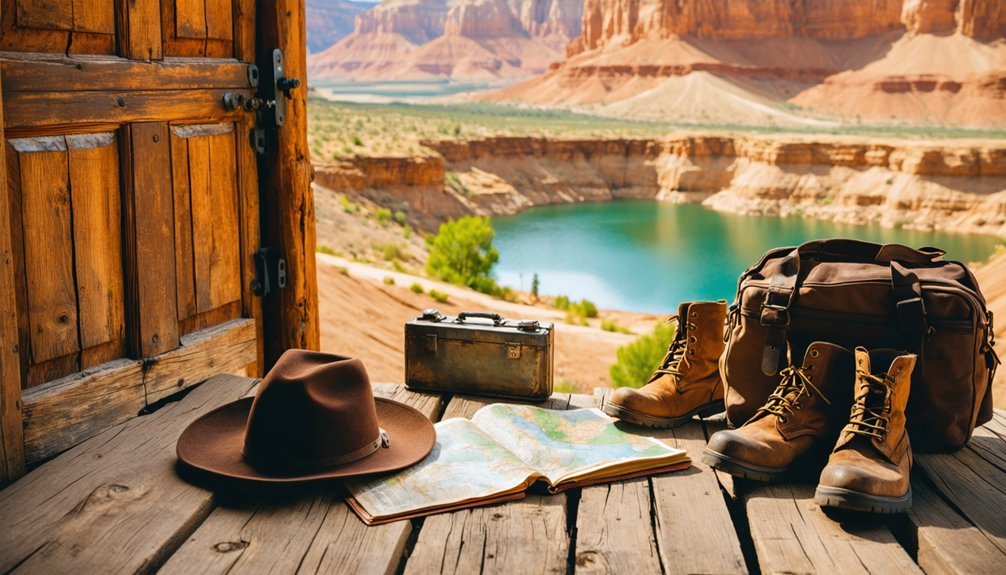
Knowing when to go is only half the equation — what you bring determines whether your trip to Electric Lake stays comfortable or turns frustrating fast.
Canyon safety demands outdoor essentials, since cell service disappears quickly in Huntington Canyon. Weather preparedness means layering even in summer, as temperatures shift dramatically near the reservoir.
Pack these critical items:
- Navigation tools and emergency supplies: Download offline maps, carry a paper backup, and pack a first-aid kit
- Hydration strategies: Bring more water than you think you need — canyon heat deceives you
- Photography tips and wildlife awareness gear: A telephoto lens and binoculars let you capture and observe canyon wildlife without disturbing animals
Freedom tastes better when you’re genuinely prepared.
Ghost Towns Near Connellsville on the Same Canyon Route
While Connellsville anchors your Huntington Canyon itinerary, you’ll find that the same canyon route connects to other mining-era sites that round out the region’s industrial past.
Winter Quarters, where Connellsville’s miners relocated after the 1878 abandonment, sits close enough to fold into a single driving loop.
Tracing these connected stops lets you follow the actual migration of coal country workers and piece together how the Wasatch Plateau coal field evolved after Connellsville’s collapse.
Nearby Canyon Ghost Towns
Huntington Canyon holds more than one ghost town worth tracking down, and if you’ve made the drive out to see Connellsville’s submerged remains, you’re already positioned to explore several nearby sites along the same route.
Canyon exploration along this corridor rewards curious travelers with layered historical mining history at every turn.
- Winter Quarters – Where Connellsville’s miners relocated after the 1878 failure, continuing coal operations until disaster struck.
- Hiawatha – A company coal town deeper in the plateau, offering weathered structural remains from Utah’s industrial past.
- Castle Gate – A striking canyon entrance settlement connected to Price River coal shipping and early railroad history.
Each stop adds context, turning your single-site visit into a fuller picture of how Utah’s canyon communities rose and collapsed together.
Connected Route Mining Sites
Once you’ve traced Connellsville’s story to the bottom of Electric Lake, the canyon route itself becomes your next guide, threading you through a string of connected mining sites that shaped the same regional coal economy.
Following Huntington Canyon south pulls you deeper into a corridor dense with mining heritage, where Winter Quarters absorbed Connellsville’s displaced miners and kept the Wasatch Plateau coal field alive.
Each stop along this route layers industrial archaeology onto open landscape, letting you read the valley’s economic ambitions through surviving shaft portals, weathered tipples, and reshaped terrain.
You’re not just driving between towns here — you’re moving through a single, evolving industrial story that started at Connellsville and pressed outward until coal finally ran the whole canyon’s future.
Frequently Asked Questions
Can You Swim or Boat on Electric Lake Near the Submerged Townsite?
You can boat and swim on Electric Lake, exploring ghost stories beneath your feet! Lake activities let you drift above the submerged townsite, connecting you with Connellsville’s sunken history while enjoying the reservoir’s open, freeing waters.
Are There Guided Tours Available for the Connellsville Ghost Town Area?
Don’t let the lack of formal tours stop you — you’ll uncover Connellsville’s ghost stories and historical significance on your own terms, exploring the reconstructed coke oven standing sentinel above Electric Lake’s submerged secrets.
Is the Reconstructed Coke Oven Accessible for People With Mobility Limitations?
Accessibility details aren’t confirmed, but you’ll want to research mobility options before visiting. The reconstruction details suggest it’s above the waterline, so you can explore this surviving industrial landmark with proper trip planning.
Does Electric Lake Ever Drop Low Enough to Expose Submerged Ruins?
No confirmed reports suggest Electric Lake drops low enough to expose Connellsville’s submerged history. Still, you’ll find lake exploration rewarding — shifting water levels occasionally hint at forgotten remnants lurking just beneath the surface.
Are Campgrounds Available Near Electric Lake for Overnight Ghost Town Trips?
You’ll find campgrounds near Electric Lake, perfect for soaking in ghost town history under starry skies. Pack your camping essentials, set up camp, and explore the haunting remnants of Connellsville’s sunken industrial past firsthand.
References
- https://en.wikipedia.org/wiki/Connellsville
- http://www.expeditionutah.com/forum/index.php?threads/ghost-town-connellsville-utah.6910/
- https://expeditionutah.com/forum/index.php?threads/ghost-town-connellsville-utah.6910/
- https://jacobbarlow.com/tag/ghost-towns/
- https://www.encyclo.co.uk/meaning-of-Connellsville
- https://etvnews.com/articles/local-news/e-clampus-vitus-dedicates-plaque-to-connellsville/
- https://www.youtube.com/watch?v=vWLVdD4W98E
- https://www.familysearch.org/en/wiki/Connellsville
- https://www.emerycountyarchives.com/uploads/1/4/0/7/140735053/connelsville_old_town_of.pdf
- http://www.expeditionutah.com/forum/index.php?forums/ghost-town-database.83/page-3