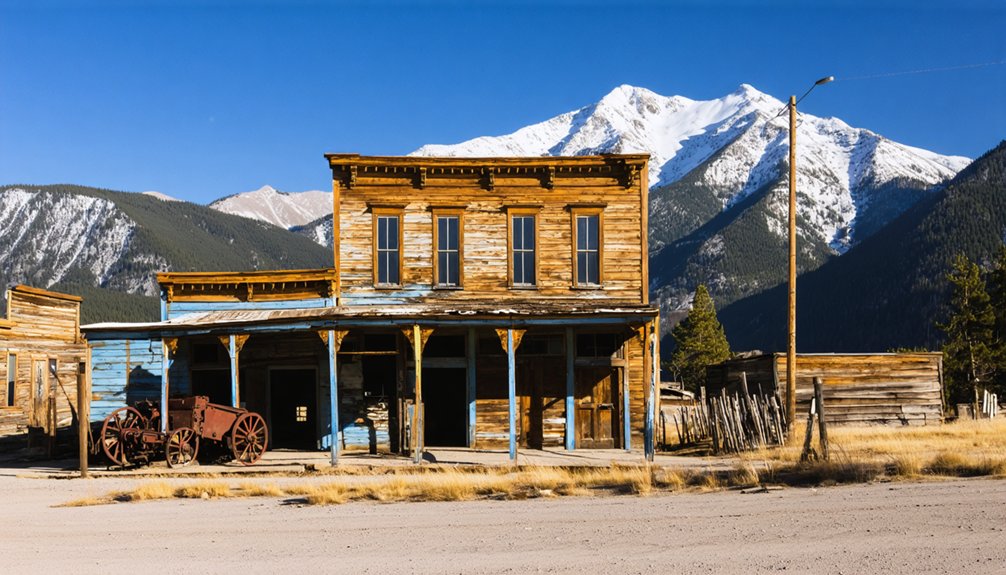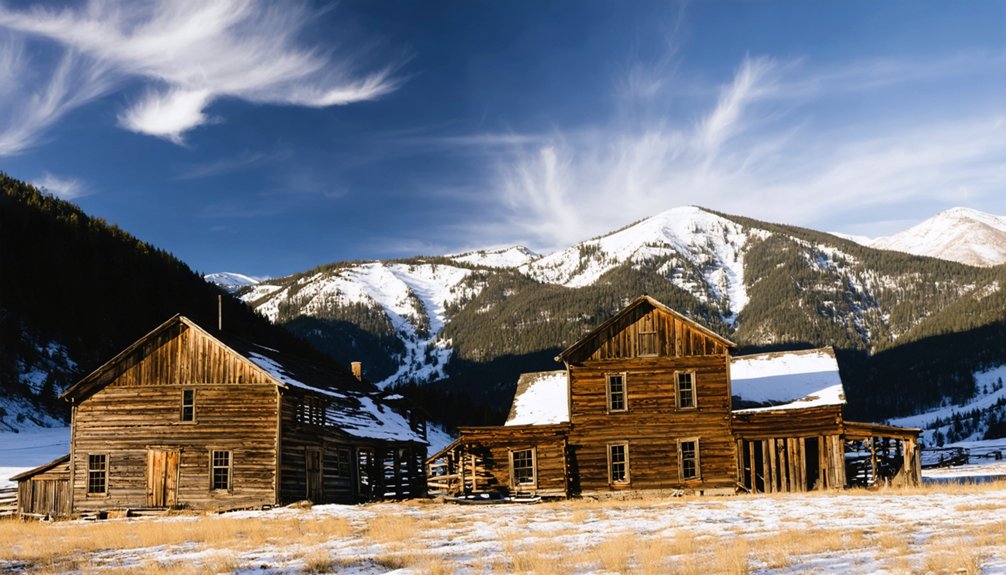
You’ll need a high-clearance 4WD vehicle and a sense of adventure to reach Copper City, perched at 10,500 feet in Colorado’s Elk Mountains. Plan your visit between July and September when the treacherous Tennessee Pass route becomes passable, traversing steep switchbacks and water crossings to reach weathered timber frames and crumbling stone walls from this 1889 mining settlement. Pack recovery gear, extra fuel, and satellite communication—this remote backcountry journey rewards the prepared with authentic ghost town solitude and stunning alpine vistas that few travelers experience.
Key Takeaways
- Access requires a high-clearance 4WD vehicle with low-range gearing, skid plates, all-terrain tires, and recovery gear for treacherous terrain.
- Visit between July and September for optimal road conditions, or early September for autumn colors and fewer visitors.
- The remote trail features steep switchbacks, loose rocks, water crossings, and narrow shelf roads through Tennessee Pass country.
- Explore weathered ruins including the bunkhouse, ore mill foundations, sawmill remnants, and blacksmith shop scattered across the site.
- Bring emergency supplies, satellite communication devices, topographic maps, extra fuel, and tools for this remote backcountry adventure.
The Rise and Fall of Copper City’s Mining Operations
In 1889, Cap Simmons staked the first claims in what would become Copper City, setting off a chain of events that transformed a remote Colorado mountainside into a bustling mining operation. By 1906, consolidated claims formed the Copper Mining Company Group, and you’d have witnessed a thriving settlement with cabins, a sawmill, blacksmith shop, and ore mill by 1910.
The mill processed copper ore deposits from Miner’s Ridge, separating valuable copper, silver, and gold from worthless rock. Transportation challenges plagued operations—high-grade ore traveled 55 grueling miles by wagon and truck to Naches railroad, then onward to Tacoma.
Post-World War II economics crushed profitability. Miners chased better opportunities elsewhere, and by 1948, Copper City stood silent, its machinery stripped away, leaving only weathered structures as evidence of frontier ambition.
The skeletal remains of Copper City may haunt your imagination, but reaching this ghost town will test your nerve and your vehicle’s suspension. You’ll navigate a treacherous 4×4 trail that climbs through Tennessee Pass country, where terrain challenges include steep switchbacks, loose rock fields, and water crossings that vary with snowmelt.
Road conditions deteriorate beyond anything resembling pavement—expect deep ruts, boulder-strewn paths, and narrow shelf roads with stomach-dropping exposure.
High-clearance four-wheel-drive vehicles are non-negotiable, and checking COtrip before departure won’t help since this backcountry route exists beyond maintained highway systems. Summer offers your best window, typically July through September, when snow finally retreats.
Bring recovery gear, extra fuel, and your spirit of adventure—this journey rewards those who refuse to let rough roads dictate their destinations.
What Remains: Exploring the Bunkhouse and Mill Ruins
Weathered timber frames and crumbling stone walls greet you at Copper City, where the bunkhouse and mill ruins stand as silent witnesses to a century-old dream gone bust. The bunkhouse’s skeletal remains reveal architectural features typical of 1910-era mining camps—simple, functional housing built to withstand harsh winters.
Skeletal timber and stone stand frozen in time, monuments to miners who chased copper dreams through unforgiving mountain winters.
The mill ruins showcase early ore concentration techniques, though machinery was stripped after 1942’s closure.
Key features you’ll discover:
- Foundation remnants from the sawmill and blacksmith shop scattered across the site
- Ore waste piles marking environmental impacts of copper, silver, and gold processing
- Designated historical signage explaining the surplus site’s significance
These photogenic ruins reward backcountry explorers willing to tackle the wilderness access beyond Bumping Lake, offering tangible connections to James T. Cap Simmons’ 1889 vision.
Essential Vehicle and Gear Requirements for the Journey
Reaching Copper City’s remote ruins demands a high-clearance 4WD vehicle capable of traversing rocky, ungraded mountain roads where standard cars simply can’t venture. You’ll need emergency supplies packed and ready—spare tire, roadside tools, extra fluids, and a phone charger—because cell service disappears quickly in these high-altitude canyons.
Before you set off, load current motor vehicle use maps and verify your route, since wrong turns on unmarked backcountry trails can strand you miles from civilization.
High-Clearance Vehicle Necessity
Before you even consider pointing your vehicle toward Copper City, understand that Forest Service Road 1808 ranks among Washington’s most punishing backcountry routes. You’ll face rugged terrain hazards that’ll test your rig’s limits—steep rocky inclines, collapsed mine debris, and wilderness ridges that demand absolute control.
Your vehicle needs these demanding 4WD capabilities:
- Low-range gearing for traversing steep wilderness grades beyond Bumping Lake
- Skid plates protecting your undercarriage from jagged rocks near abandoned mining claims
- All-terrain tires gripping loose gravel and mud on the twenty-mile Bumping River approach
High clearance isn’t optional—it’s survival equipment. You’re accessing territory where 42 mining operations failed between 1907-1942, leaving only deteriorating structures and overgrown paths. Pack recovery gear and embrace self-reliance in this remote backcountry.
Emergency Supplies and Tools
The moment your tires leave pavement for Forest Service Road 1808, you’re entering a zone where help won’t arrive quickly—if at all. Your emergency preparedness recommendations start with water—one gallon per person daily—stored in waterproof bags alongside high-energy trail mix and granola bars.
Stock vehicle modifications should include a portable jump starter, spare tire kit, and duct tape for temporary repairs. Pack thermal blankets, extra layers, and a headlamp with backup batteries for Colorado’s unpredictable mountain weather. Add reflective triangles, a whistle, and fire extinguisher for visibility and safety.
Your first aid kit needs antiseptic wipes, bandages, and pain relievers. These supplies transform potential disasters into manageable inconveniences, letting you explore Copper City’s ruins without surrendering your independence to circumstance.
Once Forest Service Road 1808‘s ruts and rocks swallow your vehicle whole, your smartphone becomes an expensive paperweight. You’ll need survival communication tools that actually work in Washington’s Cascade wilderness, where cell towers don’t exist and help sits hours away.
Essential navigation and communication gear:
- Satellite phone or GPS messenger for emergency contact when you’re stranded beyond Mount Rainier’s eastern slopes
- Topographic maps and compass to navigate unmarked routes past Bumping Lake’s confusing trail junctions
- Two-way radios for coordinating vehicle movements on blind corners and washouts
Extreme weather preparedness means redundancy—your satellite beacon works when everything else fails. Pack offline GPS apps with downloaded maps, because Copper City’s bunkhouse ruins won’t appear on Google Maps, and forest service roads change yearly.
Best Times to Visit This Remote Wilderness Ghost Town
Summer transforms Copper City into an accessible wilderness retreat where wildflowers carpet the surrounding meadows and daytime temperatures hover comfortably between 70-80°F at lower elevations. You’ll navigate roads without excessive snow obstacles, making early June ideal before crowds arrive.
Understanding seasonal weather patterns becomes critical for planning your escape—early fall delivers vibrant autumn colors and solitary exploration through September, while winter brings icy challenges above 10,000 feet that demand serious preparation. Spring’s melting snow creates muddy conditions requiring patience until routes dry completely.
Your 4WD vehicle becomes essential year-round for reaching Copper City’s remote location. Time your visit for prime scenic photography opportunities when golden aspens frame weathered structures, or capture wildflower-dotted landscapes beneath Colorado’s endless blue skies during those perfect summer days.
From Miner’s Ridge to the Mill: Understanding the Operation
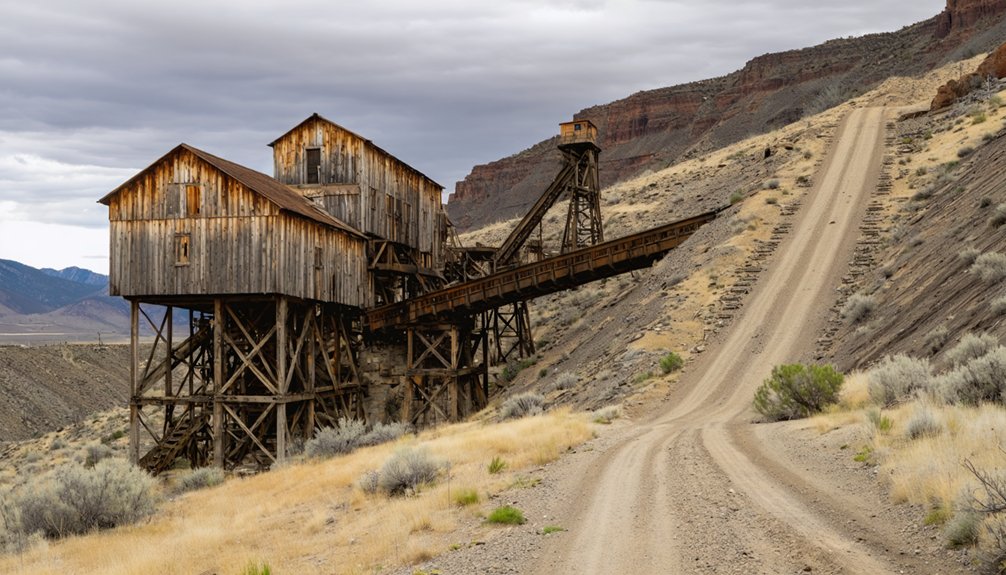
High above Copper City’s weathered buildings, Cap Simmons staked his first claims along Miner’s Ridge in 1889, launching what miners hoped would become Colorado’s next bonanza strike. You’ll discover how copper, silver, and gold ore traveled from mountain heights to valley processing:
Cap Simmons’s 1889 claims on Miner’s Ridge sparked dreams of transforming remote wilderness into Colorado’s next great mineral bonanza.
The Operation’s Three-Stage Journey:
- Horse-drawn wagons (later trucks) hauled raw ore down treacherous mountain roads to the mill
- Machinery crushed rock while gravity and water executed mineral processing techniques, separating valuable metals from worthless host material
- Only premium-grade concentrate justified the grueling 55-mile haul to Naches railroad, then onward to Tacoma smelters
Transportation infrastructure challenges ultimately doomed this venture—refining costs and distance strangled profitability. When mines underproduced expectations, owners pulled every salvageable machine by 1948, leaving only foundations and dreams scattered across wilderness slopes.
Nearby Ghost Towns Worth Adding to Your Itinerary
Why limit your adventure to a single ghost town when the surrounding mountains hide a constellation of abandoned settlements within an hour’s drive? Climax sits just 19 miles away, offering impressive mining archaeology among its abandoned molybdenum operations. At 24 miles, Montezuma’s 1800s silver cabins pair perfectly with A-Basin runs, while Dyersville’s scattered foundations mark an 1880s gold rush 27 miles out. Geneva City’s alpine ruins share that same distance, accessible through forest trails ideal for local wildlife spotting.
Gilman presents the most dramatic site at 33 miles—a cliffside zinc mining town frozen in time, though you’ll need to admire it from outside the contamination barriers. Each location reveals different chapters of Colorado’s mining legacy, transforming your single-destination trip into an unforgettable backcountry exploration.
Photography and Exploration Tips for Your Visit
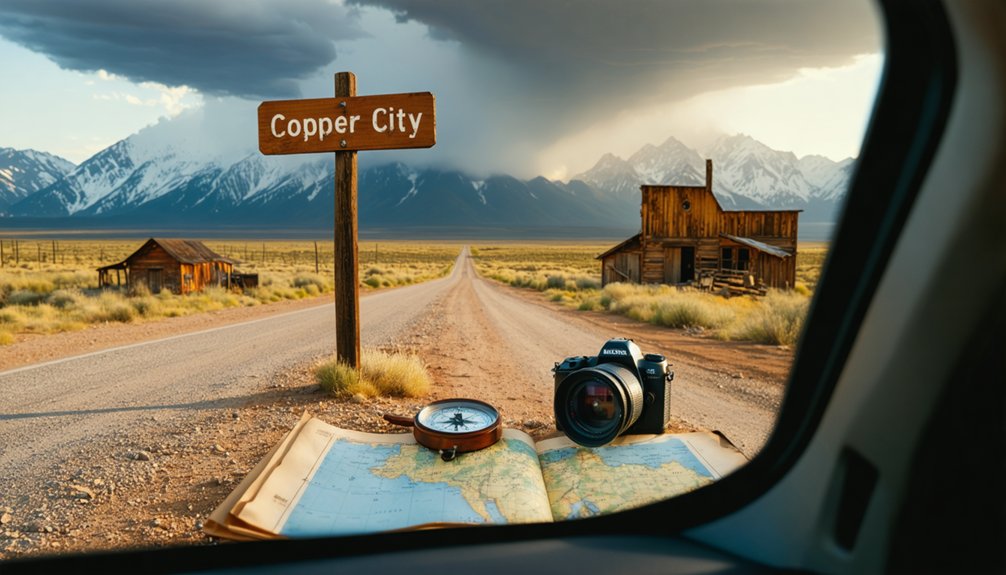
When you frame the skeletal ore mill against dense alpine forest, position yourself to capture how weathered timbers intersect with recovering wilderness—the visual tension between industrial ambition and nature’s reclamation tells Copper City’s story more powerfully than any historical marker.
Bring a wide-angle lens for the bunkhouse ruins and mill structure, but pack a telephoto to isolate architectural details like rusted machinery bolts and hand-hewn beam joints that reveal the craftsmanship of 1910s mining infrastructure.
Test your footing constantly on this remote terrain, especially around foundation remnants and collapsed structures where rotted floorboards hide beneath mountain grasses, and always carry backup navigation since cell service disappears miles before you reach the mill site.
Capturing Historic Mill Remnants
As you navigate one of Washington state’s most punishing backcountry roads, the weathered timbers of Copper City’s mill ruins emerge like skeletal fingers against Miner’s Ridge. This multi-tiered gravity processor tells stories of copper, silver, and gold extracted during the early 1900s.
To master framing historic architecture while capturing scale and isolation, employ these techniques:
- Position yourself at the bunkhouse ruins to establish foreground context before shooting the main mill’s staggered levels ascending the mountainside.
- Arrive during golden hour—early morning or late afternoon light dramatically sculpts the weathered timber framework.
- Deploy wide-angle lenses to emphasize the site’s remote vastness and the ingenious gravity-flow design that processed $55-per-ton ore shipments.
The machinery’s long gone, but these foundation stones and beams preserve mining history worth documenting.
Safety in Remote Terrain
The rugged backcountry surrounding Copper City demands respect and preparation—this isn’t a casual roadside attraction where you’ll find cell service or fellow tourists. Before you venture into these forgotten mining corridors, share your detailed itinerary with someone reliable, including your expected return time.
Route planning becomes critical when exploring collapsed structures and unstable terrain; study maps beforehand to identify safe access points and potential hazards. Watch your footing constantly—weathered boardwalks and crumbling foundations hide beneath overgrown vegetation. Wildlife awareness matters here too; mountain lions and bears inhabit these remote valleys, so maintain respectful distance and make noise while hiking.
Pack essentials: first-aid supplies, emergency food, water, weatherproof layers, and navigation tools that don’t rely on satellites. Your freedom depends on smart preparation.
Frequently Asked Questions
Are There Any Camping Facilities or Accommodations Near Copper City?
You’ll find limited options directly at Copper City, but nearby RV parks and local bed and breakfasts in surrounding towns offer comfortable bases. For true freedom, dispersed camping spots dot the area, letting you wake up surrounded by Colorado’s untamed wilderness.
Do I Need a Permit to Visit Copper City Ruins?
You won’t need a wilderness permit for day visits, but you’ll require a valid Colorado hunting or fishing license since it’s on state trust lands. Respect private property concerns and follow historical preservation guidelines while exploring.
Is the Road to Copper City Open Year-Round?
The road’s typically open year-round, though winter snow can make it impassable without 4WD. You’ll navigate rugged terrain past scenic vistas while discovering mining history. Always check conditions beforehand—freedom means being prepared for Colorado’s unpredictable mountain weather.
Are There Guided Tours Available to Copper City?
No guided tours of historic sites exist for Copper City—you’ll need your own rugged vehicle since there’s no availability of public transportation. You’re free to explore the remote wilderness ruins independently, following rough Forest Service Road 1808 at your own pace.
What Safety Hazards Should I Watch for at the Site?
Watch for collapsing abandoned buildings and unstable structures that cave without warning. You’ll face toxic heavy metal dust, contaminated water, sealed mine shafts prone to flooding, and strict trespassing laws—arrests happen. Freedom here means respecting serious dangers.