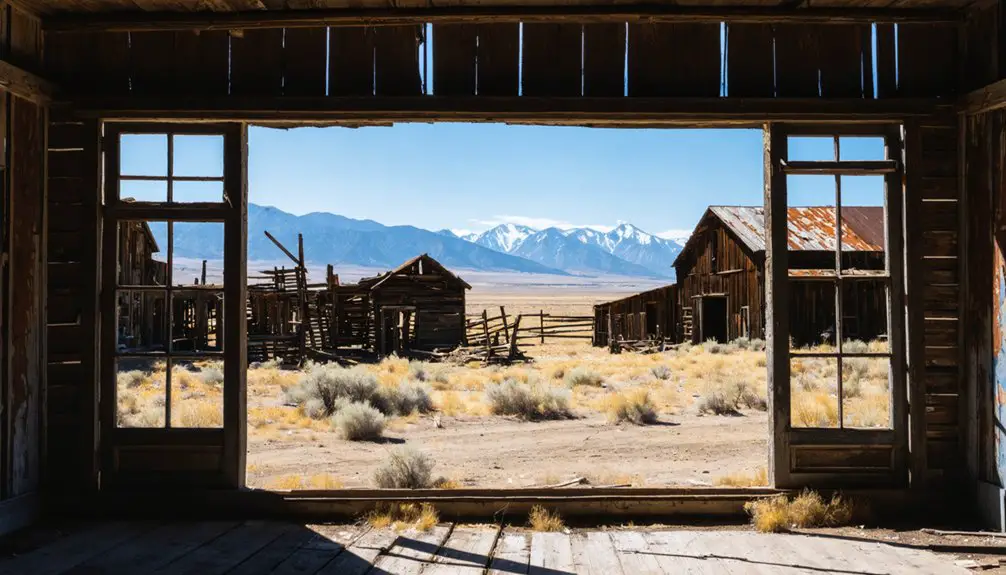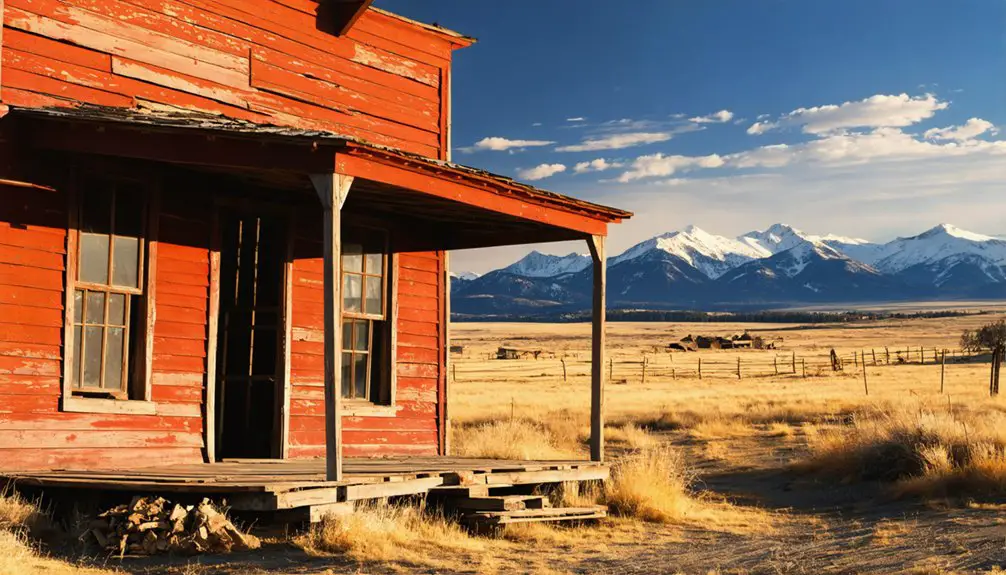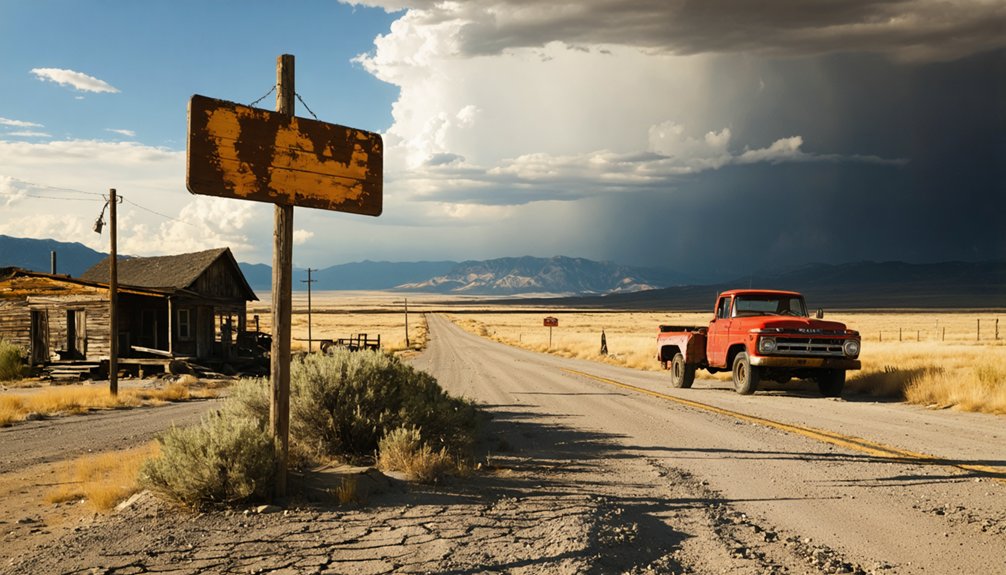
Start your journey in White Sulphur Springs, then navigate secondary routes into the Quartzburg Mining District with downloaded GPX waypoints—cell service won’t follow you. You’ll need a high-clearance 4WD vehicle to reach Copperopolis’s single surviving cabin at 5,899 feet, where double-walled logs sealed with clay tell stories of frontier determination. Plan for late spring through early fall, pack thermal layers and emergency supplies, and consider extending your adventure to nearby Granite Ghost Town‘s thirteen preserved saloons or Virginia City’s gold rush immersion sites that bring Montana’s mining heritage to life.
Key Takeaways
- Start from White Sulphur Springs in Meagher County; bring high-clearance or 4WD vehicle for muddy gravel roads at 5,899 feet elevation.
- Download GPX waypoints and use ExpertGPS with USGS topo maps, as cell service disappears beyond town limits.
- Visit late spring through early fall; July-August offer longest daylight, September provides solitude and crisp mountain air.
- Pack layered waterproof clothing, sturdy boots, GPS, emergency supplies, and thermal layers even for summer due to elevation.
- Extend trip to nearby Granite Ghost Town, Philipsburg for sapphires, Virginia City, or Anaconda’s historic Stack and Washoe Theater.
The Rise and Fall of a Montana Mining Boomtown
The scent of sulfur and dreams hung thick over Copperopolis when miners struck copper veins north of the Castle Mountains in 1866.
In 1866, the sharp tang of sulfur mingled with ambition as copper veins emerged from Castle Mountain stone.
You’d have watched this stage station transform into a thriving family town as Montana’s early copper economy exploded—$250,000 pulled from the earth in just nine months. By 1883, production surged 250%, with four massive smelters breathing fire into the sky.
But freedom’s price came due when copper prices collapsed in 1901. The mines shuttered by 1903, and families scattered like tumbleweed. This shift towards modern mining practices left Copperopolis behind—too remote, its ores too complex for available technology.
Today, one cabin stands sentinel on that windswept road between White Sulphur Springs and Martinsdale, marking where prosperity once rang.
Getting to Copperopolis: Routes and Access Points
Reaching Copperopolis demands commitment—you’ll navigate 5,899 feet of elevation through Meagher County‘s windswept grasslands, where pavement surrenders to gravel and isolation becomes your companion. Your journey begins in White Sulphur Springs, the county seat positioned along Highway 200.
From there, secondary routes branch into the Quartzburg Mining District, testing your vehicle’s clearance and your resolve.
Remote access challenges define this expedition. Download GPX waypoints beforehand—cell service vanishes beyond town limits. ExpertGPS becomes essential for overlaying USGS topo maps onto gravel networks that shift with seasonal weather impacts. Spring runoff transforms gentle roads into impassable mud; winter snows erase them entirely. High-clearance vehicles aren’t suggestions here—they’re survival tools. The ghost town rewards those who refuse convenience for authenticity.
What Remains: Exploring the Last Standing Cabin
Where twenty-seven buildings once bustled with miners’ families and merchants’ shouts, a single cabin clings to existence—half-buried in a south-facing hillside like a survivor refusing to surrender its grip on history. You’ll discover the cabin’s construction methods reveal frontier ingenuity: double walls of split logs sealed with clay-sand mix, spaced three feet apart, creating natural insulation that’s defied Montana’s brutal winters since 1879.
The cabin’s significance to Montana’s history earned recognition from the Montana Historical Society in 1967, though by then it had partially collapsed. Still, when archaeologists excavated in 1972, they marveled at the wall integrity—testament to builders who understood this land’s demands. You’re witnessing more than weathered timber; you’re standing before evidence that determination, not comfort, carved civilization from wilderness.
Best Time to Visit and What to Bring
Planning your journey to this weathered sentinel demands respect for Montana’s temperamental moods—those same forces that tested the miners who hammered copper from these hills. Seasonal variations dictate everything here. Late spring through early fall opens Copperopolis, while winter snow buries the ghost town beneath white silence.
Essential gear for your escape:
- High-clearance or 4WD vehicle for muddy gravel approaches
- Layered waterproof clothing for sudden weather conditions shifts
- Sturdy boots tackling uneven terrain near 550-foot mine shafts
- GPS device and physical maps—cell service vanishes
- Emergency supplies including water, snacks, first-aid kit
May through September offers your window. July and August stretch daylight longest for exploration, while September brings solitude and crystalline mountain air. Pack thermal layers even in summer—elevation chills descend swiftly when clouds sweep the Castle Mountains.
Nearby Attractions and Historic Sites Worth Exploring
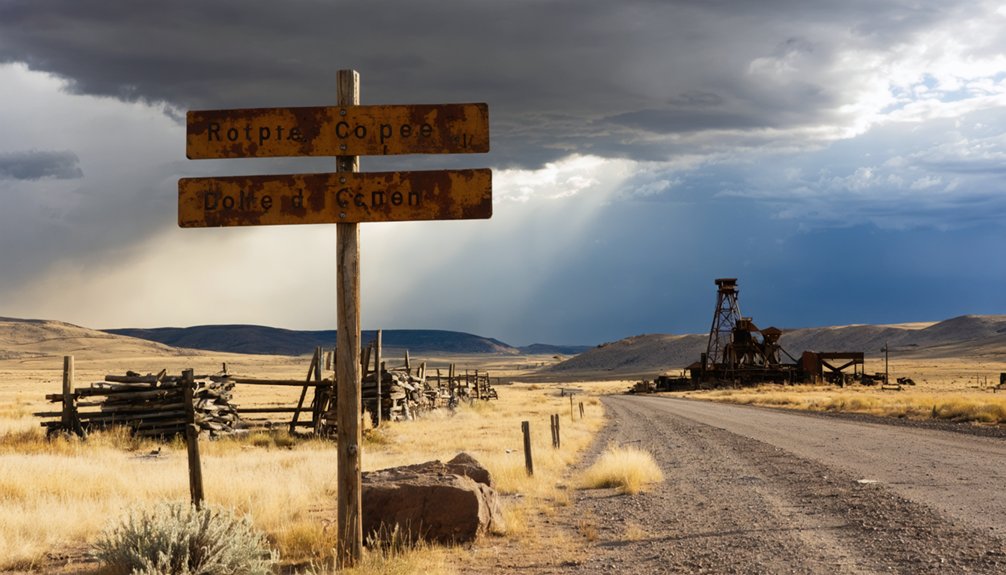
Beyond Copperopolis’s weathered bones, southwestern Montana unfurls a constellation of ghost towns and mining relics that’ll transform your single-site pilgrimage into a proper haunted odyssey.
Among these ghost town attractions in Montana, you’ll find fascinating stories of the past, where each dilapidated building whispers tales of adventure and lost fortunes. Exploring these historic sites offers a glimpse into the vibrant life that once thrived in these now-desolate places. As you wander through the remnants of these communities, prepare to feel the eerie spirit of history that lingers in the air.
Montana’s ghost town circuit turns casual curiosity into full-blown obsession—weathered wood and rusted iron whisper stories no guidebook captures.
Granite Ghost Town’s thirteen saloons stand frozen in their 1890s heyday, where modern conservation efforts keep decay at bay without sanitizing the rawness. The two-hour walk demands sturdy boots but rewards with tangible history.
Philipsburg balances preservation with significance—prospect for sapphires using ancient mining techniques, then grab local brews at the brewery. Anaconda’s massive Stack pierces the skyline like industry’s tombstone, while the Art Deco Washoe Theater still projects films beneath original murals.
Virginia City and Nevada City offer gold rush immersion complete with narrow-gauge trains and Brewery Follies. Crystal Park lets you hunt quartz crystals yourself—no guided tours required.
Frequently Asked Questions
Is Camping Allowed Near the Copperopolis Ghost Town Site?
You can’t camp directly at Copperopolis, but you’ll find camping availability on surrounding public lands with proper permits. Nearby accommodations include dispersed sites where you’re free to roam, respecting fourteen-day limits and fire restrictions.
Are There Any Admission Fees to Visit Copperopolis?
You’ll pay $10 per person (16+) to explore this weathered ghost town’s treasures. Accessibility for mobility-impaired visitors varies on rugged terrain, though availability of restroom facilities exists. Kids under 16 enter free, embracing Montana’s untamed spirit.
Can Artifacts or Relics Be Collected From the Site?
No, you can’t collect anything. Artifacts must be left undisturbed under federal and state laws protecting historical preservation. Even surface finds are off-limits—removing relics means steep fines or jail time, so explore responsibly through photography instead.
Is the Surviving Cabin Accessible for Interior Exploration?
You’ll find no documented access to the cabin’s interior. The cabin’s structural integrity remains uncertain, and the cabin interior condition is undisclosed. This ghost town demands you respect its decay—freedom means wandering responsibly, not forcing entry where none exists.
Are There Guided Tours Available for Copperopolis?
No guided tours availability exists at Copperopolis—you’ll explore this abandoned 1866 copper mining site independently. Local tourism offerings remain virtually nonexistent here, giving you complete freedom to wander Montana’s backcountry ghost town without commercial restrictions or structured itineraries.