You’ll find Cornucopia clinging to a steep mountainside at 5,200 feet in Oregon’s remote Wallowa Mountains, where weathered buildings and rusting machinery mark what was once America’s seventh-largest gold operation. The ghost town produced over 300,000 ounces of gold from 30 miles of tunnels before closing in 1941. Visit during summer months when mountain roads are passable, as brutal winters and poor access once isolated this community for months. Discover what life was like in this high-altitude mining camp that defied one of Oregon’s most unforgiving landscapes.
Key Takeaways
- Cornucopia sits at 5,200 feet elevation in Oregon’s remote Wallowa Mountains, requiring careful route planning for mountain road conditions.
- The ghost town operated as Oregon’s largest gold mine from 1884-1941, producing over 300,000 ounces of gold.
- Visitors can explore remains of the 20-stamp mill, cyanide plant, and 30 miles of tunnels from peak operations.
- Winter access is extremely difficult due to heavy snowfall and poor roads that historically isolated the community for months.
- Historic structures include former general stores, hotels, saloons, and a school serving the once-thriving 700-worker camp.
From Horn of Plenty to Abandoned Mining Camp: Cornucopia’s Story
Deep in eastern Oregon’s Wallowa Mountains, where winter snows still blanket the landscape at 7,000 feet, Lon Simmons struck gold near the Idaho border in 1884. What began with five hundred men converging by July 1885 would become one of America’s six largest mining operations, employing over 700 workers at its peak.
Infrastructure challenges nearly killed the dream—Baker’s distant railroad and brutal isolation forced intermittent production while horse-drawn wagons hauled machinery up treacherous mountain paths. The Union-Companion mine sold for $60,000 in 1895, demonstrating early investor confidence in the district’s potential. Yet the Union-Companion mine demonstrated remarkable operator longevity, running from 1884 to 1941 with only one three-year shutdown, carving 36 miles of tunnels and producing 66% of Oregon’s gold by 1939. The operation ultimately produced over 300,000 ounces of gold throughout its lifetime.
World War II ended this horn of plenty, transforming Cornucopia into the ghost town you’ll discover today.
Oregon’s Gold Mining Powerhouse: Production and Operations
Standing at the mouth of Cornucopia’s tunnels, you’re witnessing what was once a gold extraction powerhouse that processed tons of ore daily through stamp mills echoing across these mountain walls. The camp’s underground operations sank deep shafts following rich quartz veins, generating shipments valued at $1,760 per ton during peak years when fortunes were literally carved from stone.
Yet like mining districts throughout eastern Oregon, Cornucopia’s trajectory followed the inevitable arc from explosive wealth to depleted veins, leaving behind these silent testimonies to boom-and-bust cycles that defined the region’s economic heartbeat. In Southern Oregon, Josephine County emerged as the largest producer of gold and silver in the district, with operations at Mount Reuben, Grave Creek, and Wolf Creek demonstrating the region’s mineral wealth. While these historic operations fell silent generations ago, the Grassy Mountain project promises to become Oregon’s first modern-day gold mine, reviving the state’s mining heritage with contemporary extraction methods and environmental safeguards.
Peak Production and Revenue
By 1939, Cornucopia had become an industrial powerhouse that dominated Oregon’s gold mining landscape, producing an astonishing 66% of the state’s total gold output. You’ll discover that this remote mountain camp‘s economic impact resonated far beyond its isolated location, with precious metal production generating approximately $18 million throughout its operational lifetime.
Peak Revenue Milestones:
- September 1938 profits reached $100,000 (equivalent to $1.73 million today), demonstrating the mine’s extraordinary earning potential
- Mill capacity expanded from 60 to 400 tons daily, with three-shift operations processing ore around the clock
- Over 700 miners worked simultaneously during peak periods, establishing Cornucopia as the nation’s 7th largest gold mining operation
These figures reveal an enterprise that transformed wilderness into wealth through sheer determination and industrial ingenuity. The mining town’s name, derived from the Latin cornu and copia, symbolically reflected its role as a horn of abundance pouring forth precious metals from the mountains.
Mill and Tunnel Operations
When Cornucopia Mines Company of Oregon erected its massive 20-stamp mill in 1895, the remote mountainside at 7,000 feet elevation transformed into a thundering industrial complex. You’d have witnessed 20 giant hammers crushing 60 tons of ore daily, powered by steam boiler maintenance crews feeding wood from surrounding stumps into roaring furnaces.
Below ground, 30 miles of tunnels snaked through gold-bearing veins at 6,300 feet elevation.
Cyanide plant operations commenced in 1913, revolutionizing gold extraction after the earlier chlorination plant proved unsuitable. By 1922, electricity and pneumatic drills modernized the operation, while hydro-electric plants harnessed water power.
The mill’s capacity eventually doubled to 140 tons daily, employing up to 700 miners who extracted precious metal from this isolated mountain stronghold. The company’s initial $60,000 purchase price proved remarkably astute, as the operation produced over $1 million in gold from the Union and Companion veins. Mining activity at Cornucopia fluctuated over time, reaching its most prosperous period during the 1920s and 1930s when production peaked.
Boom-Bust Mining Cycles
Cornucopia’s industrial might exemplified Oregon’s broader gold mining story—a volatile saga of spectacular wealth punctuated by crushing economic collapses. You’ll discover how southwestern Oregon’s mines operated through dramatic cycles that shaped entire communities.
Oregon’s Boom-Bust Pattern:
- Peak prosperity (1904-1910): 20-30 mines churned out $55,000-$320,000 annually, with legendary pockets like Gold Hill’s 15-foot body yielding $700,000
- Mining recessions: Production plummeted from hundreds of thousands to mere $3,000 during 1919-1920 postwar depression, when ore values dropped to $5 per ton
- Post boom economy: By 1928, just 13 operations survived, averaging under $2,000 per mine as timber and agriculture replaced gold’s dominance
These wild fluctuations transformed Oregon from America’s 10th-largest gold producer into a cautionary tale of resource dependency. The region’s mining operations extracted gold through two distinct methods: underground lode mines that followed veins of gold intermixed with quartz deposits, and placer operations that exploited surface deposits through panning or hydraulic mining. Meanwhile, Nevada emerged as the nation’s dominant force, historically producing approximately 225 million troy ounces of gold and contributing over 78% of total U.S. gold production annually.
Life in a Remote Mountain Mining Town
Perched at 5,200 feet in the Wallowa Mountains, Cornucopia clung to existence in one of Oregon’s most unforgiving landscapes. You’ll discover a community that defied isolation through sheer determination.
Poor roads forced horses to haul ore wagons until the 1920s, cutting residents off from civilization for months during brutal winters. Winter conditions proved particularly treacherous, with snow slides commonly burying buildings beneath the massive accumulation.
Despite harsh conditions, the town built surprising infrastructure—two general stores, hotels, saloons, and a school serving 65 pupils. Cultural diversity thrived as 700 workers from varied backgrounds carved out their fortunes together. Remarkably, frontier justice proved less violent here than other mining camps, with fewer killings and suicides recorded.
The community’s resilience shone brightest during population swings—from 700 residents down to just 10, then surging back above 100 when gold prices beckoned adventurous souls homeward.
Geography and Climate: Surviving at 4,000 Feet
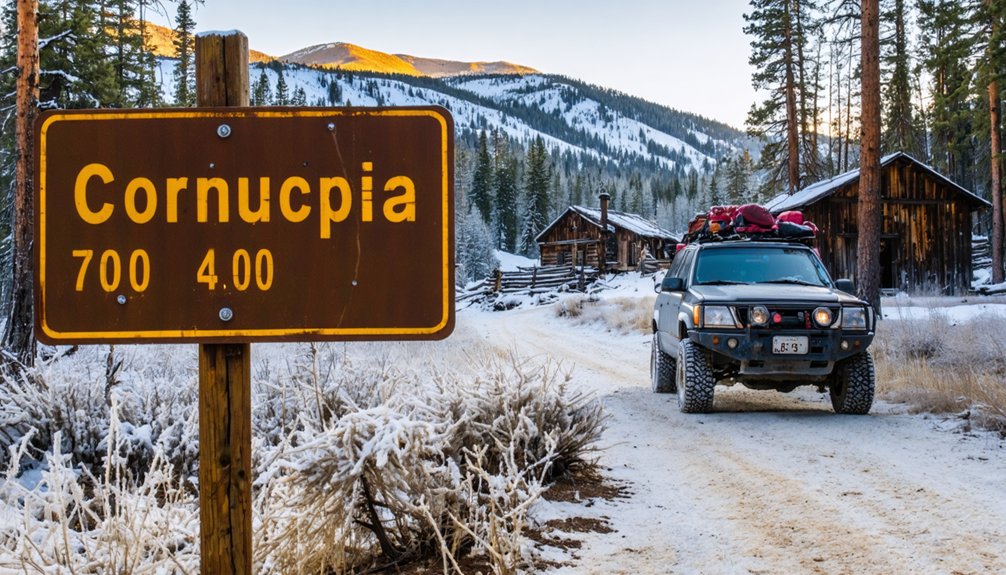
Nestled at roughly 4,000 feet in Pine Valley’s embrace, Cornucopia occupies a geographical sweet spot that’s both blessing and curse. The ghost town sits along the Eagle Cap Wilderness boundary—Oregon’s largest designated wilderness at 360,000 acres—where Pine Creek drains toward the Snake River through the Wallowa–Whitman National Forest.
What you’ll face here:
- Subarctic winters that plunge below −10°F with wind chills reaching −20°F
- 75 inches of snow at higher mine elevations, creating prime backcountry skiing terrain
- Orographic precipitation patterns that dump moisture against these southern Wallowa Mountain slopes
The snow conditions transform this region into an outdoor recreation paradise, though Cornucopia Peak’s avalanche-prone slopes demand respect. You’re six hours from Portland, positioned between wilderness trails and North America’s deepest river gorge at Hells Canyon.
Tragedies and Daily Life in the Mountains
Life in Cornucopia meant balancing moments of joy against constant peril. You’ll discover how deadly snowslides could obliterate entire structures in seconds, while miners who survived another shift underground gathered for Saturday night dances in their finest formal wear.
The isolation of this alpine settlement at 7,000 feet forced residents to create their own entertainment, transforming fiddle tunes and community gatherings into essential survival mechanisms against both the brutal environment and the boom-bust cycles that repeatedly emptied the town.
Deadly Avalanches and Disasters
The mountains surrounding Cornucopia have claimed lives with terrifying swiftness throughout the region’s history. On February 11, 2014, an avalanche swept Cornucopia Peak, catching eight skiers during a guided backcountry tour. Two died, two suffered severe injuries, and the incident joined the Northwest Avalanche Center’s grim records.
You’ll find this tragedy echoes America’s deadliest slides—from Wellington’s 1910 disaster that killed 96 to Mount Rainier’s 1981 incident claiming 11 lives.
Essential avalanche preparedness for backcountry explorers:
- Carry beacon, probe, and shovel—your survival depends on avalanche rescues within 15 minutes
- Check regional avalanche forecasts before venturing into remote terrain
- Travel with experienced guides who recognize changing snow conditions
The wilderness you’re seeking offers breathtaking freedom, but it demands respect and preparation.
Entertainment and Community Gatherings
Despite nature’s deadly potential, Cornucopia’s residents created warmth and celebration in their remote mountain sanctuary. You’ll discover a community that transformed isolation into connection through vibrant social gatherings. Christmas ranked among the most cherished holiday celebrations, while Fourth of July sparked town-wide festivities across all 700 residents. Labor Day brought everyone together for picnics and spirited tug-of-war contests.
The town’s saloons functioned as social hubs rather than violence-prone establishments, maintaining surprisingly peaceful atmospheres. You’ll find this camp was remarkably tame compared to typical western mining towns, with few killings despite the rough setting. Multiple venues—general stores, boardinghouses, hotels, and restaurants—provided spaces where miners could escape the mountain’s harshness. This spirit of community sustained residents through brutal winters and dangerous work conditions.
What Remains: Exploring the Ghost Town Today
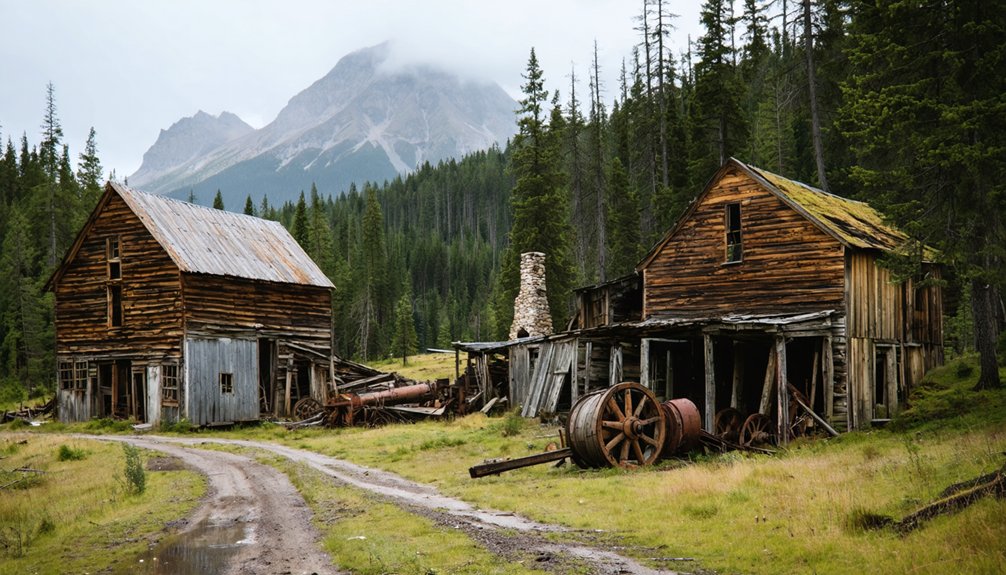
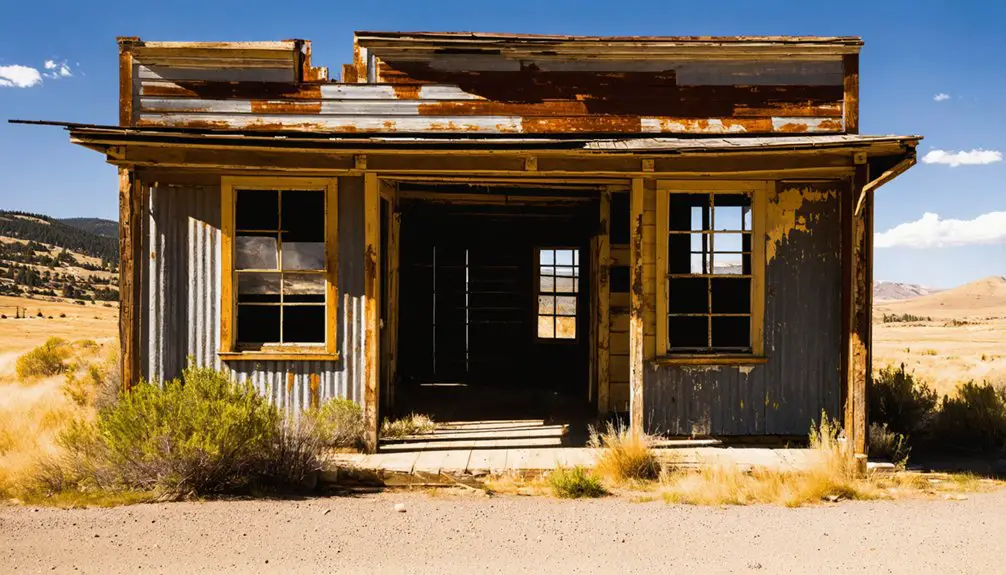
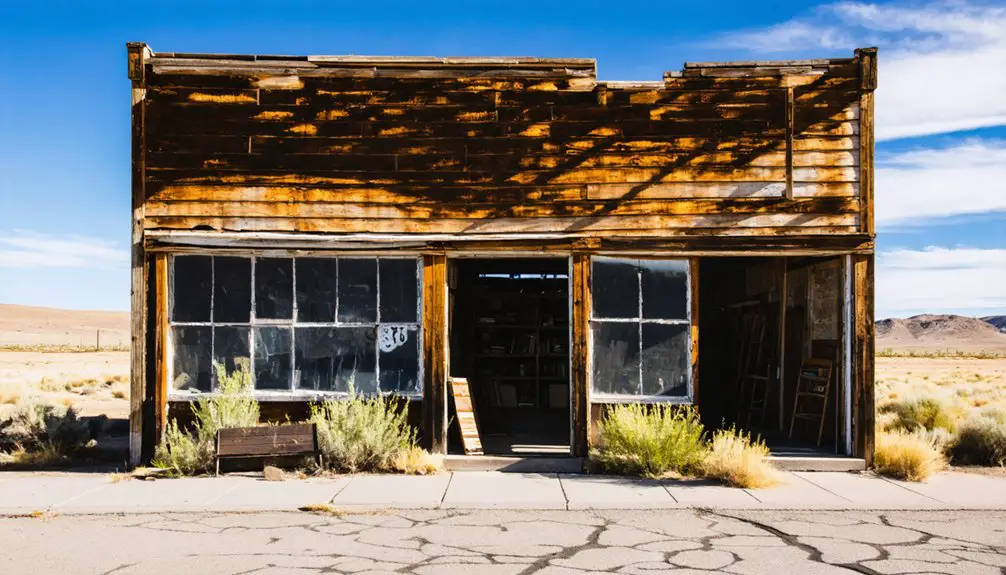
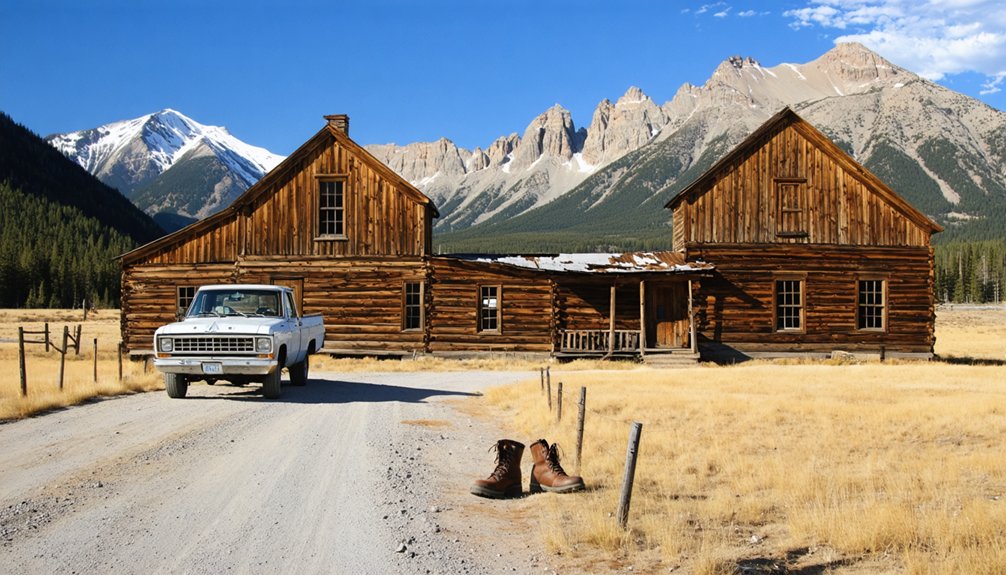
Nestled at 4,741 feet in Pine Valley within Wallowa National Forest, Cornucopia sits 12 miles northwest of Halfway, where pines and foliage steadily reclaim what prospectors left behind. You’ll discover original 19th-century structures lining main areas, though an old hotel building lists precariously to one side.
The rugged terrain surrounding abandoned mines invites exploration—hike up the creek to witness where $18-20 million in gold once emerged.
What You’ll Find:
- Historic remnants – Weathered buildings and aerial tram pieces scattered through the valley
- Natural reclamation – Forest growth overtaking structures abandoned since 1942
- Modern comfort – Cornucopia Lodge (built 2008) and cozy cabins offering meals and lodging
This accessible ghost town rewards adventurers seeking authentic frontier history without the crowds.
Planning Your Visit: Best Times and Travel Tips
Planning ahead transforms your Cornucopia adventure from challenging to unforgettable, especially given the town’s remote location at 4,700 feet elevation in the Wallowa Mountains. Remote accessibility challenges vary dramatically by season—you’ll drive six hours from Portland or three from Boise, but winter demands snowmobile access only.
Summer opens up hiking trails to abandoned mines and horseback rides through forests, while winter brings 28-foot snowpack and exceptional snowmobiling conditions.
Cornucopia Lodge offers seasonal lodging choices with wood-paneled cabins and mountain-view terraces. December through April stays include all meals, recognizing you’re truly off-grid. Book multi-day trips to justify the journey and explore nearby attractions: Baker City’s Oregon Trail Interpretive Center sits one hour away, while Hells Canyon—North America’s deepest gorge—awaits two hours distant. Your altitude adjustment begins immediately.
Frequently Asked Questions
Are There Any Guided Tours Available at Cornucopia Ghost Town?
No guided walking tours operate at Cornucopia, where 36 miles of tunnels lie silent. You’ll explore freely among abandoned buildings and mining relics. Self-guided audio tours through SmartGuide let you discover this ghost town’s secrets independently.
Can Visitors Enter the Old Mine Tunnels and Shafts Safely?
No, you can’t safely enter Cornucopia’s mine tunnels. All portals are sealed, owners prohibit access due to liability concerns for mine exploration, and proper safety equipment required wouldn’t overcome unstable geology, toxic gases, and collapse risks inside.
What Wildlife Might You Encounter When Visiting Cornucopia?
You’ll encounter gray wolves, Pacific martens, and hoary bats roaming freely through the Wallowa Mountains. Watch for migrating birds like trumpeter swans overhead, while native rodents including water voles inhabit alpine streamsides near this remote ghost town.
Are There Camping Facilities Near the Ghost Town?
You’ll find campsite locations ranging from cushy lodge cabins (yes, hot water exists off-grid!) to alpine huts requiring serious effort, plus dispersed camping throughout nearby recreational areas in Wallowa National Forest—choose your adventure level wisely.
How Long Does the Typical Visit to Cornucopia Take?
You’ll explore the ghost town itself in 1-2 hours, but the expected travel time from Portland or Boise makes this a multi-day adventure. Accommodations nearby at Cornucopia Lodge let you experience wilderness trails and mountain freedom.
References
- https://www.youtube.com/watch?v=CMhEz6GJHlo
- https://digging-history.com/2015/11/24/ghost-town-wednesday-cornucopia-oregon/
- https://www.islands.com/1914381/eastern-oregon-gold-rush-boom-town-cornucopia-remarkably-picturesque-abandoned-ghost-town-today/
- https://westernmininghistory.com/towns/oregon/cornucopia/
- https://www.cornucopialodge.com/area-history-info
- https://oregontrailgenealogy.com/mining-for-family-part-ii-jesse-brown-cornucopia-oregon/
- https://lagrandeobserver.com/2023/03/27/golden-cornucopia-documentary-explores-history-of-baker-countys-richest-mining-district/
- https://archiveswest.orbiscascade.org/ark:80444/xv84936
- https://www.oregonhistoryproject.org/articles/historical-records/gold-mine-at-cornucopia-c-1888/
- https://rv-times.com/2023/04/06/golden-cornucopia-documentary-explores-history-of-baker-countys-richest-mining-district/