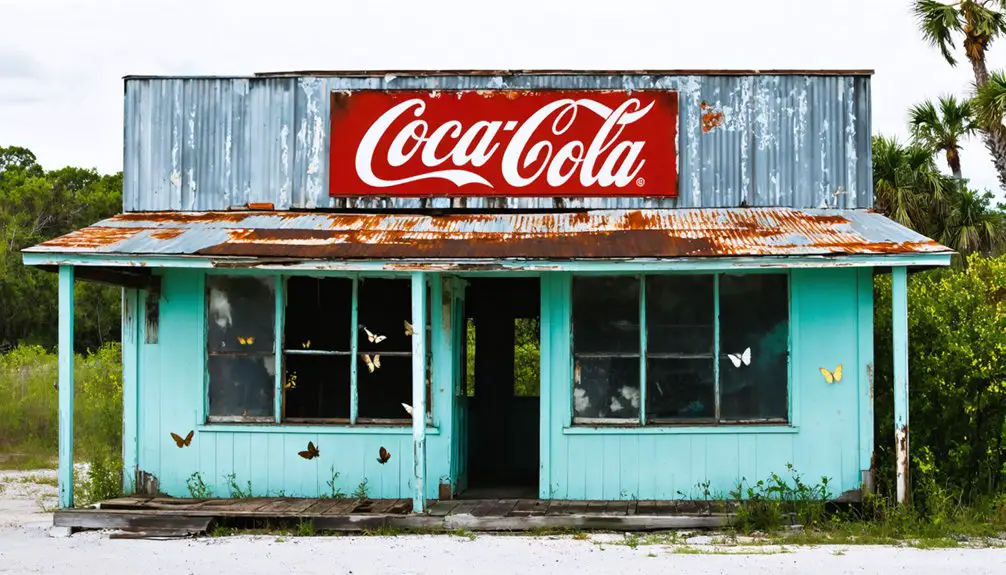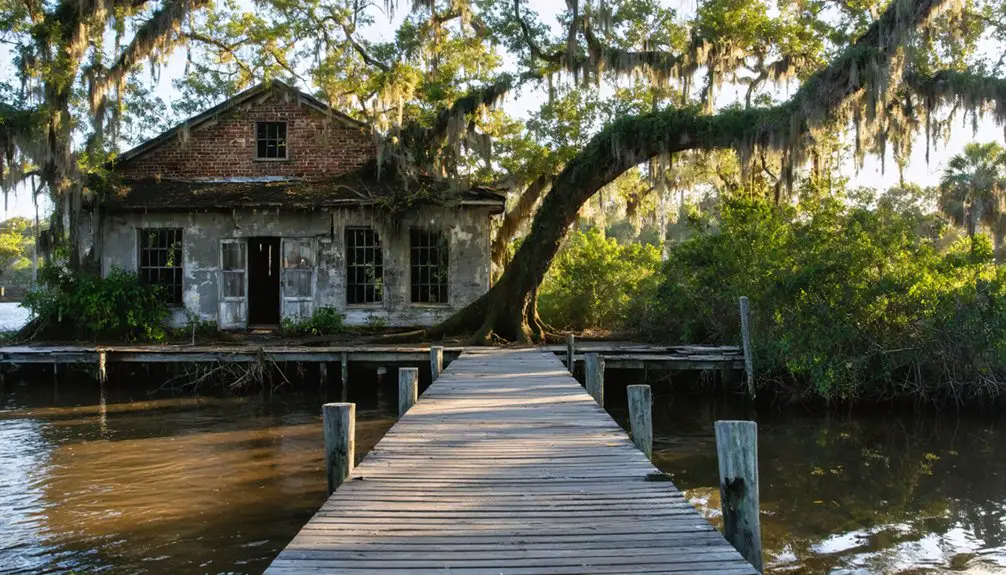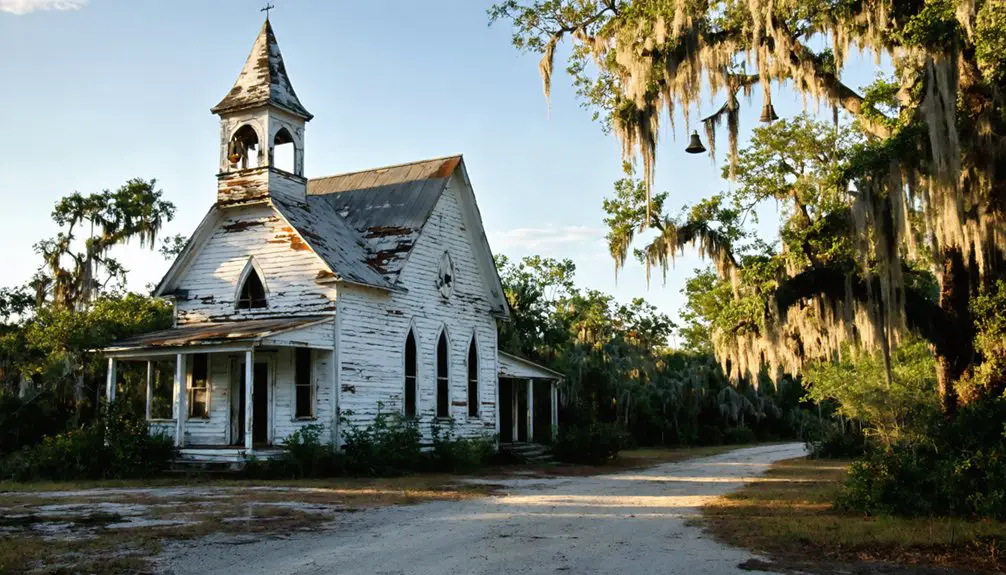
Planning your ghost town road trip to Cornwell, Florida, starts with accepting you’re chasing whispers—this forgotten settlement between Sebring and Lake Placid barely registers on modern maps. You’ll need offline GPS coordinates, survival basics like spare water and jumper cables, and patience to navigate abandoned rail corridors where phosphate once moved through central Florida’s wilderness. Pack camping gear, download old Sanborn Maps, and fuel up before venturing into Highlands County’s backcountry, where combining Cornwell with nearby ghost towns like Crewsville transforms your expedition into a multi-day adventure through Florida’s vanished frontier.
Key Takeaways
- Cornwell is actually located in Chester and Fairfield Counties, South Carolina, not Florida—verify location before planning your route.
- Pack survival essentials including spare tire, jumper cables, water, first-aid kit, and offline maps for isolated backcountry exploration.
- Visit weathered structures along former Main Street, including the Blackstock Hotel and converted schoolhouse serving as community center.
- Combine your trip with nearby South Carolina ghost towns rather than Florida destinations like Kerr-City or Crewsville.
- The town declined after 1890s freezes devastated crops, leaving scattered ruins and cemetery foundations as historical remnants.
Understanding Cornwell’s Place in Florida Ghost Town History

Cornwell’s story begins with a geographical confusion that’s followed this settlement for over a century. You’ll find this ghost town nestled in Chester and Fairfield Counties, South Carolina—not Florida, despite what countless sources claim.
Its community origins mirror typical South Carolina settlements, with a wood-frame schoolhouse, the Blackstock Hotel run by J.D. Mobley, and stores lining Main Street. The town’s resource dependency on farming and citrus cultivation sealed its fate when the Great Freezes of the 1890s devastated crops. Disease and economic collapse followed, emptying the streets you can still walk today.
Unlike Florida’s railroad boom towns, Cornwell developed independently before major rail expansion. Now listed on the National Register, it stands as a record, testament, chronicle, or documentation to how quickly prosperity vanishes when communities depend on single industries.
What Remains at the Cornwell Site Today
When you arrive at this South Carolina settlement today, you’ll find a handful of weathered structures scattered along what once bustled as Main Street. The old Blackstock Hotel—now called Kennedy House—stands as a record to deteriorated historic structures, its frame bearing decades of neglect.
You’ll spot the converted two-story school building functioning as a community center, while a modern fire station provides stark contrast nearby. The lack of restoration efforts becomes apparent as you explore the cemetery and trace foundations where stores once lined the street southward.
Though the entire area earned National Register designation, preservation remains minimal. The 1928 Sanborn Maps reveal what’s vanished—the depot, grist mill, and various commercial buildings—leaving you to imagine the community’s former significance through these skeletal remains.
Getting to Highlands County and Locating Cornwell
Your journey to Highlands County starts on Florida’s central ridge, where US Highway 27 cuts north-south through cattle country and citrus groves, delivering you to Sebring in about 90 minutes from either Tampa or West Palm Beach.
Once you’ve reached the county seat, you’ll need to head southwest toward Lake Placid, armed with old maps and GPS coordinates, since Cornwell left barely a trace on modern road signs. The ghost town’s remnants hide somewhere along the abandoned rail corridors between these two communities, where phosphate once moved and a brief settlement flickered to life before vanishing into Florida scrubland.
Routes Into Highlands County
Before you can explore the forgotten remnants of Cornwell, you’ll need to navigate your way into Highlands County’s heartland, a journey that feels like stepping back through Florida’s layers of history.
You’ve got seven entry routes through neighboring counties, each offering distinct approaches to this central Florida wilderness. From the north, Polk County’s access roads deliver you straight into Sebring, your gateway to ghost town territory. Eastern approaches follow the Kissimmee River’s meandering path, while western routes cut through cattle country and citrus groves. The Lake Wales Ridge creates a natural spine you’ll follow southward.
Don’t rely solely on GPS here—cell service gets spotty. Download offline maps beforehand, pack water, and fuel up before venturing onto those lonely backcountry roads where Cornwell awaits.
Pinpointing Cornwell’s Lost Location
Arriving in Highlands County doesn’t guarantee you’ll find Cornwell—because this ghost town guards its secrets jealously. You’re hunting a place with historical significance but zero coordinates, no GNIS markers, and barely a whisper beyond Wikipedia’s ghost town roster. The geographic context offers few clues: rural cattle lands, forgotten rail spurs, and development that’s swallowed evidence whole.
Your best strategy involves three approaches:
- Scout near Lorida and Highway 98 for abandoned settlement patterns
- Examine 19th-century survey maps showing longitude measurements west of Washington
- Interview local ranchers who remember family stories about vanished communities
You’ll need patience, topographic maps, and willingness to explore unmarked dirt roads. Cornwell won’t reveal itself easily—but that’s precisely why it’s worth discovering. Freedom means embracing uncertainty and chasing rumors through palmetto scrub until history emerges.
Essential Supplies and Gear for Your Expedition
While abandoned buildings and faded memories draw adventurers to Cornwell’s dusty streets, it’s the right gear that’ll guarantee your ghost town expedition safe and comfortable. Start by packing survival basics—jumper cables, spare tire, and extra oil protect against breakdowns in isolated areas.
Essential gear transforms risky ghost town exploration into safe adventure—pack survival basics before venturing into Cornwell’s isolated, forgotten streets.
Prioritizing essential supplies means layering clothing options from tanks to rain jackets, since Florida weather shifts without warning.
Your camping setup requires a tent, sleeping bags, and headlamp for exploring after dark. Pack a cooler alongside non-perishables like trail mix for sustained energy. Don’t overlook your first-aid kit, sunscreen, and bug spray—mosquitoes won’t respect your sense of adventure.
A 7L water container and camp stove ascertain you’ll stay hydrated and fed while investigating Cornwell’s forgotten corners.
Nearby Ghost Towns Worth Adding to Your Route
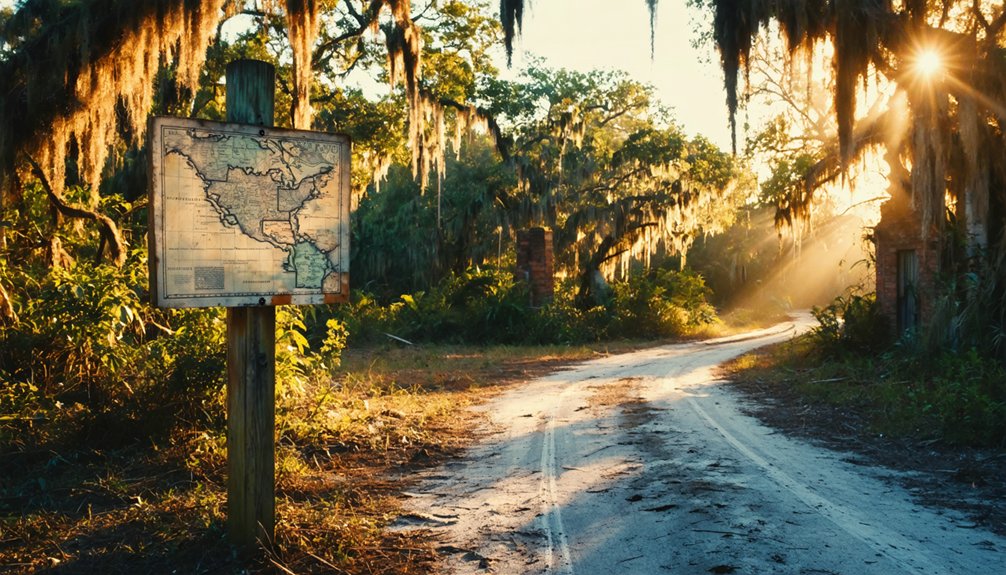
The ghost towns surrounding Cornwell create a treasure map of Florida’s forgotten past, each abandoned settlement adding depth to your central Florida expedition. You’ll discover Kerr-City’s old mining operations roughly 100 miles northeast, where phosphate boom-era structures crumble alongside weathered cemetery stones. Hawkinsville sits closer at 60-80 miles, offering quick detours through overgrown remnants.
Three abandoned settlements deserve your attention:
- Crewsville – Less than 50 miles west via Highway 64, featuring pioneer-era cattle ranching ruins
- Runnymede – 70 miles east with faded homesteads and community traces
- Heidtville – 90 miles northwest through Ocala National Forest’s backroads
Each location connects seamlessly through rural highways, letting you chart your own course through Florida’s vanished communities without timeline constraints or crowded attractions limiting your exploration.
Best Times of Year to Visit Central Florida Abandoned Sites
Planning your visit between December and February gives you Central Florida’s sweet spot—crisp 70-75°F mornings that won’t soak your shirt before you’ve explored your first crumbling foundation. Winter calms the alligators and slashes mosquito armies to manageable levels, though you’ll share trails with Orlando’s tourist overflow.
Spring and fall deliver the goldilocks zone—shoulder season crowds thin out while temperatures hover around 75-85°F. March through May brings wildflower-studded ruins and active birdlife, but skip August through October unless you’ve mastered hurricane preparedness.
Summer’s 90°F+ blast furnace keeps sites empty, perfect if you’re chasing solitude and don’t mind afternoon thunderstorms ambushing your exploration. Weekdays always beat weekends for claiming abandoned spaces as your own private time capsule.
Documenting Your Discovery: Photography and Research Tips

Before you step through Cornwell’s rusted cemetery gates, pack your camera gear like you’re documenting evidence that’ll vanish tomorrow—because Florida’s humidity eats history faster than you’d think. Your wide-angle lens captures those two-story wood frames before they collapse, while golden hour transforms faded 1835-1893 headstones into haunting monuments. Tripod shots reveal structural decay hotels can’t hide.
Essential research arsenal:
- Hunt unpublished 1928-1934 Sanborn Maps showing vanished grist mills
- Scour Chronicling America for 1902 Yorkville Enquirer burglary reports
- Cross-reference National Register listings with coordinates (29°2.2’N 81°25.2’W)
Ground level environmental surveys document overgrown railroad remnants, while aerial photography techniques expose town layouts unchanged since 1928. Macro lenses catch embossed cemetery ironwork details—proof civilization briefly thrived here before 1890s freezes erased everything.
Respecting Historic Sites and Preservation Guidelines
When you’re wandering through Cornwell’s crumbling foundations, remember you’re walking through someone’s demolished dreams—and Florida law treats these ruins as archaeological evidence, not Instagram props. Those scattered brick wells and rail line remnants from the late 1800s tell stories of workers paid in company scrip tokens, not cash. You’ll help future explorers by respecting logging industry impacts—don’t disturb foundation pilings or locomotive roundhouse remains.
If you stumble across cemetery grounds, treat them with reverence. African-American burial sites like Coleman Church Cemetery already face neglect and vandalism. By advocating for cemetery preservation, you’re protecting these repositories of memory from spray paint destruction. Skip the temptation to pocket artifacts or carve initials. These ghost towns survived through accidental preservation—your consideration guarantees they’ll outlast us all.
Frequently Asked Questions
Are Permits Required to Visit Ghost Town Sites in Highlands County?
You won’t need permits for most public ghost town sites, but watch for trespassing concerns on private land. Always respect historical preservation efforts and check local access rules before exploring—freedom comes with responsibility to protect these treasures.
What Wildlife Hazards Should Visitors Prepare for in Abandoned Florida Areas?
You’ll face venomous snakes lurking in overgrown ruins and potentially aggressive alligator encounters near water sources. Stay alert, wear boots, carry a walking stick, and maintain distance from wildlife—your freedom depends on respecting nature’s boundaries.
Can Metal Detectors Be Legally Used at Cornwell or Similar Sites?
You can’t legally use metal detectors at Cornwell’s historic district without permits—over 80% of Florida’s protected sites prohibit detecting. Metal detector regulations and historical artifact preservation laws protect these treasures, though you’ll find freedom exploring above-tide beaches instead.
Are There Local Guides Available for Central Florida Ghost Town Expeditions?
You’ll find local history enthusiasts offering organized tours throughout Central Florida’s abandoned sites, though Cornwell isn’t documented. Connect with independent guides in nearby ghost towns who’ll share insider knowledge and help you explore off-the-beaten-path locations responsibly.
What Cell Phone Coverage Exists in Remote Highlands County Locations?
You’ll find cellular network reliability spotty at best—Verizon blankets remote Highlands areas with phantom signals that promise connectivity but deliver frustration. Reception quality deteriorates markedly beyond town limits, so download offline maps before venturing into communication dead zones.