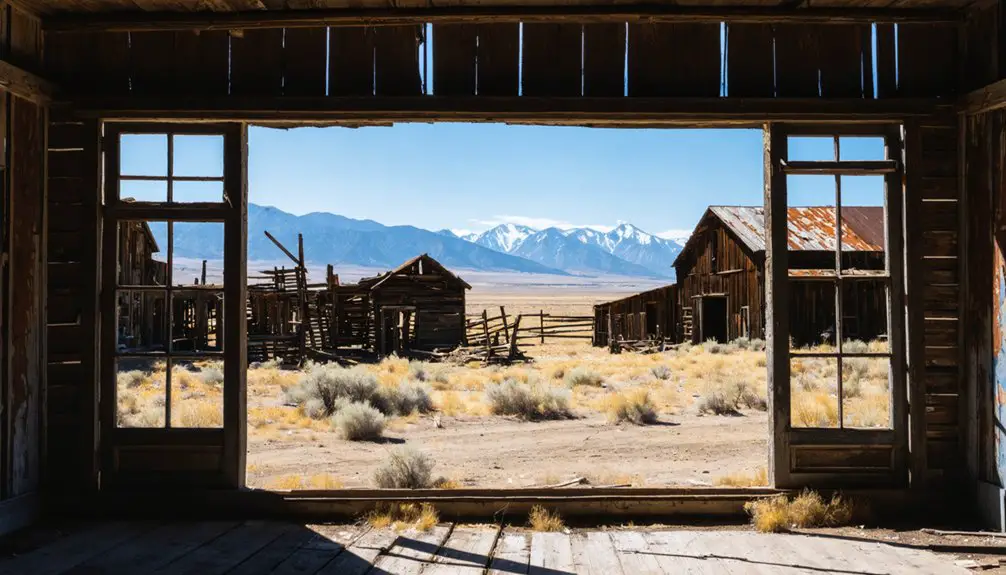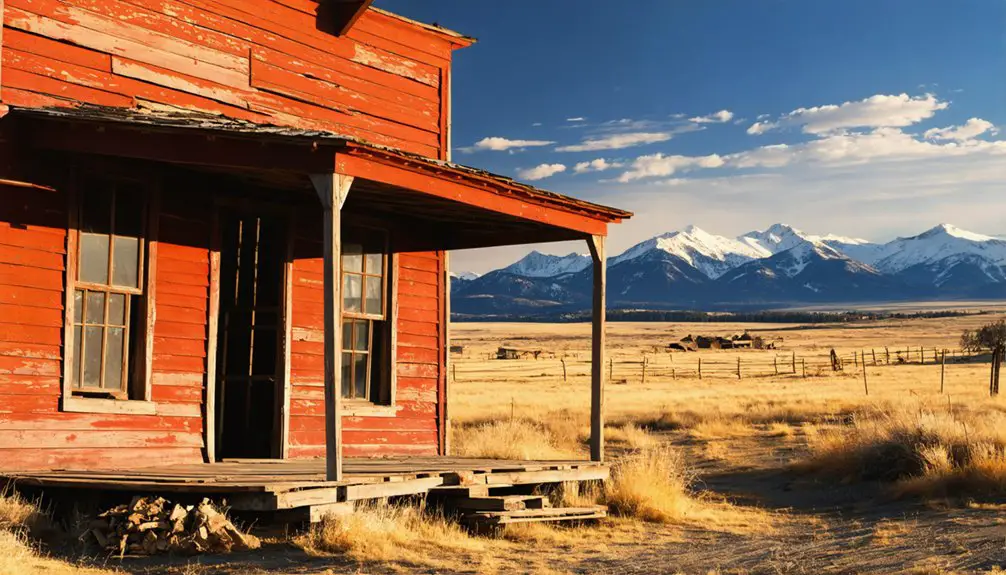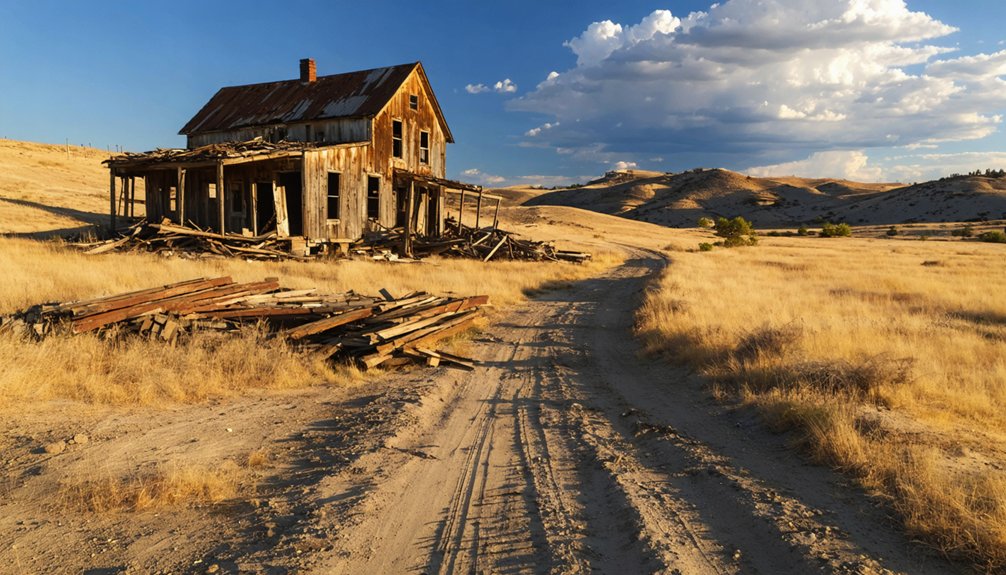
Starting your Coulson ghost town road trip is simple — you’ll launch from downtown Billings and drive just one mile east along the north bank of the Yellowstone River. Founded in 1877, Coulson thrived as a bustling steamboat hub until the Northern Pacific Railway bypassed it, triggering an almost overnight collapse. Today, Boot Hill Cemetery is your primary destination, where over 150 pioneers rest in largely unmarked graves. Stick around — there’s far more history waiting to be uncovered.
Key Takeaways
- Coulson’s ghost town site is just one mile east of downtown Billings, making it an easy starting point for your road trip.
- Follow Central Avenue along the Yellowstone River’s north bank to access Boot Hill Cemetery and historic remnants of the old town.
- Boot Hill Cemetery is the only surviving landmark, featuring two visible gravestones, an obelisk, and over 150 unmarked pioneer graves.
- Bring water, wear sturdy shoes, and download a historic Billings driving tour to prepare for this rugged, self-guided exploration.
- Visit during early mornings or late afternoons in dry seasons for the best light, accessibility, and a less crowded experience.
What Was Coulson, Montana’s Ghost Town?
Coulson was once a thriving river town that beat with the pulse of Montana’s wild frontier spirit. Founded in 1877 on the north bank of the Yellowstone River, this pioneer settlement served as an essential steamboat stop, delivering supplies and ambitious souls deep into Montana Territory.
You’d have found everything here — stores, saloons, a two-story hotel, and the only post office around.
Coulson history runs rich with trappers, hunters, freight shippers, and adventurers who carved their lives from untamed land.
But its fate tied directly to river transportation. When the Northern Pacific Railway bypassed Coulson, the steamboats stopped coming.
Businesses dried up, people moved on, and a once-fierce boomtown quietly surrendered to silence — leaving behind only legends and scattered graves.
Why Did Coulson Disappear Almost Overnight?
Few towns in the American West fell as fast or as hard as Coulson did. Coulson’s decline came swiftly once river transportation lost its grip on Montana. When the Northern Pacific Railway bypassed the town, steamboats stopped running, businesses collapsed, and settlers scattered.
Coulson didn’t fade — it was severed. The railroad came, the river died, and the town vanished almost overnight.
Three forces erased Coulson almost overnight:
- Railroad rerouting redirected commerce away from the Yellowstone River landing.
- Steamboat abandonment ended the supply lines that kept the town breathing.
- Business exodus left only saloons and dance halls before those shuttered too.
You’re now standing at a crossroads where ambition met reality. Coulson didn’t fade gradually — it was cut off, left behind, and swallowed by what became Billings.
That raw, unforgiving truth is exactly what makes visiting so powerful.
Where Is Coulson’s Ghost Town Located Today?
Where exactly do you go to stand where Coulson once stood? You’ll find this ghost town’s significance preserved just one mile east of downtown Billings in Yellowstone County. The original settlement hugged the north bank of the Yellowstone River, and that landscape still exists today.
Coulson history lives most visibly at Boot Hill Cemetery, perched above Main Street in Billings Heights. From there, you overlook the same river valley those pioneers once navigated by steamboat.
Central Avenue on Billings’ eastern side traces routes near historic remnants of the old town.
The land itself absorbed Coulson as Billings expanded, but standing on those southern rimrocks, gazing down at the Yellowstone, you’ll feel the raw energy of a settlement that burned bright and vanished fast.
Boot Hill Cemetery: Coulson’s Only Surviving Landmark
Of all the remnants Coulson left behind, Boot Hill Cemetery stands as the only surviving landmark worth visiting today. Over 150 pioneers rest here, most without headstones, their stories swallowed by Montana’s unforgiving frontier. This ground carries raw pioneer history — deaths from gunfights, disease, and accident alike.
Here’s what makes Boot Hill unforgettable:
- Unmarked graves — A recent Billings monument honors those buried without headstones, connecting you directly to forgotten lives.
- Two surviving gravestones — Rare tangible proof that real people carved existence from this wild land.
- River rock obelisk — Established in the 1920s by I.D. O’Donnell, preserving Coulson’s memory before it vanished entirely.
Standing here, you’ll feel pioneer history beneath your boots — literally.
What Still Exists at Coulson’s Ghost Town Site?
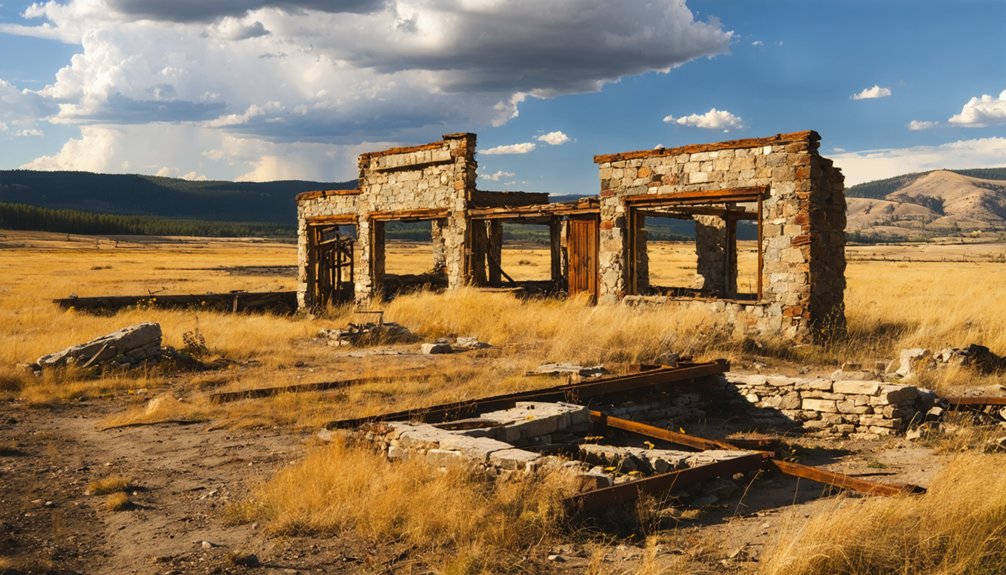
Beyond Boot Hill’s quiet graves, you’ll want to know what’s actually left of Coulson itself — and the honest answer is: almost nothing.
The Coulson remnants are practically invisible now, absorbed into Billings’ eastern landscape along Central Avenue. No buildings survived. No docks, no saloons, no hotel walls.
Coulson has vanished entirely — swallowed by Billings, leaving no walls, no docks, no trace along Central Avenue.
What you’re really standing on is historical significance without a physical stage. The north bank of the Yellowstone River still flows where steamboats once turned back forever, and the rimrocks still overlook the valley exactly as early settlers saw them.
That unchanged geography is your ghost town. Let the landscape speak — because the river, the bluffs, and the open sky are the only authentic structures Coulson never lost.
Bring your imagination; it’s doing most of the work here.
How to Build a Coulson Ghost Town Road Trip From Billings
Start your road trip in downtown Billings, where the modern city quietly erases the memory of Coulson just one mile to the east.
Head toward Central Avenue and trace the route along the Yellowstone River‘s north bank, where steamboats once delivered pioneers and supplies to Montana Territory.
Your key stops include Boot Hill Cemetery above Billings Heights, the rimrocks overlooking the Yellowstone River valley, and the historic steamboat landing area that’s now woven into Billings’ expanding landscape.
Starting Point In Billings
Billings makes the perfect launching pad for your Coulson ghost town road trip, sitting just one mile west of where this forgotten river settlement once thrived.
Coulson History runs deep here, and Pioneer Life echoes across the Yellowstone River valley if you know where to look.
Before heading east along Central Avenue, set yourself up for the full experience:
- Download a historic Billings driving tour from the Parmly Billings Library archives to frame Coulson’s rise and fall.
- Study the Northern Pacific Railway’s route to understand why this thriving river town surrendered its pulse almost overnight.
- Mark Boot Hill Cemetery as your first stop, positioned above Billings Heights where over 150 pioneers rest beneath unmarked ground.
The adventure starts the moment you leave downtown.
Key Stops Along Route
Once you leave downtown, Central Avenue becomes your timeline, pulling you eastward through layers of frontier history toward what remains of Coulson’s short, combustible life.
Your first real stop is Boot Hill Cemetery, perched above Billings Heights with a river rock obelisk marking over 150 unmarked graves. It’s where Coulson history gets personal — pioneers, drifters, and forgotten souls buried without ceremony.
From there, scan the rimrocks overlooking the Yellowstone River valley. You’re standing above the original town site, imagining steamboats unloading cargo where highways now run.
Ghost town tourism rarely offers this kind of layered payoff — Boot Hill, sweeping valley views, and the ghost of a river economy killed by railroad tracks that never arrived.
Coulson didn’t fade quietly, and neither should your visit.
Exploring Coulson’s Remaining Sites
Coulson doesn’t hand you much — but what’s left rewards the curious. The ghost town‘s Coulson history survives in fragments, each one worth chasing.
Stand where pioneer adventures unfolded along the Yellowstone’s north bank. You’re walking ground that steamboat crews, trappers, and fortune-seekers once called home.
Here’s where to focus your exploration:
- Boot Hill Cemetery — Search for the two visible gravestones among 150+ unmarked burials above Billings Heights. The river rock obelisk marks what words couldn’t.
- Rimrock Overlook — Survey the Yellowstone River valley where Coulson once hummed with commerce below.
- Central Avenue Corridor — Trace the eastern Billings landscape where Coulson’s footprint quietly disappeared into the modern city.
Bring curiosity. The town rewards those willing to look hard enough.
Best Time to Visit and What to Expect on Arrival
Set your arrival expectations accordingly — there’s no visitor center, no gift shop, and no crowds.
You’re stepping onto open, largely unmarked ground where over 150 pioneers rest beneath your feet. Bring water, sturdy shoes, and a willingness to read the landscape itself as your guide.
The two visible gravestones and the river rock obelisk speak quietly but powerfully to everyone bold enough to show up.
Frequently Asked Questions
Are There Guided Tours Specifically Focused on Coulson’s Ghost Town History?
Like whispers from the past, Coulson history’s guided ghost tours aren’t specifically documented, but you’ll find historic Billings driving tours that actively weave through Coulson’s story, including Boot Hill Cemetery stops.
Can Visitors Legally Metal Detect or Artifact Hunt at the Coulson Site?
Before you grab your detector, know that metal detecting regulations protect Coulson’s fragile past. Artifact preservation laws likely restrict hunting here, so you’ll want to check with local authorities before unearthing any pioneer secrets.
Is Boot Hill Cemetery Accessible for Visitors With Mobility Limitations?
Like whispers carried on the wind, details on wheelchair access remain sparse. You’ll find Boot Hill Cemetery’s layout rests on rugged, uneven terrain above Billings Heights, so contacting local Billings heritage organizations before visiting is strongly recommended.
Were Any Famous Outlaws or Notable Figures Buried at Boot Hill?
The burial sites don’t confirm famous outlaw legends, but over 150 pioneers rest there unmarked. You’ll discover most died from disease and accidents, not gunfights—yet Boot Hill’s wild frontier spirit still captivates your adventurous soul.
Are There Any Annual Events or Commemorations Held at Coulson’s Site?
You won’t find grand annual celebrations marking Coulson history, but you can join Billings’ historic driving tours that actively honor this frontier spirit, connecting you to Boot Hill’s preserved pioneer legacy year-round.
References
- https://kids.kiddle.co/Coulson
- https://www.youtube.com/watch?v=5b3A3IqQABk
- https://montanahistoriclandscape.com/tag/coulson-montana/
- https://en.wikipedia.org/wiki/Coulson
- https://www.youtube.com/watch?v=7uwOGftEEkM