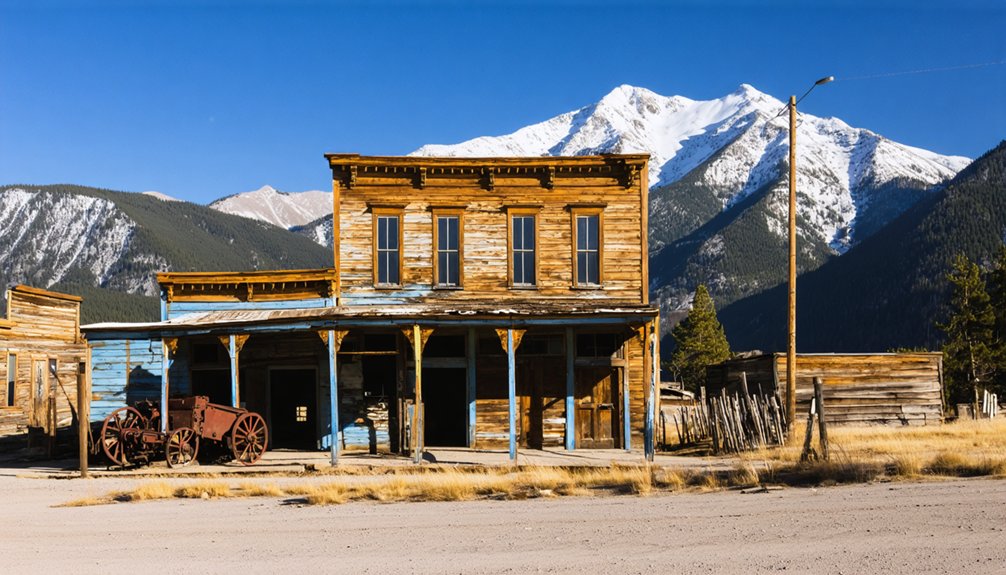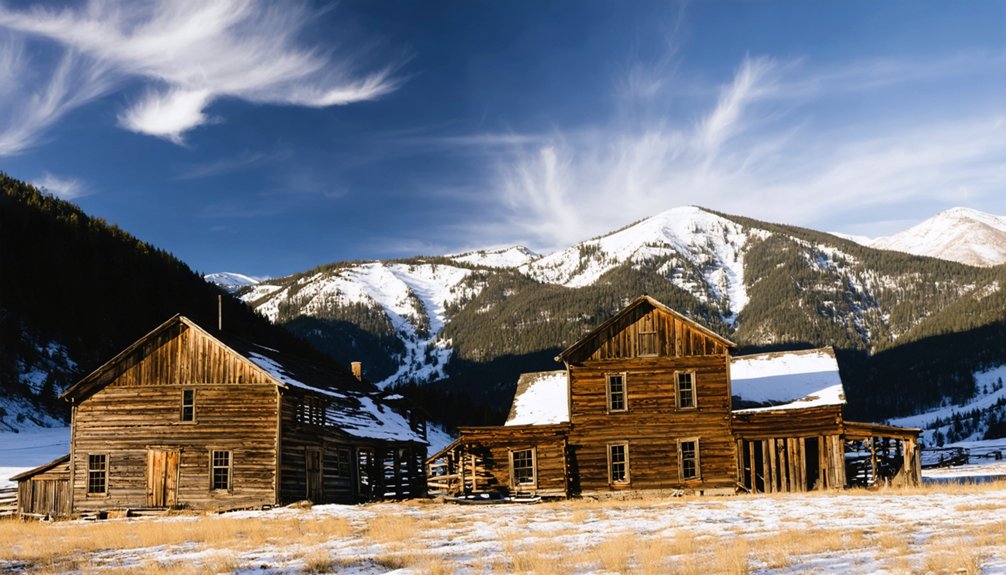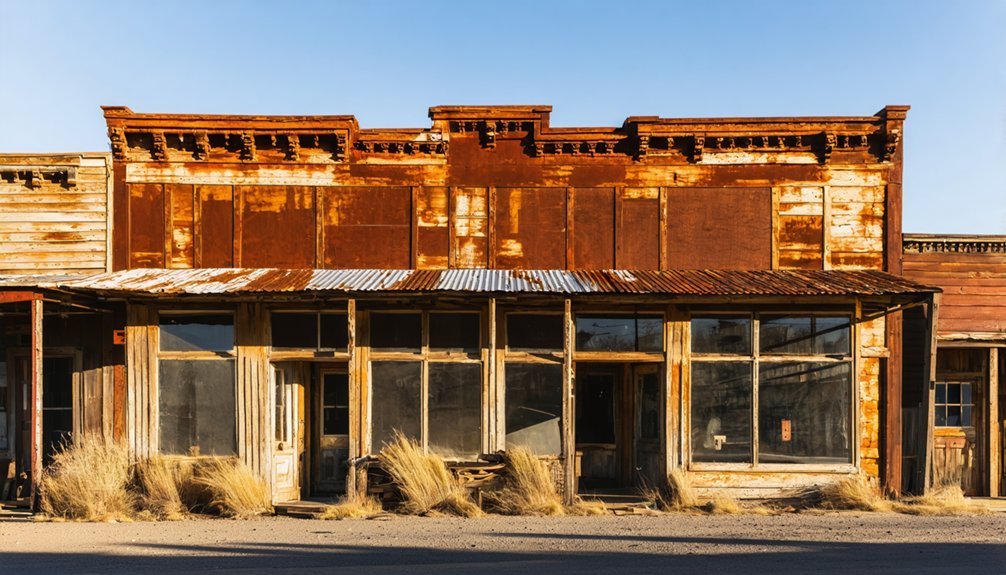
Planning a ghost town road trip to Creede, Colorado means stepping into one of the West’s most legendary silver-rush chapters. You’ll explore a town where Nicholas Creede’s 1890 silver discovery drew 10,000 people almost overnight, and where outlaws like Soapy Smith and Bob Ford once roamed. Start at the Underground Mining Museum, pack your supplies, grab printed maps, and bring a high-clearance vehicle. The full story of Creede’s mines, outlaws, and backcountry routes goes much deeper than you’d expect.
Key Takeaways
- Creede, Colorado, is a living ghost town in southwestern Colorado, offering rich mining history and notorious outlaw connections without overwhelming tourist crowds.
- Travel between June and September for optimal road conditions, as spring mud, fall snow, and winter closures can make backcountry routes impassable.
- A high-clearance vehicle with low-gear capability is recommended, as unpaved gravel and dirt roads can challenge standard passenger cars.
- Before departing, visit the Underground Mining Museum, stock up on supplies, and carry printed maps due to limited cell service along the route.
- Notable landmarks include the Holy Moses and Amethyst mines, North Creede’s old jail, Bachelor cabins, and sites linked to outlaws like Bob Ford.
Why Creede Is Colorado’s Most Underrated Ghost Town Road Trip
When most people think of Colorado ghost towns, Creede rarely tops the list — and that’s exactly what makes it worth the drive. Tucked into a narrow canyon in southwestern Colorado, this living ghost town rewards curious travelers with hidden treasures most tourists never find.
You’ll walk streets once ruled by outlaws like Soapy Smith and Bob Ford, explore surviving mining architecture, and chase local legends tied to Nicholas Creede’s silver discovery in 1890. Unlike overcrowded tourist destinations, Creede offers raw, unfiltered history without the crowds.
Its population dropped from 10,000 to roughly 290, yet the town never died. That resilience is part of its pull. If you crave authentic adventure on your own terms, Creede delivers something genuinely rare.
How a Silver Strike Turned Creede Into a Boomtown Overnight
Before you can appreciate what makes Creede so compelling today, you need to understand how fast it all happened. In 1890, Nicholas Creede discovered a high-grade silver vein along Willow Creek, a Rio Grande tributary, and everything exploded. His now-legendary “Holy Moses!” exclamation marked the beginning of a silver rush that transformed empty canyon land into a roaring boomtown practically overnight.
Within two years, the population across surrounding camps like Jimtown, Amethyst, and North Creede swelled to 10,000 people. Mines like the Holy Moses, Amethyst, and Commodore produced over $4.2 million in ore by end of 1892.
Outlaws, entrepreneurs, and dreamers flooded in, chasing freedom and fortune. That boomtown legacy still shapes everything you’ll see when you arrive today.
The Outlaws Who Ran Creede: Soapy Smith and Bob Ford
The silver rush that packed Creede’s canyon with 10,000 hopefuls also attracted some of the most notorious figures in the American West.
Jefferson “Soapy” Smith, a cunning con artist, exploited the lawlessness era by running crooked gambling operations and controlling much of the town’s criminal underworld.
Bob Ford, the man who killed Jesse James, owned a saloon here alongside Poker Alice, while Bat Masterson walked the same dusty streets.
Ford’s outlaw influence made Creede both dangerous and legendary.
You’ll sense this wild history as you explore today.
Creede’s incorporation on June 13, 1892, finally reined in the camp bosses and brought order to the chaos.
Before that, these men fundamentally ran the town on their own ruthless terms.
The Mines That Made Creede: Holy Moses, Amethyst, and Commodore
When you trace Creede’s explosive rise, you’ll find it all starts with Nicholas Creede’s 1890 discovery of a high-grade silver vein along Willow Creek, a find so stunning it reportedly drew the exclamation “Holy Moses!” that named the town’s first major mine.
The Holy Moses, Amethyst, and Commodore mines collectively drove production past $4.2 million in ore by the end of 1892, fueling the boomtown’s wild, chaotic energy.
When silver prices collapsed after the 1893 Silver Purchasing Act repeal, Creede’s miners didn’t quit — they diversified into other minerals and kept operations running continuously until 1985.
Nicholas Creede’s Silver Discovery
Picture a prospector scrambling up a remote Colorado canyon in 1890, his eyes catching the glint of something extraordinary embedded in the rock face — that’s fundamentally how Nicholas Creede stumbled upon a high-grade silver vein along Willow Creek, a tributary of the Rio Grande, and unknowingly sparked one of the West’s most explosive mining booms.
His discovery unfolded rapidly:
- Creede identified the rich silver vein and immediately staked his claim.
- He sank an 80-foot shaft into the Holy Moses Mine.
- His exclamation — “Holy Moses!” — permanently named the operation.
Major Mines And Output
Once Nicholas Creede’s Holy Moses Mine proved the canyon’s potential, a rush of ambitious operations followed — and three mines above all others defined Creede’s extraordinary output. The Holy Moses, Amethyst, and Commodore mines drove ore extraction to remarkable levels, collectively yielding over $4.2 million by the end of 1892 alone.
You’ll appreciate how rapidly miners scaled their operations, refining mining techniques to chase rich silver veins deeper into the canyon walls.
The Amethyst Mine became particularly legendary, consistently producing high-grade silver ore that fueled fortunes and kept the region buzzing. The Commodore wasn’t far behind, pushing shafts further underground while crews worked relentlessly.
Together, these three operations transformed an untamed Colorado canyon into one of the most productive silver districts the American West had ever seen.
Post-Boom Mining Diversification
Silver’s collapse after the 1893 repeal of the Sherman Silver Purchase Act could’ve ended Creede entirely — but the same mines that built the boom refused to quit.
Post boom sustainability came from smart mining diversification strategies that kept operations running until 1985.
The mines pivoted by targeting:
- Lead – a reliable industrial metal with steady demand
- Zinc – increasingly valuable for manufacturing applications
- Copper – essential for expanding electrical infrastructure
You’re looking at a mining district that refused to define itself by a single commodity.
While other Colorado silver camps became frozen relics, Creede’s mines kept adapting, kept producing, and kept a real community alive.
That resilience is exactly what makes walking these canyon roads feel different from visiting a typical ghost town.
The Ghost Towns Still Standing Near Creede
While Creede itself never fully faded into abandonment, several ghost towns nearby didn’t share the same fate.
You’ll find North Creede tucked into East Willow Creek Canyon, where the old jail still stands among ghostly architecture and weathered mining remnants.
Bachelor offers eerie cabins frozen in time, while Spar City has transformed into a private resort.
Stumptown and Weaver have virtually disappeared, leaving little trace behind.
Stumptown and Weaver have faded into the earth, leaving only whispers where boomtowns once roared.
The Bachelor Historic Loop connects these sites, winding through Rio Grande National Forest and rewarding explorers with raw, unfiltered history.
Unpaved gravel and dirt roads mean you’ll want a high-clearance vehicle for the journey.
Plan your visit between June and September for the best access, and you’ll experience Colorado’s silver-boom era exactly as it collapsed.
What’s Left to See at North Creede and the Old Jail?
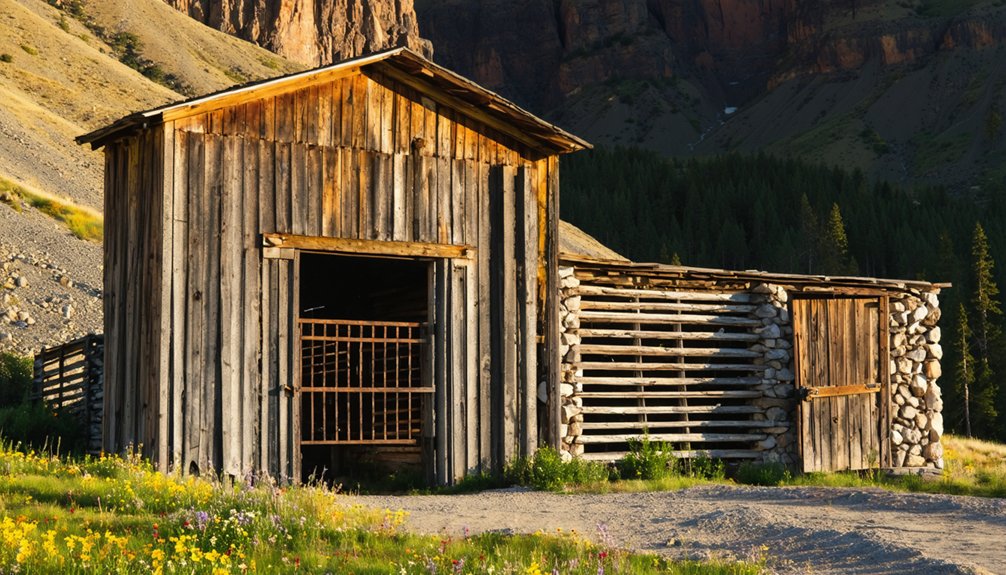
Tucked into East Willow Creek Canyon, North Creede rewards curious visitors with some of the most intact remnants of Colorado’s silver-boom era.
You’ll find weathered structures that tell raw, unfiltered stories of frontier life at its most chaotic and electrifying.
Don’t miss these highlights during your visit:
- North Creede’s remaining buildings — original structures still standing from the 1890s mining rush
- The Old Jail — one of the most preserved landmarks, built after Creede’s incorporation in 1892 tamed rampant lawlessness
- Surrounding Rio Grande National Forest — accessible via the Bachelor Historic Loop, offering stunning canyon scenery alongside historical exploration
Bring a high-clearance vehicle, plan your visit between June and September, and explore freely on these unpaved canyon roads.
Driving the Bachelor Historic Loop: Routes, Forks, and What to Expect
To start the Bachelor Historic Loop, head north from Creede past the Underground Mining Museum and take your first right onto East Willow Creek Road.
You’ll want a high-clearance vehicle with low-gear capability, since the unpaved gravel and dirt roads can challenge standard passenger cars, and you’ll get the best experience between June and September.
Along the way, you’ll pass through the Rio Grande National Forest with access to North Creede’s old jail, ghostly Bachelor cabins, and several other historic sites scattered throughout the canyon.
From Creede, your journey along the Bachelor Historic Loop begins simply enough: head north past the Underground Mining Museum, then hang a right at the first fork onto East Willow Creek Road. This starting point launches you into breathtaking scenic routes carved through Rio Grande National Forest.
Keep these navigation tips sharp:
- Bring a printed map — cell service disappears fast in Willow Creek Canyon.
- Watch for wildlife viewing opportunities; mule deer and elk frequently cross these unpaved roads.
- Stop at historical landmarks like the old North Creede jail for prime photography spots.
Travel essentials matter here — pack water, snacks, and fuel before leaving Creede’s nearby attractions and local cuisine behind.
The freedom of these gravel roads rewards prepared explorers.
Road Conditions And Requirements
Once you leave Creede’s paved streets behind, the Bachelor Historic Loop‘s unpaved gravel and dirt roads demand more than a casual Sunday driver’s mindset. Road safety isn’t optional here — it’s essential. You’ll navigate sharp curves, loose gravel, and steep grades that can punish unprepared vehicles and overconfident drivers alike.
For vehicle recommendations, skip the sedan and bring a high-clearance, four-wheel-drive or all-wheel-drive truck or SUV. Shifting into low gear on the steeper descents protects your brakes and keeps you in control.
Plan your trip between June and September, when snow and mud won’t trap you mid-route. Carry extra water, a spare tire, and basic tools. The freedom these back roads offer comes with responsibility — arrive prepared, and the loop rewards you completely.
Key Stops Along Route
Leaving Creede’s Underground Mining Museum in your rearview mirror, head north and take the right fork onto East Willow Creek Road — this is where the Bachelor Historic Loop truly begins.
You’ll wind through stunning canyon terrain, encountering remnants of Colorado’s silver rush at every turn. Watch for these essential stops:
- North Creede — explore the old jail and weathered structures showcasing historic architecture unique to boom-era mining camps.
- Bachelor townsite — ghostly cabins reveal how miners lived and worked, offering glimpses into early mining techniques.
- Amethyst Mine area — where Nicholas Creede’s original silver discovery changed everything in 1890.
The loop connects seamlessly through Rio Grande National Forest, delivering raw, unfiltered history without crowds or guardrails — pure freedom on Colorado’s forgotten roads.
What Kind of Vehicle Do You Need for These Roads?
Getting to North Creede means leaving pavement behind, so your vehicle choice matters. The roads turn to gravel and dirt quickly, and standard passenger cars will struggle once you hit the rougher sections. For vehicle recommendations, you’ll want a high-clearance, low-gear 4WD or AWD truck or SUV to handle the uneven terrain comfortably.
Road safety is just as important as your vehicle selection. Check your tire tread, brakes, and fluid levels before heading out. Carry a spare tire, basic tools, and extra water — you’re deep in Mineral County, far from any mechanic.
Plan your trip between June and September when conditions are most favorable. Mud, snow, and ice can make these roads dangerous or completely impassable outside those months.
Best Time of Year to Road Trip to Creede, Colorado
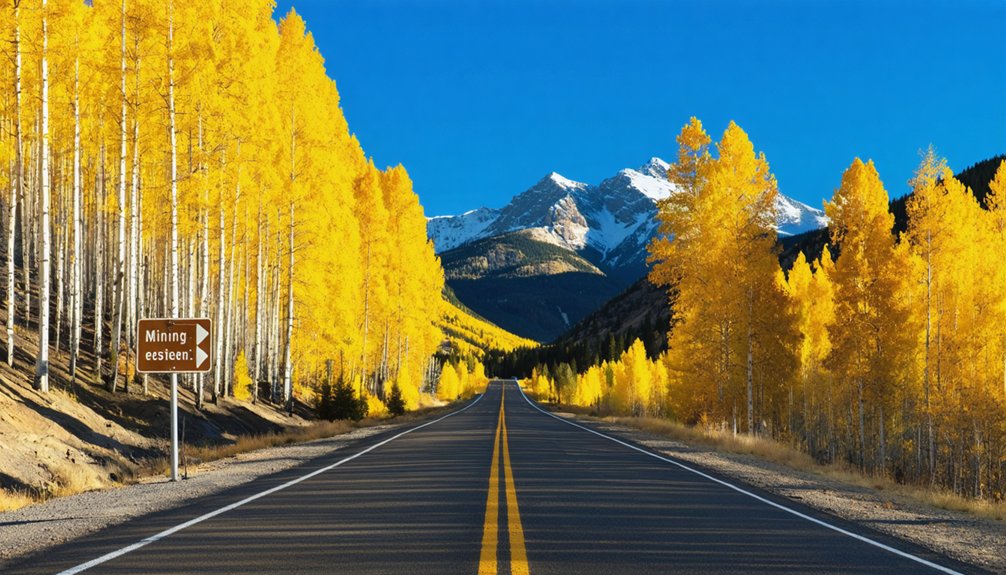
You’ll want to plan your ghost town road trip between June and September, when the unpaved gravel and dirt roads are most accessible and weather conditions are favorable for high-clearance vehicles.
Summer months offer the clearest skies and driest roads, while early spring and late fall bring mud, snow, and unpredictable conditions that can make the Bachelor Historic Loop impassable.
If you push past Labor Day, watch for early mountain snowfall that can close off East Willow Creek Road and cut short your access to North Creede’s historic structures.
Peak Season Summer Access
While Creede’s high-altitude setting makes it a year-round destination for the adventurous, the roads leading to its surrounding ghost towns tell a different story.
June through September opens full access to unpaved routes like the Bachelor Historic Loop, letting you explore freely.
Here’s what peak season delivers:
- Dry, navigable roads to North Creede, Bachelor, and Spar City without getting stuck in mud or snow.
- Prime summer activities like hiking Rio Grande National Forest trails surrounding the historic mining sites.
- Active local wildlife sightings, including elk and mule deer roaming Willow Creek Canyon.
Outside this window, snow and mud close critical gravel roads, cutting off access entirely.
Plan your visit between June and September to maximize your ghost town exploration.
Weather Conditions By Month
Creede’s mountain weather shifts dramatically with the seasons, so knowing what each month brings helps you plan smarter.
June through September delivers the warmest monthly weather, with daytime temperatures ranging from the 60s to low 80s°F — perfect for seasonal activities like hiking the Bachelor Historic Loop and exploring ghost town ruins.
July and August bring afternoon thunderstorms, so start your outdoor adventures early.
October turns crisp and golden, offering stunning foliage but increasingly unpredictable road conditions.
November through April buries the region under heavy snow, making unpaved canyon roads impassable for most vehicles.
May teases with warming temperatures, but lingering snowpack can still close higher elevation routes.
For the most freedom to roam Creede’s rugged backcountry, target late June through early September without hesitation.
Road Accessibility Seasonal Tips
Planning your road trip around Creede’s seasonal window makes all the difference between a smooth backcountry adventure and a frustrating dead end.
The unpaved, gravel, and dirt roads leading to North Creede and the Bachelor Historic Loop demand respect and preparation.
Vehicle recommendations prioritize high-clearance, low-gear capability beyond standard passenger cars.
Road safety depends entirely on timing your visit correctly.
Follow these seasonal guidelines:
- June through September offers the most reliable, passable road conditions for exploring surrounding ghost towns.
- Spring and fall bring unpredictable mud, snow patches, and unstable surfaces that can strand unprepared vehicles.
- Winter months effectively close backcountry access, making most sites completely unreachable.
Arrive prepared, choose your vehicle wisely, and you’ll reveal Creede’s remarkable backcountry freedom.
Museums and Landmarks to Visit in Creede Before the Ghost Town Loop
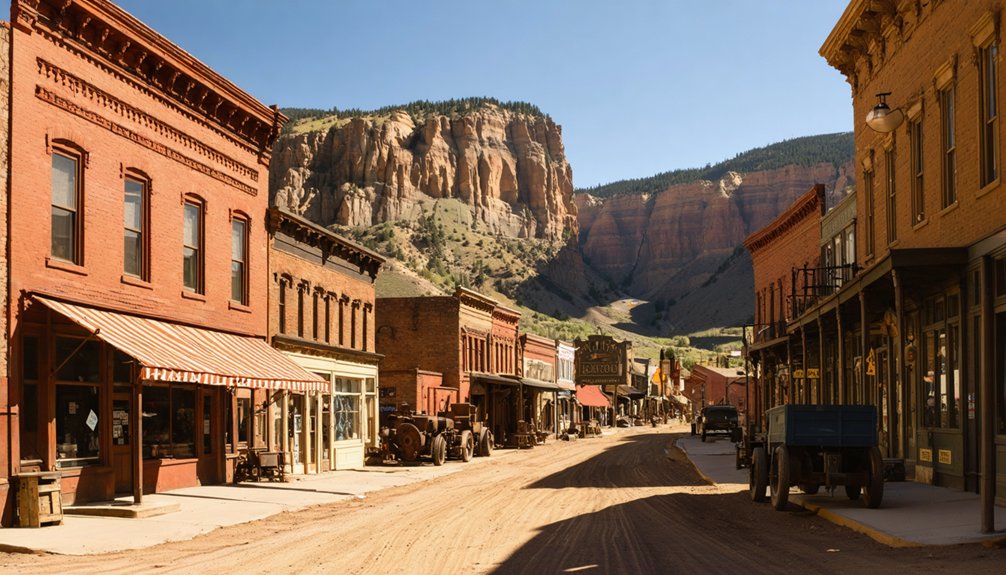
Before heading out on the Bachelor Historic Loop, you’ll want to spend some time exploring Creede’s museums and landmarks, which offer essential context for the ghost towns you’re about to visit.
The Underground Mining Museum tops the museums highlights list, taking you literally beneath the canyon walls where miners once worked silver-rich veins. It’s a hands-on experience that brings the boom era to life.
The Creede Historic Museum adds depth with artifacts and photographs documenting the town’s wild, lawless past. Among local landmarks, keep an eye out for the sites connected to infamous figures like Soapy Smith and Bob Ford.
These stops sharpen your understanding of what drove thousands to flood these mountains — making every abandoned structure on the loop far more meaningful.
Frequently Asked Questions
Are There Guided Ghost Town Tours Available in Creede, Colorado?
The knowledge doesn’t confirm guided tours, but you can explore Creede’s ghost town history independently via the Bachelor Historic Loop, uncovering local legends of outlaws like Soapy Smith and Bob Ford at your own adventurous pace.
Can You Camp Overnight Near the Bachelor Historic Loop Trail?
Like pioneers claiming their territory, you can camp overnight near the Bachelor Historic Loop! The Rio Grande National Forest surrounds the trail, but check current camping regulations first, as trail amenities remain minimal out there.
Is There Cell Phone Service Along the East Willow Creek Road?
Don’t count on reliable cell service availability along East Willow Creek’s remote, rugged roads. You’re venturing deep into Rio Grande National Forest’s wild terrain, so download offline maps, embrace the disconnect, and enjoy true freedom!
Are Pets Allowed on the Bachelor Historic Loop Driving Route?
Like a modern-day pioneer, you’ll find the Bachelor Historic Loop’s pet friendly guidelines aren’t explicitly restricted—your furry companion can join you exploring scenic viewpoints, but keep them leashed across this wild, untamed Rio Grande National Forest terrain.
What Restaurants or Food Options Are Available in Creede Today?
The provided knowledge doesn’t cover local cuisine details, but you’ll find dining experiences worth exploring in Creede’s charming small-town scene. Check local listings before your visit to discover what’s currently serving this free-spirited mountain community!
References
- https://www.uncovercolorado.com/activities/north-creede-ghost-town/
- https://www.youtube.com/watch?v=BAoMlr3eMRQ
- https://www.creede.com/history
- https://www.museumtrail.org/history-of-creede
- https://kool1079.com/10-things-you-probably-didnt-know-about-creede-colorado/
- https://coloradogeologicalsurvey.org/2019/creede-last-boom-town/
- https://gazette.com/2019/10/17/the-colorado-ghost-town-that-never-died/
- https://www.mininghistoryassociation.org/Creede.htm