Plan your Cuprum road trip for June through September when the treacherous Kleinschmidt Grade becomes passable in two-wheel drive. You’ll climb 2,200 feet through exposed switchbacks to reach this 4,298-foot ghost town where nine residents guard 1897 mining ruins. Pack bear spray for backcountry encounters with grizzlies and wolverines, and bring your camera for dawn photography when pronghorn move through the sagebrush. The Snake River Canyon‘s trails and restored cabins await exploration beyond the initial historic structures.
Key Takeaways
- Visit June through September when roads are accessible; late September to early October offers ideal conditions with fall colors and fewer crowds.
- Located at 4,298 feet elevation, 27 miles northwest of Council at coordinates 45.087°N, 116.689°W near Snake River Canyon.
- Navigate the notorious Kleinschmidt Grade, which climbs 2,200 feet; summer conditions allow two-wheel drive vehicles on this challenging route.
- Photograph well-preserved 1897 hospital, original mining structures, and historic buildings that defy typical ghost town decay and abandonment.
- Carry bear spray for grizzlies and wolverines; watch for eagles, pronghorn, and diverse wildlife in remote backcountry terrain.
The Rise and Fall of a Copper Mining Boomtown
When prospectors struck copper in Idaho’s rugged Seven Devils region, they didn’t waste time with poetic names—they christened their new settlement Cuprum, straight from the Latin periodic table. By December 1897, miners were flooding in, freight wagons groaning under loads from the Peacock and Blue Jacket mines. The town became ground zero for the copper rush, with fortune-seekers gathering before heading into the unforgiving terrain.
But early mining efforts hit brutal reality fast. The 1898 smelter trials proved disastrous—40 percent copper loss on the first run. Smelting technology challenges killed the operation before it truly began. Metropolitan Trust bailed, leaving intermittent work and broken dreams. Without decent roads, ore couldn’t reach markets profitably. The wilderness that promised riches became Cuprum’s executioner, choking development for three decades.
What Remains of Cuprum Today
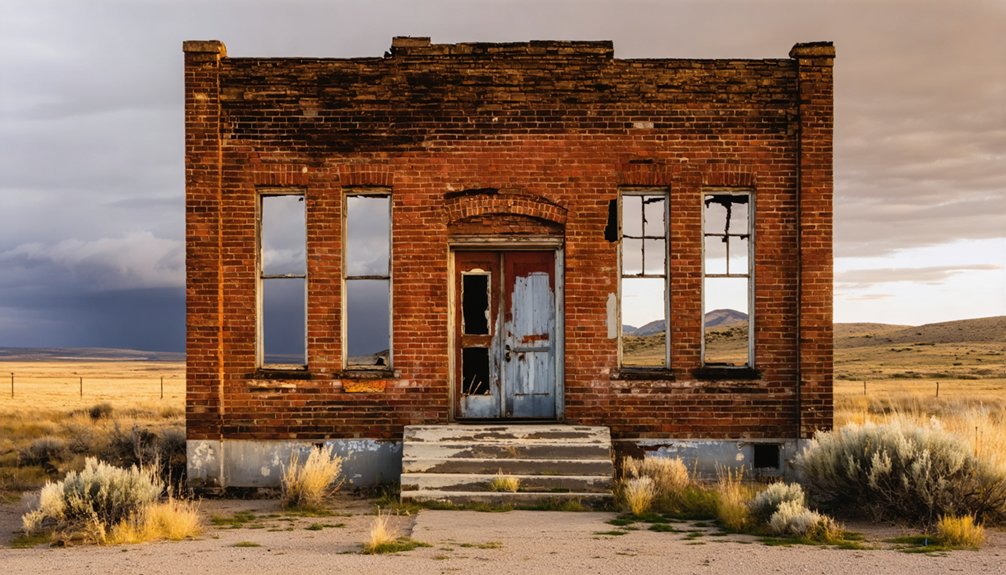
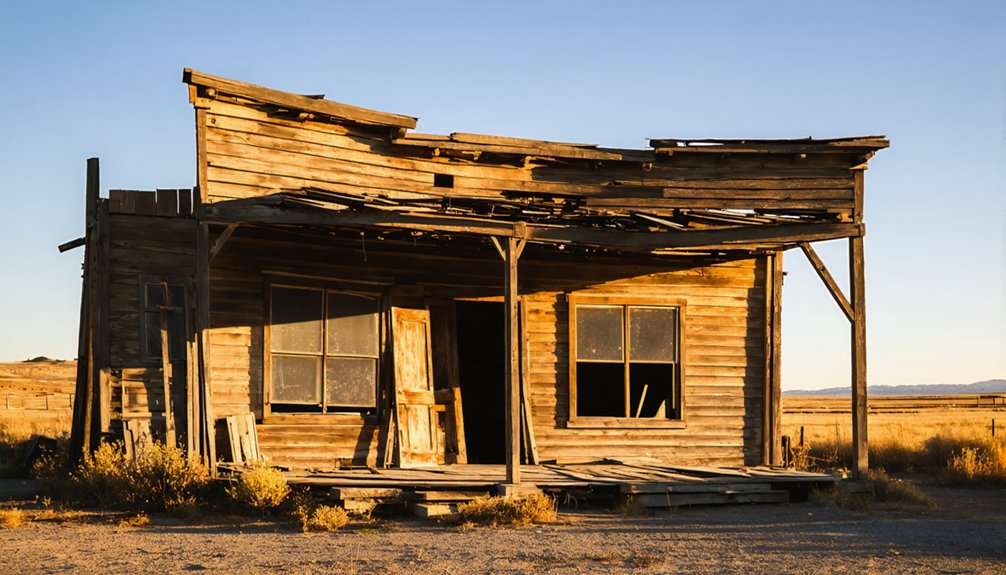
Today, Cuprum clings to existence with just nine official residents, though summer swells that number to a few dozen when cabin owners arrive. You’ll find original buildings standing proudly, their weathered facades telling stories of boom-and-bust cycles. Every structure stays remarkably well-maintained, with pristine grounds that defy the ghost town stereotype.
The old hospital from 1897 still stands, converted cabins now serve summer escapists, and mining equipment adorns the welcome sign as memorial to copper’s legacy. At 4,276 feet elevation near the Snake River, you’ll access nature trails threading through terrain that defeated countless mining operations.
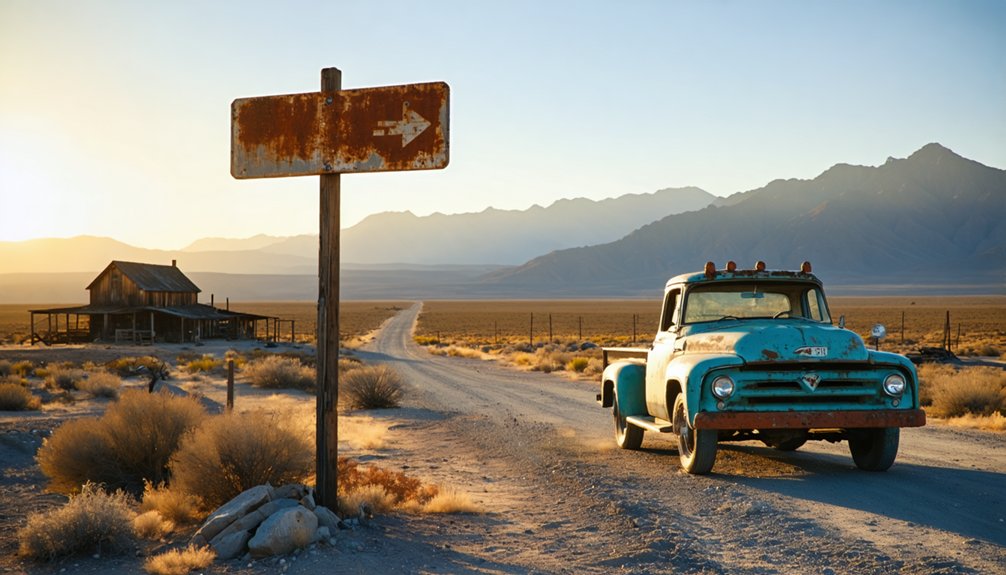
This remote town attraction demands commitment—two-wheel drive vehicles navigate the steep Kleinschmidt Grade only in summer months, keeping curious souls at bay and preserving Cuprum’s untamed character.
Best Time to Visit and Road Conditions
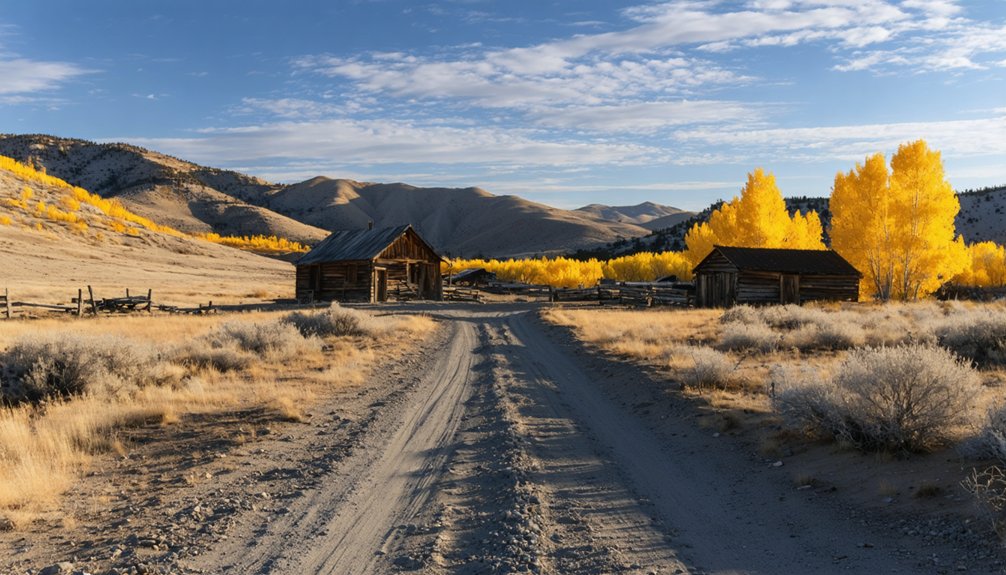
Summer opens Cuprum’s secrets from June through September, when two-wheel drive vehicles finally overcome the notorious Kleinschmidt Grade that guards this copper ghost town. You’ll share these warm months with crowds and higher lodging costs, but two wheel drive accessibility makes the trade-off worthwhile for most adventurers.
Summer unlocks Cuprum for two-wheel drive adventurers from June through September, trading solitude for accessibility on the treacherous Kleinschmidt Grade.
For ideal seasonal visitation with elbow room, target late September through early October. You’ll catch Idaho’s wildfire country shifting to brilliant fall colors while dodging both summer throngs and winter’s iron grip.
Late spring offers another sweet spot—waterfalls thunder at full force, wildflowers carpet the basins, and temperatures hover in the comfortable 70s-80s.
Come November, snow seals Cuprum’s mountain roads through May, preserving its isolation until the next thaw.
The Kleinschmidt Grade commands respect—this 5.4-mile ribbon of dirt and determination clings to Hells Canyon’s wall like a scar from Idaho’s mining fever dreams. Built in 1891 for $20,000 to haul copper dreams downriver, it climbs 2,200 feet through exposure that’ll make your passenger grip the dashboard.
Your vehicle choice matters here:
- High-clearance 4x4s own these switchbacks—confidence through technical terrain
- Brave 2WD drivers manage dry conditions—though white-knuckle moments await
- RVs and trailers stay home—single-lane width shows no mercy
Road grading maintenance happens occasionally, but don’t count on it. Driving conditions during storms transform this route into something biblical. Watch for locals—scattered cabins demand slow speeds and dust control. Few pullouts mean scanning ahead constantly for oncoming traffic.
Elevation and Geographic Setting
Perched at 4,298 feet above sea level, Cuprum clings to the western slopes of Idaho’s mountain country where Adams County’s wilderness swallows civilization whole. You’ll find these weathered ruins at location coordinates 45.087°N, 116.689°W, twenty-seven miles northwest of Council—far enough that cell service becomes a memory.
The elevation here shapes everything. Semi-arid weather patterns bring scorching summers and brutal winters that average just 45°F annually. You’ll want layers, even in July. The thin mountain air carries a clarity you won’t find at lower elevations, revealing distant ridgelines with startling precision.
This high-country setting explains why miners abandoned Cuprum when the ore ran dry. Nature reclaims quickly at this altitude, where survival demands respect for the elements.
The Seven Devils Mining District Legacy
When prospectors stumbled upon the Seven Devils mining district in 1884, they’d discovered what industry experts would soon call “some of the best copper prospects in the United States”—a claim that proved both blessing and curse for the next four decades.
The regional geology delivered stunning mineral deposits—copper, lead, gold, and silver—but the district’s true story reveals why potential doesn’t guarantee success:
- Mismanagement and lawsuits forced shutdowns during peak production in 1927, just weeks before planned mill construction
- Transportation nightmares strangled operations from day one, making profitable shipping nearly impossible
- Stock manipulation schemes funded development through fraudulent New York sales, poisoning investor confidence
You’ll find Landore’s remnants evidence to this boom-and-bust cycle, where two carloads of South Peacock ore represented an entire mine’s two-year output.
Wildlife Encounters in the Backcountry
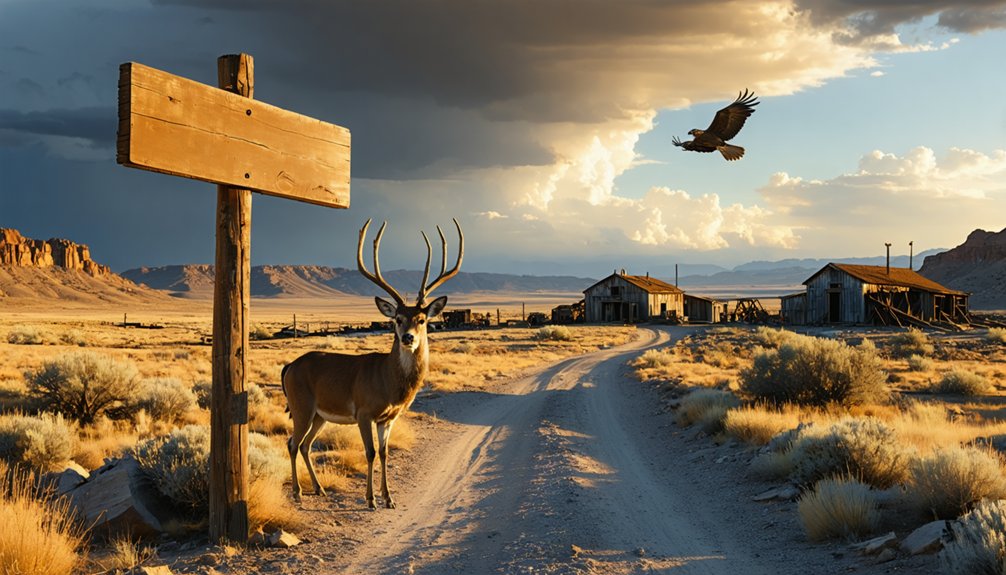
Beyond Cuprum’s crumbling foundations, Idaho’s backcountry pulses with wildlife that’ll stop you mid-hike. You’ll spot red-tailed hawks circling Snake River Canyon while golden eagles patrol the thermals above. The sagebrush sea harbors pygmy rabbits and greater sage grouse, while canyon wrens nest in cliff crevices near abandoned mine shafts.
Wildlife viewing opportunities intensify at dawn when pronghorn migrate through open terrain and American kestrels hunt from rocky perches.
Pack bear spray—grizzlies roam these mountains. Canada lynx and wolverines patrol remote areas you’re exploring. Your risk mitigation strategies should include making noise on blind corners and securing food properly. Northern pocket gophers and golden-mantled ground squirrels scatter across trails, reminding you that this untamed landscape belongs to them first.
Photography and Historical Landmarks
You’ll find incredible photo opportunities around Cuprum’s well-preserved mining structures, where antique equipment still adorns the welcome sign and rusted relics dot the mountainside.
The town’s 1897 hospital and historic buildings stand in pristine condition at 4,276 feet elevation, offering sharp architectural details against the rugged Seven Devils backdrop.
Bring your camera during summer months when the two-wheel drive accessible Kleinschmidt Grade allows you to capture both the treacherous historic road and the panoramic Snake River canyon views below.
Mining Equipment Photo Opportunities
As you approach the abandoned Copper Cliff concentrator near Cuprum, the skeletal remains of the 800-ton-per-day processing facility rise against the mountain backdrop like a rusted cathedral of industrial ambition. Your camera will capture rugged landscape relics that tell stories of boom and bust—flotation mill debris scattered like forgotten dreams, tailings ponds reflecting Idaho’s endless sky, and open-pit scars carved into mountainsides during the 1970s shift from underground operations.
Don’t miss these historic mining equipment shots:
- High-grade ore cars at Peacock Mine (1862-1876 discovery) with 35%-40% copper concentrate remnants
- Concentrator structures that once processed complex copper-silver ores worth $756,000 annually
- Ore loading equipment frozen mid-task since 1989’s final 90,000-ton milling season
These artifacts capture raw freedom—abandoned dreams weathering naturally without bureaucratic interference.
Historic Buildings and Architecture
While the concentrator’s industrial bones grab headlines, Cuprum’s 1897 hospital and post office stand as intimate tributes to the hundred souls who once called this 4,276-foot elevation outpost home. You’ll find the Seven Devils Hotel and Bar preserved in Idaho Historical Society archives—its weathered facade once echoing with miners’ stories over whiskey.
The post office establishment marked December 1st, 1897, coinciding with initial mining facilities that promised copper riches the harsh terrain never fully delivered.
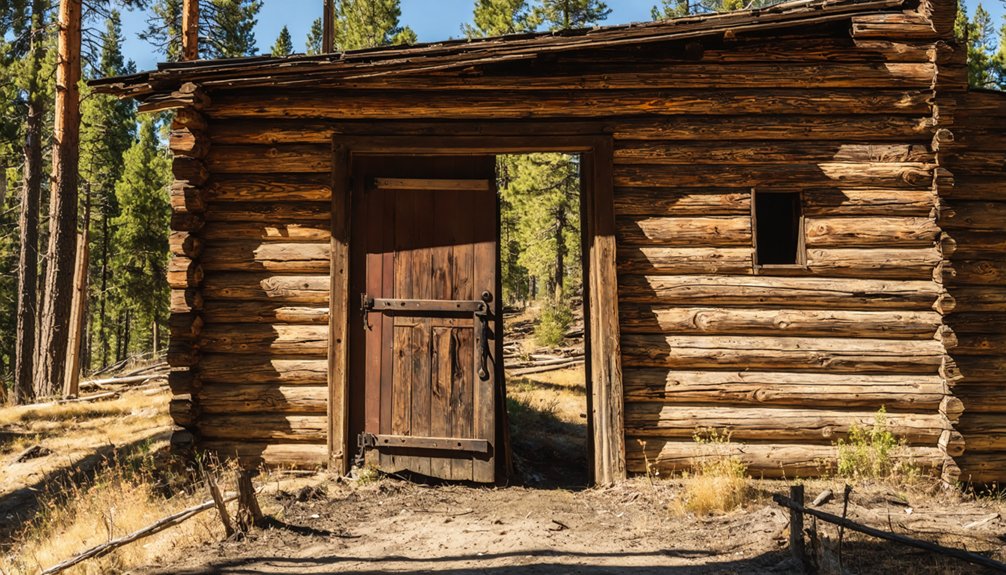
Today’s log cabins showcase enduring craftsmanship, their hand-hewn timbers defying a century of mountain winters. Navigate Kleinschmidt Grade’s punishing switchbacks and you’ll discover pristine structures maintained by nine year-round residents. These buildings aren’t roped-off museum pieces—they’re living remnants where summer renters still occupy former miner lodgings, breathing life into copper-era architecture.
Preparing Your Vehicle for Remote Mountain Travel
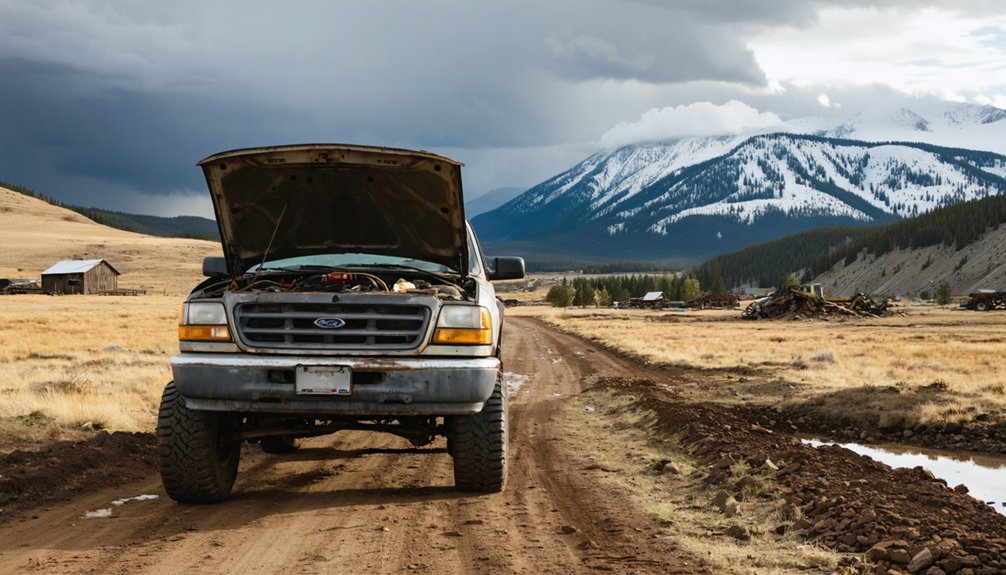
Before you point your vehicle toward Cuprum’s weathered remnants, understanding what separates a memorable adventure from a dangerous ordeal starts beneath your hood and under your tires. Vehicle servicing isn’t optional—inspect brakes, check fluid levels, and verify your spare tire’s condition before leaving pavement behind.
Essential preparations for mountain freedom:
- Pack tire chains, shovel, and tow strap—self-rescue means nobody’s coming
- Lower tire pressure to 30psi front, 40psi rear for corrugated roads
- Carry satellite communicator since cell towers don’t exist out here
Inclement weather preparedness demands extra fuel, water, non-perishable food, and emergency gear. High-clearance 4WD with all-terrain tires transforms impassable routes into conquerable challenges. Keep your tank half-full, inform someone of your plans, and remember: turning back demonstrates wisdom, not weakness.
Nearby Attractions Along the Snake River Corridor
While Cuprum sits tucked in the mountains, you’ll pass through Idaho’s dramatic Snake River corridor on your approach, where Hells Canyon—America’s deepest river gorge—plunges over 8,000 feet below the Seven Devils peaks.
The canyon’s overlooks reveal layers of ancient basalt and the winding river far below, while nearby historic mining districts echo Cuprum’s own boom-and-bust story with crumbling stamp mills and forgotten settlements.
You can spot golden eagles circling above petroglyphs left by the Nez Perce, connecting the natural spectacle with the region’s deep mining heritage before you climb toward the ghost town itself.
Hells Canyon Scenic Overlooks
The Snake River carves North America’s deepest gorge through this region, plunging 7,993 feet from He Devil Peak to the river’s surface—nearly 2,000 feet deeper than the Grand Canyon. You’ll find unforgettable panoramic viewpoints scattered throughout these backcountry roads, each revealing different perspectives of this geological masterpiece.
Essential scenic vista points you won’t want to miss:
- Hells Canyon Overlook – A quick 2-mile paved drive from Forest Service Road 39 brings you to 5,400-foot elevation views spanning McGraw Creek and the Seven Devils Mountains
- Hat Point Lookout – This remote 24-mile gravel adventure from Imnaha rewards you with one-mile vertical drops to the Snake River
- Hells Canyon Dam Viewpoint – Experience the canyon from river level, 27 miles from Copperfield
Pack your camera and embrace the journey.
Historic Mining District Sites
Copper-stained hillsides and abandoned headframes tell stories of fortune-seekers who transformed these rugged Seven Devils Mountains into one of Idaho’s most ambitious mining operations. You’ll discover the Peacock Mine’s remnants, where 35%-40% copper ore once justified building a water-jacket smelter four miles down Indian Creek.
The Blue Jacket and Crackerjack sites showcase evolving mining techniques—from hand-hauled freight wagons to the treacherous Kleinschmidt Grade truck routes. At Copper Cliff, you’ll witness where underground operations shifted to open-pit methods in 1974, processing 800 tons daily through innovative ore processing methods.
Sun Mines’ 256 unpatented claims stretch from Hells Canyon to Horse Mountain, marking dreams that persisted despite remote terrain. Each site reveals the independence-driven spirit that carved civilization from wilderness.
Frequently Asked Questions
Are There Any Lodging or Camping Facilities Available in or Near Cuprum?
You’ll find Seven Devils Lodge and nearby bed and breakfasts in Council, just minutes away. Local campground options dot the surrounding public lands, with sites running $10-30 nightly. Reserve up to six months ahead for prime spots.
What Supplies Should I Bring for a Day Trip to Cuprum?
Pack plenty of water, fuel, and emergency supplies since you’ll be remote. Packing snacks is essential—no services exist nearby. Don’t forget bringing sturdy footwear for exploring the ghost town’s rugged terrain and historic mining structures safely.
To enhance your adventure, consider planning a detailed road trip itinerary for Gibbonsville that includes stops at scenic viewpoints and local attractions. Research the area’s history to appreciate the ghost town’s unique story even more. Be prepared for unexpected encounters with wildlife that might add an exciting twist to your journey.
Are the Roads to Cuprum Safe for RVS or Trailers?
Road conditions to Cuprum aren’t RV-friendly—expect rough, unpaved backcountry routes from its mining past. Vehicle accessibility suits high-clearance trucks best. Check Idaho 511 for real-time updates, but you’ll likely need smaller, rugged transportation for this adventure.
Can I Explore the Old Mines or Are They Off-Limits?
You can explore Cuprum’s ghost town freely, but old mine shafts are dangerous—like stepping into history’s trap door. Their historical significance draws adventurers, yet environmental concerns and unstable structures make entering actual mines risky. Tread carefully around remnants.
Is Cell Phone Service Available in Cuprum or Surrounding Areas?
Cell tower coverage in Cuprum’s remote location is extremely limited or nonexistent. You’ll likely experience no cellular data speeds in this ghost town. Check T-Mobile’s extended range or Verizon’s maps beforehand, but prepare for complete digital disconnection.