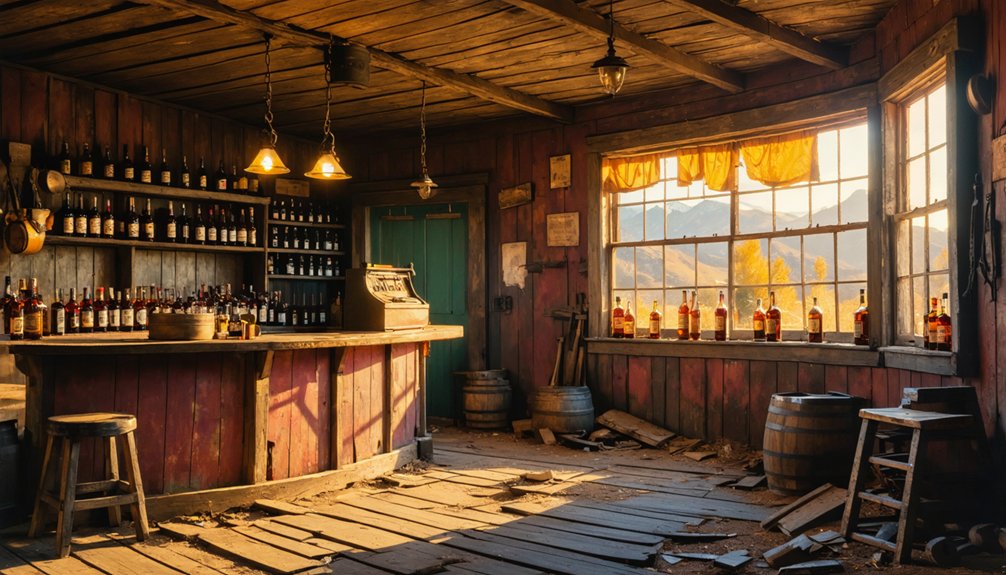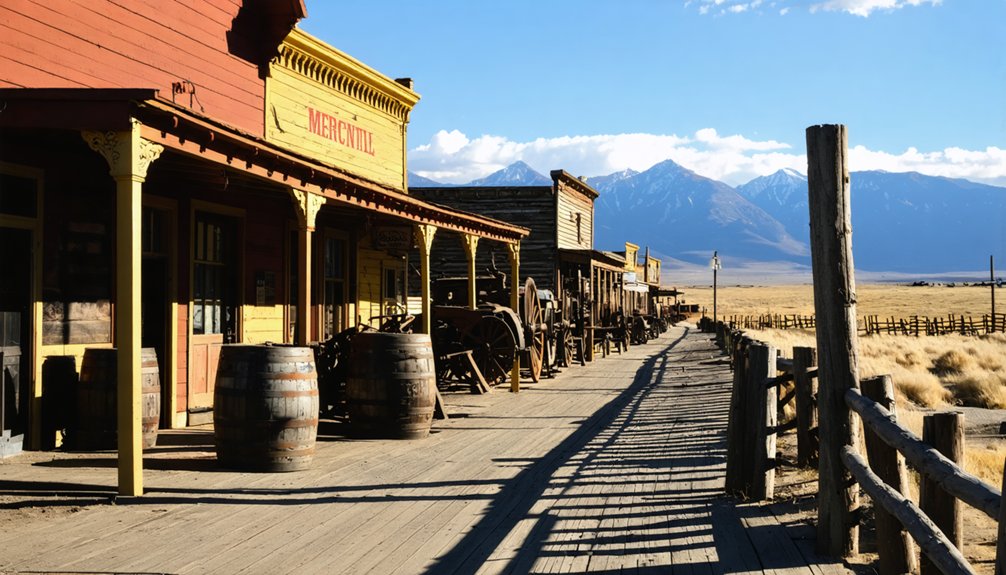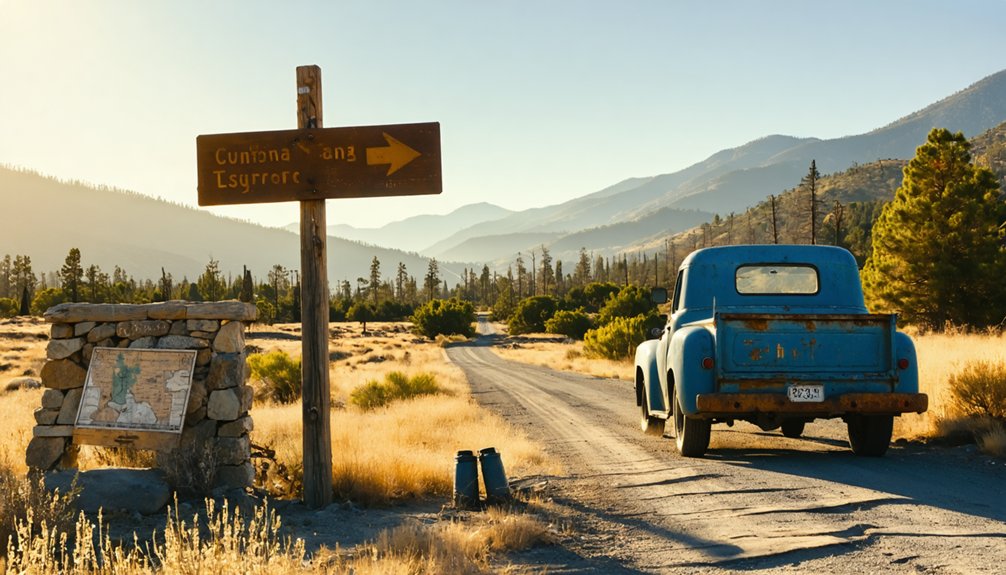
Plan your Cuyamaca City ghost town adventure during spring or fall to avoid summer thunderstorms and crowded holiday weekends. Check-in at nearby accommodations starts at 2 PM, giving you afternoon hours to explore before quiet hours begin at 10 PM. Check weather forecasts before heading out, as conditions can shift quickly in the backcountry. You’ll find the best experience visiting during non-peak times when access restrictions won’t dampen your exploration of this historic California mining site. The complete guide below reveals exactly what you’ll discover among the ruins.
Key Takeaways
- Cuyamaca City is a historic ghost town in California offering unique historical sightseeing opportunities.
- Avoid crowded holiday weekends when access restrictions dampen exploration; visit during non-peak times instead.
- Check-in begins at 2 PM with quiet hours enforced from 10 PM to 6 AM.
- Summer brings afternoon thunderstorms, so check forecasts before heading out and maintain a flexible schedule.
- Plan ahead for weather conditions to ensure a comfortable, safe trip and maximize your exploration experience.
The Rise and Fall of a Julian Gold Rush Mining Camp
When Fred Coleman knelt beside a mountain creek in the Cuyamacas during those final days of January 1870, he couldn’t have imagined the stampede his glittering discovery would trigger. Within ten hours of gold-bearing quartz reaching San Diego that March, 500 fortune-seekers swarmed the valley. Emily City sprouted as a tent town while prospectors named their claims Warlock, Washington, and Ready Relief, driving shafts deep into the mountains.
The mining town infrastructure remained primitive—canvas shelters and crude operations that disrupted traditional Kumeyaay territory, creating devastating native american cultural impact. By May, rancho owners demanded royalties, squeezing miners already pulling modest yields.
The Stonewall Mine‘s $2 million production through 1891 sustained hope, but most claims fizzled. After the Eagle Mine closed in 1937, citrus groves quietly buried the fever dreams.
Getting to Cuyamaca Rancho State Park and the Ghost Town Site
Your journey to Cuyamaca’s abandoned mining camp begins about 50 miles east of San Diego, where Highway 79 slices through the Peninsular Ranges like a ribbon through old gold country.
Take Interstate 8 east to exit 40, then follow CA-79 north for nine miles until you reach the park entrance at 12551 Highway 79 in Descanso.
From here, you’ll navigate through 26,000 acres of rolling terrain to reach the Stonewall Mine area, where Cuyamaca City’s remnants still whisper their boom-and-bust story.
Park Access Routes
The journey to Cuyamaca Rancho State Park begins on Highway 79, a winding two-lane road that climbs through Southern California’s Laguna Mountains approximately 50 miles east of San Diego. You’ll exit I-8 onto Highway 79 north, staying alert at the 2.5-mile mark where you’ll turn left to remain on 79. Ignore any GPS routing you toward Upper Green Valley Fire Road—it’s typically locked by park officials. Legal highway turnouts offer free parking for hikers seeking unrestricted access.
Day use costs $10 per vehicle, granting access to picnic areas with tables and facilities. Fire restrictions apply strictly; call 760-767-4037 before your visit. Campgrounds like Camp Cuyamaca anchor your exploration, positioning you within easy reach of trails leading toward Cuyamaca City’s remnants.
From downtown San Diego, you’ll cover 59 miles northeast before reaching Stonewall Mine, the physical heart of what remains from Cuyamaca City’s gold rush era. Getting directions from Interstate 8 is straightforward: take the CA-79 N/Japatul Valley Road exit, then follow the winding mountain highway through 15 miles of Cuyamaca wilderness.
Watch for the signed turnoff after passing Paso Picacho Campground—it’s a narrow paved lane that dead-ends at the site.
The parking lot capacity is modest but adequate for most days, with an $8 day-use fee. You’ll find restrooms and picnic tables near the fenced archaeological area where San Diego County’s most productive gold mine once operated. The main shaft collapsed in 1926, leaving behind ghost stories and scattered foundations.
What Remains at the Stonewall Mine and Town Ruins
Although Cuyamaca’s glory days ended over a century ago, you’ll find scattered remnants that hint at the bustling operation that once extracted over $2 million in gold from these hills. The main shaft—which plunged 600 to 800 feet deep using extensive timber framing techniques—was filled in during the 1920s after a collapse ended reopening attempts.
You can explore where the 20-stamp mill and cyanide plant once stood, key process infrastructure operation details that recovered $50,000 from old tailings alone. Today’s hiking trails wind past foundations of bunkhouses, the superintendent’s house, and a reservoir that supplied water to both mine and community.
A converted miner’s cabin serves as a museum, while CCC-built picnic facilities offer rest stops among the ruins.
Exploring the Historic Cemetery and Archaeological Features
You’ll find the historic cemetery tucked into the landscape where fourteen miners rest beneath the earth—men like Joseph McLane, who drank himself to death, and Jerome Macdonald, crushed by a sawmill log.
The burial ground blends almost seamlessly with the surrounding archaeological site CA-SDI-18502, where shallow pits and scattered foundations mark where the boarding house, school, and workers’ homes once stood.
Walking among these ruins, you’re tracing the footprint of an entire nineteenth-century community that served the Stonewall Mine, now preserved as silent testimony to hard lives and sudden deaths.
Cemetery’s Fourteen Buried Miners
Within the quiet northern boundary of Cuyamaca Rancho State Park, a modest cemetery holds fourteen miners who never left the mountain they came to conquer. These unmarked graves tell the stark reality of 19th-century gold extraction—when fortunes were sought at depths reaching 600 feet and lives were measured against production yields of $906,063 in gold ore.
You’ll find no names carved in stone here, no epitaphs celebrating worker’s lives. The miners rest anonymously, their stories absorbed into the earth they once drilled and blasted. They worked during the mine’s explosive peak between 1886 and 1892, part of a community that vanished as quickly as it appeared.
Stand among these graves and you’re witnessing what freedom-seeking truly cost—the ultimate price paid by ordinary men chasing extraordinary dreams.
Archaeological Ruins and Foundations
The 1890s gold rush left its own archaeological footprint—you can trace shallow rectangular depressions where cyanide vats once leached precious metals from crushed ore. Window glass glints among rusted nails and corrugated metal fragments.
A 3.2-acre sprawl of reprocessed tailings speaks to the relentless extraction that defined this era. Each ruin whispers of those who sought wealth or survival in these unforgiving peaks.
Combining Your Visit With Nearby Julian Attractions
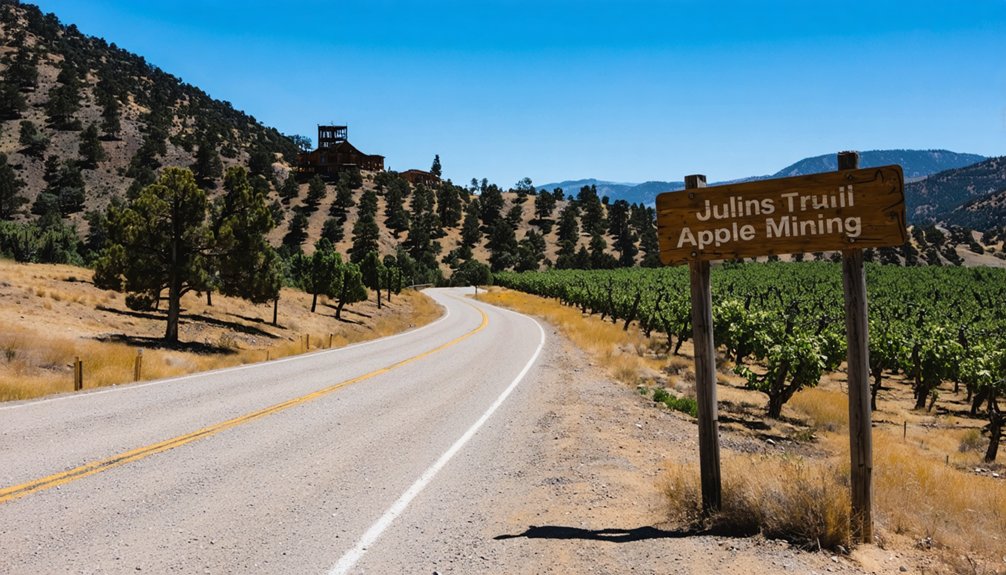
After exploring the abandoned structures of Cuyamaca City, you’ll find Julian just minutes away along CA-79, transforming your ghost town expedition into a full day of mountain discovery.
If you’re captivated by the history of bygone eras, there are numerous ghost town attractions in California that await your visit. Each site tells a story of the past, offering a glimpse into the lives of those who once called these places home. Don’t forget to bring your camera; the haunting beauty of these locations provides perfect photo opportunities against the rugged California landscape.
Julian’s proximity to Cuyamaca City makes it effortless to combine ghost town exploration with mountain town charm in a single adventure.
Lake Cuyamaca offers water activities like kayaking and fishing, with rental boats available for scenic relaxation amid mountain vistas. Volcan Mountain‘s moderate 5-mile trail rewards hikers with panoramic views stretching to the Salton Sea.
Dive deeper into the region’s 1869 gold rush legacy at Eagle Mining Co., where you can explore authentic tunnels and pan for gold yourself. Julian’s Main Street preserves Victorian architecture, antique shops, and the historic Gold Rush Hotel operating since 1897.
For wildlife encounters, visit the California Wolf Center or Oasis Camel Dairy, adding unexpected dimension to your backcountry adventure.
Best Times to Visit and What to Bring for Your Adventure
Timing transforms your Cuyamaca City ghost town adventure from merely interesting to truly memorable. Spring delivers wildflower-draped ruins and comfortable 50-70°F temperatures, while fall paints the mountain slopes in amber hues. Winter adventurers might catch rare snowfall on Cuyamaca Peak—just note that visitor center hours run weekends only, 10 AM-4 PM.
Pack layered clothing for temperature swings between 40-85°F, sturdy boots for rocky trails, and rain gear for mountain showers. Your daypack should include water, snacks, and a park map. If you’re utilizing camping amenities, remember check-in starts at 2 PM with quiet hours enforced 10 PM-6 AM.
Skip crowded holiday weekends when access restrictions dampen exploration. Summer brings afternoon thunderstorms; check forecasts before heading out.
Frequently Asked Questions
Are Pets Allowed at the Cuyamaca City Ghost Town Site?
You’ll find limited access since dogs stay restricted to paved roads only under Cuyamaca’s pet friendly policies. Your pup needs six-foot leash requirements always enforced. Unlike 90% of ghost towns, trails remain off-limits, confining exploration considerably here.
Is There an Entrance Fee for Cuyamaca Rancho State Park?
Yes, you’ll pay $10 for day use parking fees at picnic areas, though roadside turnouts offer free parking. Check visitor center hours when planning your visit, as they’ll help you maximize your adventure while minimizing costs.
Can I Camp Overnight Near the Stonewall Mine Ruins?
You’ll find freedom under the stars at Paso Picacho Campground, just five miles north of the ruins. Overnight camping policies welcome you at 85 sites with fire rings, though restrictions on campfires apply. Reserve ahead for weekend adventures.
Are Guided Tours Available for the Ghost Town Area?
You’ll find self-guided tours rather than formal guided ones at Cuyamaca’s ghost town sites. Interpretive signage marks key locations, letting you explore the weathered ruins at your own pace, discovering hidden stories without schedules constraining your adventure.
Is Metal Detecting Permitted at the Archaeological Sites?
Metal detecting isn’t permitted at archaeological sites due to strict regulations protecting cultural resources. The area’s archaeological sensitivity means you’ll face serious penalties—up to $5,000 in fines. State law prioritizes preserving these irreplaceable Native American and historic treasures.