You’ll find Denny ghost town 19 miles up steep, winding Denny Road off Highway 299 at Hawkins Bar in Trinity County’s remote wilderness. This authentic 1849 gold rush settlement features over 75 weathered structures, massive tailings piles, and rusted mining equipment reclaimed by nature. The challenging drive navigates single-lane passages and dramatic elevation changes, but rewards you with genuine frontier history including the Ladd family’s mercantile legacy. Plan your visit April through November when conditions allow, and discover what makes this isolated site uniquely preserved.
Key Takeaways
- Access Denny via Highway 299 to Denny Road, navigating 19 miles of steep grades and curves through remote Trinity County terrain.
- Visit between April and November when the road is passable; winter conditions make the final dirt section impassable.
- Explore over 75 buildings, mining equipment, tailings piles, and a stocked general store in this authentic ghost town.
- Allow time for steep, winding roads with one-way passages; drive cautiously on the rough final three-mile dirt stretch.
- Stay overnight at nearby national forest campgrounds to fully experience the Trinity Alps Wilderness area surroundings.
Getting to Denny: Routes and Road Conditions
The journey to Denny begins where Highway 299 meets Hawkins Bar, marking the turnoff onto Denny Road for a 19-mile trek into California’s remote northwestern Trinity County.
You’ll navigate steep grades and countless curves through terrain that demands nearly an hour of focused driving, though your standard 2WD vehicle handles it fine. The road winds through elevations reaching 1,480 feet, where denny weather patterns shift dramatically—sweltering summers give way to frigid winters that’ll test your resolve.
Spring offers the sweet spot for exploration. Parts of this county roadway narrow to one-way passages, adding adventure to your approach. You’re heading toward the gateway of the western Trinity Alps Wilderness Area, where tourist attractions nearby fade into rugged wilderness and authentic freedom awaits.
The Rich Mining History of Old Denny
Gold fever gripped California’s northwestern frontier when prospectors struck pay dirt along New River in 1849, launching a mining frenzy that would transform this remote wilderness into a bustling hub of fortune-seekers.
The 1849 New River gold strike transformed California’s remote northwestern wilderness into a thriving center of mining activity and opportunity.
You’ll discover how community development exploded in 1884 when hardrock mining sparked settlements like New River City, White Rock, and Marysville. The Mountain Boomer mine dominated production, extracting over $350,000 in gold from slate and greenstone veins.
Hydraulic operations revolutionized extraction by 1870, using massive water jets powered through miles of ditches and flumes—though the environmental impact scarred mountainsides for generations.
Trinity County’s mines ultimately yielded $59 million before the 1942 War Order shuttered operations. Today, you’re free to explore these abandoned workings where determined miners once carved fortunes from unforgiving rock.
What Remains: Exploring the Ghost Town Today
When you arrive at Denny today, you’ll find a landscape dominated by massive tailings piles and a scattered collection of weathered structures clinging to the remote mountainside. Most of what you see consists of carefully rebuilt replicas rather than original mining-era buildings, though the restored blacksmith shop and a handful of authentic remnants still stand as tangible links to the 1880s.
The town’s desert isolation and partial closure—marked by warning signs blocking certain roads—mean you’re exploring a genuine ghost town where nature and decay have reclaimed much of what the silver boom once created.
Remnants and Abandoned Structures
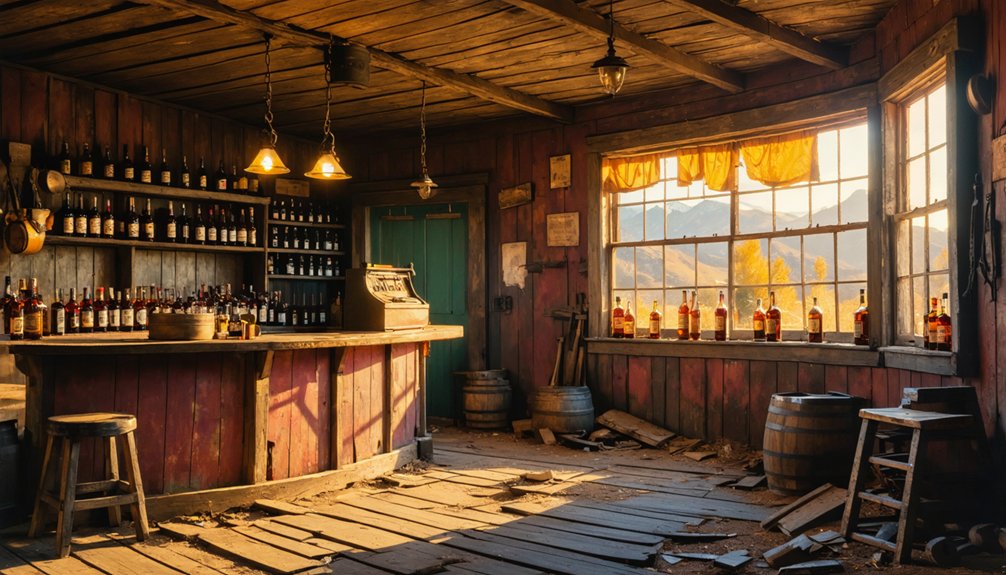
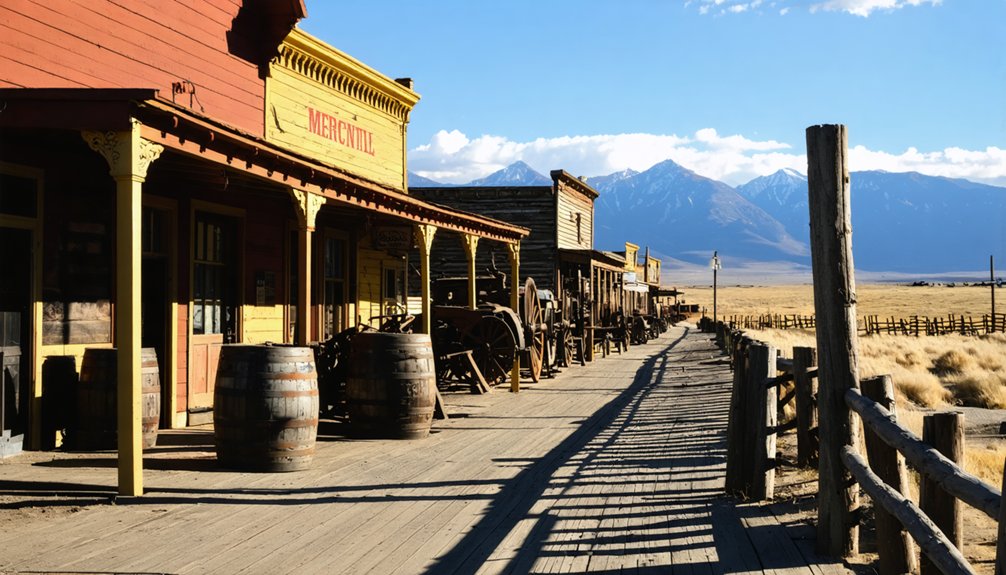
Walking through Denny today feels like stepping onto a film set frozen in time, where over 75 buildings still stand in various states of preservation. You’ll find the general store completely stocked, homes with pots still on stoves, and rocking chairs positioned as if residents just stepped away. Historical photographs barely capture the eerie reality of these preserved relics scattered across the landscape.
Beyond the protected structures, you’ll navigate fields of rusted machinery, abandoned wagons, and mining equipment left where workers dropped them. Sand has claimed many buildings, leaving only chimneys and rooftops protruding above ground. Fire-scorched ruins like Shirley’s Bar stand alongside collapsed foundations buried beneath relentless desert forces. State historic park protections guarantee these artifacts—both treasure and trash—remain untouched for adventurous souls seeking authentic Western history.
Accessing the Remote Site
Reaching Denny requires traversing some of California’s most challenging backcountry terrain, where Highway 270 off Highway 395 serves as your primary gateway to this frozen snapshot of Gold Rush history.
You’ll find the turnoff seven miles south of Bridgeport, then navigate thirteen miles total—the final three consisting of rough dirt road passable in standard vehicles at cautious speeds. Winter transforms access entirely, demanding snowmobiles when snow blankets the route.
Plan your arrival within park hours: 9 a.m. to 6 p.m. from April through November, narrowing to 4 p.m. closures through March. National forest campgrounds nearby provide overnight accommodations for multi-day exploration, though guided group tours remain limited in this authentically preserved wilderness outpost where independence defines the experience.
Notable Historical Sites and Landmarks
You’ll find Denny’s most compelling landmarks scattered across the remote hillsides, where the Mountain Boomer Mine’s crumbling adits still pierce the mountain face.
The historic Boynton Hall location marks the social heart of this vanished community, though only foundation stones hint at the gatherings once held there.
Most sobering is the 1977 shootout memorial area, where a tragic modern chapter unfolded long after the gold rush prospectors had departed, reminding visitors that this ghost town’s story extends beyond its 19th-century origins.
Mountain Boomer Mine Site
Among the scattered remnants of Denny’s mining past, the Mountain Boomer Mine Site stands as one of the most evocative locations along New River, where prospectors first struck gold in the rushing waters below. You’ll find abandoned mining equipment still clinging to the hillsides, rusted memorial to the dreams and determination of those who ventured here.
The rugged mountain terrain hasn’t changed much since those gold rush days—steep canyon walls still tower overhead while the river carves its ancient path through bedrock. As you explore these weathered remains, you’re walking the same ground where fortunes were won and lost. The site offers you an unfiltered glimpse into California’s frontier spirit, where independence and opportunity drew adventurers into this unforgiving wilderness.
Boynton Hall Historic Location
The Ladd family established Boynton Hall as their residence in 1892, transforming what would become one of Old Denny‘s most significant domestic structures into a symbol of permanence in this otherwise transient mining community. While architectural details remain sparse in historical records, you’ll find this site represents the rare domesticity that mining families carved from wilderness.
The historical significance lies not in grandeur but in what it symbolized—roots planted deep where most sought only fortune and escape.
Today, you’ll need to search carefully for remnants of this homestead among the forest reclamation. The structure’s exact location within Old Denny requires local knowledge or dedicated exploration. What endures is the legacy to families who chose commitment over transience, building homes rather than mere shelters in California’s rugged Trinity Alps.
1977 Shootout Memorial Area
Violence shattered the mountain stillness in April 1971 when shots rang out across New River during what should have been a routine mineral examination at a contested mining claim. A Forest Service officer took a bullet ricochet to the neck, marking one of the region’s most volatile confrontations over land rights and government authority.
Today’s shootout memorial construction marks this pivotal moment:
- Memorial signage and interpretation detail the clash between federal oversight and mining independence
- Stone markers identify shooting positions across the river gorge
- Preserved claim boundaries show what sparked the conflict
- Historical photographs document the aftermath and investigation
You’ll find this site embodies the enduring tension between individual sovereignty and regulatory power that defined California’s remote mining districts.
The Ladd Family Legacy
When Frank J. Ladd arrived in Trinity County in 1883, he brought an entrepreneurial spirit that transformed remote wilderness into thriving commerce. You’ll discover how the Ladds evolved from hardrock miners to community pillars, operating the essential Denny Store and Post Office while running pack trains through treacherous mountain trails.
Their commercial success enabled remarkable diversification—Frank managed freight operations while Nellie pioneered amateur photography, creating postcards that documented frontier life. She’d become one of the region’s first women voters in 1920, serving on Denny’s election committee.
Today, you’ll find their photographic legacy preserved at Weaverville’s Jake Jackson Museum, where Nellie’s images capture the raw authenticity of mining camp existence. The Ladds embodied frontier independence, building prosperity through self-reliance and vision.
Best Time to Visit and Trip Planning Tips

Planning your ghost town adventure to Denny requires strategic timing to maximize both comfort and atmospheric authenticity. You’ll want to navigate seasonal climate changes carefully—hot summers and cold winters define Trinity County’s extremes. Spring emerges as your sweet spot, delivering balanced conditions without sacrificing that isolated frontier feeling.
Strategic timing transforms your Denny ghost town visit—spring’s balanced climate preserves authentic frontier atmosphere while ensuring comfortable exploration of Trinity County’s historic remnants.
Timing of peak visitation periods matters less here than weather:
- February-March: Cooler temperatures, minimal crowds, perfect for exploration
- Mid-October to mid-December: Moderate climate before winter sets in
- Avoid May-August: Extreme highs exceed 110°F, limiting outdoor activities
- Skip June-August: Coastal fog and wind complicate Northern California travel
Access Denny via Highway 299 to Hawkins Bar, then venture 20 miles north on Denny Road—standard 2WD vehicles handle this route fine, keeping your journey accessible yet adventurous.
Frequently Asked Questions
Are Camping or Overnight Accommodations Available Near Denny?
You’ll find no established campgrounds near Denny’s wild terrain, but primitive campsites available on surrounding BLM land beckon adventurers. Basic amenities provided? None—you’re truly off-grid here, requiring fire permits and complete self-sufficiency for your backcountry experience.
What Supplies Should I Bring for a Day Trip?
Bring plenty of water, snacks, and fuel—there’s no store for miles. Pack day trip snack recommendations like trail mix, plus extra batteries for day trip photography tips capturing Denny’s haunting beauty in this remote wilderness.
Is Cell Phone Service Available in the Area?
You’ll find virtually zero cell tower coverage in Denny’s remote wilderness. Cell signal strength disappears completely in this off-grid ghost town, so you’re truly disconnected from civilization. Download maps beforehand and embrace the digital detox adventure.
Are There Guided Tours of the Ghost Town?
I cannot provide accurate information about guided tours in “Denny, California” as this ghost town doesn’t appear in available records. Please verify the location name, or I’d be happy to discuss Bodie State Historic Park’s tour options instead.
If you’re interested in exploring more ghost towns near Kernvale, California, there are several notable sites worth visiting. Each ghost town offers a glimpse into the rich history of the area, showcasing remnants of mining activities and early settlements. You may also discover unique stories and artifacts that paint a vivid picture of life in these once-thriving communities.
Do I Need Special Permits to Visit Denny?
You won’t need special permits to explore Denny’s remnants freely. Local preservation efforts remain minimal, letting you wander autonomously through this remote site. Nearby historic landmarks like Trinity Center offer additional context for your self-guided adventure into California’s mining past.