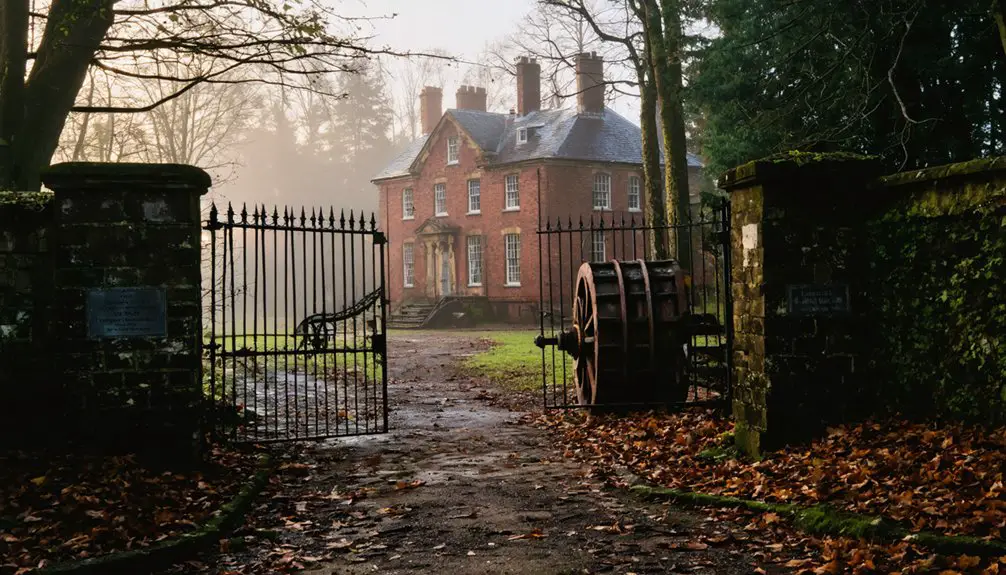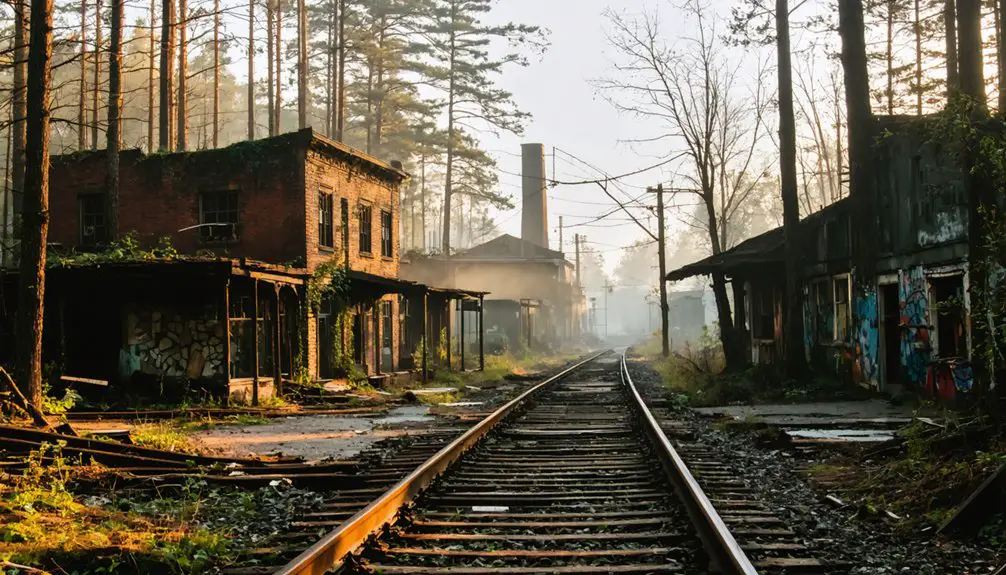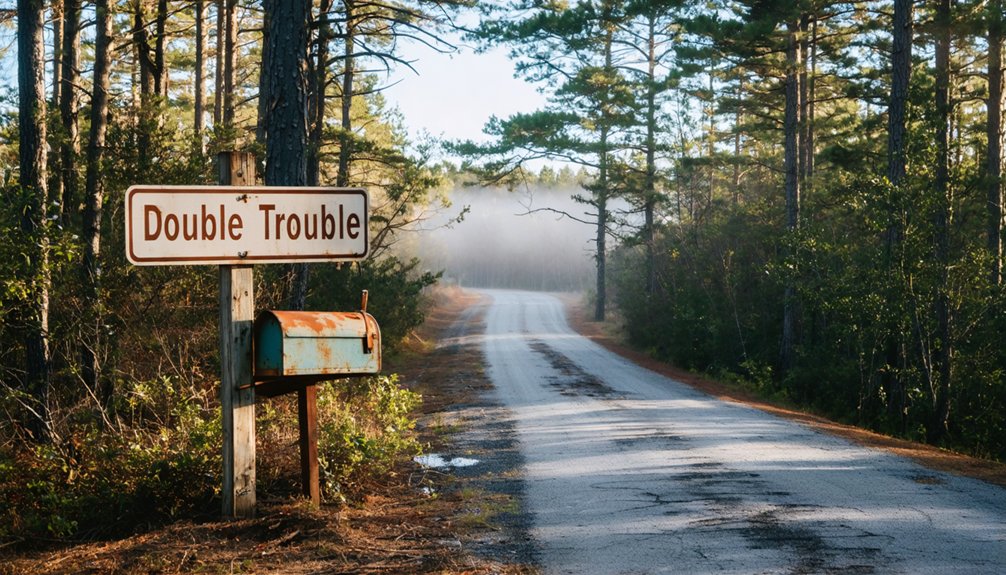
Take exit 77 from the Garden State Parkway and follow signs through the Pine Barrens to reach Double Trouble State Park (N39.89756° W74.22181°). You’ll find free parking, restrooms, and access from 8:00am until dusk. The weathered cranberry village buildings line Cedar Creek‘s rust-colored waters, offering self-guided tours through 14 restored structures including sawmills, worker cottages, and a one-room schoolhouse. Pack water and sturdy shoes for exploring 260 acres of historic bogs and sand trails that reveal why this ghost town earned its unusual name.
Key Takeaways
- Exit 77 from Garden State Parkway leads to Double Trouble State Park, open daily 8:00am to dusk with free parking and restrooms.
- This 19th-century cranberry village features weathered buildings, rusted equipment, and 260 acres of historic bogs along Cedar Creek’s rust-colored waters.
- Explore restored structures including worker cottages, Edward Crabbe’s sawmill, packing house, general store, and one-room schoolhouse through self-guided tours.
- Marked trails depart from the parking lot on packed sand roads, with Cedar Creek water trail available for paddling adventures.
- The abandoned village earned its name after Thomas Potter’s sawmill dam washed out twice in the 1790s, preserving authentic industrial decay.
The Fascinating History Behind Double Trouble’s Unusual Name
The name “Double Trouble” has sparked curiosity and debate for over two centuries, with several colorful legends competing to explain how this peculiar New Jersey settlement earned its memorable moniker. The most widely accepted theory credits sawmill operator Thomas Potter, whose dam on Cedar Creek washed out twice during spring floods in a single season.
Another tale involves persistent muskrats gnawing breaches in the structure, prompting workers to shout “double trouble” upon discovering simultaneous leaks. These theories on the origin of the unusual name reflect the impact of industrial development on the region’s naming—the moniker appears in official deeds dating back to 1790. You’ll find the name became standardized during the shift from timber operations to cranberry cultivation in the 1860s.
How to Get to Double Trouble State Park
Planning your visit to this historic Pine Barrens settlement requires traversing the sandy backroads of Ocean County, where Double Trouble State Park sits tucked between Berkeley and Lacey Townships at the intersection of Pinewald Keswick Road and Double Trouble Road.
Park accessibility couldn’t be simpler—from Garden State Parkway, you’ll take exit 77 and follow the signs through classic Jersey Pine Barrens landscape.
Navigate to coordinates N39.89756° W74.22181° for:
- Free entrance with on-site amenities including parking and interpretive center
- Daily access from 8:00am until dusk with restroom facilities
- Marked trails departing from the lot on packed sand roads
- Cedar Creek water trail for paddling adventures
Your GPS might struggle with the address alone, so search “Double Trouble State Park” instead for reliable routing through these remote woodlands.
What Makes Double Trouble a Ghost Town Worth Visiting
Wandering through Double Trouble feels like stepping onto a film set frozen in time, where weathered clapboard buildings stand sentinel along Cedar Creek’s rust-colored waters. This 19th-century cranberry village delivers an eerie ambiance that separates it from sanitized historical sites—there’s no gift shop selling postcards, just authentic decay and Pine Barrens wilderness reclaiming its territory.
You’ll explore operational cranberry bogs that once supplied nearly a quarter of America’s harvest, alongside sawmills and company structures left untouched since production ceased. The haunting atmosphere intensifies knowing workers lived, labored, and built an entire economy here before the 1959 cranberry scare and development pressures forced abandonment.
Unlike manicured parks, Double Trouble preserves raw history—crumbling foundations, rusted equipment, and buildings slowly surrendering to nature’s patient reclamation.
Exploring the Historic Village and Its 14 Restored Buildings
Fourteen weathered structures punctuate the Double Trouble landscape, each telling a chapter of the village’s industrial past through peeling paint and hand-hewn timbers. While village renovation progress remains selective, recent preservation efforts prioritize the sawmill and cranberry packing house—both accessible during guided tours.
The remaining structures stand authentically unrestored, offering raw glimpses into worker life.
Your exploration reveals:
- Worker accommodations – bunk house, pickers’ cottages (one dating to 1900), and the foreman’s residence
- Operational facilities – cook house, gender-separated shower house, and maintenance shop
- Community cornerstones – 19th-century one-room schoolhouse and general store
- Industrial centerpieces – Edward Crabbe’s rebuilt sawmill and modernized packing house
Wander freely through these structures during self-guided grounds tours (8:00am-dusk daily), or book guided access into the sawmill and packing house for deeper historical immersion.
The Cedar Creek Cranberry Bogs: New Jersey’s Largest Agricultural Legacy
Beyond the weathered village structures, 260 acres of cranberry bogs stretch across the Double Trouble landscape like a patchwork quilt stitched with cedar-dark water. You’re standing where the Crabbe family once commanded New Jersey’s largest cranberry operation, including the massive 56-acre Mill Pond Bog—the state’s biggest single bog.
While modern cranberry industry challenges have silenced the harvest here, you can still trace the sorting house foundations where workers processed thousands of barrels using traditional cranberry harvesting techniques. Cedar Creek’s waters still flow through the channels that once flooded these bogs, though commercial picking ended a decade ago when Ocean County’s last growers retired.
You’ll find something rare here: cranberry bogs you can actually access, unlike the thousands of private acres scattered across the Pinelands.
Hiking Trails and Natural Wonders in the Pine Barrens
Eight miles of sandy trails wind through Double Trouble State Park, offering you some of the most accessible Pine Barrens hiking in Ocean County. Trail difficulty ratings classify these routes as very easy to easy, letting you explore without constraints.
You’ll discover tea-colored streams flowing with tannic acid from ancient cedars, while environmental restoration initiatives have preserved cranberry bogs documenting New Jersey’s agricultural past.
Choose your adventure:
- Mill Pond Trail (1.3 miles): Red-blazed path leading to the reservoir dam where water cascades during heavy rainfall
- Nature Trail (1.9 miles): Green-blazed loop traversing cedar swamps, crossing Cedar Creek, and featuring a small dock for water viewing
- Optional Extensions: Swordens Pond and Clear Brook trails for traditional pine barrens exploration
- Accessible Options: Packed sand roads accommodate strollers with robust wheels
Wildlife Watching Opportunities at Double Trouble
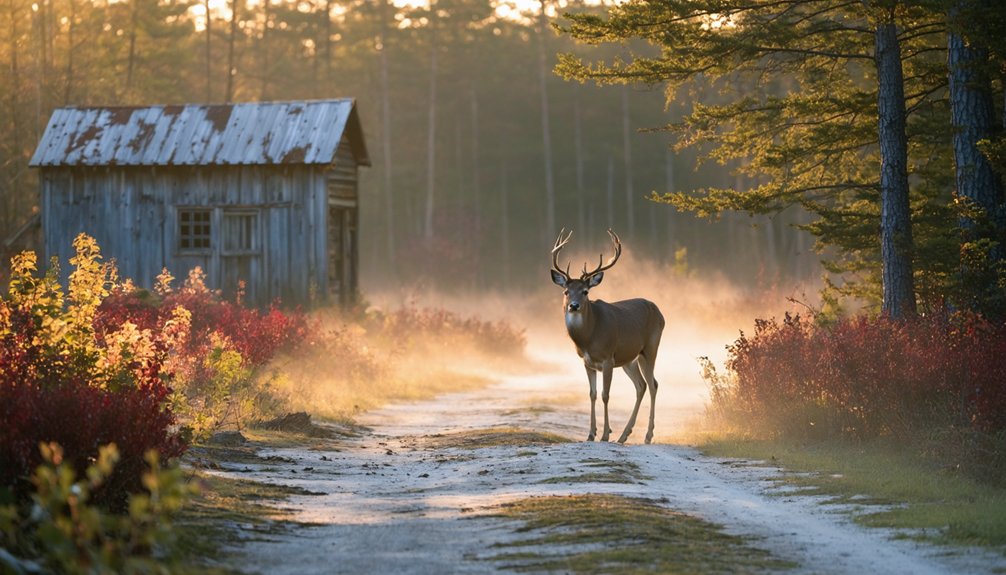
You’ll find exceptional wildlife watching beyond the ghost town’s weathered buildings, where 8,000 acres of pristine Pine Barrens habitat shelter everything from threatened Pine Barrens treefrogs to soaring bald eagles.
As you plan a road trip to Dogtown, be sure to pack your binoculars to catch sight of the unique bird species inhabiting the area. The scenic route offers breathtaking views and plenty of opportunities for outdoor adventures along the way. Don’t forget to stop at local landmarks that tell the rich history of this remarkable region.
Position yourself along Cedar Creek’s cypress-lined banks during spring migration, when over 50 bird species pass through and beaver dams create prime observation points for spotting elusive bobcats at dawn. The park’s interwoven cedar swamps and bogs form hunting grounds for rare species—keep your binoculars ready for timber rattlesnakes sunning on sandy trails and spotted turtles traversing the tea-colored streams.
Rare Species to Spot
When sunlight filters through the pitch pine canopy at Double Trouble, it illuminates a landscape where some of New Jersey’s rarest creatures make their last stand. You’ll find yourself in prime territory for encountering species that exist nowhere else on Earth.
The park shelters an impressive collection of threatened wildlife:
- Federally threatened bog turtles hide in secluded wetlands, their small size making them challenging to spot
- State-listed northern pine snakes navigate sandy soils with remarkable stealth
- Pine Barrens treefrogs call from bog edges with their distinctive nasal “wonk-wonk-wonk”
- Spotted turtles bask on sun-drenched logs throughout Pinelands habitats
With 43 animal species holding threatened or endangered status here, you’re exploring one of the region’s most critical wildlife refuges. Tread carefully—you’re walking among survivors.
Best Viewing Locations
Several prime locations at Double Trouble State Park transform casual hikers into successful wildlife observers. Start at the village’s open areas where songbirds congregate near historical buildings overlooking bog and creek habitats.
The Nature Trail’s back-end clearings offer ideal observation areas for spotting raptors and waterfowl against dramatic red earth of drained cranberry bogs. Wide trails minimize tick exposure while maximizing sightlines across filled bogs where herons stalk prey.
Cedar Creek’s accessible viewpoints along reservoir sections reveal diverse ecosystems from swamps to waterways. For extended watching, combine the Nature Trail with Swordens Pond’s yellow-marked loop—this no-hunting zone creates safer conditions for patient observers.
Benches positioned near bog edges let you settle in and watch Pine Barrens wildlife emerge naturally.
Best Time to Visit and What to Bring on Your Trip
Double Trouble State Park welcomes visitors year-round, with its gates opening daily at 8:00am and staying accessible until dusk. Fall delivers ideal weather patterns with cooler temperatures and fewer insects haunting the Pine Barrens trails. Summer mornings offer perfect hiking conditions before you head to nearby beaches.
Packing essential gear ensures you’ll conquer over 8,000 acres of preserved wilderness comfortably:
- Sturdy hiking shoes for traversing marked trails and historic walkways
- Plenty of water to stay hydrated while exploring the ghost town
- Bug spray for protection against Pine Barrens mosquitoes
- Sunscreen as trails offer limited shade coverage
Trail maps await at the restrooms near clean picnic areas. With free admission and self-guided exploration, you’re set to discover this abandoned cranberry village on your terms.
Frequently Asked Questions
Is There an Admission Fee to Enter Double Trouble State Park?
No, you won’t pay anything to enter. Picture yourself driving straight in, finding free parking availability near historic buildings, then exploring visitor amenities like restrooms and trails without reaching for your wallet—pure freedom awaits.
Are Pets Allowed on the Trails and Historic Village Areas?
Yes, you’ll find welcoming pet policies here—your leashed furry companions can explore the 1.5-mile nature loop and historic village with you. Trail accessibility extends to sandy service roads, letting you roam freely together through pine barrens wilderness.
Can Visitors Purchase Cranberries or Local Products at the Site?
The park doesn’t currently offer on-site vendor offerings for cranberry purchases. However, you’ll find seasonal produce availability at nearby Pine Barrens farms and roadside stands, where you can grab fresh cranberries during harvest season and taste authentic local flavors.
Are Guided Tours Available or Is It Self-Guided Exploration Only?
You’ll find both options available! Self-guided tours let you roam freely along marked trails with historical signage explaining the village’s past, while advance-arranged guided tours provide access to/grant entry to the sawmill and cranberry packing house for deeper exploration.
Is the Park Wheelchair Accessible for Visitors With Mobility Limitations?
The park’s accessibility is limited—wheelchair-friendly pathways aren’t specified, and sandy Pine Barrens trails may challenge mobility. While accessible restroom facilities are clean, historic buildings lack confirmed ramps. You’ll want to call ahead to verify your specific needs.