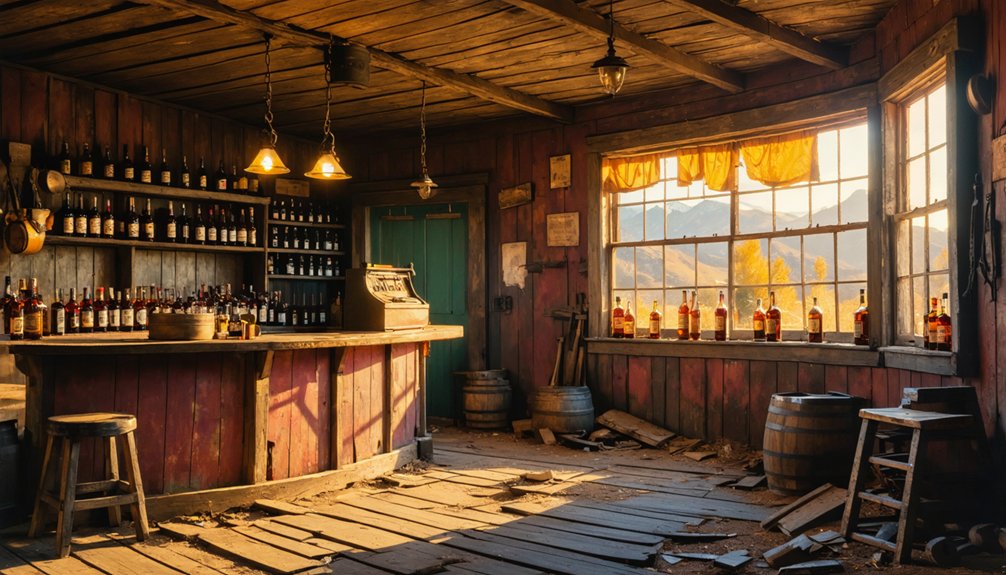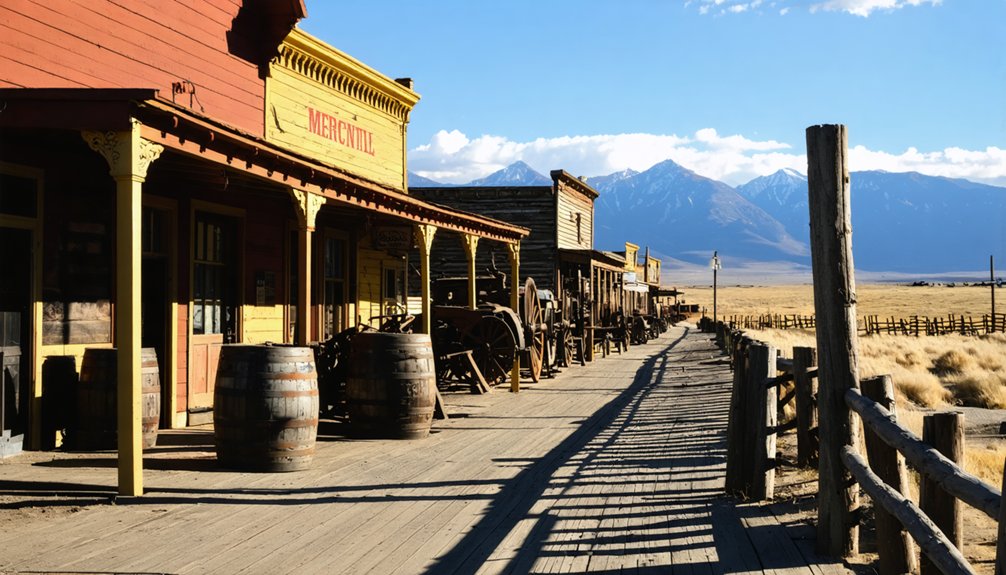
You’ll discover Drum Barracks isn’t actually a ghost town, but a genuinely haunted Civil War site in Wilmington’s harbor district, 25 miles south of Los Angeles. Navigate to the corner of Cary and Opp Streets to find the 1862 Junior Officers’ Quarters, where apparitions of Colonel Curtis and his wife Marie still linger among the cannons and medical displays. Tours run 60-90 minutes for just $5, though you’ll need advance reservations for this deliberately paced experience where cold spots and phantom pipe tobacco await your exploration.
Key Takeaways
- Drum Barracks is located in Wilmington, 25 miles south of Los Angeles near the Port of Los Angeles harbor district.
- Guided tours last 60-90 minutes through the 1862 Junior Officers’ Quarters, showcasing Civil War artifacts and recreated barracks.
- The site operates on a limited schedule requiring advance reservations; admission costs $5 or $4 with AAA membership.
- Two original buildings remain from the million-dollar fortress that served as the Union Army’s western command center.
- The museum is known for paranormal activity including apparitions, unexplained sounds, and encounters with Colonel Curtis and his wife.
Getting to Drum Barracks in Wilmington
Located just 25 miles south of Los Angeles in the harbor district of Wilmington, the Drum Barracks sits quietly at 1052 North Banning Boulevard, a weathered wooden sentinel to California’s Civil War past.
You’ll find this last surviving structure near the Port of Los Angeles, where San Pedro Bay’s salt air still whispers through its timbers. The journey takes you through industrial corridors and working-class neighborhoods, far from downtown’s glittering towers. Parking availability presents no challenge—pull right up to the historic site’s designated spaces.
For driving directions, navigate to the corner of Cary and Opp Streets in Wilmington, where the old powder magazine once stood nearby on East Opp. This isn’t some sanitized tourist trap. It’s authentic California history, preserved against the odds, waiting for those who seek untold stories beyond the beaten path.
What to Expect at the Civil War Museum
Step through the heavy wooden doors of the 1862 Junior Officers’ Quarters, and you’re transported to a war most Californians never knew happened on their soil. Your knowledgeable volunteer guide leads you through detailed historical exhibits spanning 60 to 90 minutes, revealing how California’s gold financed Union efforts while soldiers drilled on these very grounds.
You’ll encounter a wide range of artifacts: an operable Gatling gun, an 1863 cannon, cavalry sabers, and infantry rifles filling the new Armory Display. Victorian bedrooms and recreated barracks showcase soldier life, while medical displays reveal battlefield horrors. Maps, photographs, and personal items bring forgotten stories alive. The extensive library houses Union and Confederate records for deeper exploration. Tours run Tuesday through Saturday at 10:30 am and 12:30 pm—admission’s free, though donations support preservation.
Historic Significance and Preserved Buildings
The weathered Junior Officers’ Quarters stands as a defiant survivor—one of only two buildings remaining from what was once the Union Army’s sprawling western command center. This 16-room Greek Revival structure, alongside the stone powder magazine, escaped demolition in 1962 when determined locals fought back against the wrecking ball.
You’re walking through authentic military architecture that earned National Register status in 1971—a rare Civil War landmark west of the Mississippi. The original 19-to-22 buildings that once surrounded the parade ground have vanished, but these survivors tell the story of a million-dollar fortress built to house 500 soldiers defending California, Arizona, and New Mexico.
Touch the East Coast timber shipped around Cape Horn. Feel history that community rebels refused to let die.
Paranormal Activity and Ghost Encounters
Beyond the architectural remnants and historic timbers, something restless inhabits these rooms. You’ll encounter unusual paranormal manifestations that have drawn investigators for decades—from Colonel James Freeman Curtis limping with his frostbitten foot to his wife Marie drifting through corridors in lavender-scented hoop skirts.
The documented spiritual sightings include:
- Officer apparitions requesting chairs near fireplaces, smoking phantom pipes, and patrolling grounds in period uniforms
- Disembodied sounds of chains dragging, thunderous footsteps, and voices echoing through secured, empty rooms
- Unexplained phenomena like self-raising window shades, doors unlatching themselves, and electromagnetic fluctuations captured by multiple paranormal teams
You’ll smell pipe tobacco and violet perfume in vacant spaces, feel cold spots materialize, and perhaps glimpse shadowy figures fading between dimensions—freedom seekers exploring realms beyond rational justification.
Planning Your Visit: Hours and Tour Information
When you’re ready to experience Drum’s haunted corridors firsthand, you’ll need to plan carefully—this Civil War relic operates on a limited schedule that requires advance coordination. The museum offers guided tours running approximately 90 minutes, but you’ll find varying open times that demand calling ahead.
Unlike ghost towns with self-guided wandering freedom, Drum restricts solo exploration except during their Christmas event. You’ll invest $5 for admission ($4 with AAA membership), avoiding the additional attraction fees common at commercial sites.
Peak season visitation isn’t a concern here—Drum maintains its intimate, controlled atmosphere year-round. This isn’t a drop-in destination; it’s a deliberately paced journey into authenticated history where reservations and flexibility trump spontaneous adventure.
Frequently Asked Questions
Are There Nearby Restaurants or Amenities in Wilmington for Visitors?
Don’t worry about starving in this ghost town territory—you’ll discover abundant dining options nearby, from 24/7 authentic Mexican joints to waterfront seafood havens. While lodging opportunities remain limited, neighboring Long Beach offers comfortable retreats after your adventure.
Exploring the ghost town attractions in California can lead to fascinating encounters and stunning landscapes that are steeped in history. Don’t forget to bring your camera, as the remnants of the past set against the backdrop of the California desert create unforgettable memories. Whether you’re a history buff or simply in search of unique experiences, there’s plenty to see and do in this captivating region.
Can Children Participate in the Guided Tours at Drum Barracks?
Children can absolutely join guided tours for families at Drum Barracks. There’s no age restrictions, and accessibility of tours for children is excellent—kids under 12 get free admission. Your young adventurers will love exploring Civil War history!
Is Photography Permitted Inside the Museum During Tours?
Like a bird traversing open skies, you’re free to capture memories during tours. Indoor photography policies welcome personal cameras and smartphones using natural light, though guided tour photography guidelines prohibit flash to protect historical artifacts from damage.
Are There Other Civil War Sites to Visit in Southern California?
Yes, you’ll discover several Civil War sites across Southern California, including Lincoln Memorial Shrine in Redlands and Drum Barracks Museum. While exploring, you’ll also encounter ancient adobe structures and Spanish mission ruins that predate the war era.
What Happened to the Army Camels After They Left in 1863?
The military camel program’s disbandment saw the entire herd auctioned for under $2,000 in February 1864. You’ll discover this camel herd dispersal scattered them across private freight operations, with some wandering freely through California’s wild landscapes.