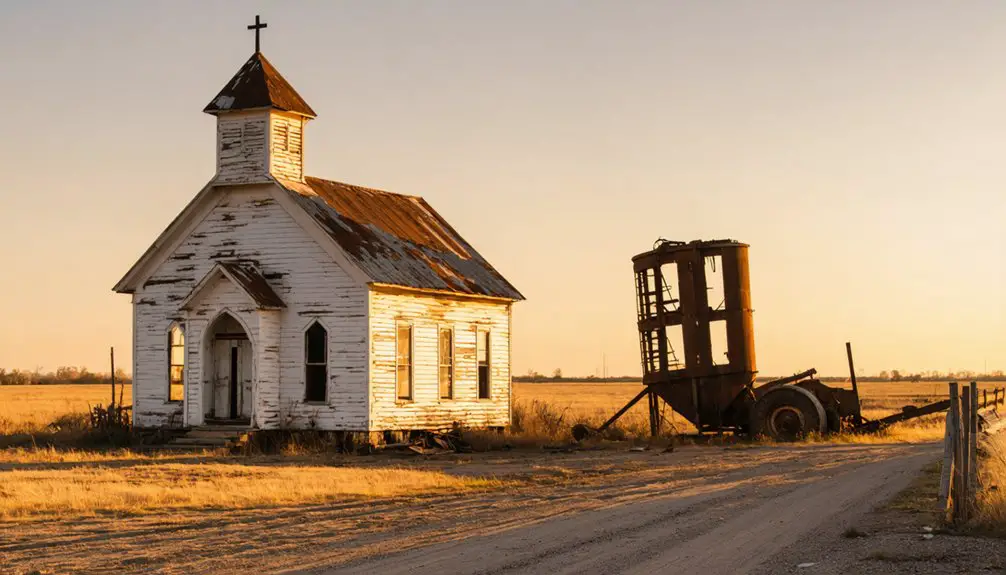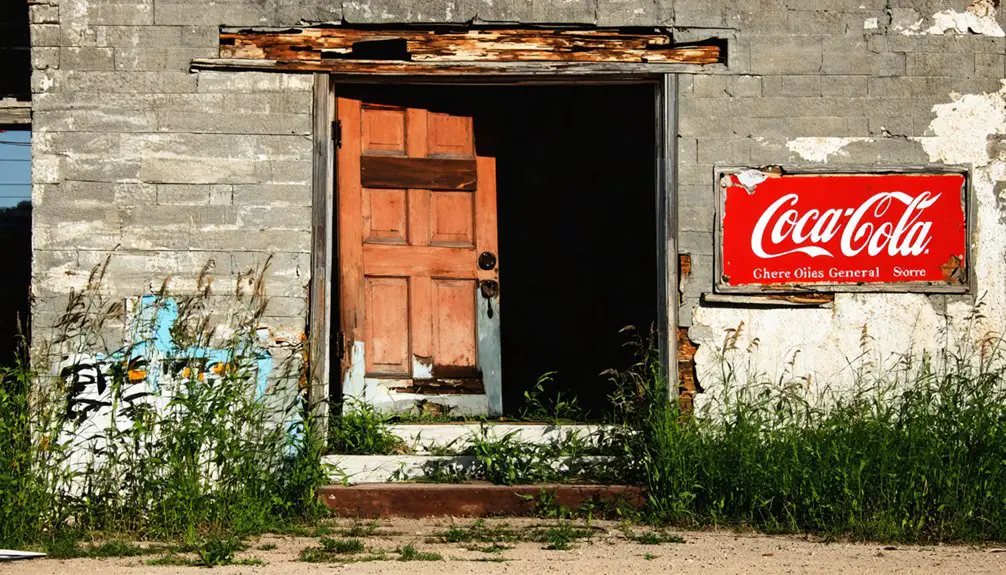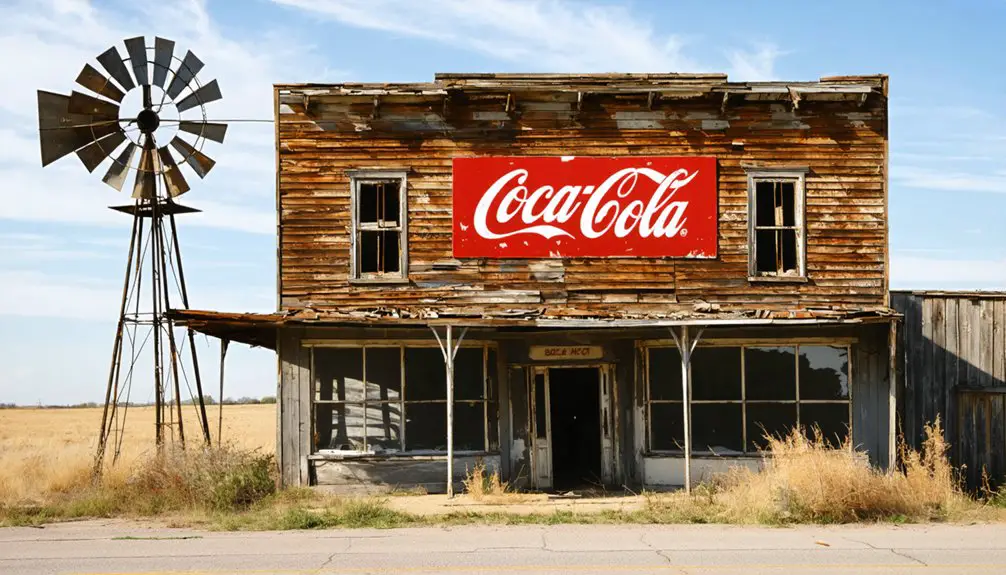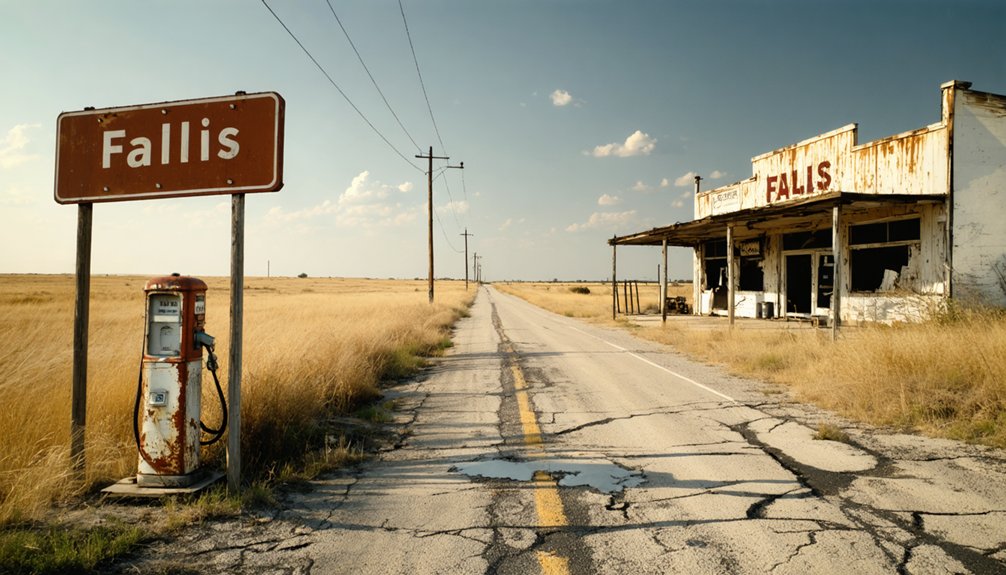
You’ll find Fallis 5 miles northwest of Wellston, Oklahoma, where paved county roads wind through red hills and dense timber toward two crumbling brick sentinels from the 1900s cotton boom. Park near the weathered buildings that once processed 10,500 bales of “white gold,” then explore the intact bank vault, overgrown railroad beds through Bear Creek valley, and foundation stones marking the 1892 schoolhouse. The abandoned Main Street reveals how a half-million-dollar empire vanished when rails were pulled and farms mechanized—though there’s considerably more to uncover.
Key Takeaways
- Fallis is located 5 miles northwest of Wellston, Oklahoma at 971 feet elevation in western Lincoln County’s wooded hills.
- Access the ghost town via paved county roads winding through red hills, with off-road routes available for adventurous explorers.
- Visit two crumbling brick buildings from the 1900s boom era, featuring an intact bank vault and abandoned post office.
- Explore overgrown railroad beds through Bear Creek valley and the old water pump station site from Katy Railroad days.
- View the 1892 schoolhouse foundation stones and collapsed storefronts where cotton fortunes once thrived before WWII decline.
Getting to Fallis: Directions and Route Planning
Nestled in the wooded hills of western Lincoln County, Fallis sits five miles northwest of Wellston at coordinates 35.74944°N, 97.11833°W—a specification you’ll want programmed into your GPS before venturing into this corner of central Oklahoma. You’ll navigate paved county roads that wind through terrain marked by long red hills and dense timber, arriving at this 0.3-square-mile ghost town perched at 971 feet elevation.
Using aerial mapping technology beforehand reveals the layout and surrounding Iowa Reservation landscape, while topographic maps show approach routes from Luther to the east or Carney to the south. Though the main access follows maintained pavement, off road accessibility exists for explorers seeking alternative routes through the wooded periphery where the original townsite once bordered an Indian village.
The Rise and Fall of a Railroad Boomtown
As you stand among Fallis’s crumbling brick facades, you’re witnessing the ghost of a town that once thrived on cotton wealth and railroad ambition. The twin steel arteries of the Katy and Fort Smith & Western lines pumped life into this crossroads, transforming a small agricultural village into a bustling hub of 400 souls, four general stores, and grand dreams of roundhouses.
But the same forces that built Fallis—mechanized farming, shifting rail routes, and the magnetic pull of larger towns—eventually drained it down to just 21 resilient residents clinging to memories of prosperity.
Cotton and Railroad Prosperity
When the Katy Railroad punched through this wooded valley in 1902, it transformed Fallis from a modest agricultural outpost into one of Oklahoma Territory’s most promising boomtowns. You’d have witnessed 14,000 acres of cotton fields yielding 10,500 bales worth $500,000—staggering wealth for 1903. Two cotton gins worked overtime processing the white gold that built fortunes here.
The railroad intersection changed everything. When Fort Smith and Western tracks crossed the Katy line in 1903, Fallis became a critical trans-shipment center. No more grueling wagon hauls to distant markets. Farmers could load their cotton exports directly onto railcars bound for processing centers. Agricultural labor on small, intensive plots sustained the local economy, while four saloons kept railroad workers and farmers entertained between shipments. This convergence of cotton and steel created unprecedented prosperity.
Decline Through Modern Progress
The same forces that built Fallis tore it down. When railroads abandoned their routes and mechanized farming eliminated agricultural jobs after World War II, your prosperity vanished overnight. The population plummeted from 350 at statehood to just 21 today.
You’ll find two crumbling brick buildings and a closed post office where bustling commerce once thrived. The cotton industry that produced 10,500 bales from surrounding fields disappeared. Even the 1904 oil discovery couldn’t sustain economic life.
What remains isn’t defeat—it’s transformation. Those 21 holdouts created an artist colony among the ruins, finding freedom in Fallis’s rustic decay. The social cohesion that once centered on railroad timetables now binds through creative independence, proving that progress destroys as readily as it creates.
What to See Along the Historic Main Street
As you walk along what remains of Historic Main Street, weeds push through cracked pavement where 321 residents once conducted their daily commerce.
Two crumbling brick buildings stand as sentinels of the early 1900s boom years, their walls still guarding an intact bank vault that once secured the town’s agricultural wealth.
The closed post office, silent since Fallis’s decline, watches over this forgotten lane where the only sound is wind whistling through broken windows.
Former Commercial District Buildings
Walking Fallis’s abandoned main street today feels like stepping onto a movie set frozen in time. You’ll discover two weathered brick buildings standing sentinel over empty lots where businesses once thrived. The old bank vault rises from the rubble—a monument to prosperity that vanished decades ago.
Peer through dusty windows at vacant storefronts that desperately need purpose, their potential for reuse limited only by imagination. These hollow structures hold stories of four general stores, lumber yards, and cotton gins that served 350 residents during Oklahoma’s statehood era.
Some preservationists envision town museum potential in these crumbling facades, though overgrown streets and collapsed foundations suggest nature’s reclaiming its territory. You’re free to explore this haunting landscape where commerce once flourished, walking among ghosts of a forgotten American dream.
Post Office Operations Today
What you’ll encounter instead:
- Empty storefronts where Zula Lenon’s grocery once stood
- Overgrown lots marking the former Katy Railroad crossing
- Crumbling foundations from the 1903 trans-shipment center
- National Archives records as your only link to postal operations (1837–1950)
- Silent streets where 321 residents once collected their mail
The freedom here belongs to time itself, reclaiming what railroads and commerce briefly animated.
Quiet Lane Atmosphere
The brick skeletons of two former storefronts anchor Fallis’s main street, their mortar crumbling between rust-colored blocks that once housed a fraction of the town’s four general stores, three hotels, and four saloons. You’ll wander streets choked with weeds, where nature reclaims what commerce abandoned. The old bank vault stands sentinel in the business district—a fortress guarding nothing but memories of cotton money and railroad prosperity.
A dozen weathered homes scatter along forgotten lanes, their peeling paint testifying to Fallis’s low key lifestyle. This peaceful solitude draws you deeper into the past, where four saloons once roared and blacksmiths’ hammers rang against anvils. The closed post office remains your final landmark—a silent monument to disconnection that attracts those seeking liberation from modern noise.
Exploring the Old Railroad Corridors and Depot Site
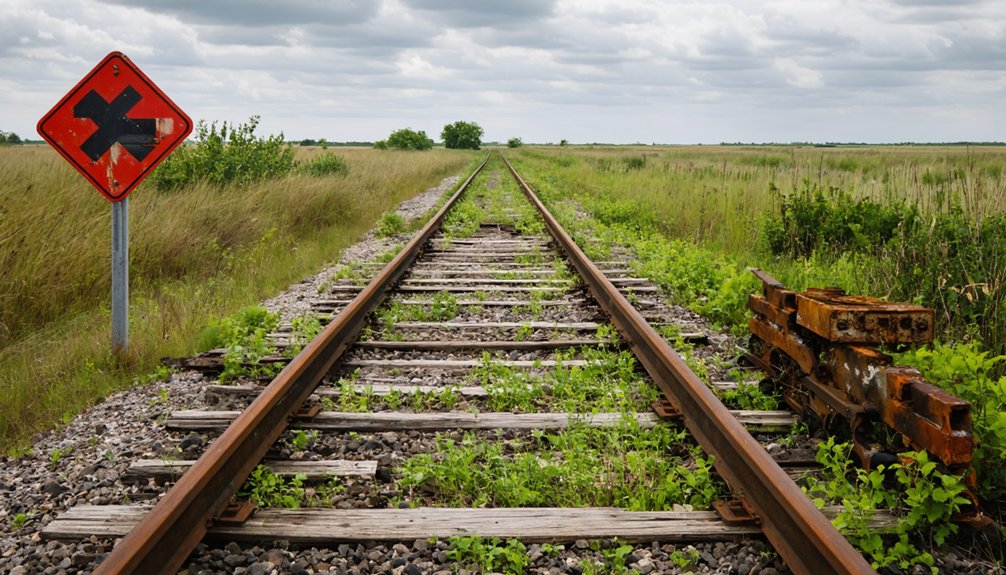
Standing where Fallis’s two railroad lines once intersected, you’ll find yourself at the geographic heart of what made this town matter. The Katy and Fort Smith & Western crossing transformed this valley into a trans-shipment powerhouse that once moved half-million-dollar cotton harvests.
Exploring abandoned rail infrastructure reveals the skeleton of that prosperity:
- Overgrown track beds wind through Bear Creek valley where trains once hauled 10,500 cotton bales
- The water pump station site marks where locomotives refreshed for their journeys
- Empty ground shows where roundhouse dreams died unbuilt
- Two weathered brick buildings stand sentinel near the old depot location
- A solitary bank vault guards memories of rail-era commerce
Documenting the former rail corridor, you’ll trace the arteries that fed this town’s brief significance before abandonment claimed them.
The Abandoned Schoolhouse: a Window Into the Past
Beyond the overgrown railroad beds, foundation stones mark where Fallis‘s 1892 schoolhouse once anchored community life in this wooded valley. You’ll find grass-covered remnants where children’s laughter once filled rooms, where spelling bees and Christmas programs brought families together.
This modern brick building served Negro children before becoming a Baptist church, then slowly surrendered to time’s grip.
The abandoned structure stands as stark record to forces beyond local control—mechanized farming, the Dust Bowl, population collapse from 173 to 21 souls. You’re witnessing what happens when cotton, railroads, and opportunity vanish simultaneously.
Despite minimal historic preservation efforts or community restoration plans, these foundation stones speak volumes. They’re your unfiltered connection to Mission’s tribal roots and Fallis’s brief flowering—a story no bureaucrat can sanitize.
Meeting the 20 Residents Who Call Fallis Home
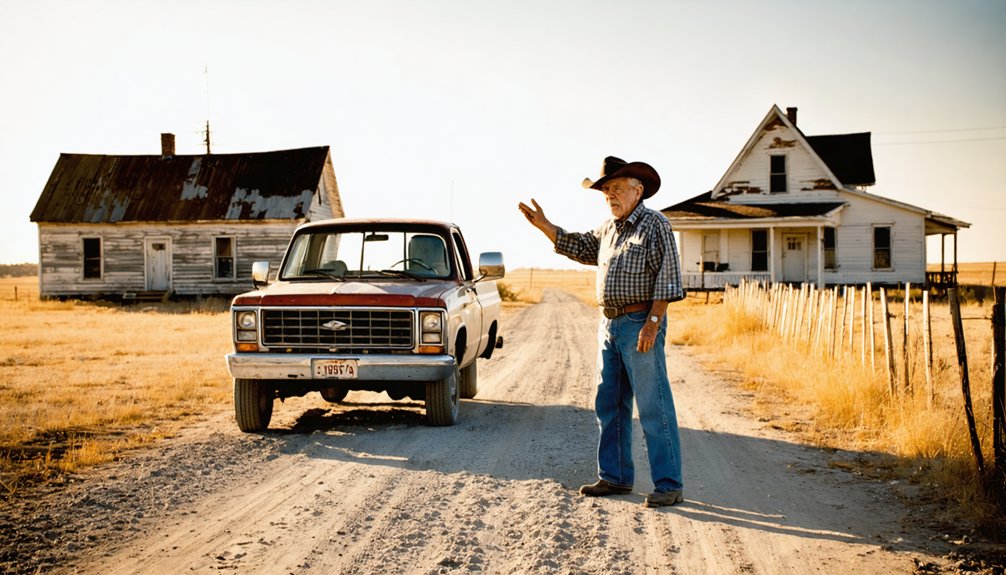
The handful of people who’ve chosen to stay in Fallis maintain their connection to the outside world through a modest post office, a quiet anchor that arrives with mail and departs with their letters to distant relatives.
You’ll notice the volunteer fire department building stands ready despite the town’s dwindling size—a symbol/indication/sign to neighbors who still protect one another’s wooden homes and weathered barns. These remaining residents have woven their own safety net from scattered farms and properties, creating bonds that cities of thousands never quite manage to forge.
The Post Office Lifeline
Twice daily during Fallis’s heyday, the Katy Railroad whistled through town delivering mail that connected 350 residents to the wider world beyond the prairie. You’ll discover how postal delivery methods evolved from John F. Murdock’s original 1892 “Mission” post office into a sophisticated hub serving a thriving frontier community.
The postal infrastructure operations supported an impressive commercial network:
- Four general stores conducting business correspondence
- Two cotton gins shipping agricultural documentation
- Two banks processing financial transactions
- Two lumberyards coordinating timber orders
- Multiple hotels and blacksmith shops maintaining supply chains
Volunteer Fire Department Community
These volunteers remember 1906’s devastating blaze that consumed five businesses when no department existed. They’ve learned from history, maintaining equipment across agricultural land and woods prone to ignition.
Their station, paired with the 1999 community building, creates a nucleus of resilience. Here, volunteerism isn’t charity—it’s survival, freedom from dependence, self-reliance perfected. You’re witnessing authentic American grit.
Literary Legacy: Authors and Poets of Fallis
Despite its small size, Fallis nurtured an extraordinary concentration of literary talent that would seem improbable for a town of barely 300 souls. You’ll discover this settlement produced five nationally recognized authors and two celebrated poets—a phenomenon that defied conventional geography and drew attention from literary societies across America.
Seven literary luminaries emerged from a dusty Oklahoma town of 300—a concentration of talent that mystified America’s literary establishment.
Their remarkable achievements included:
- Jennie Harris Oliver, Oklahoma’s third poet laureate, whose work “Mokey” caught MGM’s eye and whose home became sacred ground for annual writer pilgrimages
- Blanche Seal Hunt’s “Little Brown Koko” series, engaging children nationwide through Household Magazine for two decades
- Vingie E. Roe’s western novels immortalizing frontier landscapes
- Delbert Davis, earning poet laureate honors at award ceremonies in 1963
- Beulah Rhodes Overman’s detective tales thrilling mystery enthusiasts
These writers supported each other’s creative pursuits, forging an artistic community that transcended Fallis’s dusty roads.
The Working Post Office and Community Building
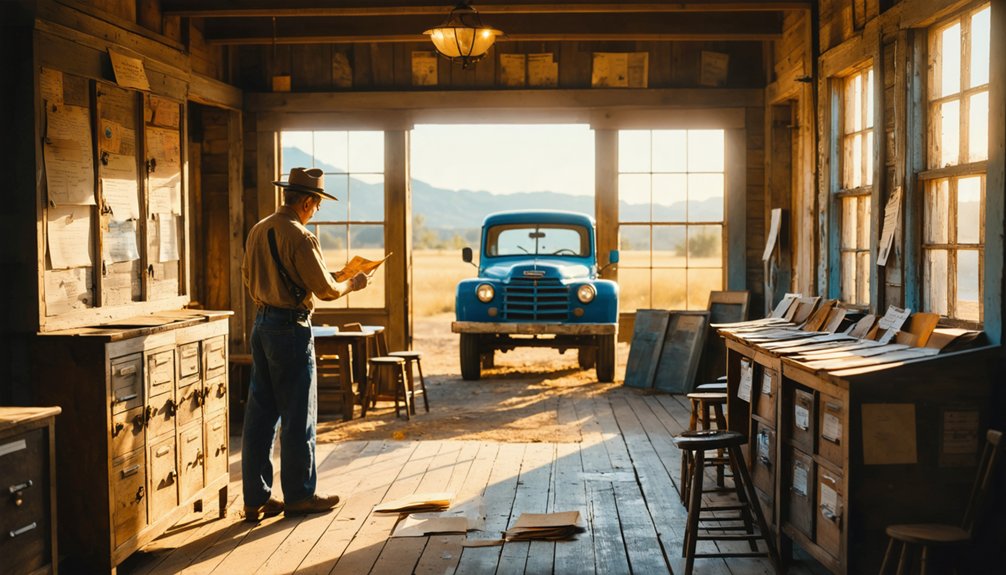
Long before Fallis became a ghost town, its post office anchored a thriving hub where the Katy Railroad’s whistle announced mail delivery twice daily. You’ll find that working post office still standing—a memorial, an emblem, a symbol to community preservation in a town where population dwindled from 400 to just 20. First established in 1892 as “Mission,” it’s witnessed everything from cotton gin prosperity to oil boom decline.
Today’s post office services connect those final holdouts to the wider world, operating alongside a 1999 community building and fire station staffed by twenty volunteers. You’re standing where four saloons once roared, where two banks financed dreams, where railroad junctions promised endless possibilities. That little post office endures—proof that some communities refuse to vanish completely, choosing instead to persist against all odds.
Best Times to Visit and Photography Tips
When Oklahoma’s spring air settles between 60°F and 80°F from April through June, you’ll discover Fallis at its most forgiving—a ghost town stripped bare under generous daylight that stretches across the flat prairie.
Fall delivers equally compelling light conditions, with September and October painting rural decay in amber tones while maintaining that same comfortable range.
Your off season experience demands strategic timing:
- Drive slowly along public roads, observing structures without crossing property lines
- Capture the wishing well and remaining buildings during golden hour
- Respect occupied homes—wave from distance, move on
- Bring water and supplies for contemplative 30-minute stops
- Avoid summer’s harsh crowds and winter’s unpredictable snow that renders dirt roads impassable
No amenities exist here. You’re untethered, unscheduled, free.
Nearby Attractions in Lincoln County
Twenty-five miles northeast of Fallis, Chandler anchors your ghost town pilgrimage with substance—a Route 66 town that survived what killed its neighbors. You’ll find the Lincoln County Museum of Pioneer History spread across three century-old buildings, displaying the artifacts of territorial survival.
The Route 66 Interpretive Center occupies a 1937 sandstone armory with walls twenty inches thick—architecture built to endure.
Seaba Station’s motorcycle museum preserves 140 vintage machines in a 1920s building that’s weathered nearly as much as you have. Beyond these historic museums and cultural centers, regional agricultural attractions like Painted Gate Farm connect you to working cattle ranches where Oklahoma’s rural traditions continue unbroken. Bell Cow Lake offers RV camping when civilization’s density becomes too much.
Frequently Asked Questions
Are There Any Restaurants or Places to Eat in Fallis?
You won’t find local eatery options in Fallis itself—it’s practically abandoned. Pack your own provisions for this remote adventure, though you might occasionally spot seasonal food trucks during special events in nearby towns along your journey.
Can Visitors Enter the Abandoned Schoolhouse or Is It Private Property?
Like Pompeii’s ruins, you can’t enter—the schoolhouse is now just foundation stones on an empty lot. Potential liability concerns and structural instability risks aside, there’s nothing left to explore but memories frozen in time.
Is Camping Allowed Near Fallis or in the Surrounding Area?
Seasonal camping availability exists at nearby state parks and Turner Falls, though you’ll need to check local municipal camping regulations for Fallis itself. The surrounding wilderness offers primitive sites where you can escape civilization’s constraints and roam freely.
Do I Need Permission to Explore the Old Railroad Corridors?
You’ll need to tread carefully—abandoned corridors often revert to private property. Check local regulations first, then obtain landowner permission before exploring these ghostly paths. Respecting boundaries guarantees your freedom to roam remains uncompromised and legal.
Are There Any Guided Tours Available in Fallis?
No guided tours offered by local historians exist in Fallis. You’ll find freedom exploring independently—self-guided walking tours of historical sites aren’t formally established, but you can drive slowly through town, photographing abandoned buildings from public roads without trespassing.