You’ll discover Michigan’s best-preserved ghost town at Fayette Historic State Park, where 20 original limestone buildings stand frozen since 1891. The remote Garden Peninsula location protected these structures from scavengers, leaving you with intact blast furnaces, beehive kilns, and workers’ homes to explore freely. Visit mid-May through mid-October when buildings are open—weekday mornings in late May or early September offer fewer crowds and better photos. Michigan residents need a Recreation Passport, while out-of-staters pay daily fees. There’s much more to uncover about this remarkable industrial village.
Key Takeaways
- Fayette Historic State Park is open year-round, but the 20+ preserved townsite buildings are accessible only mid-May through mid-October.
- The park features 45-foot blast furnaces, ten beehive charcoal kilns, and a complete 19th-century industrial village with free building access.
- Michigan residents need a Recreation Passport for entry; out-of-state visitors pay daily or annual pass fees at the gate.
- Visit weekday mornings in late May or early September for smaller crowds and optimal photography conditions at this remote site.
- Located on Garden Peninsula, Fayette preserves an 1867-1891 iron smelting boomtown with intact machinery and original worker housing.
The Rise and Fall of Michigan’s Iron Smelting Boomtown
When Fayette Brown surveyed the pristine shoreline of Snail Shell Harbor in the late 1860s, he wasn’t admiring the view—he was calculating profit margins. The Jackson Iron Company agent saw limestone cliffs, endless hardwood forests, and deep water access—everything needed for a smelting empire.
By December 1867, blast furnaces roared to life, transforming raw ore into 229,288 tons of America’s finest pig iron over 24 years.
The economic impacts rippled through Michigan’s Upper Peninsula as 500 workers forged metal that built railroads and cities. But freedom comes with a price. By 1891, the hardwood forests vanished, leaving an environmental legacy of stripped hillsides and abandoned kilns.
The furnaces went cold, workers scattered, and Fayette became what you’ll explore today—a perfectly preserved ghost town.
What Makes Fayette Different From Other Ghost Towns
Unlike most ghost towns where you’ll find crumbling ruins and dusty foundations, Fayette stands before you as a complete 19th-century industrial village—over 20 original buildings with charcoal still loaded in the furnaces exactly as workers left them in 1891. You’re not squinting at historical markers trying to imagine what once stood here; you’re walking through furnished homes with dishes set on tables, past the superintendent’s house, hotel, machine shop, and workers’ residences that Michigan has meticulously stabilized since 1959.
This isn’t a scattered collection of abandoned structures—it’s an entire functioning townsite frozen in time, preserved within 711 acres of state parkland where every building tells its story without interpretation needed.
Complete Industrial Complex Preserved
Most ghost towns offer scattered foundations and the occasional crumbling wall—Fayette gives you an entire 19th-century iron smelting operation frozen in time. You’ll explore two massive blast furnaces that churned out 225,000 tons of pig iron between 1867 and 1891. The upper machinery level, charcoal kilns, lime kiln, and machine shop—over twenty original buildings stand ready for your discovery.
Fayette’s remote location on Garden Peninsula kept scavengers away after operations ceased abruptly in 1891. While the intact industrial machinery was dismantled, the bone structure remained untouched. You’re seeing what workers abandoned: the complete industrial ecosystem from charcoal production through final pig iron ingots. It’s industrial archaeology at its purest—no reconstruction, just raw history.
State-Managed Historic Townsite
That industrial skeleton you’re walking through exists in such pristine condition because Michigan stepped in at exactly the right moment. In 1959, they acquired Fayette for $30,879.48—preventing the private exploitation that’s gutted countless other ghost towns. This wasn’t abandonment; it was intervention.
The state funding allocation through the Department of Natural Resources maintains over 20 original buildings you can actually explore, not just photograph from behind chain-link. Historic preservation impacts are visible everywhere: stabilized structures, costumed interpreters who’ll answer your questions without corporate scripts, and five miles of trails interpreting both industrial grit and natural beauty.
You’ll need a Recreation Passport for vehicle entry, but buildings are free to explore mid-May through mid-October. Unlike crumbling ruins elsewhere, Fayette’s preservation lets you experience history on your terms.
Exploring the Blast Furnaces and Industrial Complex
When you stand before Fayette’s 45-foot stone blast furnaces, you’re facing the beating heart of what was once Michigan’s most advanced iron-smelting operation.
The complex stretches along the waterfront with its row of ten beehive-shaped charcoal kilns, casting houses, and the massive steam-powered machinery that once forced superheated air through tons of iron ore, limestone, and charcoal.
Step inside the interpretive displays to see how workers transformed raw materials into 229,000 tons of pig iron—you’ll trace the complete journey from hardwood forest to molten metal, discovering why this remote harbor became an industrial powerhouse that rivaled any foundry on the Great Lakes.
Towering Charcoal-Fired Furnaces
Standing before Fayette’s twin blast furnaces, you’ll confront the massive stone towers that once roared with industrial fire for 24 consecutive years. The Jackson Iron Company built these monsters between 1867 and 1870, strategically positioning them at Snail Shell Harbor where raw materials processing flowed seamlessly from forest to foundry to ship.
The company secured 16,000 acres of surrounding hardwood, feeding several kilns that kept both towers blazing. Together, they produced 229,288 tons of pure iron before operations ceased in 1891. You’ll notice the furnaces remain loaded with original charcoal—frozen in time since their final day. The steel roofing Michigan added protects these industrial relics from the elements.
What made these furnaces extraordinary was their smelting process efficiency using locally-sourced charcoal instead of coke.
Iron Production Technology Display
Inside Fayette’s industrial complex, you’ll discover how raw materials transformed into valuable pig iron through a surprisingly elegant process that ran 24 hours a day. Steam engines forced heated air through towering furnace stacks, igniting charcoal that melted ore at extreme temperatures.
You’ll watch limestone flux bind with impurities, floating them to the surface as slag while pure molten iron drained through tapholes into sand channels below.
The interpretive technology exhibits bring this vanished world alive. A planned model blast furnace will let you trace each step, from charcoal ignition to those 80-pound pig ingots cooling on the floor.
Furnace demonstrations reveal why Fayette’s operation earned medals in Upper Peninsula competitions, producing 229,288 tons before coal-powered smelting made these pioneering charcoal methods obsolete in 1891.
Walking Through Preserved 1880s Buildings and Homes
You’ll wander freely through the three-story warehouse, past hollow-windowed brick buildings where machinery once thundered, and into the opera house where community social spaces brought culture to industrial grit.
The machine shop stands silent now, its tools frozen mid-task since 1891. Over 20 structures await your exploration—no velvet ropes, just raw history beneath your boots.
Best Time to Visit and Park Entry Requirements
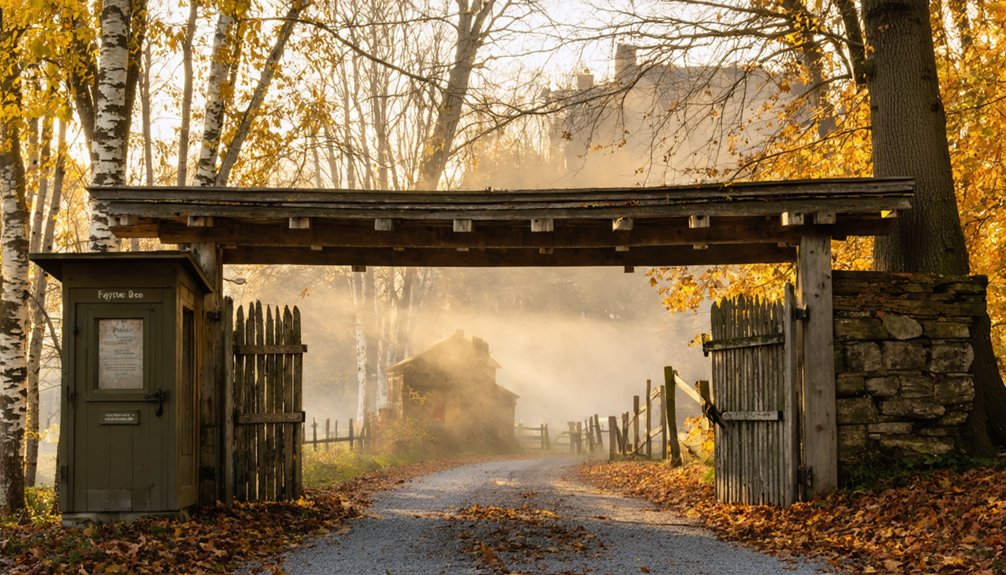
You’ll find Fayette Historic State Park open year-round from 8 a.m. to 10 p.m., but the townsite buildings grant access to their doors only mid-May through mid-October—outside those months, you’re limited to trail hiking and winter sports while the structures remain shuttered.
Michigan residents need a Recreation Passport ($13 annually or $9 for motorcycles), while out-of-state visitors pay $9 daily or $34 for an annual pass, all purchasable at the park entrance.
Summer weekends draw the heaviest crowds, so you’ll experience shorter wait times and better photo opportunities on weekday mornings, particularly in late May or early September when the buildings are accessible but the parking lots aren’t jammed.
Seasonal Operating Hours
Fayette Historic State Park welcomes visitors 365 days a year from 8 a.m. to 10 p.m., though the historic townsite keeps tighter seasonal hours. You’ll find buildings open mid-May through mid-October, with spring access starting May 12 at 9 a.m. to 5 p.m.
Summer brings extended hours from June 16 through September 4, when the townsite stays open until dusk—perfect for catching golden hour photography among the ruins.
Shoulder season visitation in May, June, and September offers fewer crowds and crisp hiking weather. The townsite closes for winter operations after October 22, but you’re free to explore the outdoor areas year-round. Plan accordingly: arrive between late spring and mid-fall for full access to historic buildings and costumed interpreters who bring the ghost town’s story alive.
Michigan Recreation Passport
Before you load up the car for your ghost town adventure, know that Michigan requires a Recreation Passport for vehicle entry to Fayette Historic State Park. If you’re a Michigan resident, you’ve got convenient resident purchase options: check “YES” when renewing your plates at the Secretary of State for just $6 on motorcycles, or grab one separately at DNR centers with a windshield sticker.
Your non-resident purchase requirements are straightforward—$42 annually or $12 daily for any Michigan-registered vehicle outside the state. That daily pass lets you explore multiple parks on the same day, perfect for combining Fayette with nearby Peninsula Point Lighthouse. Don’t forget: this passport covers park entry only, not camping fees. Self-serve kiosks at the entrance make last-minute purchases simple, keeping you moving toward those weathered limestone furnaces.
Weather and Crowd Considerations
Timing your visit shapes everything about your Fayette experience, from the crunch of frost-kissed leaves underfoot to whether you’re jostling for parking with minivans full of summer vacationers. Peak visitation periods hit during July and August when families flood the grounds, but you’ll find breathing room in May or June when spring blossoms frame the limestone kilns without the crowds.
October delivers the ultimate payoff—blazing fall colors meet Halloween’s spooky vibe, though you’ll share trails with foliage chasers. The park opens year-round from 8 a.m. to 10 p.m., but historic buildings and campgrounds close mid-October through mid-May. Winter visits mean solitude but limited recreational activities.
September strikes the sweet spot: comfortable hiking weather, emerging autumn colors, and elbow room to explore.
Getting to Fayette Historic State Park on Garden Peninsula
Tucked at the southern tip of Michigan’s Upper Peninsula, Fayette Historic State Park sits along the Lake Michigan coastline between Snail Shell Harbor and Sand Bay, overlooking the pristine waters of Big Bay de Noc. You’ll find this 711-acre treasure by turning south onto M-183 from U.S. 2, then driving 17 miles down the Garden Peninsula’s coast. The journey passes through the town of Garden at the 9-mile mark before reaching the park.
Your GPS can guide you to either 4785 II Road or 13700 13.25 Ln—both lead to the same destination between Escanaba and Manistique. Once you arrive, you’ll need a Michigan Recreational Passport to access the historic townsite history and parkland recreational activities that make this ghost town worth the drive.
Life in a 19th Century Company Town: Stories of Immigrant Workers
Between 1867 and 1891, approximately 500 immigrants from Canada, the British Isles, and northern Europe called this remote Lake Michigan settlement home. The diversity of immigrant backgrounds created a vibrant community where artisans, shopkeepers, a physician, farmers, and fishermen worked alongside furnace operators producing 230,000 tons of pig iron.
The legacy they left included social and cultural activities that defied the isolation—a coronet band, baseball team, and horse racing track brought entertainment to grueling workdays. Over 80 charcoal kilns kept furnaces blazing while children attended Furnace Hill School. Workers criticized the company store as “pluck me” for inflated prices, often ordering cheaper goods by mail.
When local hardwood exhausted in 1891, families scattered, ending this self-sufficient industrial experiment.
Snail Shell Harbor and the Natural Landscape
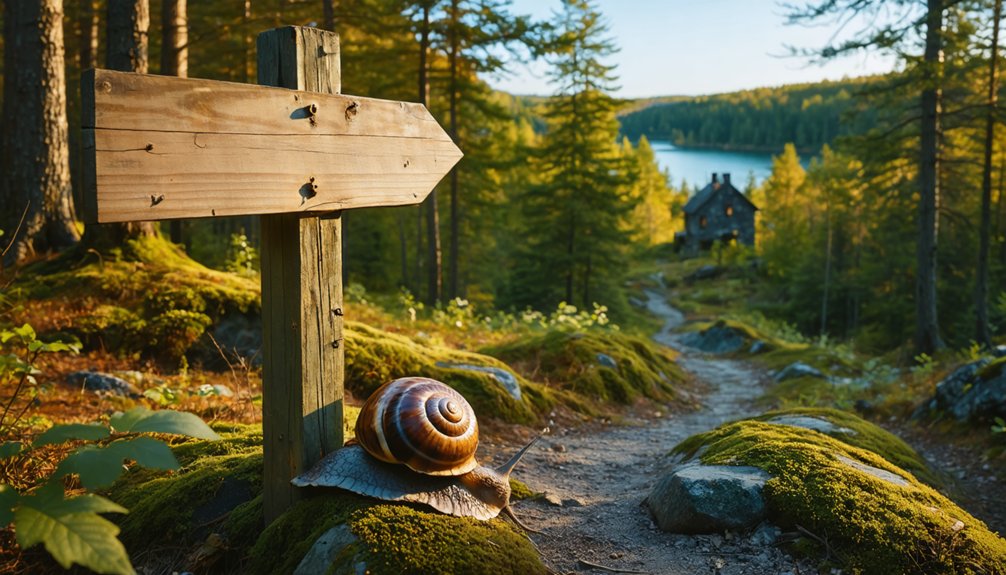
Where the Garden Peninsula juts into Lake Michigan’s Big Bay de Noc, 90-foot white limestone cliffs rise dramatically above the turquoise waters of Snail Shell Harbor. You’ll find these ivory bluffs rivaling the famous Pictured Rocks, wrapping around a sheltered natural harbor that’s drawn explorers for centuries.
The 711-acre park offers five miles of trails where limestone cliff views stretch endlessly before you. Stand at the Snail Shell Harbor Overlook and watch turquoise harbor waters shift from emerald to sapphire as clouds drift overhead. It’s raw, untamed Michigan wilderness at its finest.
Launch your kayak from the protected harbor, hike the bluff-top trails, or simply lose yourself in the landscape. This isn’t some manicured state park—it’s freedom carved in limestone and water.
Photography Tips for Capturing the Historic Townsite
With over 20 weathered buildings frozen since 1891, Fayette delivers a photographer’s paradise where industrial ruins meet wilderness drama. You’ll find interpretive lighting setups naturally occur during October’s golden hours, when autumn sun rakes across limestone cliffs and historic architecture details emerge from shadow.
Chase these money shots:
- Window compositions – Peer into workers’ homes where period furniture and table settings create ready-made still lifes
- Charcoal kilns at dawn – Catch dramatic side-lighting on massive stone furnaces while crowds sleep
- Ancient cedar framing – Use 1,400-year-old trees as natural vignettes for architectural subjects
- Harbor overlook panoramas – Capture turquoise waters meeting white cliffs with townsite mid-ground
Weekday visits guarantee empty frames. The shore trail loop provides elevation changes for varied perspectives, while gnarled roots emerging from rocks add textured foreground drama.
Nearby Attractions and Where to Stay in the Upper Peninsula
After filling your memory cards with Fayette’s haunting architecture, you’ll discover the surrounding Upper Peninsula rewards extended exploration. Historic sites like Sand Point Lighthouse—where Mary Terry kept the beacon burning for 18 years—and the Great Lakes Shipwreck Museum reveal maritime legends. Natural attractions dominate your options: Pictured Rocks’ towering cliffs, Tahquamenon Falls’ amber cascades, and Kitch-iti-Kipi’s crystal-clear springs. Big Bay de Noc delivers world-class walleye fishing, while Seney National Wildlife Refuge offers wildlife encounters.
For lodging, Fayette’s on-site camping keeps you within the 711-acre park year-round. The preserved structures, including the hotel building, create an atmospheric basecamp. You’ll find 3.5 miles of trails winding through hardwood forests and dramatic limestone bluffs overlooking Snail Shell Harbor—perfect for morning explorations before venturing farther into wilderness territory.
Frequently Asked Questions
Are Pets Allowed at Fayette Historic State Park?
While historic buildings remain off-limits, you’ll find pet policies surprisingly welcoming elsewhere. You can explore trails, campgrounds, and shorelines with your leashed companion. Service animals enjoy broader accessibility, letting you freely discover this ghost town’s haunting beauty together.
Is the Historic Townsite Wheelchair Accessible for Visitors With Mobility Issues?
The historic townsite’s partially wheelchair accessible, with designated parking and paved roads as accessibility options. You’ll find visitor accommodations like a track chair available daily (9 a.m.-4 p.m.), letting you explore this ghost town’s rugged terrain freely.
Can You Camp Overnight at Fayette Historic State Park?
Under stars that once watched miners sleep, you’ll find freedom in 61 modern campsites with full hookups. Seasonal availability runs year-round, and campsite amenities include showers, electric service, and WiFi—blending historic solitude with contemporary comfort.
Are There Restroom Facilities Available Throughout the Historic Townsite?
Yes, you’ll find accessible vault toilets strategically placed throughout the historic townsite, including near the livery barn with handicap parking availability. The visitor center offers modern restrooms among its visitor amenities, ensuring your comfortable exploration.
How Long Does a Typical Visit to Fayette Take?
Like wandering through a time capsule, you’ll need 2-4 hours for a typical visit duration. Seasonal visitation patterns show summer crowds exploring longer, while spring and fall offer peaceful, self-paced discovery of Fayette’s haunting beauty.