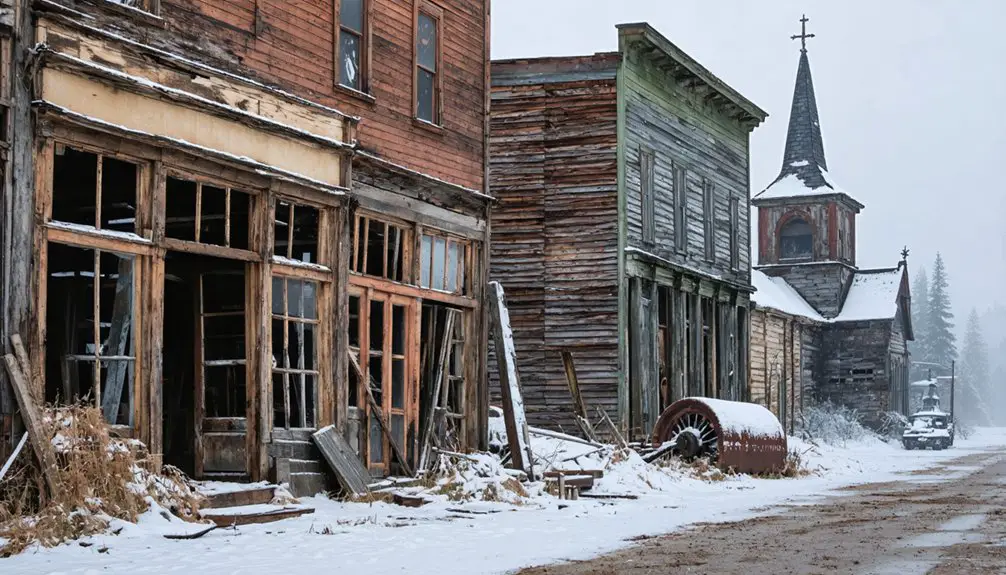
Planning a ghost town road trip to Fire Creek, West Virginia means venturing deep into New River Gorge National Park, where a once-thriving 1873 coal camp now sleeps beneath dense forest. You’ll navigate unpaved, rugged roads, so bring a high-clearance vehicle, sturdy footwear, and plenty of water. Scattered foundations and historic coke ovens reward the adventurous explorer. Pair your visit with nearby ghost towns like Thurmond and Beury, and there’s far more to discover ahead.
Key Takeaways
- Fire Creek, founded in 1873, is a former coal camp in New River Gorge National Park, Fayette County, West Virginia.
- High-clearance or four-wheel-drive vehicles are recommended, as access requires unpaved roads and rough trails.
- Check National Park Service maps and current road conditions before departing for Fire Creek.
- Remnants include scattered foundations and coke ovens, with historical maps aiding orientation among dense forest.
- Nearby ghost towns Thurmond, Beury, and Pennbrook offer additional stops enriching the region’s coal-era history.
What Made Fire Creek a Ghost Town?
Once a thriving coal camp carved into the rugged cliffs of the New River Gorge, Fire Creek’s story follows a trajectory that’s tragically common across Appalachia. Founded in 1873, the town rode the coal industry’s explosive growth, shipping coke and coal along Chesapeake and Ohio Railway lines to distant markets.
But Fire Creek’s labor history tells a harder truth. Residents fought for better conditions, participating in strikes as early as 1880. Despite their resistance, broader economic forces won out.
Postwar demand for coal collapsed, and one by one, the town’s lifelines disappeared. The post office closed in 1947. The rail depot followed in 1957.
How Do You Get to Fire Creek in the New River Gorge?
Knowing Fire Creek’s history makes you want to see it for yourself, and getting there requires some preparation. Fire Creek sits within New River Gorge National Park and Preserve in Fayette County, West Virginia, near the historic town of Thurmond.
Your access routes will likely involve unpaved roads and rough trails branching off the gorge’s main corridors, so bring a high-clearance or four-wheel-drive vehicle. Before heading out, check current National Park Service maps and road-condition notices to avoid dead ends or closures.
A few practical travel tips: visit during daylight hours in warmer months when trails are drier, wear sturdy footwear, and carry water and a printed map. Cell service in the gorge can be unreliable, so plan your route before you leave.
What’s Left to See at Fire Creek Today?
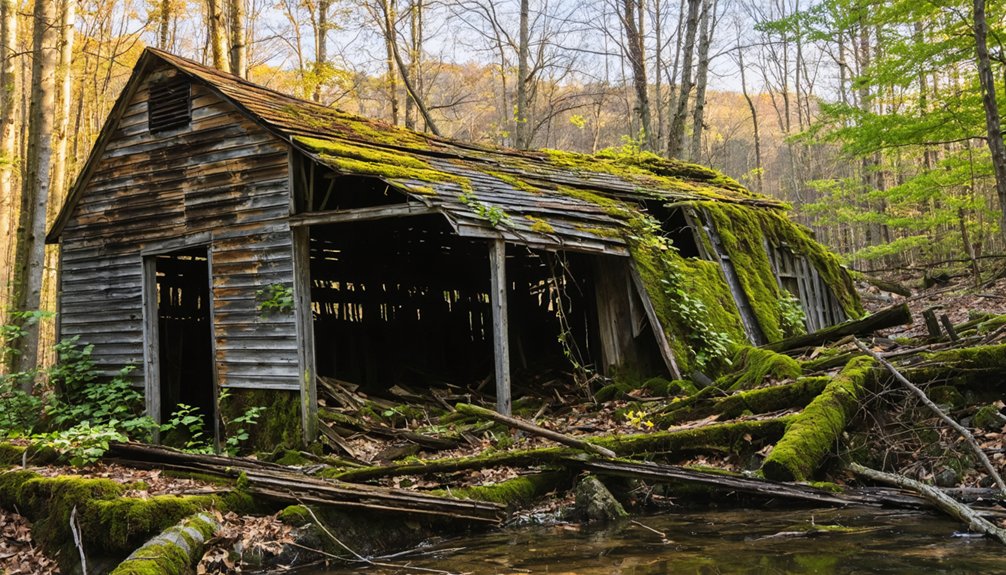
What remains at Fire Creek today tells a quiet but compelling story of industrial ambition slowly reclaimed by nature. As you explore the site, you’ll find scattered foundations, remnants of coke ovens, and traces of structures that once supported an entire working community.
Unlike many New River Gorge camps built with wood, Fire Creek used brick more extensively, so some ruins have better withstood the decades.
The historical significance here runs deep — you’re walking ground where coal shaped lives, labor movements stirred, and an entire economy rose and fell. Dense forest and Appalachian hillsides now cover former street layouts, making ruins exploration both challenging and rewarding.
Bring a historical map to orient yourself and fully appreciate what this forgotten community once looked like at its peak.
Which Nearby Ghost Towns Pair Well With Fire Creek?
After soaking in Fire Creek’s ruins, you’ll find that the surrounding New River Gorge holds several ghost towns worth folding into your itinerary.
Thurmond History runs deep here — its preserved depot and interpretive signage give you context that Fire Creek’s overgrown foundations can’t fully provide.
Head further into the gorge and you’ll encounter the haunting Beury Ruins, where nature has aggressively reclaimed what industry left behind.
Consider adding these stops to feel the full weight of the gorge’s past:
- Thurmond — a rare, walkable slice of preserved coal-era history
- Beury — crumbling walls swallowed by Appalachian forest
- Pennbrook — quiet, overlooked, and powerfully remote
- New River Gorge scenic overlooks — connecting each ghost town emotionally and geographically
What Should You Know Before You Drive to Fire Creek?
Before you point your vehicle toward Fire Creek, there are a few realities about this terrain you’ll want to respect. Unpaved, rugged roads make high-clearance or four-wheel-drive vehicles strongly advisable.
Check current National Park Service road-condition notices before departing, as conditions shift seasonally.
Take your safety precautions seriously — wear sturdy footwear, carry water, and bring printed maps since cell service in the gorge is unreliable.
Visit during daylight hours in drier months for the safest, clearest experience.
Fire Creek’s historical significance also demands respectful behavior. You’re walking through a 150-year-old coal camp with fragile ruins, surviving coke-oven remnants, and brick foundations.
Don’t disturb structures or remove artifacts. Honoring those boundaries keeps this extraordinary slice of Appalachian history accessible for every explorer who follows you.
Frequently Asked Questions
Was Fire Creek Ever Considered for Historical Preservation or Landmark Status?
Fire Creek’s historical significance earned it protection within New River Gorge National Park and Preserve, where preservation efforts actively safeguard its ruins. You’ll find its foundations and coke oven remnants recognized as valuable remnants of Appalachian coal heritage.
Are There Any Guided Tours Specifically Focused on Fire Creek’s History?
You won’t find tours specifically focused on Fire Creek, but you can explore its ghost town legends and historical significance through New River Gorge National Park’s broader guided programs covering the gorge’s abandoned coal communities.
Did Any Notable Individuals or Families Originate From Fire Creek?
The knowledge doesn’t highlight famous residents or specific families tied to Fire Creek’s historical significance, but you’ll find its residents shaped labor history, organized strikes, and built community roots that echo freedom’s enduring, rebellious spirit.
Can Visitors Legally Collect Artifacts or Souvenirs Found at Fire Creek?
You can’t take artifacts at Fire Creek — legal considerations are strict here. Artifact collection violates federal law within New River Gorge National Park. Respect the ruins, snap photos instead, and you’ll preserve this freedom to explore for everyone.
Are There Any Documented Photographs or Maps of Fire Creek at Its Peak?
Like buried treasure, historic archives hold ghost town photography and maps of Fire Creek at its peak. You’ll want to explore the National Park Service records and local Fayette County historical collections for documented images.
References
- https://www.youtube.com/watch?v=-Uhfil4H13c
- https://en.wikipedia.org/wiki/Fire_Creek
- https://en.wikipedia.org/wiki/List_of_ghost_towns_in_West_Virginia
- https://kids.kiddle.co/Fire_Creek
- https://www.youtube.com/watch?v=pE1Q7P8qZ2k
- https://www.ghosttowns.com/states/wv/wv.html
- https://en.wikipedia.org/wiki/Category:Ghost_towns_in_West_Virginia
- https://www.youtube.com/watch?v=wYiDeaGt-yE
- https://www.youtube.com/watch?v=b2JfXdzfCmA
- https://www.trainorders.com/discussion/read.php?11,4901941