When you visit Picher, Oklahoma, you’re stepping into one of America’s most haunting industrial ghost towns. Once home to over 14,000 residents during its lead and zinc mining peak, it’s now a Superfund site marked by crumbling storefronts, toxic chat piles, and demolition warnings. Keep your windows up, avoid touching anything, and stay alert for unstable ground. There’s no emergency help nearby. Stick around, and you’ll uncover everything you need to explore this toxic boomtown safely.
Key Takeaways
- Picher, Oklahoma, not Fisher, is the ghost town located off Route 66 near the Kansas border, accessible via Route 69 North.
- Once home to 14,252 residents at peak, Picher collapsed after lead and zinc mining depleted, leaving toxic chat piles and crumbling buildings.
- Picher is a designated Superfund site; keep car windows up and avoid touching surfaces due to lead-contaminated dust.
- Nearby ghost towns Cardin, Treece, and Douthat share Picher’s toxic mining history, enriching the overall ghost town road trip experience.
- After visiting Picher, head south on Route 69 to Miami, Oklahoma, featuring the Coleman Theatre, Dobson Museum, and Route 66 historic corridor.
What’s Left Standing in Picher, Oklahoma’s Abandoned Ghost Town
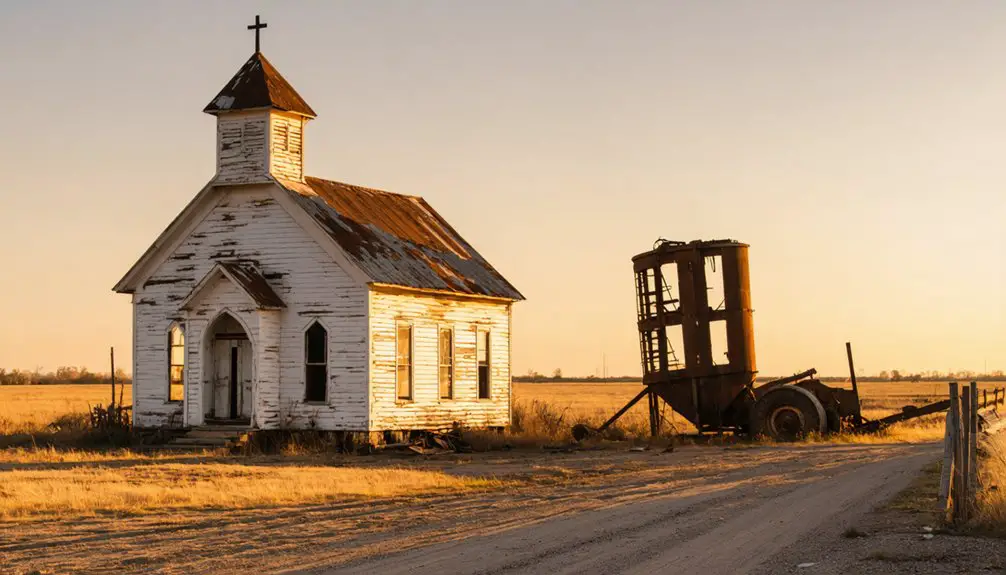
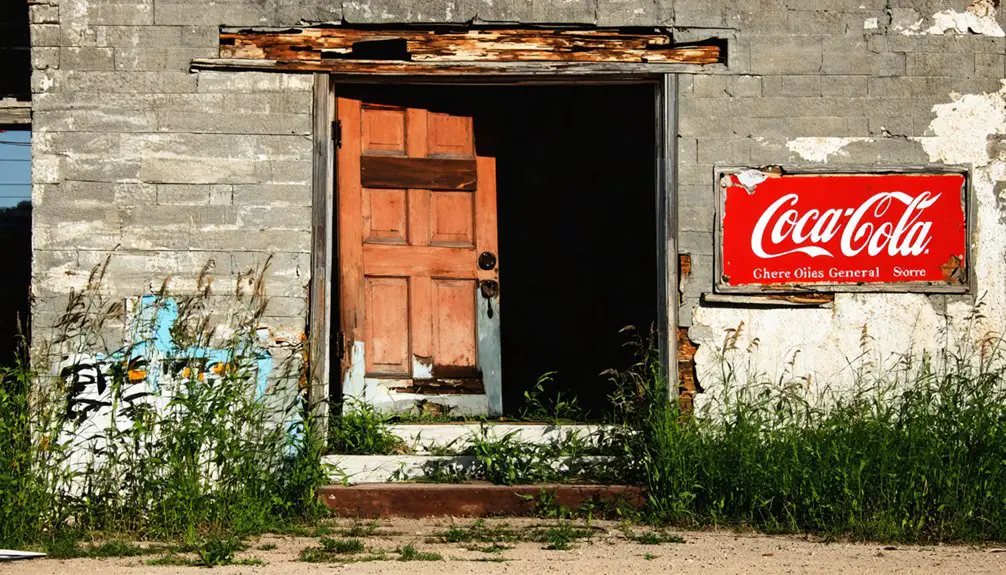
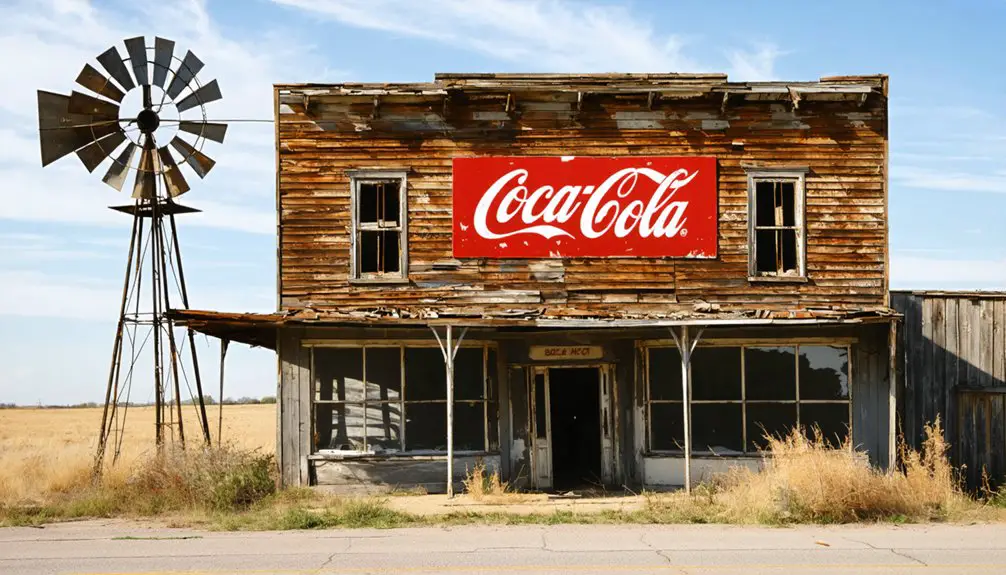
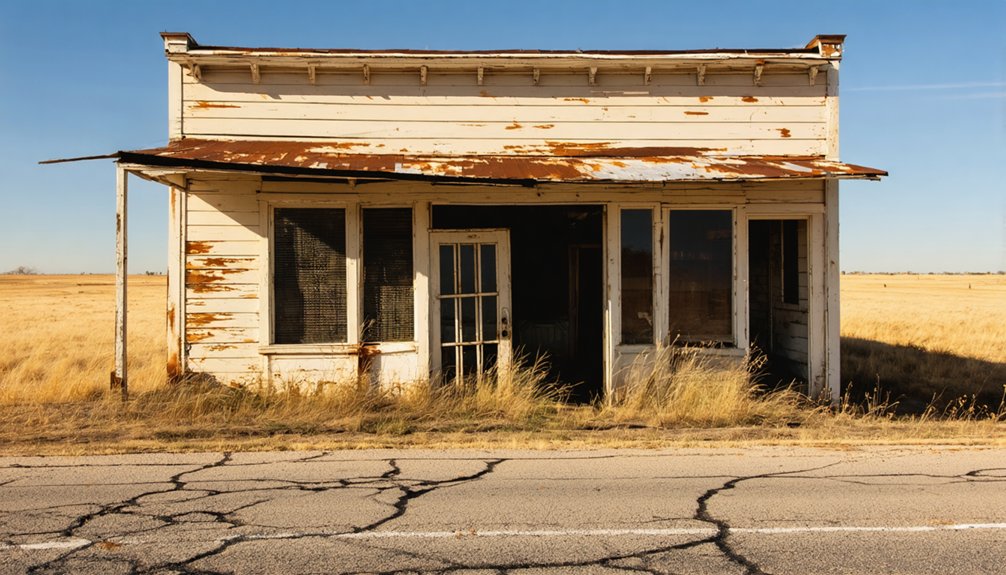
Once a booming mining town of over 14,000 residents, Picher now stands as a hollow shell of crumbling storefronts, toxic chat piles, and spray-painted warnings that read “Keep Out.”
Drive down Route 69 through the empty business district and you’ll see orange X’s marking buildings slated for demolition, foundations where homes once stood, and boarded-up facades slowly surrendering to time.
Orange X’s mark doomed buildings. Bare foundations. Boarded facades slowly surrendering to time along a ghost town’s main street.
A few abandoned structures still rise against the scarred horizon, carrying the historical significance of a community that once fueled America’s lead and zinc industries.
Keep your windows rolled up — the contamination is real. What remains isn’t just debris; it’s a raw, unfiltered snapshot of industrial boom and catastrophic bust.
Picher doesn’t sanitize its story. It leaves everything exposed for those bold enough to witness it firsthand.
Getting to Picher via Route 66 and Route 69
If you’re traveling Route 66, you’re already close — Picher sits just a few miles off the Mother Road in northeastern Oklahoma, near the Kansas border.
You’ll want to swing onto Route 69, which cuts directly through the heart of the abandoned town and serves as your main artery into this eerie landscape.
Keep your windows up as you approach, because the toxic chat piles that scar the horizon aren’t just an eyesore — they’re a genuine health hazard.
Route 66 Connection Details
Though Picher isn’t directly on Route 66, getting there from the Mother Road is straightforward. Head northeast from the historic highway and pick up Route 69, which cuts directly through what remains of this haunting ghost town.
The drive itself sets the tone — wide open Oklahoma skies, flat terrain, and a growing sense that civilization is fading behind you.
Route 66 travelers chasing authentic ghost towns beyond the usual roadside attractions will find Picher rewarding and unsettling in equal measure.
Once you turn onto Route 69 and roll through Picher’s empty business district, you’ll understand why this detour earns its place on any serious road tripper’s itinerary.
Freedom-seekers who crave raw, unfiltered American history won’t leave disappointed — just keep your car windows up.
Three turns stand between you and Picher’s eerie silence once you’re rolling northeast on Route 66.
Peel off onto Route 69 North, and you’ll feel the landscape shift—open plains dissolving into scarred industrial remnants. The Route Highlights here aren’t postcard-pretty; they’re raw and honest.
Follow these four navigational checkpoints:
- Exit Route 66 eastbound toward Commerce, Oklahoma
- Merge onto Route 69 North, watching for chat pile silhouettes breaking the Scenic Views
- Pass through Commerce, Mickey Mantle’s birthplace—a brief human touchstone
- Enter Picher’s outskirts, where orange demolition X’s and boarded storefronts signal arrival
Keep your windows rolled up once chat piles appear. Toxic dust travels freely.
You’re driving through history’s wreckage now—approach it with eyes wide open.
Health Risks and Ground Rules Before You Enter the Tar Creek Superfund Site
Before you step foot in Picher, you need to understand what you’re dealing with: decades of lead and zinc mining left behind toxic chat piles that have leached heavy metals into the groundwater and soil, making even brief exposure a serious health risk.
Keep your car windows up, don’t touch anything, and absolutely don’t walk on or near the chat piles, since the ground beneath you may be honeycombed with abandoned mine shafts that can collapse without warning.
Treat this visit like the EPA does — with caution — because Picher isn’t just a ghost town; it’s a designated Superfund site that earned its uninhabitable status the hard way.
Understanding Toxic Contamination Risks
Visiting Picher isn’t just an eerie experience — it’s a genuinely dangerous one, and you need to understand why before you ever roll down your window or step outside your car.
Decades of lead and zinc mining left behind toxic exposure risks that linger despite ongoing environmental cleanup efforts by the EPA.
Here’s what you’re actually dealing with:
- Lead-contaminated dust floats freely from chat piles and can penetrate your vehicle instantly.
- Poisoned groundwater sits beneath the surface, seeping into soil you might casually walk across.
- Unstable ground from undermined subsurface shafts can collapse without warning.
- No emergency services exist — you’re completely on your own if something goes wrong.
Respect these risks.
Your freedom to explore means nothing if you’re too sick to enjoy it.
Essential Safety Precautions
Stepping onto Tar Creek Superfund land without preparation isn’t adventurous — it’s reckless. Keep your car windows up while driving through Picher’s hollow streets.
Don’t step onto chat piles — lead-laced dust clings to shoes, clothing, and skin. If you’re pursuing ghost town photography, shoot from your vehicle or paved surfaces only. Wear an N95 mask if you exit your car.
Don’t touch crumbling structures; subsurface mine shafts make ground stability unpredictable. Watch for “Keep Out” spray-painted warnings — respect them.
Local folklore romanticizes the “chat rats” who once roamed freely here, but those days carried real health consequences. Children and pregnant women shouldn’t visit at all.
Treat Picher like the designated uninhabitable zone it legally is — document its haunting beauty responsibly, then leave.
What you can’t see in Picher is what’ll kill you. Beneath the surface, collapsed mine shafts create unstable terrain that can swallow you whole without warning. The ground looks solid, but decades of tunneling have hollowed it out completely.
Follow these safety measures before you step anywhere:
- Stay in your vehicle — the toxic chat dust becomes airborne the moment you disturb it.
- Keep windows up — lead contamination travels invisibly through the air.
- Never enter structures — subsurface voids make every foundation a collapse risk.
- Obey orange X markings — these signal imminent demolition zones, not suggestions.
Picher doesn’t punish carelessness slowly. It punishes it immediately. Respect the warnings spray-painted across every remaining building — they’re written in survival ink.
Toxic Chat Piles and Why You Stay in Your Car
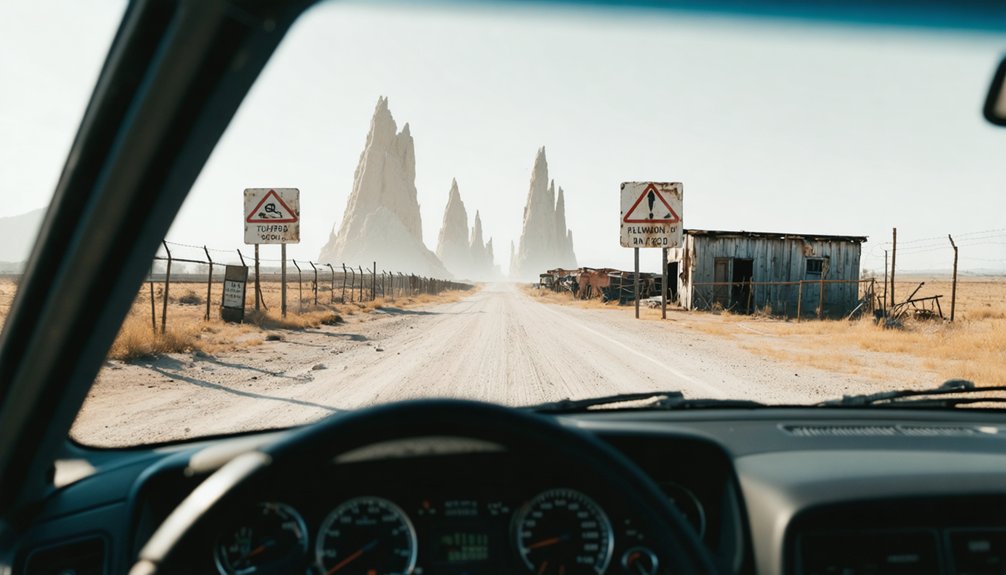
Those imposing gray mountains dominating Picher’s skyline aren’t natural formations — they’re chat piles, the toxic byproduct of decades of lead and zinc mining that turned this town into one of America’s most contaminated landscapes.
This mining history left behind mountains of crushed rock laced with lead, zinc, and cadmium that contaminated groundwater and poisoned generations of residents.
When you drive through, keep your windows up and stay in your car. Toxic exposure isn’t a distant risk here — it’s immediate. Lead dust particles travel through open windows, and stepping outside means contact with heavily contaminated soil.
The EPA’s ongoing Tar Creek Superfund cleanup tells you everything about severity. Drive slowly, observe the scarred horizon, and respect the invisible danger surrounding you on every side.
The Rise and Fall of Oklahoma’s Most Toxic Boomtown
Before the toxic chat piles and “Keep Out” warnings, Picher was a genuine American success story — and a fast one.
Lead and zinc discoveries transformed this Oklahoma landscape almost overnight. That mining legacy built fortunes — then left behind a poisoned wasteland.
Lead and zinc built empires here — then quietly poisoned everything they touched.
Here’s how quickly everything changed:
- 1913 — Harry Crawfish strikes lead and zinc, launching the boom
- 1926 — Peak population hits 14,252 at mining’s height
- 1983 — Superfund designation confirms what residents already felt in their bodies
- 2009 — Incorporated status cancelled; the town legally ceases to exist
Environmental remediation through the EPA’s Tar Creek Superfund site continues today, but no cleanup restores what’s lost.
You’re visiting proof that unchecked industrial progress extracts a permanent price from the land — and the people living on it.
Ghost Towns in Picher’s Shadow: Cardin, Treece, and Douthat
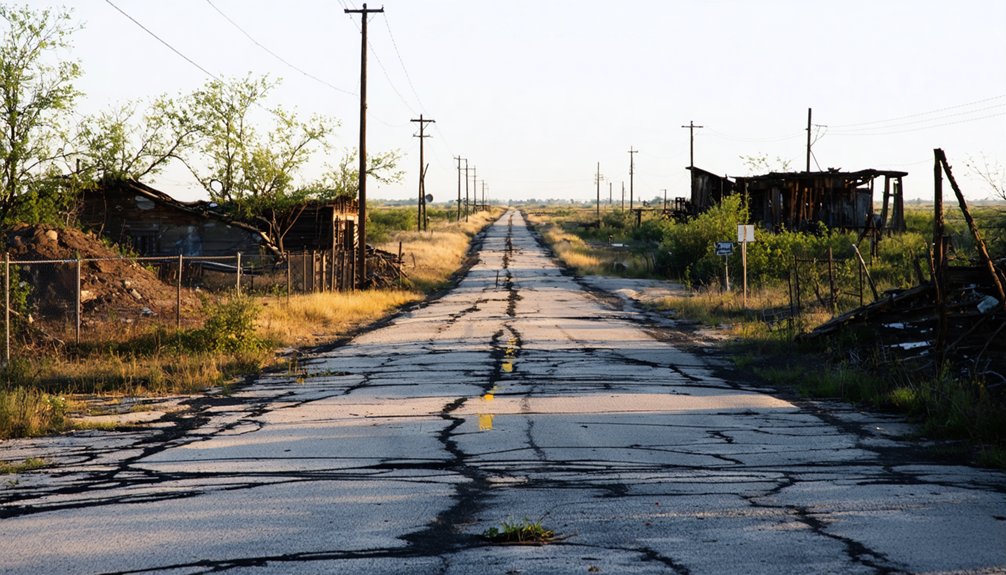
Picher didn’t fall alone. Its neighboring ghost towns — Cardin in Oklahoma and Treece and Douthat in Kansas — share the same toxic mining history and hollow fate. These communities rose alongside Picher during the lead and zinc boom, then crumbled just as fast when the ore ran dry and the land turned poisonous.
Your ghost town exploration naturally extends beyond Picher’s empty streets. Cardin sits just north, equally abandoned and eerily quiet.
Cross into Kansas and you’ll find Treece, another shell of a once-thriving mining settlement. Douthat rounds out this forgotten cluster of casualties.
Together, these towns form a haunting corridor of industrial ambition and environmental consequence. Drive through them all — you’ll feel the weight of what unchecked resource extraction truly costs.
After Picher: Miami, Route 66, and the Dobson Museum
After soaking in Picher’s ghost town silence, you’ll find a few miles of road separating you from Commerce, a small but living town, before Route 69 carries you south into Miami, Oklahoma — pronounced “My-am-uh” by locals.
Miami’s Route 66 History and Miami Attractions reward curious road trippers:
- Dobson Museum — Preserves Picher artifacts, giving context to everything you just witnessed.
- Route 66 corridor — Historic storefronts and neon signs remind you freedom once meant open highways.
- Coleman Theatre — A stunning 1929 Spanish Mission-style venue still hosting performances.
- Quapaw Nation headquarters — Located in nearby Quapaw, connecting regional Indigenous heritage to the land’s deeper story.
Miami breathes life back into you after Picher’s haunting emptiness, making it the perfect road trip reset.
Frequently Asked Questions
Is There an Entrance Fee to Visit Picher, Oklahoma?
You can freely roam Picher’s endless, haunting streets without paying an entrance fee! There aren’t any entrance restrictions, but respect its historical significance — toxic chat piles and “Keep Out” warnings mean you should stay in your car.
What Is the Best Time of Year to Visit Picher?
Spring or fall offers you the best season to explore Picher’s eerie landscape. Weather considerations matter here — you’ll want mild temperatures since you’re staying in your car with windows up to avoid toxic exposure.
Can You Legally Drive Through Picher’s Abandoned Streets Today?
Coincidentally, you *can* legally drive through Picher’s abandoned infrastructure on Route 69, where local history echoes through empty storefronts. Keep your windows up, stay in your car, and absorb the haunting, post-apocalyptic atmosphere safely.
Are There Guided Ghost Town Tours Available Near Picher, Oklahoma?
No formal guided tours exist for this ghost town, but you’ll find artifacts and history at Miami’s Dobson Museum. It’s your best starting point before exploring Picher’s haunting, abandoned streets on your own terms.
What Should I Pack for a Road Trip to Picher?
Pack your road trip essentials with this packing checklist: keep car windows up, bring water, wear closed-toe shoes, and grab a camera. You’ll want to document Picher’s eerie, post-apocalyptic landscape while staying safe from toxic chat piles.
References
- https://en.wikipedia.org/wiki/Picher
- https://www.okhistory.org/publications/enc/entry?entry=PI002
- https://www.youtube.com/watch?v=0KnAr4swnT8
- https://www.youtube.com/watch?v=pPB4Bal_mm8
- https://www.islands.com/1977293/americas-most-toxic-ghost-town-border-kansas-oklahoma-abandoned-mine-town-picher/
- https://allthatsinteresting.com/picher-oklahoma