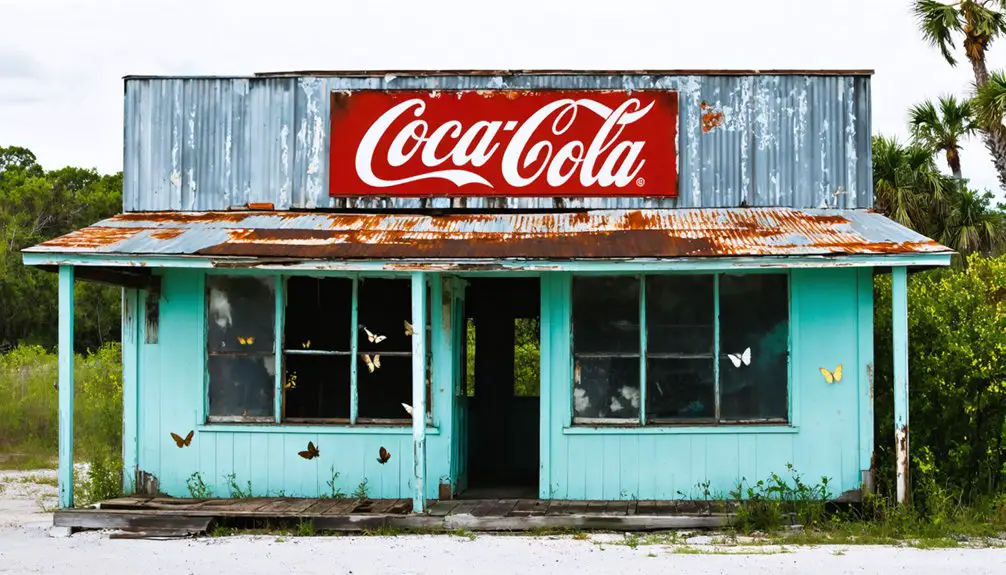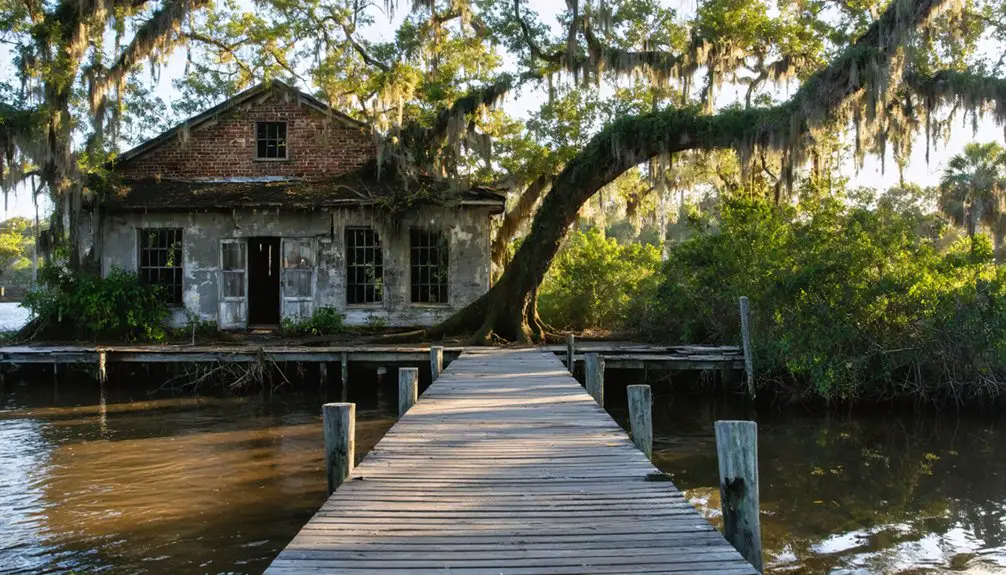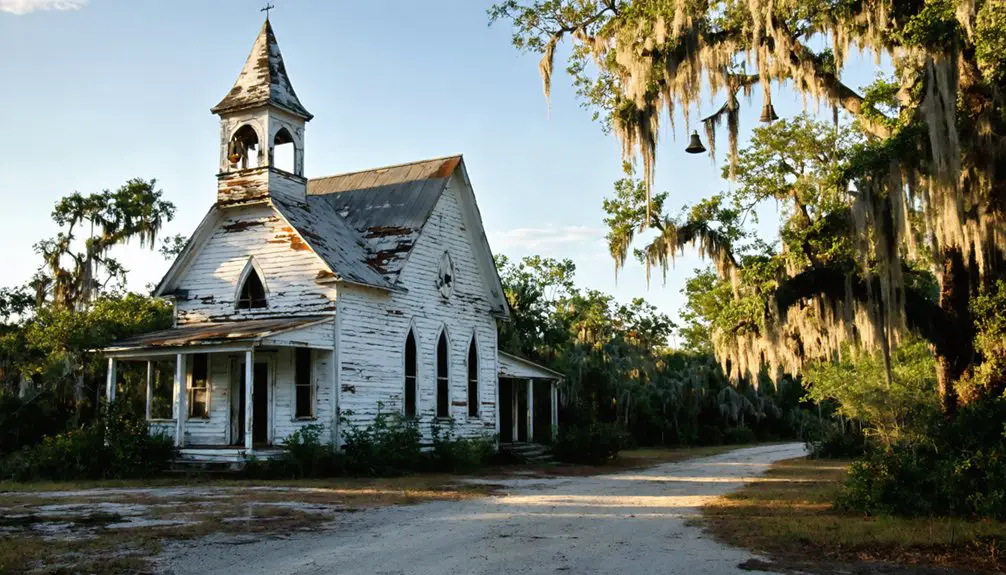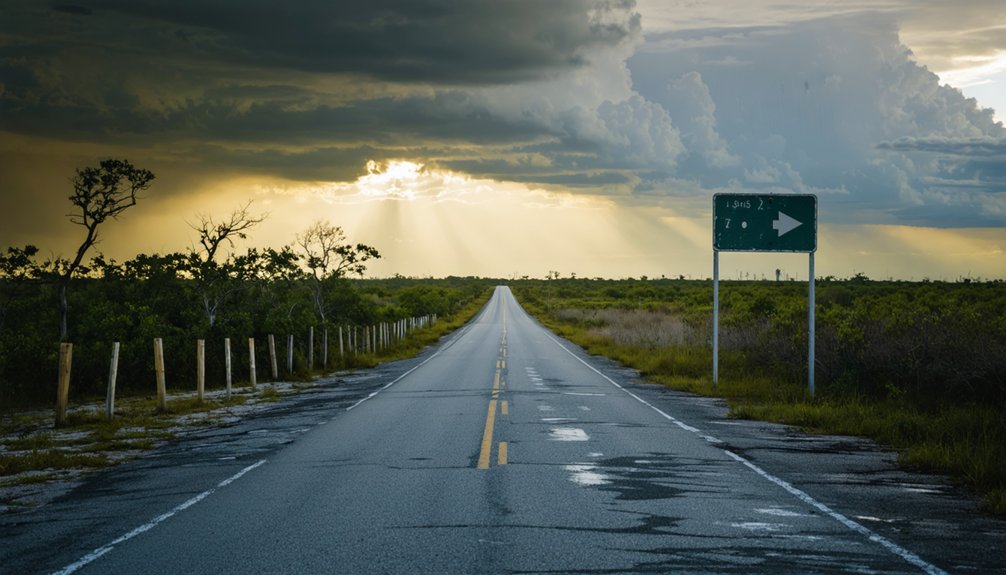
You’ll drive 38 miles through Everglades sawgrass prairies to reach Flamingo’s modern campground, then hike 4.5 miles west to discover concrete foundations and rusted cisterns from the 1890s settlement. Plan your visit between November and April when temperatures hover around 60-80°F and mosquitoes won’t devour you alive. Summer’s brutal heat and hurricane season floods make the trail nearly impassable. Pack water, insect repellent, and emergency supplies—this isolated ghost town rewards prepared adventurers with glimpses into Florida’s forgotten frontier past.
Key Takeaways
- Access Flamingo via the 38-mile Main Park Road from Everglades’ eastern entrance through diverse landscapes including pine forests and sawgrass prairies.
- Visit between November and April for ideal conditions with 60-80°F temperatures, minimal rainfall, and manageable mosquitoes during dry season.
- The ghost town ruins lie 4.5 miles west of the modern campground, accessible only by a 4-mile hiking trail.
- Expect to see concrete foundations, building footprints, and faded signage marking the 1890s frontier settlement reclaimed by wilderness.
- Avoid June-November hurricane season when flooding can submerge roads, create dangerous conditions, and trigger mandatory evacuations.
The Rise and Fall of a Frontier Settlement
Long before Flamingo earned its name, the southern tip of Florida belonged to the Calusa, whose shell middens and villages stretched from Tampa Bay to the windswept coast where you’ll find yourself standing today.
The Calusa claimed these shores centuries before Flamingo existed, leaving only shell mounds as monuments to their vanished world.
By 1893, pioneers like Duncan C. Brady sailed in on schooners, drawn by the role of homesteading—eighty-acre strips at $1.25 per acre, each with precious beach frontage. They planted coconut palms, fished, and traded with Key West.
You’d have thrived on plume hunting profits or moonshining ventures in this lawless paradise. But the challenges of isolation proved relentless: mosquitoes formed black curtains, storms shredded roofs, and supplies arrived only by boat.
When the railway claimed the land in 1912, Flamingo’s fate was sealed.
What Remains of Old Flamingo Today
Today’s Flamingo bears little resemblance to the hardscrapble settlement that once clung to this mosquito-plagued shore. You’ll find few traces of the original town, located 4.5 miles west of the current campground. Partial archeological excavations have uncovered scattered foundation remnants, but don’t expect intact buildings—everything was abandoned or demolished when the park absorbed the area in the 1940s.
To reach these ruins, you’ll hike four miles through mangroves, prairies, and hardwood hammocks, starting from the Guy Bradley Visitor Center. Limited historical records make piecing together the past challenging, but that’s part of the adventure. The HABS documentation preserves what later structures existed, while the wilderness has reclaimed the rest. You’re free to explore this forgotten frontier on your own terms.
Getting There: Routes and Road Conditions
The journey to Flamingo unfolds along a single ribbon of asphalt—the Main Park Road—that stretches 38 miles from Everglades National Park’s eastern entrance near Florida City to the continent’s edge. You’ll pass the Ernest C. Coe Visitor Center before trading pine forests for cypress swamps, then sawgrass prairies that shimmer like molten gold. Road signage appears sparse once you commit—there’s only one way forward, one way back.
As you continue your journey, keep an eye out for ghost town attractions in Bryant, where remnants of the past come alive with stories waiting to be discovered. These hidden gems offer a glimpse into a bygone era, showcasing decaying buildings and abandoned streets that tell tales of former bustling communities. Exploring these sites can add an unexpected twist to your adventure through this diverse landscape.
Despite minimal navigational challenges on this straight shot, summer floods can swallow sections near the mangrove coast. Budget an hour without stops, though you’ll want to linger where alligators sun themselves beside the pavement. The road delivers you to Flamingo’s modern campground, where your vehicle journey ends. Beyond lies the ghost town, accessible only by foot through mosquito-thick wilderness.
Best Time to Visit the Everglades Ghost Town
You’ll find Flamingo’s ghost town most welcoming between November and April, when cool dry air replaces the oppressive heat and swarms of mosquitoes that plague summer visitors. I learned this lesson the hard way during a June visit—within minutes of stepping from my air-conditioned car, I was drenched in sweat and under assault by clouds of insects so thick they obscured my camera lens.
Winter brings comfortable 60-80°F days perfect for exploring the abandoned structures, though you’ll need to watch hurricane forecasts if you’re planning a trip between June and November when violent storms can shut down park access entirely.
Winter: Ideal Weather Conditions
When planning your ghost town road trip to Flamingo, winter emerges as the undisputed champion for exploration. You’ll find temperatures hovering between 69-75°F with invigorating low humidity around 71%—perfect for outdoor recreation without the oppressive summer swelter.
The dry season delivers minimal rainfall (roughly 2 inches monthly) and excellent 9-mile visibility, letting you roam abandoned structures and waterfront trails freely.
Those breezy 13-14 mph winds keep you comfortable while photographing crumbling foundations and mangrove coastlines. December through February offers stable weather patterns, meaning you won’t scramble for shelter during sudden thunderstorms. While occasional cold fronts sweep through, they’re rare this far south.
Check local events calendars, as winter’s pleasant conditions attract guided tours and ranger programs. You’ll experience Flamingo’s haunting beauty without fighting heat exhaustion or mosquito swarms.
Summer: Heat and Bugs
Flip the calendar to summer, and Flamingo transforms into a test of endurance that’ll challenge even seasoned adventurers. Temperatures soar into the low 90s°F while humidity wraps around you like a wet blanket.
The 4.5-mile Coastal Prairie Trail—your only path to the ghost town ruins—becomes partially underwater, exposing you to relentless bug diversity that drove 1893 visitors to near madness. Mosquitoes swarm so thick they’ll extinguish oil lamps, while fleas infest every surface. Historical pest control measures included smudge pots that blackened cabin walls with soot and flea powder locals called their “staff of life.”
Frequent thunderstorms offer brief relief but amplify the moisture that sustains this subtropical swamp’s thriving insect population, making summer exploration borderline unbearable.
Hurricane Season Considerations
From June through November, hurricane season casts a shadow over any Flamingo road trip—a reality that permanently reshaped this ghost town when Hurricane Wilma’s storm surge decimated the site in 2005. You’ll face real risks: flooded access roads, park closures, and mandatory evacuations that’ll cut your adventure short. I learned this watching campers scramble during a tropical storm watch—their gear soaked, Main Park Road impassable.
Smart travelers prioritize December through May visits when hurricane tracking becomes irrelevant. If you’re committed to off-season exploration, emergency planning isn’t optional. Download NOAA’s app, pack evacuation supplies, and accept that nature owns this remote peninsula. Remember, Wilma erased 103 rooms and 24 cabins overnight. Your freedom means respecting the Gulf’s power and timing your escape accordingly.
Exploring the Abandoned Settlement on Foot
Your journey to Flamingo’s ghost town begins at the modern visitor center, where weathered trails wind 4.5 miles west toward the original settlement on Cape Sable’s eastern edge. You’ll discover preserved architectural details emerging from the wilderness—concrete foundations where 38 stilt-shacks once housed fishermen and plume hunters who defied isolation. Faded historical signage marks the remnants of this 1890s frontier outpost, though locals once stole the original park sign, forcing rangers to replace it with an immovable limestone boulder.
Walk among building footprints where families battled mosquito swarms so thick they extinguished oil lamps. The smudge-blackened walls are gone, but you’ll sense why they abandoned this place—salted fields, polluted cisterns, and hurricane-battered dreams scattered across Florida Bay’s unforgiving shoreline.
The Guy Bradley Story: Murder That Changed Conservation
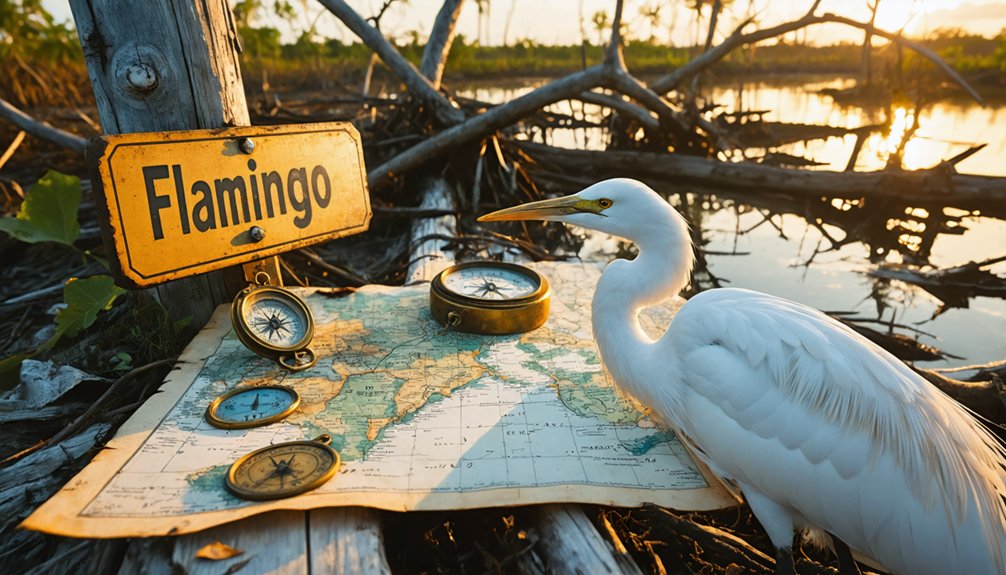
A wooden cross once marked the grave of America’s first wildlife martyr on Cape Sable Beach, but hurricanes claimed both the marker and Guy Bradley’s body decades ago—fitting for a man who spent his final years defending birds against ruthless profiteers in this lawless frontier.
Bradley patrolled these waters alone in 1905, confronting plume hunters who slaughtered egrets for fashionable hat feathers. On July 8th, he approached the schooner *Cleveland* near Oyster Keys. Walter Smith fired his rifle. Bradley, 35, bled out in his dinghy, weapon unfired.
Smith walked free after claiming self-defense. The acquittal ignited nationwide fury. Guy Bradley’s lasting legacy sparked the National Audubon Society’s formation and strengthened protection laws. His murder’s impact on Audubon Society continues today through the Guy Bradley Award honoring wildlife officers who risk everything.
Wildlife and Natural Features Around Flamingo
Why did early settlers name this remote outpost Flamingo when the pink waders barely nested here? These wanderers preferred Caribbean shallows, yet pioneers recognized occasional visitors drawn to Snake Bight’s brackish flats and mangrove-fringed mudflats.
Today, flamingo habitat shifts tell a different story—you’ll spot consistent flocks where early naturalists saw stragglers.
Drive Snake Bight Trail and scan the waters where radio-tagged birds now stay year-round, proof of flamingo conservation success. The 2024 Audubon survey counted 101 statewide, many right here.
Beyond the namesake birds, you’re sharing space with nesting sea turtles on nearby keys, over 100 avian species, and juvenile manta rays cruising offshore nurseries. Hurricane-driven arrivals sometimes linger for years, turning temporary refuge into permanent residence.
Visitor Facilities and Modern Amenities
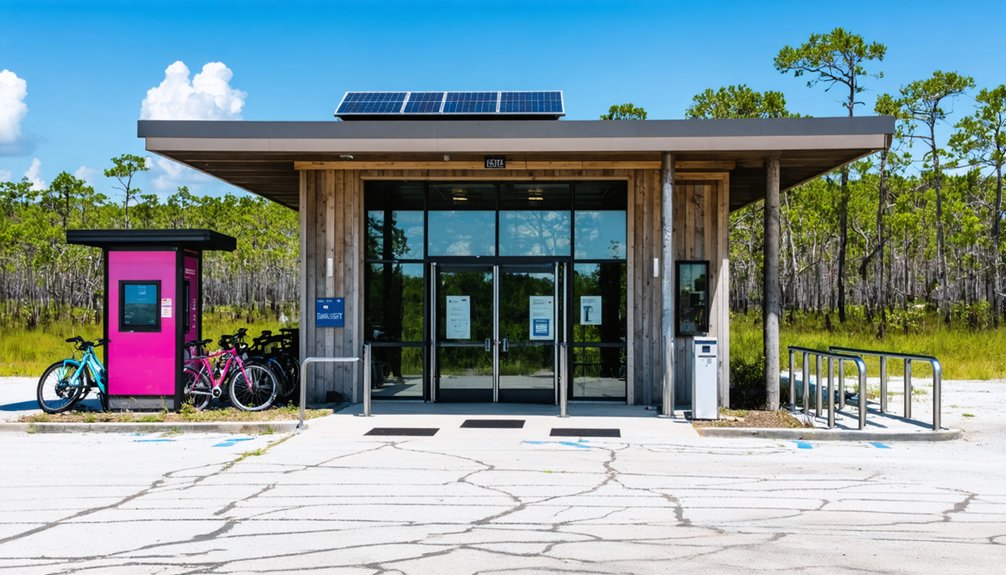
Despite its end-of-the-road isolation, Flamingo punches above its weight with visitor services that’d make some gateway towns jealous. The Guy Bradley Visitor Center anchors the area—currently getting a face-lift through 2026, though a temporary center keeps you oriented.
Lodging options include eco tents and lodges near the newly opened restaurant, where you’ll find honest food and a full bar. The Marina Store stocks everything from bait to camping gear, with a food truck slinging sandwiches when you need fuel.
Dining variety extends from quick marina bites to sit-down meals. The small marina itself offers boat rentals, fuel, and parking—your launchpad into the backcountry. Camping runs first-come, first-served, with electric and primitive sites awaiting those ready to disappear awhile.
Photography Tips for Capturing Historic Remnants
You’ll want to arrive at Flamingo’s historic sites during golden hour—that soft early morning or late afternoon light transforms weathered wood and rusted metal into striking subjects with rich textures and warm tones. I’ve found midday sun creates harsh shadows that flatten the character of abandoned structures, while sunrise and sunset add depth and drama to crumbling buildings against the Everglades backdrop.
Position yourself to include environmental context like mangroves framing old pilings or sawgrass leading to deteriorating foundations—these elements tell the story of how nature reclaims what humans left behind.
Best Lighting and Timing
The crumbling concrete foundations of old Flamingo emerge from darkness like archaeological treasures when you arrive at dawn, that first golden light skimming across Florida Bay to paint every weathered surface in amber and shadow. You’ll watch striking shadows crawl across Z Tree’s ruins as the sun rises eastward, revealing textures midday obliterates. I’ve bracketed exposures here countless times—merging three shots balances those deep shadows against bright highlights on weathered wood.
Late afternoon transforms Flamingo Prairie Trail into a photographer’s playground. Position yourself dead-center as sunset delivers dramatic backlighting straight down the path, silhouetting remnants against fire-orange skies. Set your tripod low, shoot at f/11 for landscape depth, and bracket religiously. Skip noon entirely—harsh overhead light murders detail and flattens everything worth capturing about these forgotten places.
Composing Everglades Historical Scenes
Ancient coquina foundations jutting from sawgrass demand a storytelling approach—position these crumbling sentinels against dense mangrove walls to capture Flamingo’s crushing isolation that drove fifty families away. You’ll frame flamingo’s ecology through wide-angle shots linking forgotten shack sites to endless Florida Bay horizons, revealing why plume hunters once thrived here.
The 1928 Geodetic Marker becomes your timeline anchor in close-ups—a brass record to surveyed permanence where human ambition failed. Local folklore whispers through your viewfinder when you compose the Coastal Prairie Trail winding toward rubble, suggesting the moonshine runners who briefly revived this ghost town.
Layer foreground ruins with background wetlands, letting viewer eyes travel the same escape route those last three holdouts took in 1910.
Nearby Attractions in Everglades National Park
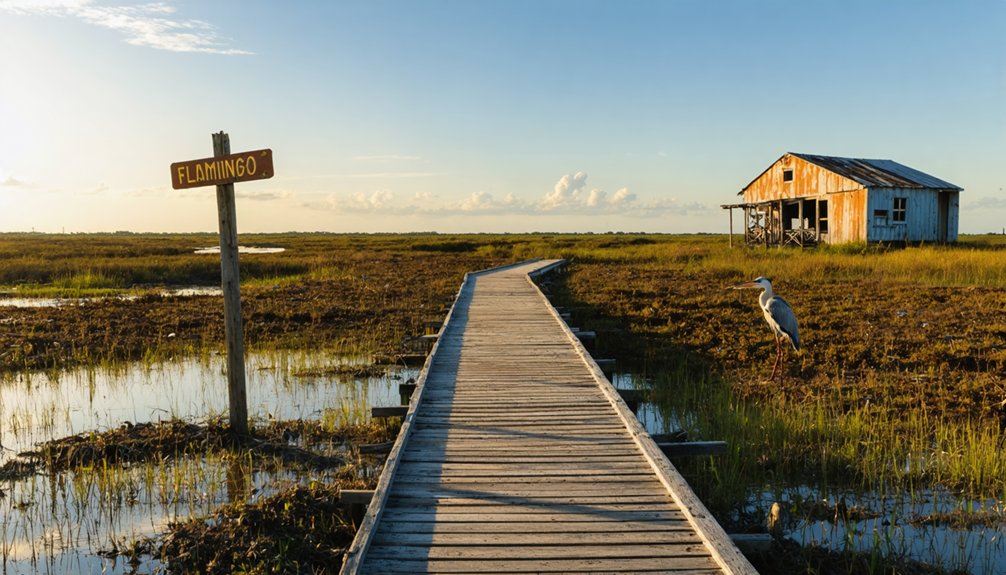
Beyond Flamingo’s abandoned buildings, Everglades National Park unfolds across 1.5 million acres of subtropical wilderness, offering dozens of trails, wildlife viewing spots, and water routes that’ll fill days of exploration. Start at Royal Palm Visitor Center, where the 0.8-mile Anhinga Trail delivers guaranteed alligator sightings among lily-choked marshes. You’ll watch turtles sunbathe while anhingas dive for fish mere feet away.
For solitude, paddle Nine Mile Pond’s winding waterways or bike Shark Valley’s 15-mile car-free loop. Winter brings wood storks massing at Mrazek Pond—a spectacle you won’t forget. The visitor centers at Ernest F. Coe and Guy Bradley offer context, but honestly, you’re here to disappear into sawgrass prairies and mangrove tunnels where civilization feels impossibly distant. Rangers at Flamingo lead backcountry boat tours into Whitewater Bay’s off-grid waters.
Frequently Asked Questions
Do I Need to Pay an Entrance Fee to Visit Flamingo?
Yes, you’ll pay entrance fees for Everglades National Park to reach Flamingo. Your pass covers seven days and parking’s free once inside. Check park hours before heading out—nothing kills adventure faster than locked gates at sunset.
Are There Camping Options Available at or Near Flamingo?
Like an oasis in the wilderness, you’ll find 274 sites at Flamingo Campground, plus primitive campsites and boat-in campgrounds throughout the Everglades backcountry. Nearby options include Big Cypress and Collier-Seminole for your untethered adventure.
Can I Bring My Pet to Flamingo Ghost Town?
Yes, you can bring your pet to Flamingo! The campground’s pet-friendly policies welcome leashed dogs, though they’ll restrict your freedom on trails and water due to wildlife interactions with alligators and crocodiles lurking nearby.
Is Cell Phone Service Available in the Flamingo Area?
While you’ll crave off-grid freedom, cellular coverage remains spotty at Flamingo. AT&T offers the strongest signal strength among carriers, though it’s unreliable. Verizon and T-Mobile provide minimal to no service, so download maps beforehand for true independence.
How Long Should I Plan to Spend Exploring Flamingo?
Plan a full day to explore Flamingo’s wildlife viewing opportunities and soak in the historical significance of location. You’ll need 3-5 hours for ghost town trails, plus time for boat tours and birdwatching adventures.