You’ll discover Fort Dallas isn’t a ghost town but Miami’s oldest standing structure, hidden within Lummus Park along the Miami River. The weathered oolitic limestone slave quarters and barracks date to 1844, remnants of a military outpost established during the Seminole Wars. These authentic buildings were rescued stone-by-stone in the 1920s and reassembled riverside, just seven minutes from Government Center station. This tangible connection to Florida’s contested past reveals how subtropical wilderness transformed into a modern metropolis, with fascinating stories awaiting beneath the surface.
Key Takeaways
- Fort Dallas is not a ghost town but historic structures relocated to Lummus Park in downtown Miami.
- The site features Miami’s oldest building, an 1844 oolitic limestone structure with authentic slave quarters and barracks.
- Access Lummus Park via Government Center station, just seven minutes away, along the Miami River in downtown Miami.
- Visit weathered antebellum structures that survived military occupation from 1836-1857 and plantation-era development.
- The Daughters of the American Revolution maintain the historic buildings rescued from demolition in the 1920s.
What Makes Fort Dallas a Unique Historical Destination
Two weathered oolitic limestone structures stand defiant against Miami’s gleaming skyline, survivors of an era when this global metropolis was nothing more than subtropical wilderness and military outpost. You’ll discover Fort Dallas isn’t your typical ghost town—it’s an urban time capsule where antebellum architectural features meet modern downtown Miami.
These 175-year-old buildings witnessed the raw edge of American expansion, when frontier transportation routes along the Miami River served soldiers patrolling against Seminole trade rather than cruise ships and yachts.
What sets this destination apart is its authenticity. You’re exploring actual slave quarters and barracks relocated to Lummus Park, tangible connections to Florida’s contested past. Unlike reconstructed sites, these limestone walls absorbed real history—military campaigns, pioneer settlement, and the transformation of wilderness into civilization’s newest frontier.
The Military Origins of Fort Dallas During the Seminole Wars
You’ll discover Fort Dallas’s military roots trace back to 1836, when the U.S. Navy desperately needed to cut off Seminole trade routes to Cuba and the West Indies. Lieutenant L.M. Powell landed at the mouth of the Miami River with orders to construct blockhouses and troop structures on Richard Fitzpatrick and William English’s plantation.
The post, named for Commodore Alexander James Dallas, transformed this isolated riverside property into a strategic military cantonment designed to support naval operations and harass Seminole forces.
Lieutenant Powell’s 1836 Establishment
Powell commanded roughly two years, directing construction of blockhouses and troop structures on Richard Fitzpatrick’s plantation land. His soldiers likely erected a protective stockade around the cantonment, establishing the first permanent military presence in what’s now Miami.
This wasn’t a fortress—it was a working military post designed for mobility and quick deployment against Seminole resistance during the brutal Second Seminole War.
While Powell’s soldiers hammered stockade posts into South Florida soil, the U.S. Navy’s warships prowled Biscayne Bay’s azure waters with ruthless efficiency. You’d have witnessed strategic military objectives unfold across multiple fronts—Powell’s fort served merely as the land-based anchor for far-reaching naval interdiction efforts.
Commodore Dallas commanded vessels blocking Seminole trade routes to Cuba and West Indies merchants, choking off arms shipments that fueled resistance. Marines under Commandant Henderson adapted to Florida’s unforgiving swamps, scoring victories at Hatchee-Lustee where conventional Army tactics failed. This coordinated sea-and-land campaign aimed to economically strangle Seminole communities into submission.
The patrols transformed Biscayne Bay from peaceful trading waters into a militarized zone, though they’d ultimately fail to achieve complete removal of Florida’s indigenous defenders.
From Plantation to Trading Post: Fort Dallas Through the Decades
Long before Miami’s skyline pierced the Florida coast, Richard Fitzpatrick envisioned something different along the Miami River’s banks. Starting in the late 1820s, he built a plantation economy with rock-walled structures that’d later serve military forces.
His nephew William English continued this legacy in 1849, constructing a rock mansion using enslaved labor—buildings that symbolized both agricultural ambition and the region’s Seminole War role.
The fort’s transformation reflects Florida’s tumultuous frontier years. You’ll discover how military occupation from 1836 to 1857 gave way to civilian enterprise when Harriett English reclaimed the property.
The Journey of the Historic Stone Buildings to Lummus Park
As Miami’s real estate boom thundered through the 1920s, the fort’s limestone barracks faced an existential threat—demolition to make way for the Dupont Plaza Hotel development. You’ll find this survival story remarkable: the Miami Women’s Club and Daughters of the American Revolution refused to let history vanish beneath concrete and steel.
They mounted an ambitious rescue mission in spring 1925. Workers dismantled the structure stone-by-stone, marking each oolitic limestone block. Careful transportation logistics required barging the pieces down the Miami River to Lummus Park, where the city commission had granted sanctuary.
The careful reassembly process stretched until September 1929, with craftsmen positioning original blocks, doorframes, and windows exactly as they’d stood for eight decades. Today, you’ll discover this monument to preservation overlooking the same river that carried it to freedom.
Where to Find the Fort Dallas Structures Today
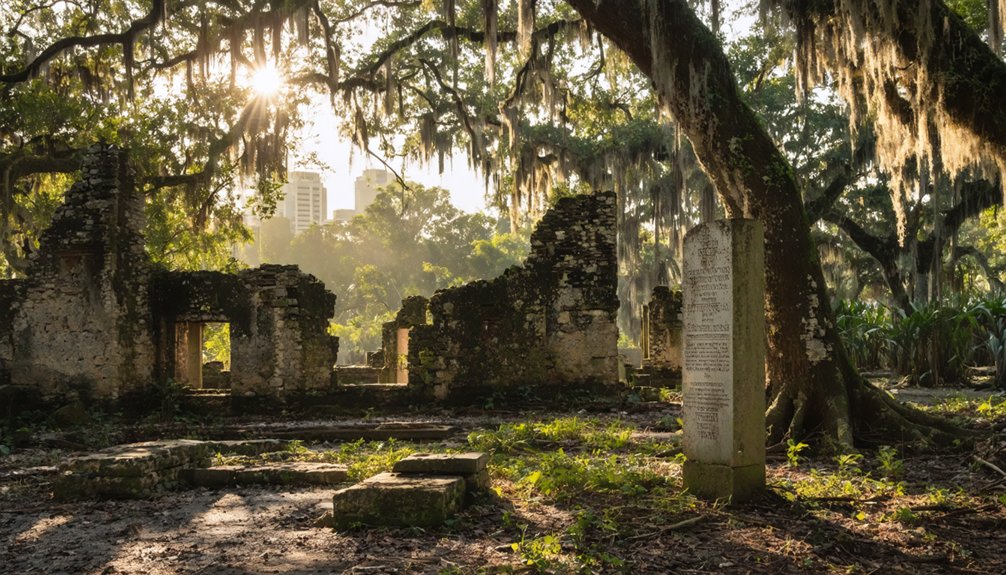
You’ll find Fort Dallas’s remnants in Lummus Park, where the limestone slave quarters stand sentinel along the Miami River’s north bank at Northwest River Drive and North Third Street. The weathered coquina walls—Miami’s oldest standing structure—now rest just blocks from downtown’s gleaming towers, a stark contrast between frontier outpost and modern metropolis.
The Daughters of the American Revolution have maintained their headquarters here since 1929, ensuring the 1844 building remains accessible to visitors seeking this tangible connection to Miami’s martial past.
Lummus Park Historic Location
Nestled in the shadow of Interstate 95‘s concrete spans, Lummus Park preserves Miami’s pioneer past at 404 NW 3rd Street in downtown Miami. You’ll discover Fort Dallas‘s stone barracks and the Wagner House—Miami’s oldest surviving home—standing defiant against modern glass towers.
The park’s design elements blend historical structures with contemporary amenities: basketball courts, picnic pavilions, and BBQ areas invite everyday use while interpretive signage guides you through 1850s Miami. You’re free to explore daily from 8:00 AM to 9:00 PM, experiencing cultural celebrations and concerts that breathe life into these relocated pioneer buildings.
The Scottish Rite Temple‘s art deco ziggurat towers over the north boundary, creating an architectural conversation spanning centuries. Government Center station sits just seven minutes away.
Original Stone Buildings Preserved
The Fort Dallas barracks stands today at 404 NW 3rd Street in Lummus Park, though its native oolitic limestone blocks have weathered a remarkable journey from their original riverside location. When developers threatened demolition in 1925, the Miami Women’s Club and Everglades DAR chapter initiated an ambitious stone relocation process, dismantling the 1844 structure piece by piece and barging it upriver to safety.
These community preservation efforts saved Miami’s earliest surviving limestone building through painstaking reconstruction:
- Original quarried blocks reassembled in authentic configuration
- Historic windows and doorframes incorporated into new site
- Exposed jig-cut rafters and gable roof maintained
- Iron grilles and wood panel doors preserved intact
You’ll find this one-story rectangular monument to freedom-seeking settlers anchored in the Lummus Park Historic District, officially designated in 1984.
Downtown Miami Accessibility
Finding Fort Dallas today requires visiting two distinct downtown Miami locations, each preserving different chapters of this frontier outpost’s history. The original site at 60-64 SE Fourth Street sits where the Miami River meets Biscayne Bay, offering transit access through the adjacent Riverwalk Metromover stop. Though currently closed for renovations, you’ll find the historic Palm Cottage awaiting restoration at this riverside location.
The fort’s relocated barracks stand one mile upriver at Lummus Park (404 NW 3rd Street), Miami’s oldest surviving building. This 5.9-acre park stretches between I-95 and NW North River Drive, accessible via Miami Trolley. The preserved military structure remains publicly viewable, unlike its shuttered counterpart downstream. Both sites connect through Miami’s public infrastructure, including the scenic Riverwalk Trail threading through downtown’s historic waterfront.
Key Historical Figures Who Shaped Fort Dallas
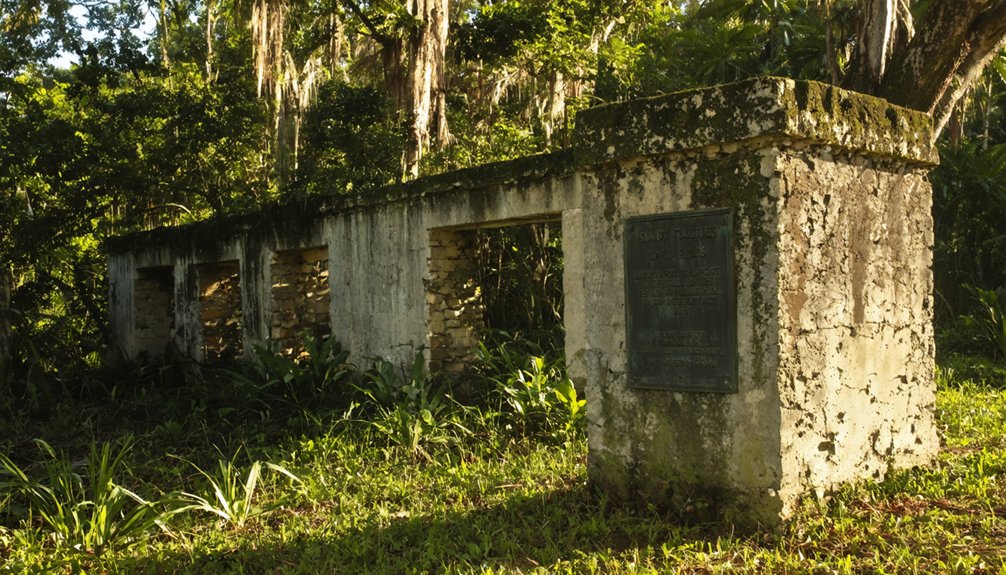
Several military officers and entrepreneurs transformed Fort Dallas from a strategic military outpost into the foundation of modern Miami. You’ll discover how these pioneers shaped the settlement through military leadership and plantation operations that defined the region’s early character.
Fort Dallas evolved from military stronghold to Miami’s birthplace through the vision of determined officers and enterprising settlers.
Key figures who built Fort Dallas’s legacy:
- Lieutenant F. M. Powell established the fort in 1836, commanding naval operations that blocked Seminole trade routes to Cuba during the Second Seminole War
- Colonel William S. Harney led dragoon attacks against Seminole Chief Chakaika, maintaining military control until troop withdrawal in 1842
- William F. English transformed the abandoned fort into a thriving plantation, platting Miami’s first streets and constructing stone buildings that housed enslaved workers
- Julia Tuttle purchased the property in 1891, becoming Miami’s founder while occupying these historical structures
Exploring the Original Fort Dallas Site in Downtown Miami
When you visit the original Fort Dallas location at Brickell Point, you’ll find yourself at Fort Dallas Park on the south bank of the Miami River where it meets Biscayne Bay. The site once occupied by the Dupont Plaza Hotel now stands as preserved parkland at 60-64 SE Fourth Street, though no original fort structures remain standing.
Historical markers throughout the grounds guide you across the strategic position where U.S. Navy forces first established their presence during the Second Seminole War.
Dupont Plaza Hotel Location
Standing where Fort Dallas once guarded Miami’s frontier, the Dupont Plaza Hotel rose in 1958 as an indication of downtown’s post-war renaissance. This twelve-story, three-wing complex marked a bold chapter in urban redevelopment, transforming the historic military site into Miami’s first major downtown hotel since the 1920s tourism decline.
You’ll discover modern hotel history unfolded here through:
- $11 million construction completed after groundbreaking on May 2, 1954
- Mayor Robert King High’s attendance at the March 16, 1958 grand opening
- The 1966 apartment building addition expanding the plaza westward
- Epic complex replacement in 2008, featuring the Kimpton Epic Hotel and luxury residences
The site’s transformation reflects Miami’s evolution from frontier outpost to metropolitan destination, where layers of history remain buried beneath contemporary towers.
Historical Site Markers
At the intersection of Northwest River Drive and Northwest 3rd Street, a historical marker stands as one of the few tangible reminders that Fort Dallas once commanded this strategic position on the Miami River’s north bank. You’ll find this site near 404 N.W. 3rd Street, where the original wooden buildings rose in 1838 during the Second Seminole War.
The landmark recognition came centuries later when a bronze plaque was presented in 1927 on the Robert Clay Hotel, which replaced the fort in 1925. These historic markers commemorate where stone slave quarters and military barracks once sheltered soldiers patrolling against Seminole resistance.
Stand here, and you’re touching ground where Miami’s earliest limestone structures emerged from William English’s vision in 1849.
What to See at the Preserved Barracks in Lummus Park
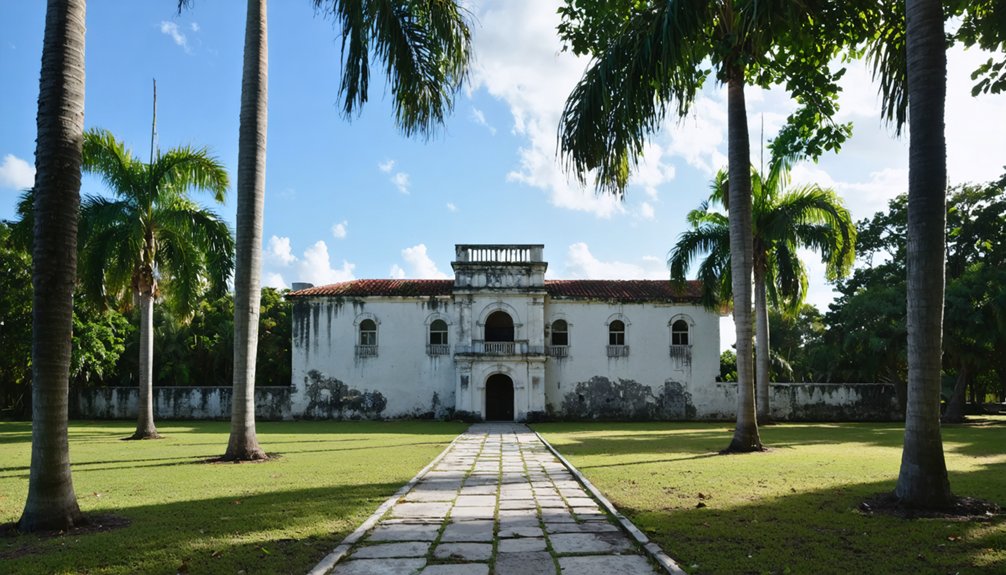
Nestled between the roar of I-95 and the gentle curves of the Miami River, the Fort Dallas Barracks stands as downtown Miami’s oldest surviving structure—a 100-foot-long commemoration to pre-Civil War Florida built from honey-colored coquina stone and limestone blocks. You’ll discover original architectural details painstakingly preserved from its 1849 construction:
Downtown Miami’s oldest structure survives in honey-colored stone—a 100-foot testament to Florida’s untamed pre-Civil War frontier.
- Limestone blocks hand-carried during the 1925 relocation
- Original windows and doorframes that witnessed Julia Tuttle’s residency
- Army-added roof and attic quarters from its military service years
- Bronze commemorative tablet documenting its transformation from slave quarters to fort
Wander Lummus Park’s 5.9 acres to explore nearby historical sites, including an early frame house that shares this pioneer-era sanctuary. Each element tells Miami’s untamed origin story—before skyscrapers, before tourists, when freedom meant survival on Florida’s frontier.
Best Times to Visit and How to Plan Your Trip
Timing your Fort Dallas expedition requires balancing Miami’s subtropical moods with practical logistics—especially since Fort Dallas Park currently remains closed for renovations. Before planning, call +1-305-4161416 to verify reopening dates and avoid wasted journeys.
Fall and spring deliver ideal 70-80°F temperatures for exploring historical preservation sites without summer’s oppressive humidity. You’ll need sunscreen, water, and insect repellent when traversing Miami’s natural ecosystem. Book online tickets for skip-the-line access once the park reopens. Consider pairing your visit with nearby Everglades airboat tours for a full day of adventure.
Always check weather forecasts—afternoon thunderstorms strike suddenly in Florida’s subtropics. Monitor federal holiday schedules, as unexpected closures can derail spontaneous road trips. Your freedom to explore demands flexible planning.
Other Historic Miami Landmarks to Include in Your Itinerary
Your Fort Dallas exploration opens doors to a constellation of pioneer-era landmarks clustered within walking distance along the Miami River. These other historic landmarks reveal Miami’s transformation from military outpost to thriving metropolis.
Fort Dallas anchors a walkable cluster of pioneer landmarks that chronicle Miami’s evolution from frontier outpost to modern city.
Essential stops near Fort Dallas:
- William Wagner House – One of two surviving structures from Miami’s pioneer era, this native oolitic limestone building stands in Lummus Park alongside the barracks, designated historic in 1984
- Palm Cottage at Fort Dallas Park – Built in 1897 for Henry Flagler’s railway workers, this relocated structure marks the railroad baron’s influence on Miami’s development
- Lummus Park Historic District – Houses the 1844 Fort Dallas barracks at 404 NW 3rd Street, where Julia Tuttle lived while orchestrating Miami’s founding in 1891
- Miami River Riverwalk – Connects these pioneer era buildings while offering views of the original settlement location
Frequently Asked Questions
Are There Any Admission Fees to Visit the Fort Dallas Barracks?
You’ll need to contact Miami Parks directly for current admission fees and details about restroom availability and accessibility for disabled visitors. The historic barracks’ policies aren’t publicly listed, so you’ll want verification before your visit.
Is Parking Available Near Lummus Park and the Historic Structures?
You’ll find no on-site parking at Lummus Park, but several parking lots operate nearby within walking distance. Street parking requires app-based payment. You can explore public transportation options near Lummus Park, or consider garages along Collins Avenue for convenient access.
Can Visitors Tour the Interior of the Preserved Stone Buildings?
You can view Fort Dallas’s interior layout through documented video tours, though preservation challenges limit regular public access inside. The 1836 limestone structure’s exterior remains openly accessible in Lummus Park, where you’ll experience Miami’s earliest military history firsthand.
Are Guided Tours Available at the Fort Dallas Historic Sites?
No guided tours are offered specifically at Fort Dallas, but you’ll find self-guided tours available through the Florida Stories app. You’re free to explore the exterior independently, discovering South Florida’s oldest structure at your own adventurous pace.
What Nearby Restaurants or Facilities Are Close to Lummus Park?
You’ll find Osteria del Mar’s oceanfront dining directly at Lummus Park, offering Italian cuisine with Art Deco ambiance. Concessions available include Mediterranean fare and signature cocktails, while recreational activities offered encompass beachfront access and live music nightly.