You’ll find Franklin’s ghost town ruins along a 2.5-mile trail that follows an old railroad grade through Washington’s Green River Valley. Park at the yellow gate off SE Green Valley Road and hike past the moss-covered “Franklin” railcar to discover crumbling foundations, hidden gravestones, and a grated mine shaft plunging 1,300 feet into darkness. October offers ideal conditions for exploring this coal mining boomtown that thrived from 1884 until tragedy and labor strife sealed its fate. The surrounding area holds even more secrets worth uncovering.
Key Takeaways
- Park at the yellow gate and hike 2.5 miles roundtrip with 200 feet elevation gain along the old railroad grade.
- Visit in October for optimal conditions; trails become muddy after rain and icy in winter months.
- Look for the moss-covered “Franklin” railcar marking arrival, then bear left to reach the historic graveyard.
- Explore remnants including concrete foundations, grated mine shafts plunging 1,300 feet, and scattered gravestones hidden by vegetation.
- Stay cautious around unstable ruins, abandoned mine shafts, and overgrown blackberry vines concealing uneven ground and hazards.
The Rise and Fall of a Coal Mining Boomtown
In 1884, the Oregon Improvement Company staked its claim on a remote stretch of Washington Territory that would transform into Franklin, a coal mining powerhouse along the Green River. You’ll discover a town that shipped its first coal to San Francisco by August 1885, four years before statehood arrived.
By 1900, nearly 1,000 residents called this place home, producing 200,000 tons annually.
The workforce demographics shifted dramatically when African American miners from Missouri, Kentucky, and Tennessee arrived in 1891. The town’s infrastructure expanded rapidly with the Columbia & Puget Sound railroad extension, connecting Franklin to broader markets and fueling its prosperity. Economic factors eventually crushed Franklin’s prosperity—petroleum and hydroelectric power displaced coal demand after 1908. Depression-era collapse followed, though Roosevelt’s New Deal briefly revived union representation in 1933.
Palmer’s final operations extracted their last tons in the 1950s, leaving behind only memories. After the mines closed, spontaneous combustion of coal in one seam created a hot spring at the mine’s mouth on the Green River that lasted for several years.
Tragedies That Shaped Franklin’s Dark History
Before Franklin could establish itself as a thriving coal town, violence erupted in 1891 when the Oregon Improvement Company slashed wages and imported African American strikebreakers from Missouri, Kentucky, and Tennessee. White miners refused the cuts, sparking what became known as the “Day of Black Terror.”
Labor unrest and racial tensions would haunt Franklin for decades.
The town’s darkest chapter came on August 24, 1894, when tragedy struck 700 feet underground:
- 37 miners died from smoke inhalation in Washington’s second-worst coal disaster
- Investigators suspected arson among causes of mining disasters, though no perpetrator was found
- 14 widows and 38 orphans remained after the catastrophe
- Bodies scattered across multiple cemeteries from Black Diamond to Seattle
The disaster occurred when ventilation fans briefly shut off due to a series of errors on the sixth level, trapping miners in deadly smoke.
Twenty years later, a 1914 cave-in left one man dead and another miner buried underground for a week before rescue.
You’ll discover a community forged through unimaginable loss and dangerous defiance.
What Remains: Exploring the Abandoned Site Today
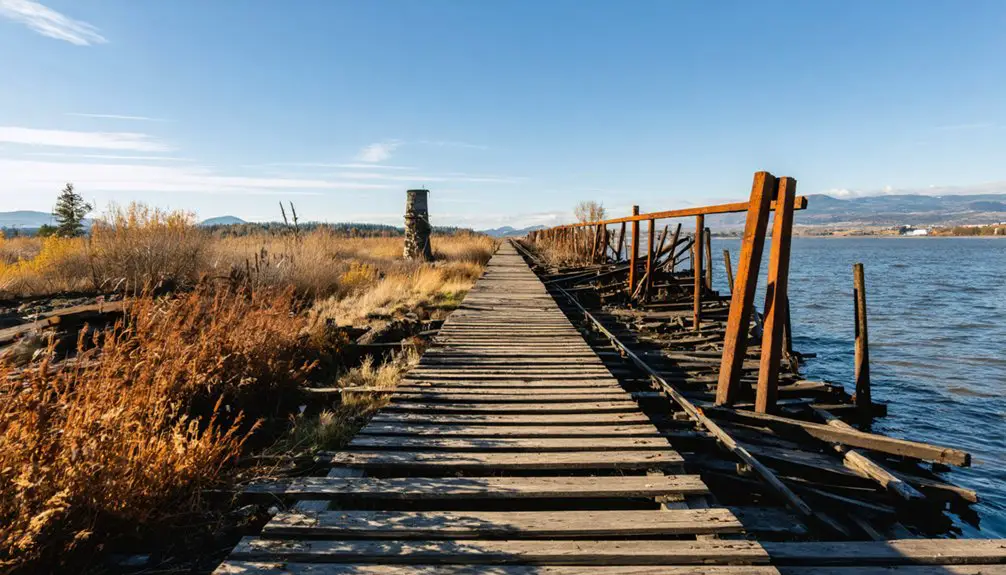
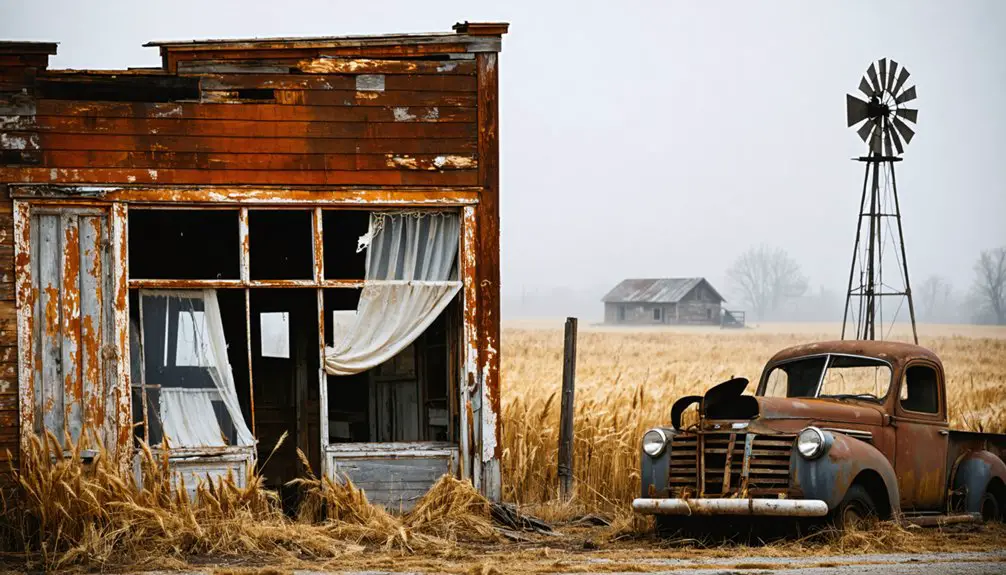
The forest has reclaimed Franklin with a vengeance, leaving only skeletal traces of the coal town that once housed 1,000 souls. You’ll discover an old “Franklin” railcar marking your arrival, its metal canvas decorated with moss and modern graffiti. The 2.5-mile trail follows a gentle railroad grade through overgrown brush—wear long pants.
A grated mine shaft plunges 1,300 feet into darkness; drop a rock to hear the abyss answer back. Concrete foundations poke through vegetation where the powerhouse once hummed. Scattered gravestones hide trailside, their messages fading without proper gravestone preservation. Visitors leave coins and flowers anyway.
This is ecological succession in action: nature methodically erasing human ambition, leaving only whispers of those who dug, lived, and died here. Franklin was born in the 1880s as coal mining operations transformed the wilderness into a bustling industrial town. The trailhead begins from a small dirt parking lot off Green River Gorge Road Southeast in Black Diamond.
Getting There: Directions and Trail Access
Park at the yellow vehicle gate and head down the gravel road
Begin your adventure at the distinctive yellow gate where pavement ends and the backcountry gravel path beckons forward.
Navigate 2.5 miles roundtrip with 200 feet elevation gain
Watch for blackberry vines, roots, and stumps on narrow passages
Bear left at the old rail car to reach the graveyard
October offers prime hiking conditions on this year-round accessible trail. Pack water and sturdy boots—you’re venturing into authentic backcountry territory. Note there’s no bathroom or water available at the trailhead, so plan accordingly. This site once served as a significant coal mining town during the 1800s before being abandoned for many years.
Safety Tips for Visiting the Ruins and Mineshafts
While Franklin’s abandoned mine shafts draw curious explorers, they’re also the site’s most dangerous features. The No. 2 shaft plunges over 1,300 feet into darkness, secured by heavy iron grating, concrete seals, and safety railings installed in 1984. Never attempt to bypass these protections—the health hazards of old mines are extreme.
Around crumbling foundations, assess structural integrity before approaching. Overgrown ivy and blackberries conceal unstable ruins and uneven ground. The bakery’s location in the remnants of old buildings along the Franklin Ghost Town Trail means some structures have been preserved, but many others remain hazardous.
Exploring ghost towns near Franklin, Washington can reveal fascinating stories of the past. However, awareness of the potential dangers hidden beneath the overgrowth is crucial for a safe experience. Visitors are often surprised by the contrasts of decayed buildings and nature’s resilience reclaiming the landscape.
After rain, trails become treacherous mud slicks, especially steep sections near the river. At the parking area, watch for icy puddles and frozen frost during colder months.
Pack the 10 essentials, even for short visits. There’s no cell service, bathrooms, or emergency facilities. You’ll hear gunfire from the nearby range—unsettling but harmless. Keep dogs leashed and respect no trespassing signs. Freedom means exploring responsibly.
Nearby Attractions in the Green River Gorge Area
Beyond Franklin’s haunted ruins, the Green River Gorge unfolds into a wonderland of cascading waterfalls, emerald swimming holes, and moss-draped limestone cliffs.
Nature’s masterpiece awaits: plunging waterfalls, jewel-toned pools, and ancient cliffs wrapped in emerald moss beckon the adventurous soul.
Essential Green River Gorge Experiences:
- Scenic waterfall viewpoints – Wooden steps lead to crystal-clear vistas of water cascading down opposite canyon walls, with catwalks providing safe navigation through technical sections.
- Swimming hole experiences – Deep pools nestled in the lush forest canyon offer invigorating escapes, accessible from Franklin’s parking area via steep trails.
- State park endpoints – Flaming Geyser and Kanaskat parks anchor the gorge with maintained trails, while Green River Resort provides quick access to dramatic overlooks.
- Hidden access points – Hanging Gardens and Icy Creek require GPS navigation but reward adventurers with grotesque rock formations and rainforest-veiled waterfalls carved through sandstone.
Frequently Asked Questions
Can I Bring My Dog to the Franklin Ghost Town Site?
Your furry explorer can absolutely tag along! Pet policies here embrace hiking with pets on leash throughout Franklin’s trails. You’ll discover overgrown paths, sealed mine shafts, and scenic overlooks together—just keep that leash secured during your adventure.
Are There Restrooms or Facilities Available Near the Trailhead?
No, there’s zero restroom availability at Franklin Ghost Town’s trailhead. Your only nearby amenities are stores or restaurants within five minutes. Plan ahead for this wild, facility-free adventure—you’ll need to prepare before hitting the trail!
How Long Does the Entire Hike and Exploration Typically Take?
You’ll need 1.5-2 hours total for the entire experience. The estimated hiking time is about an hour, plus another 30-45 minutes exploring the historical significance of site remnants like mineshafts, foundations, and the haunting cemetery ruins.
Is the Trail Accessible for Wheelchairs or Strollers?
Ironically, wheelchair accessibility exists only on Franklin’s first graveled segment—until you hit the Y junction. Beyond that, narrow paths and steep drops end stroller accessibility too. You’ll need sturdy legs for the full ghost town adventure ahead.
Do I Need a Discover Pass to Park at the Trailhead?
You don’t need a Discover Pass here. The trailhead operates on an honor system with a $5 parking fee—just drop your cash in the pay box. It’s private property with relaxed parking options and minimal cost of admission.
References
- https://www.wta.org/go-hiking/hikes/franklin-ghost-town
- https://www.youtube.com/watch?v=0JLTapdmaYY
- https://theviewfromadrawbridge.com/2020/09/05/the-ghost-town-of-franklin-washington/
- https://authorbloodymaria.wordpress.com/2021/01/02/franklin-ghost-town/
- https://patch.com/washington/enumclaw/bp–franklin-a-ghost-town-at-our-doorstep
- https://kissfm1053.com/franklin-wa-graves/
- https://www.historylink.org/File/22479
- https://en.wikipedia.org/wiki/Franklin
- https://blackdiamondhistory.wordpress.com/2011/02/04/franklin-everything-you-always-wanted-to-know/
- https://www.blackdiamondmuseum.org/black-diamond/