Your road trip to Centralia—often confused with Fulton Run—begins on Route 61, where a 90-degree kink signals entry into fire-scarred territory. Since 1962, an underground coal mine fire has consumed 3,700 acres beneath this ghost town, creating sulfurous vents and cratered streets that forced mass evacuation. You’ll find the South Penn Railroad Aqueduct and abandoned turnpike tunnels nearby, but proper preparation with dust masks, GPS devices, and heat-resistant gear proves essential. The complete story behind Pennsylvania’s smoldering wasteland awaits your discovery.
Key Takeaways
- Route 61 in Columbia County serves as the primary access road, with a 90-degree kink marking entry into fire-affected areas.
- Visit the South Penn Railroad Aqueduct, abandoned PA Turnpike tunnels, and Sideling Hill POW Camp foundations from the 1940s.
- Pack dust masks, waterproof boots, GPS devices, paper maps, and layers to navigate unmarked routes and smoke zones safely.
- Monitor for methane and carbon monoxide, maintain distance from active vents located one mile east of the main intersection.
- Graffiti Highway is blockaded with authorities monitoring trespassing; plan alternative routes to explore accessible historical ruins.
The History Behind America’s Most Famous Underground Fire
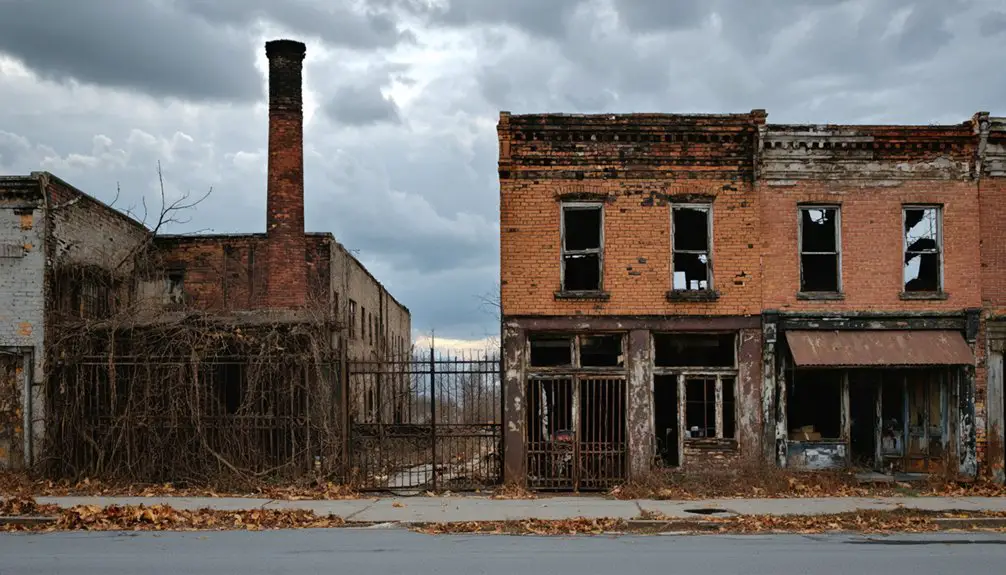
On May 27, 1962, workers set fire to residential trash in an abandoned strip pit near Centralia, Pennsylvania—a routine cleanup that would ignite America’s longest-burning underground inferno. The flames found their way through an unsealed opening into the coal seam below, spreading through abandoned mine tunnels that honeycomb the region’s geological composition.
Central Pennsylvania’s massive coal deposits, formed over millions of years, provided virtually limitless fuel. The fire rapidly expanded through the Buck Mountain Coal Bed, eventually consuming 3,700 acres and reaching depths of 300 feet. Sulfurous fumes and carbon monoxide seeped into homes while sinkholes cratered streets. Despite federal intervention and $42 million in aid, the fire’s long term environmental impact continues—it’s still burning today, over six decades later.
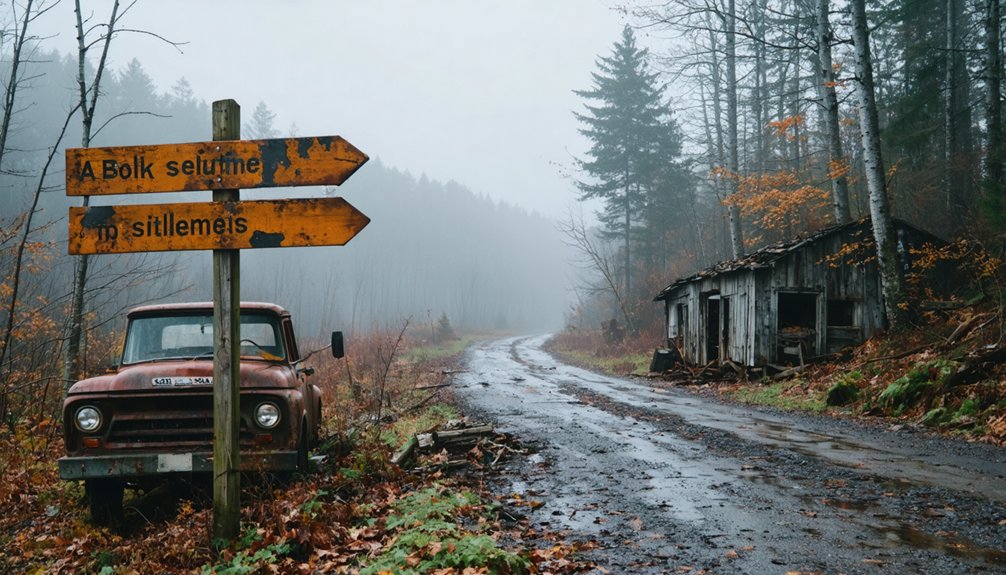
Reaching Centralia requires traversing Pennsylvania’s winding coal country roads, where Route 61 serves as your primary artery through Columbia County’s quiet northeastern valleys. You’ll encounter challenging terrain marked by decades of underground burning, with navigation demanding attention to both road conditions and fire effects.
Essential Navigation Points:
- Southern Approach: From Ashland, follow Route 61 north through an awkward 90-degree kink that signals entry into fire-affected territory.
- Active Vent Sites: Drive one mile east of the main intersection to witness steam vents just seconds off the roadway.
- Graffiti Highway Blockade: Expect dirt mounds blocking the famous painted stretch—authorities monitor trespassing.
- Cemetery Landmark: Locate Odd Fellows Cemetery opposite St. Ignatius, marking where everything began.
Winter visits offer clearer visibility through overgrown areas obscuring ground-level fire effects.
Must-See Landmarks in the Abandoned Town
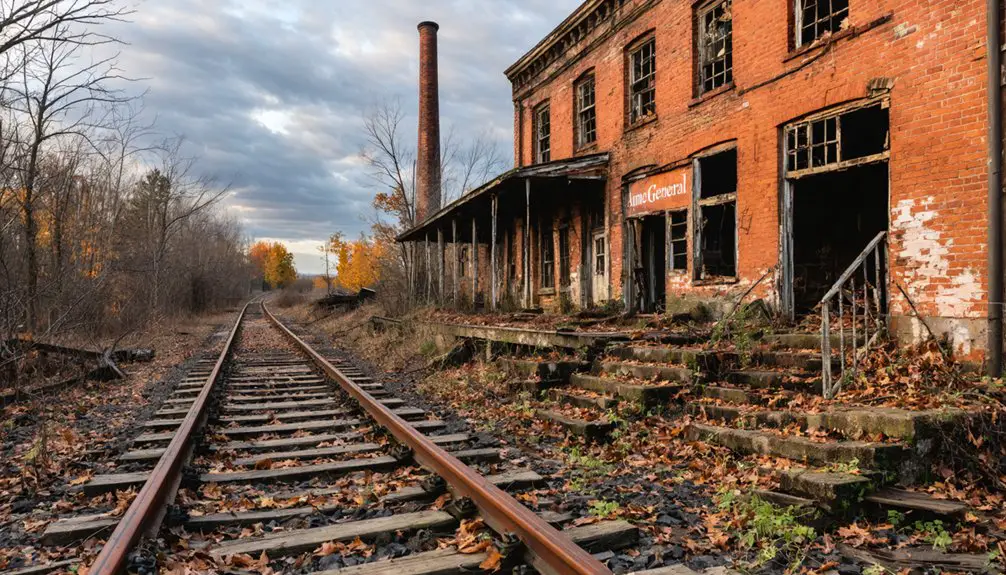
While Centralia’s smoldering vents capture headlines, Fulton Run’s abandoned landmarks tell a quieter story of Pennsylvania’s vanished railroad ambitions. You’ll find the South Penn Railroad Aqueduct just 0.3 miles from Oregon Road trailhead—derelict architectural elements crafted by Sicilian masons in 1883 without mortar. The dynamite shed ruins and nearby footbridge mark your path to this perfectly-preserved structure.
Beyond the aqueduct, the 13-mile Abandoned PA Turnpike follows the railroad’s original route, featuring two long forgotten structures: tunnels begun in 1883 and left incomplete. Less than 0.5 miles east, Sideling Hill POW Camp‘s crumbling foundations housed German prisoners from May 1945 through spring 1946. These sites form an interconnected network of accessible ruins, each revealing layers of unrealized infrastructure dreams and wartime necessity.
Safety Precautions for Exploring Active Mine Fire Zones
Exploring Fulton Run’s remnants differs fundamentally from venturing near Centralia’s active underground inferno, where carbon monoxide seeps through fissured earth and subsurface temperatures exceed 900°F.
You’ll need specialized equipment for identifying invisible fire hazards that safeguard your autonomy to explore freely:
- Continuous gas monitoring devices detect methane and carbon monoxide concentrations before symptoms manifest—birds and flame safety lamps historically served this purpose.
- Heat-resistant PPE including full-body suits prevents chemical burns from subsurface vapor contact.
- Maintained distance protocols require staying beyond heat zones and smoke pathways where oxygen depletion occurs.
- Implementing worker monitoring protocols through buddy systems guarantees someone tracks your location near fissures and trenches.
Site security isn’t about restricting freedom—it’s preserving it through informed risk assessment.
What to Bring for Your Visit
Packing for Fulton Run requires the same methodical preparation nineteenth-century mining surveyors employed when documenting Pennsylvania’s anthracite fields—except modern explorers face hazards those iron-willed predecessors never imagined.
Your precautionary supplies list should include dust masks against airborne particles, waterproof hiking boots with ankle support, and layers accommodating temperature shifts from subterranean heat. Gear storage considerations demand organization: pack gloves preventing cuts from rusted relics, GPS devices for tracking unmarked routes, and paper maps combating signal loss.
Include long pants protecting against brush, face coverings blocking toxic gases, and headlamps illuminating smoke-dimmed zones. Reusable water bottles and high-energy snacks maintain stamina during extended reconnaissance. This methodical approach honors both self-preservation and the unregulated spirit of venturing beyond civilization’s boundaries into Pennsylvania’s smoldering wasteland.
Frequently Asked Questions
Are There Any Nearby Accommodations or Hotels for Overnight Stays?
You’ll find several nearby bed and breakfasts within 15-25 miles, including historic inns like The Casselman. Local camping options await at Pittsburgh Roaring Run RV Resort, while Hampton Inn locations offer convenient modern amenities throughout the region.
Is the Town Accessible Year-Round or Closed During Certain Seasons?
You’ll find year-round seasonal accessibility to Fulton Run’s abandoned roads, though weather conditions in Pennsylvania’s mountains can challenge winter exploration. The deserted routes remainopen continuously, letting you venture freely through this forgotten landscape whenever wanderlust strikes.
Can You Visit the Remaining Residents Who Still Live There?
You shouldn’t disturb Centralia’s final five souls who’ve endured decades of bureaucratic battles and tourist invasions. Respect residents’ privacy fiercely—they’ve earned their solitude. Instead, inquire about community events through official channels if you’re genuinely interested in their stories.
Are There Guided Tours Available for First-Time Visitors?
No guided tours exist at Fulton Run, but you’ll discover freedom exploring independently. Self-guided audio tours aren’t available, though you’re free to create your own narrative while capturing professional photography opportunities among the haunting, abandoned structures.
What Are the Legal Consequences of Trespassing on Private Property?
You’ll face potential legal penalties from $300 fines to 10-year prison sentences for trespassing. Pennsylvania’s laws protect property owners’ freedom, with consequences escalating from summary offenses to second-degree felonies depending on your actions and defiance of warnings.